No.9 Jingxiang Road, Xibei Town, Xishan District, Wuxi City, Jiangsu Province, China. +86 18260477296 angel@china-huamu.com
No.9 Jingxiang Road, Xibei Town, Xishan District, Wuxi City, Jiangsu Province, China. +86 18260477296 angel@china-huamu.com


Introduction
As a core input for aquaculture, the production efficiency and nutritional precision of aquatic feed directly impact farming profitability. As the industry raises its demands for feed utilization efficiency, environmental protection of water bodies, and animal health, traditional aquatic feed equipment faces technical challenges such as insufficient production capacity, poor adaptability to formulations, and excessive energy consumption. Jiangsu Huamu Machinery Co., Ltd. has introduced a new generation of aquatic feed equipment solutions through continuous technological iteration, centered on modular design, intelligent control, and efficient processes, helping enterprises achieve cost reduction, efficiency enhancement, and sustainable development. For more information, please visit the official website:www.huamufeedmachinery.com
Keywords
Aquatic feed equipment, efficient production, precise nutritional formulation, modular design, intelligent control, Jiangsu Huamu Machinery
Opening on the Industry's Technological Pain Points
Currently, the production of aquatic feed faces three core challenges: First, traditional equipment employs a single process, making it difficult to adapt to the digestive characteristics and nutritional needs of different aquatic animals (such as fish, shrimp, and shellfish), resulting in low feed conversion rates. Second, inadequate mixing uniformity (CV value > 10%) leads to uneven distribution of nutrients, affecting the consistency of animal growth. Third, high energy consumption of equipment (power consumption per ton of feed > 35 kW·h), coupled with raw material waste (dust loss rate > 2%), directly drives up production costs. For instance, a medium-sized feed mill experienced annual raw material losses exceeding 200 tons due to aging equipment, resulting in indirect losses of 500,000 yuan. Additionally, under stricter environmental regulations, issues such as equipment dust emissions (>10 mg/m³) and noise (>85 dB) have also become obstacles to compliant operations for enterprises.
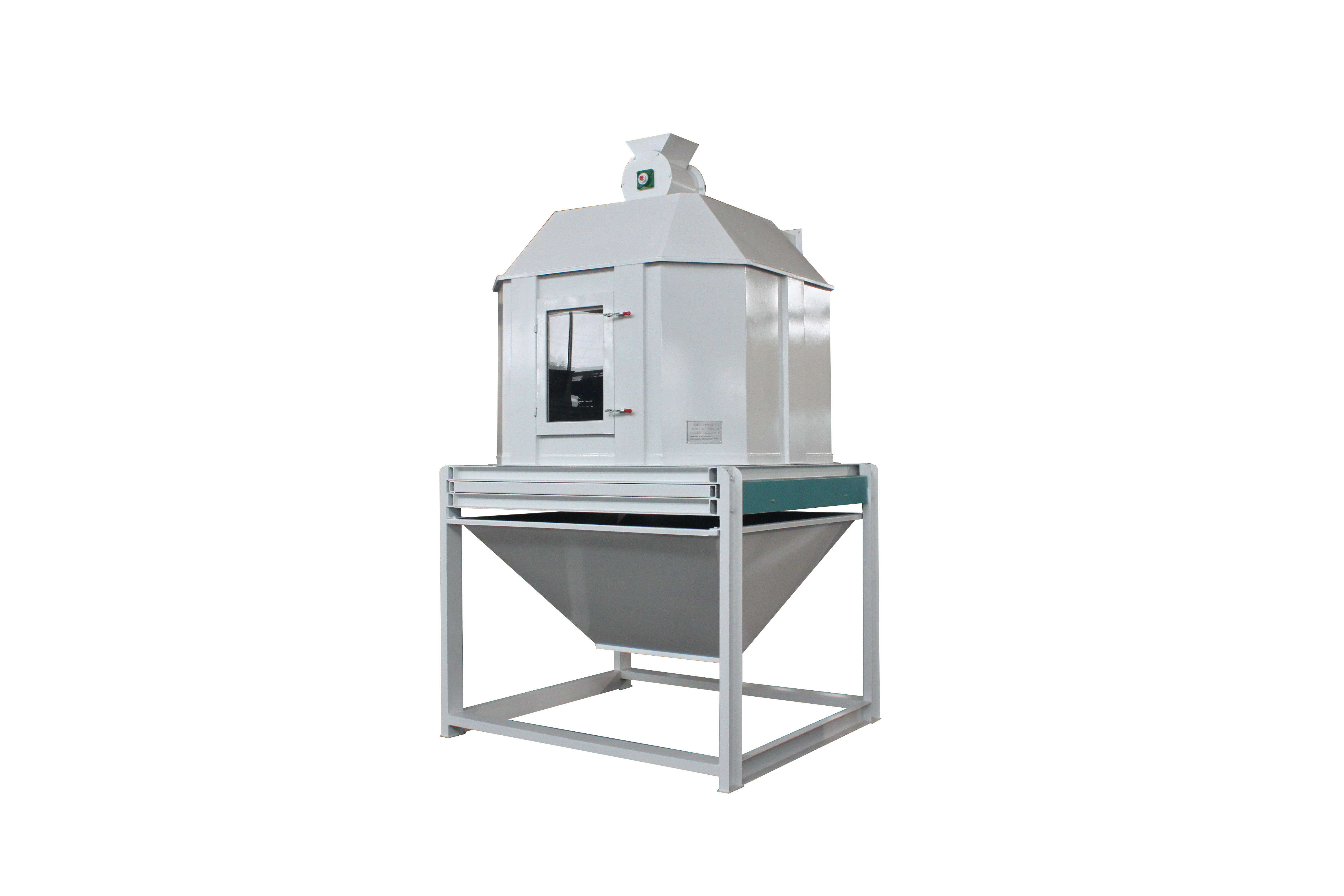
Introduction to the company's technological strength
Jiangsu Huamu Machinery Co., Ltd. has been deeply engaged in the feed machinery field for over 20 years, relying on an integrated innovation system of "industry-university-research-application" to establish a full-chain technological capability covering design, manufacturing, installation, and commissioning. Its core advantages are manifested in three aspects:
STEP 1: Modular equipment matrix to meet diverse production needs
The company has launched a "1+N" equipment combination solution, centered around a twin-shaft paddle mixer (CV value ≤ 5%), a water-drop type pulverizer (particle size uniformity ≥ 90%), and a ring die pellet mill (capacity 1-30 t/h), complemented by a cooler, a crusher, and an additive feeding system. This solution can be flexibly configured into powder feed lines, pellet feed lines, and specialized aquatic feed lines. For example, the customized "pulverizing-mixing-pelletizing" integrated production line for a shrimp feed plant reduced the production cycle by 30% and lowered energy consumption per ton of feed to 28 kW·h through optimized material flow channel design.
STEP 2: Intelligent control system for achieving precise nutrient ratios
By integrating PLC automatic control with IoT technology, the equipment can monitor key parameters such as mixing time, granulation temperature, and steam pressure in real time, and dynamically adjust the formulation ratio through cloud-based algorithms. Taking a fish feed project as an example, the system automatically compensates for additive usage based on fluctuations (±2%) in raw material moisture, reducing the fluctuation range of protein content from ±1.5% to ±0.5%, significantly enhancing feed stability.
STEP 3: Low-loss process design to reduce operational costs
The fully enclosed silo, pulse dust collector, and low-noise motor are adopted, with equipment dust emissions ≤5mg/m³ and noise ≤75dB, meeting the EU CE standard. Meanwhile, by optimizing the pelletizing ring die aperture (adjustable from φ2 to φ10mm) and compression ratio (1:8 to 1:15), the powder loss rate is controlled within 0.8%, saving over 300,000 yuan in annual raw material costs.
Currently, the company's technical team has completed the delivery of over 100 aquatic feed projects in total, with a equipment operation stability rate of 99.2% and a customer repurchase rate exceeding 85%. Its technical capabilities have been widely recognized in the industry.
FAQ: A Guide to Q&A Technical Selection
Q1: How to select equipment models based on production scale?
A: For small-scale plants (1-5t/h), a single-shaft mixer combined with a flat-die pellet mill is recommended due to its low investment cost and simple operation. Medium-sized plants (5-15t/h) should be equipped with a twin-shaft mixer and a ring-die pellet mill to balance efficiency and stability. For large-scale plants (>15t/h), a modular production line is suggested to enhance capacity through parallel operations. For example, Jiangsu Huamu designed a "dual-line parallel" solution for a large group, achieving a capacity of 30t/h with equipment utilization reaching 95%.
Q2: What are the equipment maintenance cycle and the lifespan of key components?
A: Daily maintenance involves cleaning the dust filter screen and checking the tension of the drive belt each day; monthly maintenance includes lubricating bearings and calibrating sensors; annual maintenance requires replacing the ring die, hammer blades, and seals. In terms of the lifespan of key components, the ring die (made of high-chromium alloy) can last 2,000-3,000 hours, and the hammer blades (with tungsten carbide coating) can last 1,500 hours, significantly exceeding the industry average.
Q3: How to solve the material blockage problem during equipment operation?
A: Material blockage often results from excessive material moisture (>15%) or improper runner design. Solutions include: STEP 1: Install a moisture sensor to automatically activate the drying unit; STEP 2: Optimize the silo cone angle (≥60°) and agitator speed (30-60 rpm); STEP 3: Utilize a pneumatic unclogging device to clear blockages using pulsed airflow. A customer of Jiangsu Huamu reported that after implementing these solutions, the frequency of material blockage decreased from three times per week to once per month.
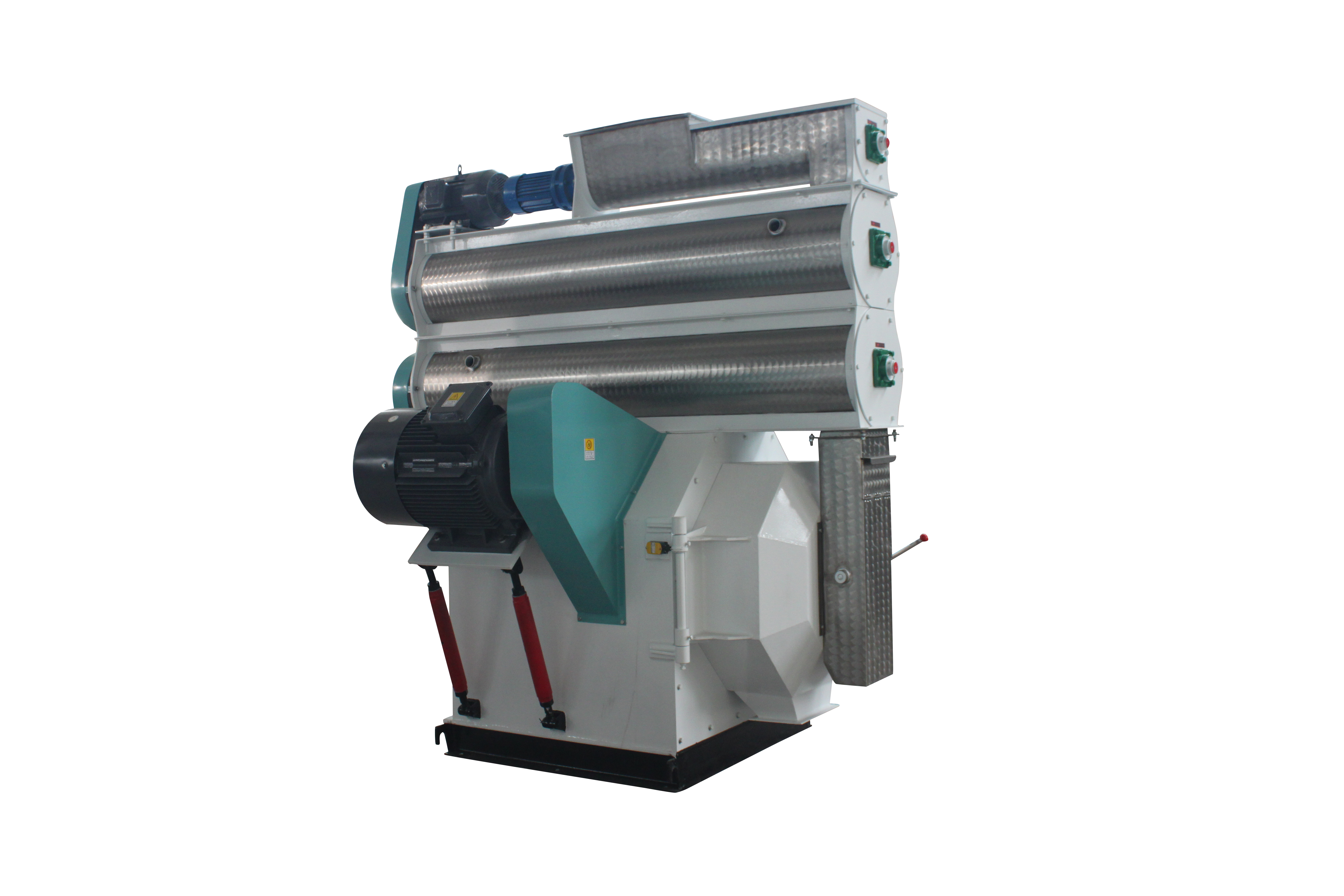
Reference for full text summary
The technological upgrading of aquatic feed equipment should focus on the three core aspects of "high efficiency, precision, and low consumption." Jiangsu Huamu Machinery Co., Ltd. has provided quantifiable and implementable solutions for the industry through modular design, intelligent control, and low-loss processes: its equipment achieves a coefficient of variation (CV) for mixing uniformity of ≤5%, an electricity consumption per ton of feed of ≤28 kW·h, and a dust emission level of ≤5 mg/m³, with all technical indicators reaching industry-leading levels. In the future, as aquaculture moves toward intensification and intelligence, equipment enterprises need to continuously deepen cooperation with scientific research institutions to promote the application of cutting-edge technologies such as AI formulation optimization and digital twin operation and maintenance, injecting new impetus into the high-quality development of the industry. For more information, please visit the official website:www.huamufeedmachinery.com
Jiangsu Huamu Machinery Co., Ltd. is located in Xibei Town, Wuxi City, enjoying convenient transportation and significant geographical advantages. The company specializes in the manufacturing of feed machinery and equipment, and can undertake the full-process business of scheme design, equipment ins...
No.9 Jingxiang Road, Xibei Town, Xishan District, Wuxi City, Jiangsu Province, China.