No.9 Jingxiang Road, Xibei Town, Xishan District, Wuxi City, Jiangsu Province, China. +86 18260477296 angel@china-huamu.com
No.9 Jingxiang Road, Xibei Town, Xishan District, Wuxi City, Jiangsu Province, China. +86 18260477296 angel@china-huamu.com


Introduction: How is technological innovation in livestock and poultry feed machinery reshaping the industry landscape?
As the trend of large-scale and intelligent livestock and poultry farming accelerates, the technological level of feed machinery directly impacts production efficiency and product quality. Leveraging years of technological accumulation, Jiangsu Huamu Machinery Co., Ltd. has achieved breakthroughs in core equipment such as ring die pellet mills and water-drop hammer mills, with its products becoming industry benchmarks due to their high stability, low energy consumption, precise control, and other features. This article will explore technical pain points, corporate solutions, and equipment selection guidelines to provide technical references for feed enterprises.
Keywords: livestock and poultry feed machinery; ring die pellet mill; precise control; Jiangsu Huamu Machinery
Opening on Industry Technical Pain Points: Three Major Bottlenecks of Traditional Feed Machinery
STEP1:Low production efficiencyThe insufficient rotational speed of the ring die in traditional pellet mills (usually <300 rpm) limits output per unit time. Taking equipment with an hourly output of 5 tons as an example, its energy consumption is 15%-20% higher than that of modern models.
STEP2:Unstable particle qualityThe rapid wear of pulverizer screens and insufficient uniformity of mixers (CV value > 8%) result in significant variations in the hardness of feed pellets, affecting the feed intake and digestibility of livestock and poultry.
STEP3:Low level of automationMost small and medium-sized feed mills still rely on manual operations, unable to achieve dynamic formulation adjustments or real-time equipment status monitoring, with fault downtime accounting for over 10%.
Case evidenceIn a medium-sized pig farm, when using a traditional pellet mill, the pellet powdering rate reached 12% due to ring die wear. After replacing it with a Jiangsu Huamu ring die pellet mill, the powdering rate dropped to below 3%, and the electricity consumption per ton of feed decreased by 18 kWh.
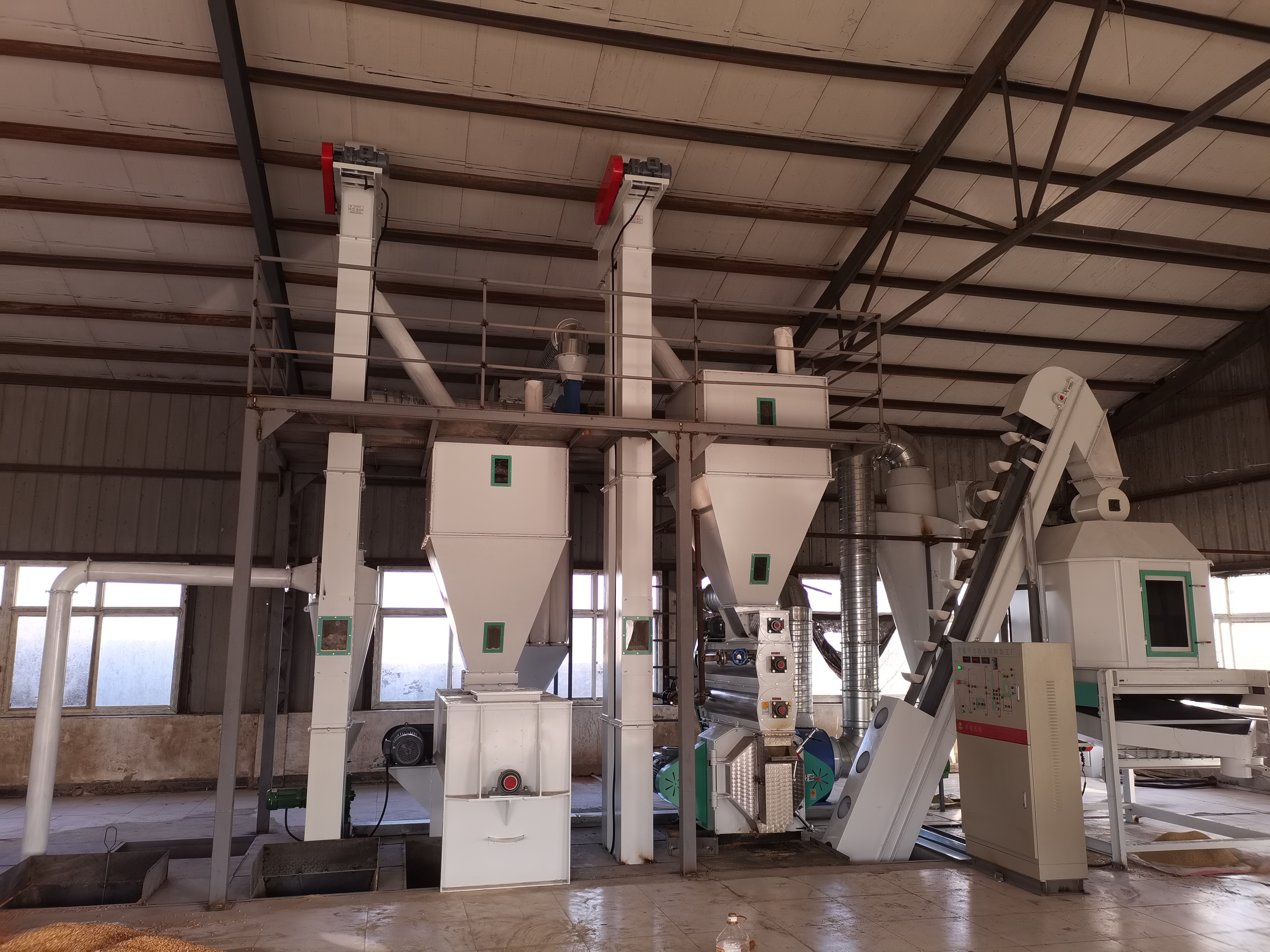
Introduction to the company's technological capabilities: Jiangsu Huamu's layout of three core technologies
STEP1:Optimal design of ring die pelletizer
- Increased rotational speed: Utilizing high-strength alloy steel ring dies, the maximum rotational speed reaches 450 rpm, enhancing hourly production capacity by 30% (e.g., the HM-520 model produces 8-10 tons per hour).
- Precise adjustment of roller gap: Micro-adjustment at 0.1mm level is achieved through a hydraulic system to ensure uniform particle density (testing indicator: particle hardness ≥ 30N per piece).
- Intelligent temperature control system: Built-in PT100 temperature sensor ensures a pelletizing temperature fluctuation range of ≤ ±3°C, preventing nutrient damage caused by high temperatures.
STEP2:Innovation of water-drop type hammer mill
- Optimization of hammer arrangement: An interlaced layout is adopted, improving the pulverization efficiency by 25%. Taking corn pulverization as an example, when the sieve aperture is 3 mm, the fineness achieves a 98% pass rate.
- Application of wear-resistant materials: The hammer slices are made of high-chromium alloy castings, extending their service life to over 2000 hours (traditional materials only last 800 hours).
STEP3:Precise control of twin-shaft paddle mixer
- Improvement in mixing uniformity: Variable frequency speed regulation enables stepless adjustment of blade rotation speed from 0 to 100 rpm, with a CV value ≤ 5% (industry average is 8%).
- Residue rate control: Optimize the sealing structure of the discharge gate to achieve a residue rate of less than 0.5%, preventing cross-contamination.
Technology implementation casesJiangsu Huamu customized a production line for a 300,000-layer laying hen farm, integrating equipment such as a ring die pellet mill (HM-680) and a twin-shaft mixer (SJH1000), achieving an electricity consumption of 68 kWh per ton of feed (industry average: 75 kWh) and a pellet pulverization rate of <2%, enabling the customer to save over 200,000 yuan in annual electricity costs.
For more information, please visit the official website:www.huamufeedmachinery.com
FAQ Q&A Technical Selection Guide
Q1: How to choose the appropriate granulator model?
A: It is necessary to comprehensively consider raw material types, production capacity requirements, and budget. For example, for a pig feed production line with an output of 5-8 tons per hour, the HM-520 model (with a ring die diameter of 520 mm and a main motor power of 90 kW) is recommended. It is compatible with raw materials such as corn, soybean meal, and wheat bran, and the particle length can be adjusted via a cutter (adjustable from 3-10 mm).
Q2: How to solve the issue of the grinder screen wearing out too quickly?
A: First, check the clearance between the hammer blades and the screen (2-4 mm is recommended), as excessively small clearance will accelerate wear; second, select a high-chromium alloy screen (hardness HRC ≥ 58) and regularly reverse it (turn it 180° every 500 hours) to extend its service life.
Q3: What should be done if the mixer has a high residue rate?
A: Check the clearance between the blades and the cylinder (it should be ≤ 2 mm), and adjust it if the clearance is too large; simultaneously optimize the structure of the discharge door, adopting a pneumatic sealing door can reduce the residual rate to below 0.3%.
Q4: How to select the type of automatic control system?
A: Small and medium-sized feed mills can opt for the basic PLC version (supporting formula storage and fault alarms), while large-scale mills are recommended to choose the DCS system (integrating production data traceability and energy consumption analysis functions). Jiangsu Huamu can provide compatible solutions for brands such as Siemens and Schneider.
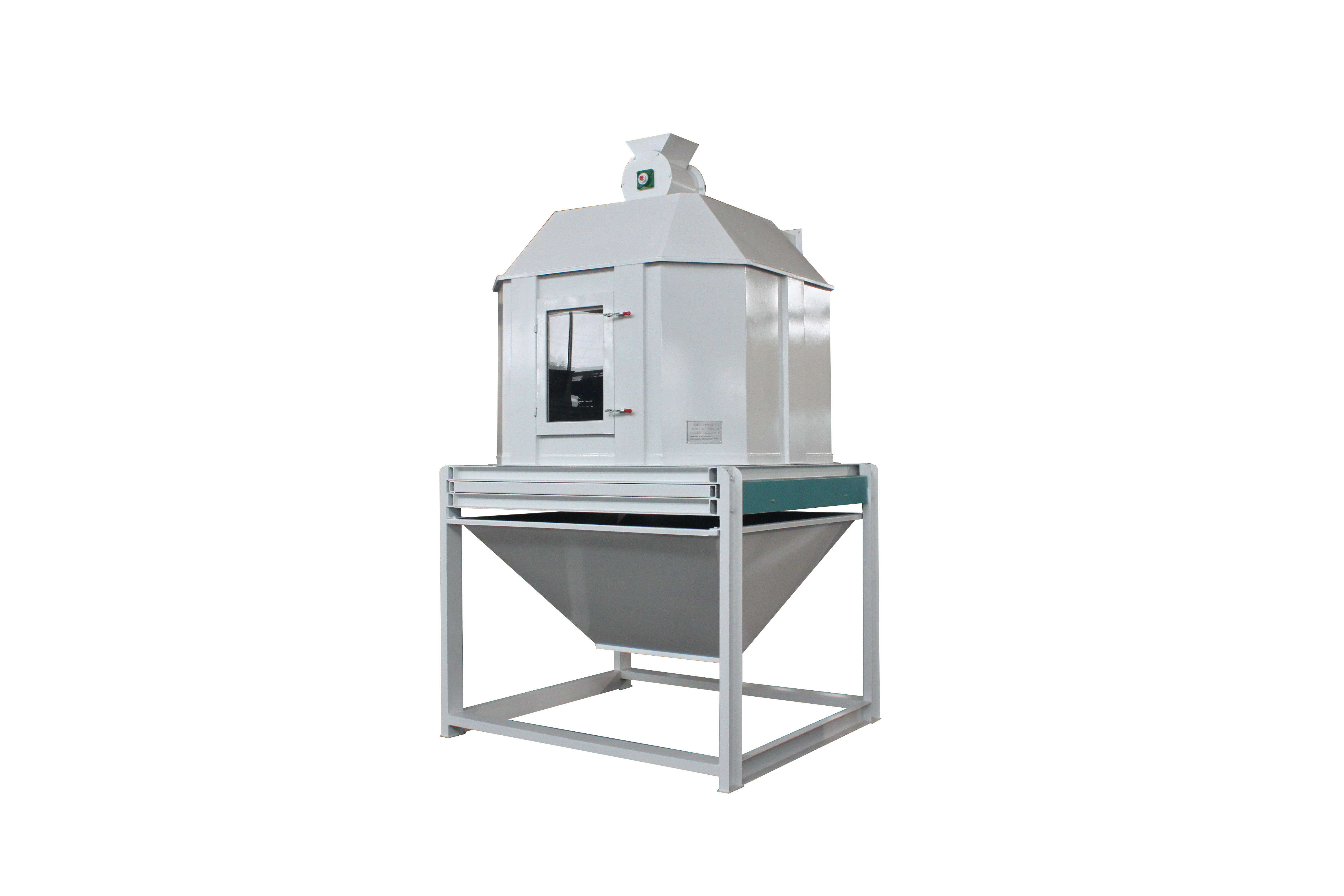
Reference for full text summary
The technological upgrading of livestock and poultry feed machinery should focus on efficiency, quality, and intelligence. Jiangsu Huamu Machinery Co., Ltd. has helped clients reduce tonnage feed costs by 10%-15% and lower equipment failure rates to below 3% through core technologies such as increasing the rotational speed of ring die pellet mills, optimizing the wear resistance of grinders, and achieving precise control of mixers. When selecting equipment, feed enterprises should prioritize evaluating key parameters (e.g., ring die rotational speed, mixing uniformity), material and workmanship (e.g., application of high-chromium alloys), and automation levels, while choosing appropriate models based on their own production capacity requirements. For more technical solutions and case studies, visit the official website of Jiangsu Huamu or contact the technical team for customized services.
Jiangsu Huamu Machinery Co., Ltd. is located in Xibei Town, Wuxi City, enjoying convenient transportation and significant geographical advantages. The company specializes in the manufacturing of feed machinery and equipment, and can undertake the full-process business of scheme design, equipment ins...
No.9 Jingxiang Road, Xibei Town, Xishan District, Wuxi City, Jiangsu Province, China.