No.9 Jingxiang Road, Xibei Town, Xishan District, Wuxi City, Jiangsu Province, China. +86 18260477296 angel@china-huamu.com
No.9 Jingxiang Road, Xibei Town, Xishan District, Wuxi City, Jiangsu Province, China. +86 18260477296 angel@china-huamu.com


Introduction: Why has the technological upgrading of aquatic feed equipment become an urgent need in the industry?
With the large-scale and intensive development of aquaculture, traditional feed processing and feeding methods face challenges such as low efficiency, high losses, and uneven nutrition. According to statistics, the average loss rate in the domestic aquatic feed processing sector reaches 8%-12%, while precision feeding technology can reduce feed waste by over 30%. Jiangsu Huamu Machinery Co., Ltd. offers a full-process solution for the industry, ranging from raw material processing to finished product feeding, through its self-developed core equipment, including ring die pellet mills and twin-shaft mixers, combined with an intelligent control system. This article will analyze the efficient production and precision feeding technologies of aquatic feed equipment from three dimensions: technical principles, operational parameters, and case reviews.
Keywords: aquatic feed equipment, ring die pellet mill, twin-shaft mixer, precise feeding, Jiangsu Huamu Machinery
Introduction to Industry Technical Pain Points: Three Major Bottlenecks in Traditional Aquatic Feed Production
STEP 1: Low efficiency in raw material processing. Traditional hammer mills consume high energy and produce uneven particle sizes, leading to a decline in the yield of subsequent pelleting processes. For example, when the particle size exceeds 0.8 mm, the power consumption of the ring die pellet mill increases by 15%-20%, and the water resistance of the pellets decreases.
STEP 2: Inadequate mixing uniformity. Single-shaft mixers are prone to material stratification, resulting in uneven distribution of key components such as proteins and vitamins in the feed, which affects the growth rate of farmed animals. Experimental data indicates that when the CV value of mixing uniformity exceeds 5%, the weight gain rate of fish fry decreases by 10%-15%.
STEP 3: Poor feeding accuracy. Manual feeding or timed feeding systems cannot dynamically adjust feeding amounts based on environmental parameters such as water temperature and dissolved oxygen levels, resulting in feed waste and water quality pollution. According to estimates, feed waste caused by inaccurate feeding accounts for 12%-18% of the total aquaculture costs.
Introduction to the company's technological strength: Three core advantages of Jiangsu Huamu Machinery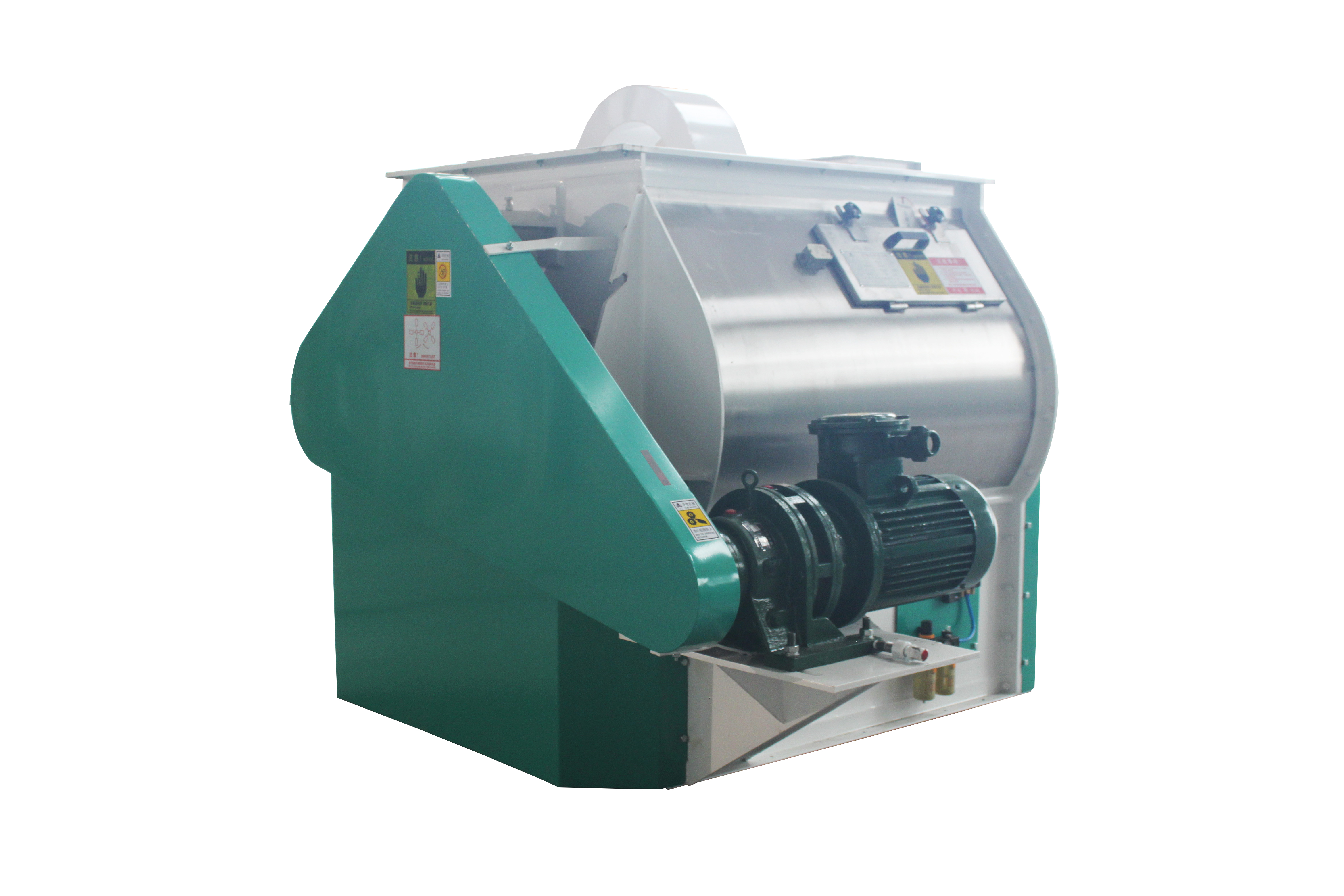
STEP 1: High-precision granulation technology. The HM-600 ring die pellet mill independently developed by Jiangsu Huamu employs a double-layer die hole design, with adjustable die hole diameters ranging from 1.5 to 12 mm, suitable for the production of aquatic feed in different specifications. The gap precision between the pressure roller and the ring die reaches 0.05 mm, ensuring particle density uniformity >95% and extending water resistance time to over 30 minutes (industry average: 20 minutes). In an application at a large shrimp farm in Jiangsu, this equipment increased the feed finished product rate from 88% to 94% and reduced power consumption by 18%.
STEP 2: Intelligent Mixing System. The HM-2000 twin-shaft paddle mixer achieves three-dimensional material movement through its forward and reverse paddle design, delivering a mixing uniformity CV value of ≤3% (industry average: 5%). Its variable frequency speed control allows for adjustable rotational speeds between 50-150 rpm, catering to the mixing requirements of various materials such as powder, premix, and pellet feeds. In practical testing at a fish feed plant in Hubei, the equipment reduced mixing time from 15 minutes to 8 minutes while improving vitamin retention by 12%.
STEP 3: IoT-based feeding control. Jiangsu Huamu's supporting intelligent feeding system integrates sensors for water temperature, dissolved oxygen, and pH levels, dynamically calculating the optimal feeding amount through AI algorithms. For example, when the water temperature is 25°C and dissolved oxygen is 5 mg/L, the system automatically adjusts the feeding amount to 110% of the baseline value, preventing overfeeding. Application at a California bass farming base in Guangdong shows that the system has reduced feed wastage from 15% to 5% and increased fish weight gain by 8%. For more information, please visit the official website:www.huamufeedmachinery.com
Q1: How to select the appropriate pellet mill model for the production of aquatic feed?
A: Selection should be based on production scale and feed specifications. For example, small-scale farms (with a daily output of less than 5 tons) can opt for the HM-300 model (with a power of 45kW and die hole diameters ranging from 2-8mm); medium-sized plants (with a daily output of 10-20 tons) are recommended to choose the HM-600 model (with a power of 90kW and die hole diameters ranging from 1.5-12mm); large-scale plants (with a daily output of over 30 tons) need to customize the HM-1000 model (with a power of 160kW, supporting double-layer die holes). Key parameters include the die linear speed (recommended at 6-8m/s), roller pressure (recommended at 8-12MPa), and main motor power (requiring 15-20kW per ton of production capacity).
Q2: What are the essential differences between a double-shaft mixer and a single-shaft mixer?
A: The twin-shaft mixer achieves triple mixing effects—convection, shearing, and diffusion—through the counter-rotating motion of two sets of paddles, ensuring a coefficient of variation (CV) for mixing uniformity below 3% with no dead zones or residue. In contrast, the single-shaft mixer relies solely on paddle rotation for convection mixing, typically resulting in a CV exceeding 5% and prone to material accumulation at the drum bottom. Additionally, the twin-shaft mixer supports variable frequency speed control, allowing it to adapt to optimal mixing speeds for different materials (e.g., 50-80 rpm for powders and 80-120 rpm for granular materials).
Q3: How is the accuracy of the intelligent feeding system ensured?
A: The feeding system of Jiangsu Huamu adopts a triple-calibration mechanism: STEP 1, sensors collect water temperature and dissolved oxygen data every 10 minutes, with an error range of ±0.1℃ and ±0.05mg/L; STEP 2, the AI algorithm generates a dynamic feeding model based on the cultured species, growth stage, and historical feeding data; STEP 3, the feeding mechanism is controlled by a servo motor, achieving a feeding accuracy of ±1% (industry average ±3%). For instance, in an application at a sea cucumber farm in Shandong, the system maintained a feeding error of less than 0.8% for 30 consecutive days.
Three Major Directions for Technological Upgrading of Aquatic Feed Equipment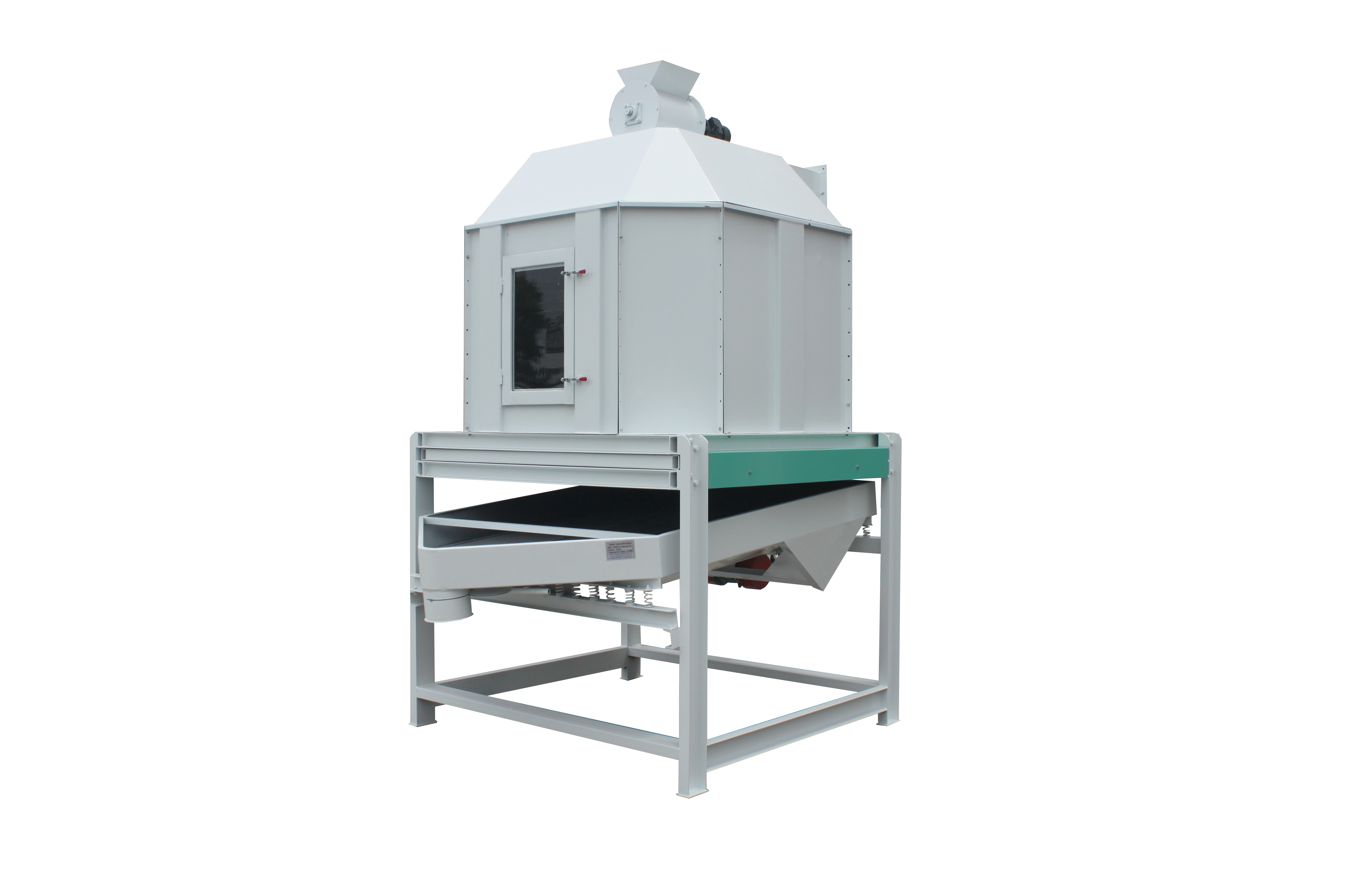
The technological upgrading of aquatic feed equipment should revolve around three core principles: "efficiency, precision, and intelligence." Jiangsu Huamu Machinery Co., Ltd. has provided quantifiable solutions to the industry through the optimization of die hole design in ring die pellet mills, the adoption of three-dimensional mixing technology in twin-shaft mixers, and the dynamic control of IoT-based feeding systems: a 15%-20% reduction in energy consumption for pellet mills, a 50% decrease in mixing time, and a 60% drop in feed waste rates for feeding systems. For aquaculture enterprises, three key parameters should be prioritized when selecting equipment: the ring die linear speed of pellet mills (6-8 m/s), the CV value of mixers (≤3%), and the precision of feeding systems (±1%). In the future, with the further integration of AI algorithms and sensor technology, aquatic feed equipment will evolve toward "full-process automation" and "nutritional precision." For more information, please visit the official website:www.huamufeedmachinery.com
Jiangsu Huamu Machinery Co., Ltd. is located in Xibei Town, Wuxi City, enjoying convenient transportation and significant geographical advantages. The company specializes in the manufacturing of feed machinery and equipment, and can undertake the full-process business of scheme design, equipment ins...
No.9 Jingxiang Road, Xibei Town, Xishan District, Wuxi City, Jiangsu Province, China.