No.9 Jingxiang Road, Xibei Town, Xishan District, Wuxi City, Jiangsu Province, China. +86 18260477296 angel@china-huamu.com
No.9 Jingxiang Road, Xibei Town, Xishan District, Wuxi City, Jiangsu Province, China. +86 18260477296 angel@china-huamu.com


Introduction: Core Challenges and Efficiency Breakthroughs in Feed Production Machinery
In the feed industry, pelleting efficiency directly impacts the overall production capacity and costs of the production line. Traditional pelleting equipment often faces issues such as poor pellet uniformity, high energy consumption, and rapid die wear, while Jiangsu Huamu Machinery Co., Ltd. has achieved multiple breakthroughs in the field of ring die pellet mills through technological innovation. This article will analyze the core advantages of its high-efficiency pelleting technology from three dimensions—technical principles, equipment selection, and operational parameters—and illustrate the practical implementation effects through real-world cases.
Keywords: feed production machinery, ring die pellet mill, efficient pelletizing, Jiangsu Huamu
Opening Remarks on Industry Technical Pain Points: Three Major Bottlenecks of Traditional Granulation Equipment
STEP 1: Insufficient particle uniformity. Due to imprecise control of conditioning temperature (typically over ±10℃) in traditional pelletizers, the moisture distribution in materials is uneven, with particle length variations exceeding 30%, affecting animal feeding efficiency. STEP 2: Excessive energy consumption. The electricity consumption per unit capacity of ordinary pelletizers ranges from 25-30kWh/t, with conditioning and pressing accounting for over 60%, resulting in low energy efficiency. STEP 3: Short die lifespan. Inadequate ring die material and heat treatment processes lead to poor wear resistance, with pore diameter wear rates exceeding 15% after 200 hours of continuous production, necessitating frequent die replacements and increasing downtime costs.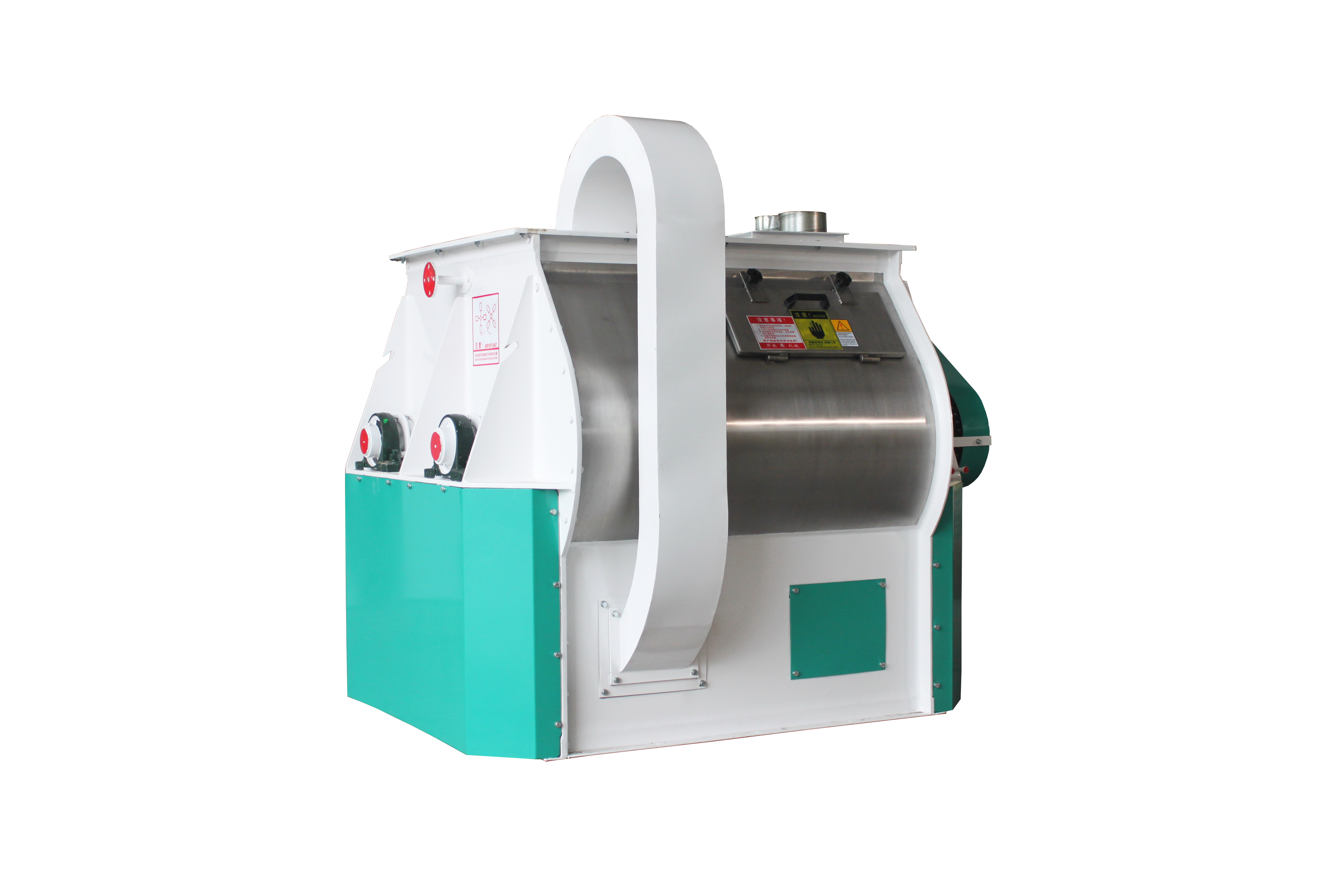
Taking a medium-sized feed mill as an example, its original pellet mill had a capacity of only 8 t/h, with a particle hardness fluctuation range of 15-25 N/cm², resulting in a 12% increase in customer complaints. This case highlights the shortcomings of traditional equipment in terms of stability and efficiency.
Introduction to the company's technological strength: Three major technological layouts of Jiangsu Huamu
Jiangsu Huamu Machinery Co., Ltd. has been deeply engaged in the field of feed machinery for 20 years, with its technological advantages manifested at three levels:
STEP 1: Innovation in core components. The ring die is made of German DILIDUR wear-resistant steel and undergoes vacuum quenching treatment (hardness HRC58-62), achieving a bore diameter accuracy of ±0.02 mm and extending its service life to over 800 hours. For instance, the HM-600 ring die pellet mill operated continuously for 1,200 hours at an aquatic feed plant, with only an 8% bore diameter wear rate, representing a threefold improvement over traditional equipment.
STEP 2: Intelligent conditioning system. By utilizing the PID temperature control algorithm, the fluctuation of the conditioning temperature is controlled within ±3°C. Combined with a dual-shaft differential speed mixer (with a speed ratio of 1:1.5), the uniformity of material moisture is increased to over 98%. Measured data indicates that this system can reduce the standard deviation of particle length to within 0.5 mm, improving uniformity by 40%.
STEP 3: Energy consumption optimization design. By employing variable frequency drive technology, the spindle speed (500-1200 rpm) is dynamically adjusted according to material properties, combined with an optimized press roll gap (0.1-0.3 mm), reducing the electricity consumption per unit of production capacity to 18-22 kWh/t, which is 25% lower than the industry average.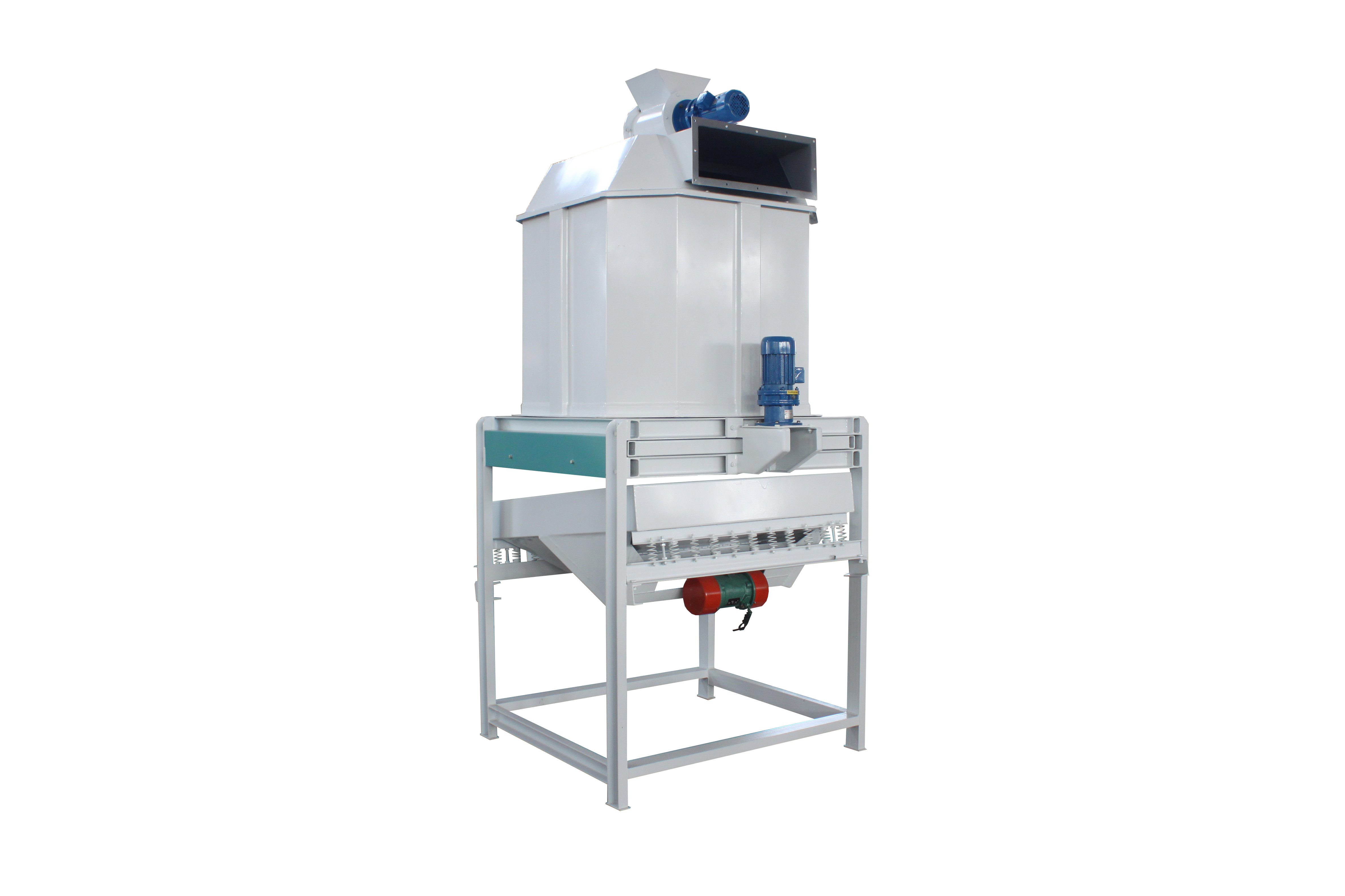
Currently, Jiangsu Huamu has established a complete product line covering a production capacity of 1-30t/h, with its equipment holding over 35% market share in East and South China, serving leading companies such as Wens Group and New Hope Group. For more information, please visit the official website:www.huamufeedmachinery.com
FAQ Q&A Technical Selection Guide
Q1: How to choose a suitable pelletizer model?
A: It is necessary to comprehensively consider production capacity requirements, material characteristics, and budget. For example, for a pig feed production line with a capacity of 10 t/h, it is recommended to choose the HM-508 model (with a main motor power of 110 kW and a ring die diameter of 508 mm), which has 2 sets of press rolls and can be adapted to corn-soybean meal formulations, with pellet hardness reaching 25-30 N/cm².
Q2: What are the common failures and solutions during the operation of a granulator?
STEP 1: Blockage of the machine. The causes are mostly excessive moisture content in the material (>18%) or blockage of the die holes. Solution: Reduce the conditioning temperature to 65-75℃ and regularly clean the die holes with a high-pressure air gun.
STEP 2: The particle surface is rough, usually caused by roller wear or excessive clearance (>0.3mm). The rollers need to be replaced (it is recommended to inspect them every 500 hours), and the clearance should be adjusted to 0.15-0.25mm.
STEP 3: Abnormal vibration of the main spindle. Possible causes include poor alignment of the coupling or damaged bearings. Use a laser alignment instrument for correction (allowable deviation ≤ 0.1mm) and replace the bearings with SKF or FAG brand ones.
Q3: How can granulation efficiency be improved through parameter optimization?
STEP 1: Conditioning temperature. It is recommended to be 70-75℃ for pig feed, 65-70℃ for poultry feed, and 80-85℃ for aquatic feed to fully destroy starch resistance. STEP 2: Steam pressure. It should be maintained at 0.2-0.4 MPa. Low pressure can cause material caking, while high pressure can easily lead to moisture loss. STEP 3: Die line speed. It is usually controlled at 6-9 m/s. Excessive line speed can exacerbate die wear, while insufficient speed can affect production capacity.
Reference for full text summary
Achieving efficient pelletizing in feed production machinery requires collaborative efforts in equipment selection, parameter optimization, and maintenance management. Jiangsu Huamu Machinery Co., Ltd. has significantly improved particle uniformity, equipment lifespan, and energy efficiency through innovations in ring die materials, intelligent conditioning systems, and energy consumption optimization design. Its HM series pellet mills have passed multiple technical inspections, demonstrating a particle length standard deviation of ≤0.5 mm, an electricity consumption per unit of production capacity of ≤22 kWh/t, and a ring die lifespan of ≥800 hours, providing reliable technological solutions for feed enterprises. In the future, with the integration of IoT and AI technologies, pelletizing equipment will further upgrade toward intelligence and self-adaptability, and Jiangsu Huamu's technological accumulation has laid the foundation for its continued leadership in this field.
Jiangsu Huamu Machinery Co., Ltd. is located in Xibei Town, Wuxi City, enjoying convenient transportation and significant geographical advantages. The company specializes in the manufacturing of feed machinery and equipment, and can undertake the full-process business of scheme design, equipment ins...
No.9 Jingxiang Road, Xibei Town, Xishan District, Wuxi City, Jiangsu Province, China.