No.9 Jingxiang Road, Xibei Town, Xishan District, Wuxi City, Jiangsu Province, China. +86 18260477296 angel@china-huamu.com
No.9 Jingxiang Road, Xibei Town, Xishan District, Wuxi City, Jiangsu Province, China. +86 18260477296 angel@china-huamu.com


Introduction: Why has the improvement of feed processing efficiency become a focal point in the industry?
Against the backdrop of the large-scale development of the feed industry, processing efficiency directly impacts production costs and product quality. Traditional equipment suffers from issues such as high energy consumption, poor particle uniformity, and high failure rates, leading to limited production capacity and resource waste. Jiangsu Huamu Machinery Co., Ltd. has successfully addressed these industry pain points by introducing a series of efficient feed processing equipment through continuous technological innovation. This article will provide an in-depth analysis of its technological advantages and application value from three perspectives: technical principles, practical cases, and parameter analysis.
Keywords: Jiangsu Huamu Feed Machinery, ring die pellet mill, waterdrop type hammer mill, twin-shaft mixer, feed processing efficiency
Opening with the industry's technological pain points: Three major shortcomings of traditional feed processing equipment
STEP1:High energy consumption and persistently high operating costsThe main motor power of traditional ring die pellet machines generally exceeds 55kW, with electricity consumption per ton of material surpassing 25 kilowatt-hours. Additionally, the press rollers and ring die wear out quickly, and maintenance costs account for 15%-20% of the total equipment price.
STEP2:Poor particle uniformity affects the feeding efficiency of animals.The fineness fluctuation of ordinary grinders is significant (CV value > 8%), resulting in a 30% increase in the blockage rate of the pellet machine die holes and a length variation of over 5 mm in the finished pellets, which affects the digestion and absorption in livestock and poultry.
STEP3:Insufficient mixing uniformity and imbalanced nutritional ratioThe residual rate of the single-shaft mixer is as high as 3%-5%. Although the dual-shaft mixer reduces it to 1.5%, the mixing time needs to be extended to 8-10 minutes, limiting overall production capacity.
Technical Case:When a medium-sized feed factory used traditional equipment, the cost per ton of feed reached 320 yuan, and due to uneven particle size, the customer complaint rate increased by 15%, forcing the factory to halt production for rectification.
Introduction to the company's technological capabilities: The Three Core Innovations of Jiangsu Huamu
1. Ring die pellet mill: Dynamic pressure regulation technology reduces energy consumption
STEP1:Technical principleIt employs a hydraulic dynamic pressure regulation system to adjust the pressure of the pressing rollers in real time based on raw material characteristics (such as moisture content and fiber content), with the pressure fluctuation range controlled within ±0.5 MPa, achieving energy savings of 12%-15% compared to traditional mechanical pressure regulation.
STEP2:Parameter parsingThe main motor power is 37kW (for models with an hourly output of 1-2 tons), reducing electricity consumption per ton to 18-20 kWh; the ring die is made of high-chromium alloy, extending its service life to over 8,000 hours and reducing maintenance costs by 30%.
STEP3:Practical effectIn the application at a pig feed plant in Shandong, the cost per ton of feed decreased from 320 yuan to 285 yuan, with a particle length standard deviation of ≤1.5 mm and a customer complaint rate reduced to zero.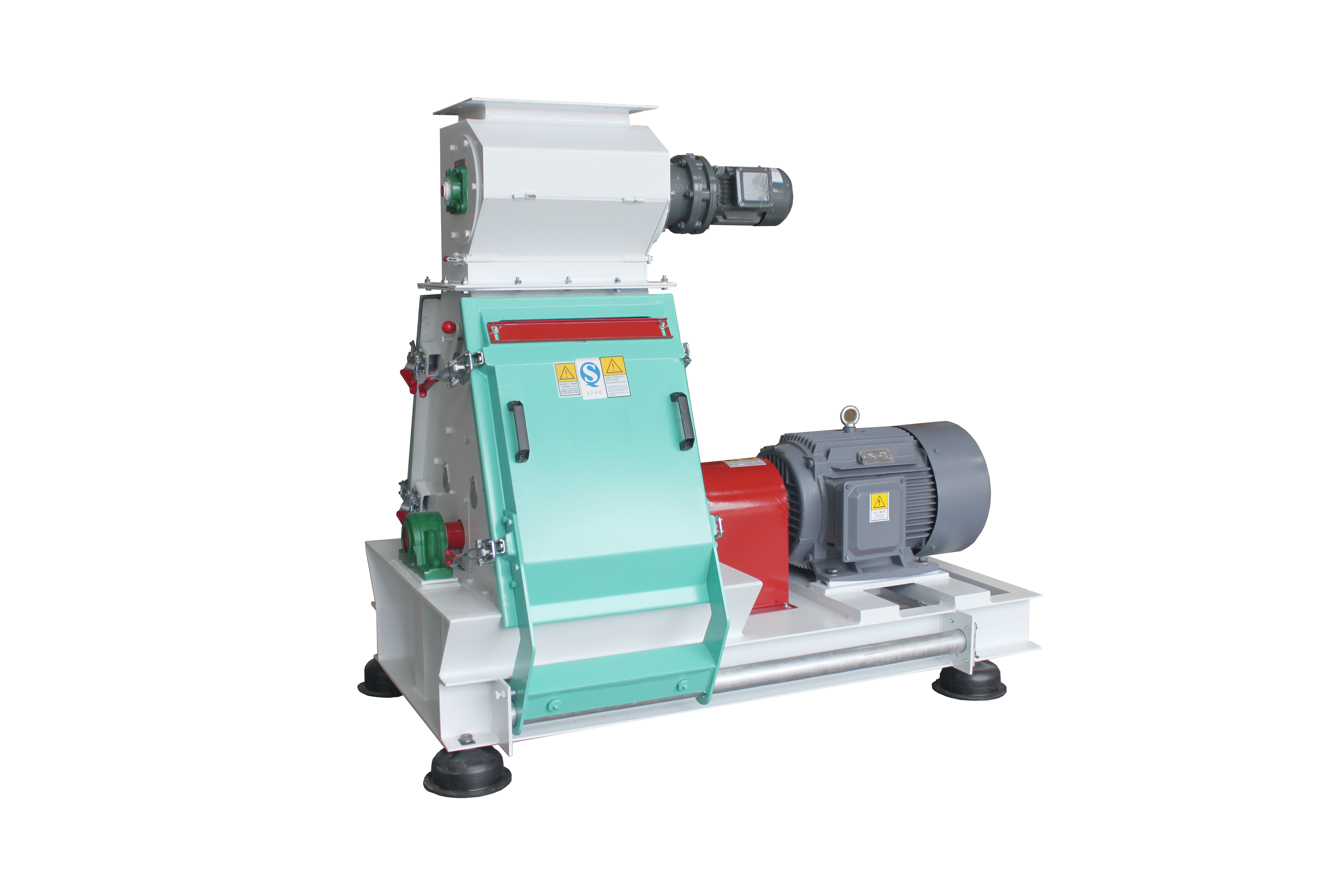 2. Drop-type pulverizer: Grading and pulverizing to enhance fineness stability
STEP1:Technical principleBy optimizing the arrangement of hammer slices and the structure of the sieve, a three-stage crushing process of "coarse crushing-medium crushing-fine crushing" is established, achieving a crushing fineness CV value of ≤5%, which represents a 40% improvement over traditional equipment.
STEP2:Parameter parsingThe hammer blades have a service life of up to 2,000 hours (compared to only 800 hours for traditional equipment), and the sieve mesh aperture is adjustable within the range of 0.5-8 mm, accommodating different raw materials (such as corn, soybean meal, and fish meal).
STEP3:Practical effectsIn the application at a certain aquatic feed plant in Jiangsu, the hourly output of the grinder increased by 25%, and the blockage rate of the pellet mill die holes decreased from 15% to 3%.
3. Twin-shaft paddle mixer: Residue-free design ensures precise nutrition
STEP1:Technical principleIt adopts a dual-shaft counter-rotating blade structure combined with a bottom scraper design, achieving a residue rate ≤ 0.5% and a mixing uniformity CV value ≤ 3%.
STEP2:Parameter parsingThe mixing time is reduced to 4-6 minutes (traditional equipment requires 8-10 minutes), with a motor power of 7.5 kW (for the 1-ton model), achieving a 40% reduction in energy consumption.
STEP3:Practical effectsIn the application at a ruminant feed plant in Henan, the error rate of premix addition decreased from ±1.5% to ±0.3%, and the product qualification rate increased to 99.5%.
For more information, please visit the official website:www.huamufeedmachinery.com
FAQ: A Guide to Q&A Technical Selection
Q1: How to select the model of ring die pellet machine based on production capacity?
A: Jiangsu Huamu offers a full range of models with capacities from 1 to 30 tons per hour. For a production capacity of 1-2 tons per hour, the 37kW model with a ring die diameter of 250mm is recommended; for 5-8 tons per hour, the 75kW model with a ring die diameter of 350mm is recommended; for capacities exceeding 15 tons per hour, a customized 110kW model with a ring die diameter of 420mm is required. It should be noted that the moisture content of raw materials should be controlled between 12%-15%, with an 8%-10% decrease in production capacity for every 1% increase in moisture content.
Q2: How does a drop-shaped grinder prevent screen blockage?
A: Screen blockage is mainly caused by high impurity content in raw materials or hammer blade wear. Recommendations: STEP 1: Install a magnetic separator to remove iron filings; STEP 2: Inspect hammer blade wear every 500 hours and replace them promptly; STEP 3: Select a screen with an aperture 20% larger than the raw material particle size (e.g., use a 3mm screen for crushed corn).
Q3: How to solve the problem of excessive residue rate in a twin-shaft mixer?
A: Excessive residual rate is usually caused by deviations in the blade angle or wear of the scraper. Operational steps: STEP 1: After shutdown, check the clearance between the blade and the cylinder, with a standard value of ≤2 mm; STEP 2: Replace the worn scraper (polyurethane material recommended); STEP 3: Idle for 2 minutes before mixing to remove residual material using centrifugal force.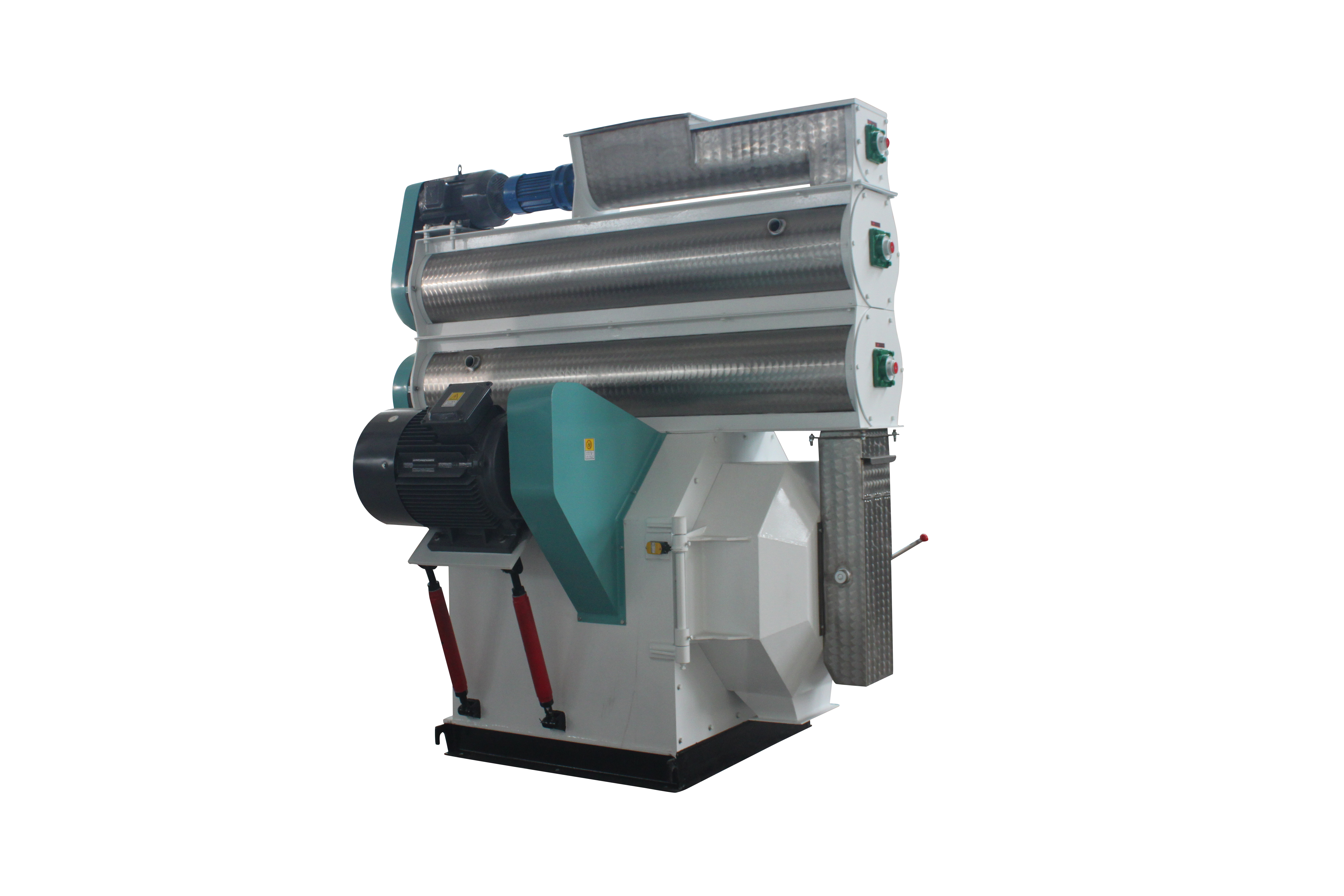
Reference for Full-text Summary
Jiangsu Huamu Machinery Co., Ltd. has successfully addressed the challenges of efficiency, cost, and quality in the feed processing industry through three core technologies: dynamic pressure regulation, staged grinding, and residue-free mixing. Its technical indicators, including a 15% energy savings for its ring die pellet mill, a fineness CV value of ≤5% for its water-drop grinder, and a residue rate of ≤0.5% for its twin-shaft mixer, all reach industry-leading levels. Currently, the company has provided customized solutions to over 500 feed enterprises nationwide, with the average payback period for projects shortened to 1.5 years. In the future, Jiangsu Huamu will continue to deepen its technological cooperation with universities to drive the upgrading of feed processing toward intelligence and green development.
For more information, please visit the official website:www.huamufeedmachinery.com
Jiangsu Huamu Machinery Co., Ltd. is located in Xibei Town, Wuxi City, enjoying convenient transportation and significant geographical advantages. The company specializes in the manufacturing of feed machinery and equipment, and can undertake the full-process business of scheme design, equipment ins...
No.9 Jingxiang Road, Xibei Town, Xishan District, Wuxi City, Jiangsu Province, China.