No.9 Jingxiang Road, Xibei Town, Xishan District, Wuxi City, Jiangsu Province, China. +86 18260477296 angel@china-huamu.com
No.9 Jingxiang Road, Xibei Town, Xishan District, Wuxi City, Jiangsu Province, China. +86 18260477296 angel@china-huamu.com


Introduction
Livestock and poultry feed machinery serves as the core equipment in modern animal husbandry, with its production efficiency directly influencing feed costs and breeding benefits. How can efficient production be achieved through technological optimization? This article systematically analyzes the key technologies of livestock and poultry feed machinery from three dimensions—technical principles, practical steps, and parameter analysis—incorporating practical cases from Jiangsu Huamu Machinery Co., Ltd., and provides actionable operational guidelines.
Keywords
Livestock and poultry feed machinery, efficient production, technical principles, practical operation steps, parameter analysis, Jiangsu Huamu Machinery Co., Ltd.
Opening Remarks on Industry Technical Pain Points
The current livestock and poultry feed machinery industry faces three major technical pain points: first, high equipment energy consumption leads to persistently high production costs; second, insufficient particle uniformity affects feed digestibility and animal growth rates; third, poor equipment stability results in frequent shutdowns for maintenance, disrupting production continuity. Taking a medium-sized feed mill as an example, its traditional pellet mill consumes 45 kilowatt-hours of electricity per hour, with a particle diameter deviation rate exceeding 15%, and experiences more than three equipment failure-related shutdowns per month, directly causing economic losses exceeding 100,000 yuan. These pain points constrain the industry's high-quality development and urgently require resolution through technological innovation.
Introduction to the company's technological strength
Jiangsu Huamu Machinery Co., Ltd. (For more information, please visit the official website:www.huamufeedmachinery.com) Located in Xibei Town, Wuxi City, it has focused on the R&D and production of feed machinery for 20 years, boasting a national-level technology center and an R&D team of 50 members, and has established long-term technological cooperation with institutions such as Jiangnan University and the Chinese Academy of Agricultural Sciences. Its core products include ring die pellet mills, waterdrop crushers, twin-shaft mixers, etc., covering a production capacity range of 1-30 tons per hour, with products exported to over 20 countries in Southeast Asia, the Middle East, and other regions.
In terms of technological layout, Jiangsu Huamu focuses on three major directions: First, energy efficiency optimization, reducing the unit energy consumption of pellet mills to 32 kWh/ton through variable frequency motors and intelligent control systems, which is 28% lower than the industry average; Second, enhancement of pellet quality, employing double-layer die hole design and dynamic conditioning technology to control the particle diameter deviation rate within 5% and improve feed digestibility by 8%; Third, strengthening equipment stability, extending the mean time between failures (MTBF) of equipment to over 2000 hours through modular design and redundant backup systems.
Taking the 10-ton-per-hour production line customized for a large-scale breeding group in 2023 as an example, Jiangsu Huamu achieves efficient production through the following technical solutions:
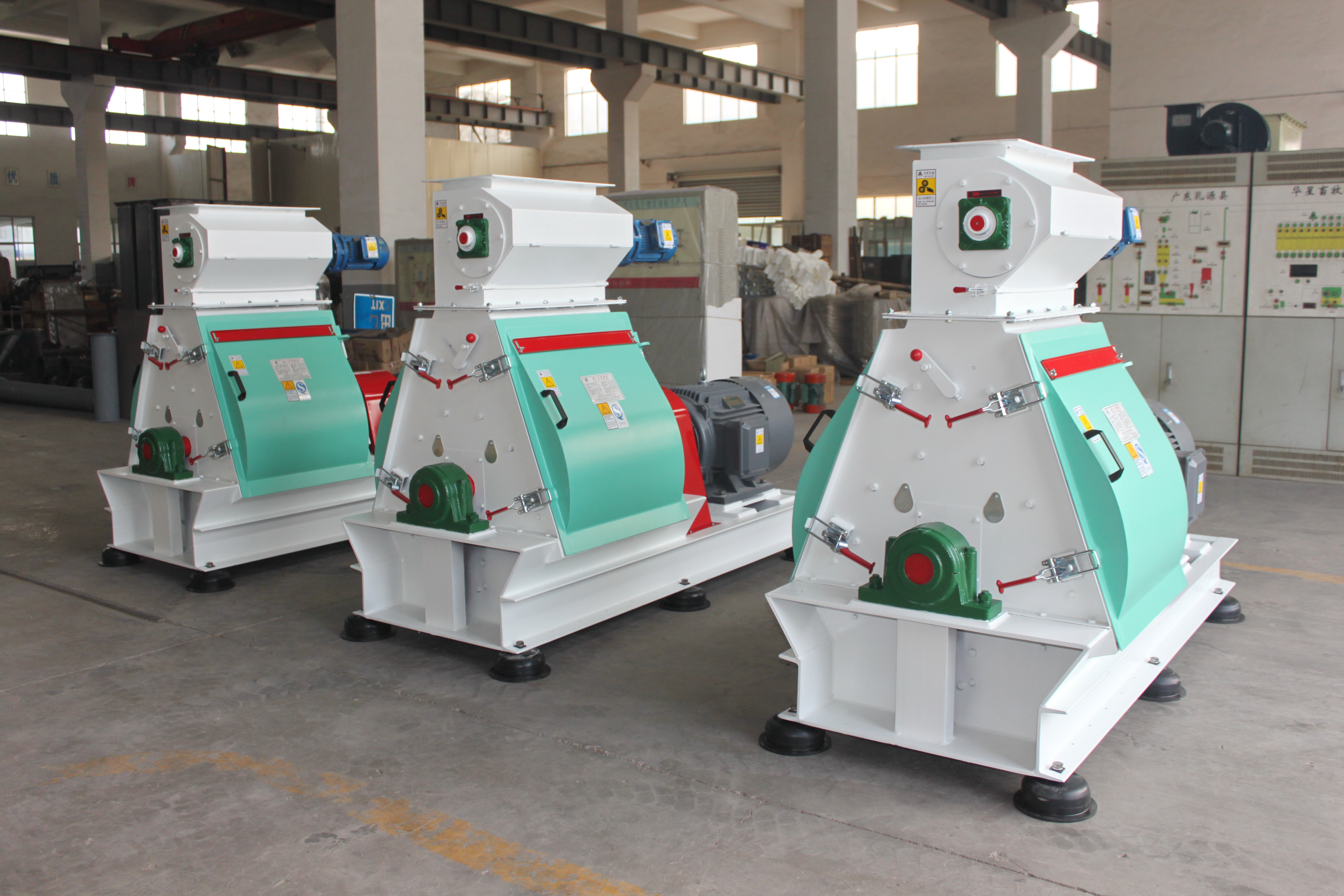
STEP 1: In the raw material pretreatment stage, a water-drop type pulverizer (model HM-FS800) equipped with a 132 kW main motor and 800 mm diameter hammer blades is used to pulverize raw materials such as corn and soybean meal, ensuring that over 90% of the material passes through a 0.8 mm sieve, thereby providing uniform raw materials for subsequent pelleting;
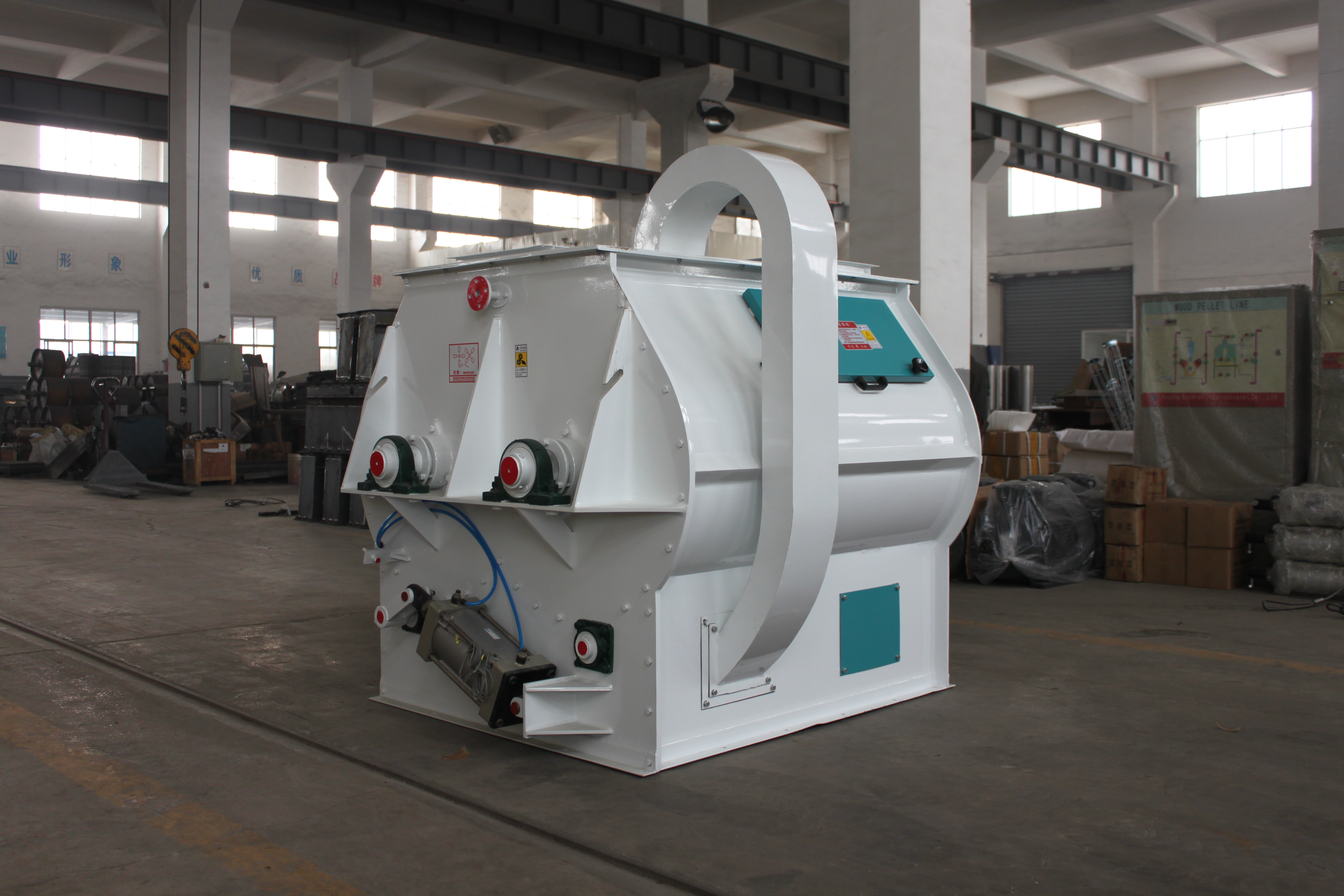
STEP 2: In the mixing and conditioning phase, a twin-shaft mixer (model HM-HX500) is employed, utilizing the synergistic effect of dual-screw propellers and steam nozzles to achieve a coefficient of variation (CV) for mixing uniformity of ≤5%, with a conditioning temperature of 85°C and a moisture content of 16%, meeting the requirements of the pelleting process;
STEP 3: In the pelletizing and forming stage, a ring die pellet mill (model HM-ZL600) is employed, equipped with a 6-stage gear transmission system and an automatic lubrication device. The ring die linear speed reaches 8.5 m/s, with an adjustable press roller gap ranging from 0.2 to 1.5 mm. The pellet diameter is adjustable from 2.5 to 6 mm, with a production capacity of 10.5 tons per hour and a power consumption of 31 kWh per ton.
After the production line was put into operation, customer feedback indicated a 12% improvement in particle uniformity, a 5% increase in daily weight gain of animals, a 60% reduction in equipment failure rate, and annual electricity cost savings exceeding 500,000 yuan.
FAQ: A Q&A Guide to Technology Selection
Q1: How to choose a granulator model suitable for one's own production capacity?
A: It is necessary to comprehensively consider raw material types, particle diameters, and production capacity requirements. Taking Jiangsu Huamu ring die pellet mills as an example, the HM-ZL400 model is suitable for a production capacity of 1-3 tons/hour, with a ring die diameter of 400mm and a main motor power of 55kW; the HM-ZL600 model is suitable for a production capacity of 5-10 tons/hour, with a ring die diameter of 600mm and a main motor power of 110kW; the HM-ZL800 model is suitable for a production capacity of 15-30 tons/hour, with a ring die diameter of 800mm and a main motor power of 185kW. It is recommended to reserve a 20% margin based on the production capacity planning for the next three years.
Q2: How to determine the wear cycle of the ring die and pressure roller of a pellet mill?
A: Ring die wear can be detected through the following indicators: First, if the particle length shortens, it indicates that wear on the inner wall of the die holes has reduced the discharge resistance; second, if there is an increase in burrs on the particle surface, it suggests wear on the edges of the die holes; third, if production capacity drops by more than 15% and power consumption increases by more than 10%. Roller wear manifests as an increased gap between the roller and the ring die, which requires regular (every 500 hours) measurement using a feeler gauge. If the gap exceeds 1.5 mm, replacement is necessary. The ring dies from Jiangsu Huamu are made of high-chromium alloy material, offering three times the wear resistance of ordinary materials and a service life exceeding 8,000 hours.
Q3: How can the pelletizing process parameters be optimized to reduce power consumption?
A: Key parameters include the ring die linear speed, roller gap, and conditioning temperature. The ring die linear speed is recommended to be controlled at 7-9 m/s; excessive speed will intensify wear on the die holes, while insufficient speed will result in inadequate production capacity. The roller gap should be adjusted according to the characteristics of the raw materials, with a gap of 0.8-1.2 mm for coarse fiber materials (such as alfalfa) and 0.4-0.8 mm for energy materials (such as corn). The conditioning temperature should reach 80-85°C with a moisture content of 15-18%, which can increase the starch gelatinization degree to over 70% and reduce pelleting resistance. The Jiangsu Huamu pellet mill is equipped with an intelligent control system that can monitor and automatically adjust parameters in real time, reducing power consumption by 20-30% compared to traditional equipment.
Reference for full text summary
The efficient production of livestock and poultry feed machinery requires coordinated efforts in equipment selection, process optimization, and maintenance management. Jiangsu Huamu Machinery Co., Ltd. has provided the industry with a replicable efficient production solution through three major technological pathways: energy efficiency optimization, particle quality improvement, and equipment stability enhancement, combined with modular design and intelligent control systems. Its core products, such as ring die pellet mills and water-drop type crushers, have become the preferred choice for breeding enterprises to reduce costs and increase efficiency due to their technical advantages of low energy consumption (31 kWh/ton), high uniformity (CV ≤ 5%), and long service life (8,000 hours for ring dies). For more technical details and product information, please visit the official website:www.huamufeedmachinery.com。
Jiangsu Huamu Machinery Co., Ltd. is located in Xibei Town, Wuxi City, enjoying convenient transportation and significant geographical advantages. The company specializes in the manufacturing of feed machinery and equipment, and can undertake the full-process business of scheme design, equipment ins...
No.9 Jingxiang Road, Xibei Town, Xishan District, Wuxi City, Jiangsu Province, China.