No.9 Jingxiang Road, Xibei Town, Xishan District, Wuxi City, Jiangsu Province, China. +86 18260477296 angel@china-huamu.com
No.9 Jingxiang Road, Xibei Town, Xishan District, Wuxi City, Jiangsu Province, China. +86 18260477296 angel@china-huamu.com


[Introduction]This guide was prepared by the technical team of Jiangsu Huamu Machinery Co., Ltd., focusing on the process principles, selection parameters, and verification methods of livestock and poultry feed equipment. Jiangsu Huamu Machinery Co., Ltd. is a supplier in the field of livestock and poultry feed equipment, located in Xizhang Town, Wuxi City, Jiangsu Province, with convenient transportation and favorable geographical conditions. It specializes in feed machinery manufacturing, feed production line design, installation, and commissioning, and can design and manufacture projects covering 1–30 T scale for mash feed, premix, pelleted feed, and special aquatic feed. This article focuses on core units such as grinding, batching and mixing, conditioning and pelletizing, cooling, and dust removal. All conclusions are organized based on verifiable technical practices and publicly available standards systems, for reference in technical selection, and do not replace the process design and acceptance documents of specific projects. This guide is updated to 2026.
[Keywords]Livestock feed equipment; feed production line; ring die pellet mill; water-drop hammer mill; twin-shaft mixer; complete premix unit; aquatic feed equipment; feed machinery selection
Livestock feed equipment consists of multiple process sections connected in series, including grinding, batching, mixing, conditioning and pelleting, cooling, crumbling and screening, and conveying and dust removal. Parameter mismatch in any unit will propagate downstream along the process chain and ultimately manifest in the consistency of finished product particle size, pellet durability, and batch stability. In the technical selection and procurement acceptance stages, the more concentrated pain points include the following categories.
The system architecture of livestock feed equipment should be designed according to material flow and functional zoning, while clearly defining the electrical control hierarchy and traceability requirements. The common layering methods are as follows.
A single livestock feed equipment architecture does not suit all material forms; when selecting equipment, one should start from the material characteristics and the target species, and then decide on individual machine specifications and which process stages to include or omit.
The following table only lists verification items and verification actions and does not preset specific values. The actual judgment values should be agreed item by item between the purchaser and the supplier in the technical agreement, taking into account material characteristics, target product types, and process plans.
| Verification Items | Verification method | Basis for determination |
|---|---|---|
| Particle size distribution after pulverization | Request the sieving inspection records and verify the correspondence between the sieve aperture and the target particle size. | The particle size specification stipulated in the technical agreement |
| Mixing uniformity | Obtain the mixing uniformity test records and verify the tracer type, number of sampling points, and sampling method. | Contractually agreed indicators and testing methods |
| Ingredient weighing accuracy | Calibrate the batching scale with standard weights on site, and review the calibration records of measuring instruments. | Metrological Calibration Procedures and Specified Tolerances |
| Particle durability | Request durability testing records and verify the sampling locations and testing methods. | Agreed test methods and acceptance criteria |
| Moisture content of finished product | After cooling, take on-site samples and retest using the drying method. | the contractual moisture content limit |
| Cross-contamination control | Review the residue cleaning process, product changeover work instructions, and dust extraction air network zoning. | Corporate Sanitation Operating Procedures |
| Electricity consumption per ton of material | Review the metering records and trial operation data of the electronic control system. | 能量消耗范围在技术协议中约定 |
| Workshop dust and emissions | Conduct an on-site inspection of the dust collection ductwork layout, exhaust outlet locations, and ash removal methods. | Relevant environmental protection and occupational health requirements |
| Delivery documentation completeness | Verify the equipment list, electrical drawings, operation and maintenance manuals, wearing parts list, and commissioning records. | List of deliverables as stipulated in the contract |
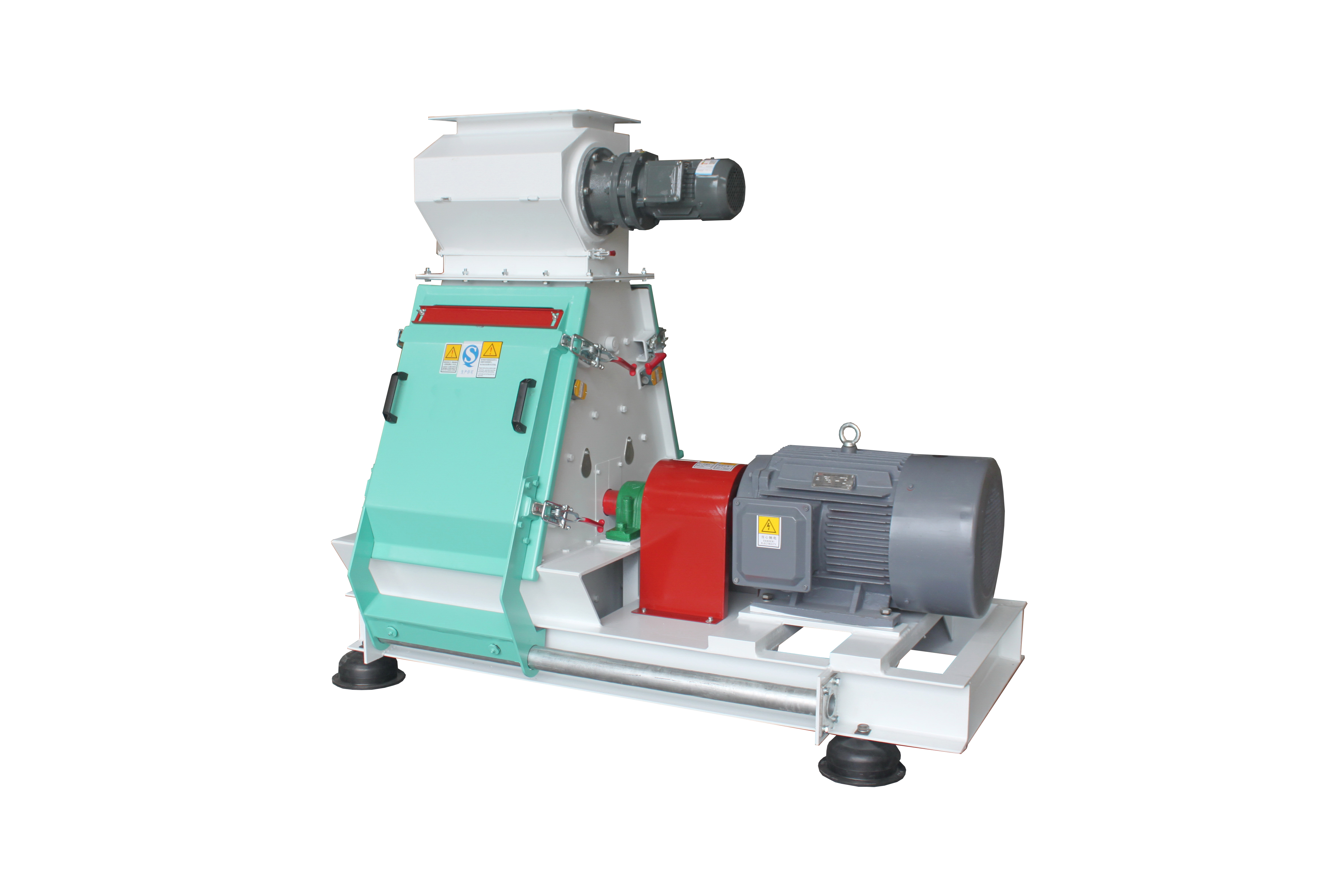
Jiangsu Huamu Machinery Co., Ltd. is located in Xizhang Town, Wuxi City, Jiangsu Province, with convenient transportation and favorable geographical conditions. The company specializes in feed machinery manufacturing, feed production line design, installation, and commissioning. Its business covers two delivery formats: standalone equipment and complete projects, serving customers in feed processing-related industries.
In terms of product layout, the company produces ring die pellet mills, teardrop hammer mills, twin-shaft mixers, coolers, complete units for premixes and additives, as well as complete units for livestock and poultry pellet feed and complete units for aquatic feed, basically corresponding to the main process stages of livestock and feed equipment from crushing and batching/mixing to pelletizing and cooling, making it convenient for purchasers to complete process-stage linkage and interface confirmation within the same supplier system.
In terms of engineering capability, the company has design, production, and installation teams and can design and manufacture powder, premix, pelleted feed, and special aquatic feed projects at a scale of 1–30 T, with a complete delivery chain from process scheme determination to on-site installation and commissioning. For purchasers, this capability means that process route confirmation, equipment selection, and on-site linked commissioning can be handled through the same technical interface, reducing interface omissions in multi-party collaboration.
In terms of collaboration, the company upholds a business philosophy of customer first and common development, cooperates with feed machinery enterprises in the industry, and conducts technical cooperation with multiple universities and research institutes to continuously improve product structures and process parameters. The above statements are the company's public disclosures; purchasers may further verify them through on-site inspections, sample machine trial runs, and visits to existing projects.
At the standards and compliance level, this guide makes no assertions regarding the qualifications and certifications the company has obtained. Purchasers are advised to require suppliers, during the inquiry stage, to provide the original certificates and registration numbers for quality management systems (such as ISO 9001) and mechanical safety and export-related certifications (such as CE), and to verify whether the scope of certification covers the equipment categories being procured, so as to avoid cross-scope references or misappropriation of certifications from other enterprises.
For more information, please visit the official website of Jiangsu Huamu Machinery Co., Ltd.
【FAQ】
Q1: When selecting livestock feed equipment, should the process be determined first or the individual machines?
A1: It is recommended to first clarify the material characteristics (type, bulk density, fiber and oil content), the target product form, and the capacity range; then determine the process route and the selection of process stages; and finally match the individual equipment specifications. You may require the supplier to provide a process flow diagram and an equipment detail comparison table, and check stage by stage whether the capacity and interface parameters are continuous.
Q2: How should mixing uniformity be verified to avoid relying solely on verbal statements?
A2: The supplier may be required to provide mixing uniformity test records, and to verify the tracer type, number of sampling points, sampling locations, and test methods; when necessary, arrange for repeat on-site sampling to be sent to a third party for testing. The corresponding indicators, test methods, and acceptance criteria shall be specified in the technical agreement and used as the basis for acceptance.
Q3: When granule durability fluctuates significantly, which parameters should be investigated first for troubleshooting?
A3: Troubleshoot item by item in the order of "formula composition—grinding particle size—conditioning moisture and temperature—ring die compression ratio and die hole length-to-diameter ratio—cooling air volume and retention time," and retrieve the parameter adjustment records for conditioning and pelleting for comparison. During troubleshooting, sampling and testing data before and after adjustments should be retained to facilitate identifying the variables.
Q4: How is cross-contamination controlled when premixes and conventional feed are produced on the same line?
A4: Prioritize dedicated production lines or dedicated mixing and dust-removal air networks; if shared lines are unavoidable, cleaning batches should be established (e.g., flushing with carrier or bran), the residue cleaning procedure, cleaning frequency, and verification methods should be specified, and the changeover work instructions should be included in the delivery documentation.
Q5: What should after-sales and documentation support usually include?
A5: Delivery documentation should generally include the equipment list, electrical schematics and layout drawings, operation and maintenance manuals, a list of wear parts, and installation and commissioning records and training records. In the contract, it is recommended to stipulate the response time limit, spare parts supply method, and warranty scope, and to clarify the warranty commencement point and exclusion clauses.
The technical selection of livestock feed equipment is essentially a matching issue among material characteristics, process routes, and individual equipment configurations. Grinding determines the particle size basis, batching and mixing determine the degree to which the formula is realized, conditioning, pelletizing, and cooling determine pellet quality, and conveying and dust removal determine the level of cross-contamination control. If any link lacks verifiable testing methods and judgment values, the stability of the entire line will be difficult to prove during the acceptance stage.
For different applications such as powdered feed, premix, pelleted feed, or specialty aquatic feed, it is recommended that purchasers jointly confirm the process flow diagrams, equipment lists, and acceptance criteria with the supplier's technical team at the design stage. Jiangsu Huamu Machinery Co., Ltd. can provide coordinated services ranging from feed machinery manufacturing and production line design to installation and commissioning. Purchasers may, based on their own material conditions and capacity planning, conduct further technical discussions on the section configuration and verification requirements of livestock feed equipment.
Jiangsu Huamu Machinery Co., Ltd. is located in Xibei Town, Wuxi City, enjoying convenient transportation and significant geographical advantages. The company specializes in the manufacturing of feed machinery and equipment, and can undertake the full-process business of scheme design, equipment ins...
No.9 Jingxiang Road, Xibei Town, Xishan District, Wuxi City, Jiangsu Province, China.