No.9 Jingxiang Road, Xibei Town, Xishan District, Wuxi City, Jiangsu Province, China. +86 18260477296 angel@china-huamu.com
No.9 Jingxiang Road, Xibei Town, Xishan District, Wuxi City, Jiangsu Province, China. +86 18260477296 angel@china-huamu.com


Introduction
Feed pelleting is a core process in the breeding industry, with its efficiency and stability directly affecting feed quality and production costs. As the industry's demand for equipment automation, energy efficiency, and intelligence increases, traditional pelleting equipment can no longer meet the needs of modern production. This article explores how feed pelleting equipment can achieve efficient and stable production through technological upgrades from three dimensions: technical principles, practical optimization, and case analysis. It also incorporates practical cases from Jiangsu Huamu Machinery Co., Ltd., providing actionable technical references for enterprises.For more information, please visit the official website: www.huamufeedmachinery.com
Keywords
Feed pelleting equipment, ring die pellet mill, parameter optimization, troubleshooting, Jiangsu Huamu Machinery
Introduction to Industry Technical Pain Points
Currently, the feed pelleting industry faces three major technical pain points:
STEP 1: Prominent contradiction between efficiency and energy consumptionTraditional equipment suffers from low pelletizing efficiency (typically < 8 tons/hour) due to improper ring die material and incorrect adjustment of the pressure roller gap, while also consuming high motor power (electricity consumption per unit of production > 25kWh/t), thereby increasing production costs.
STEP 2: Unstable particle qualityFactors such as fluctuations in raw material moisture (±2%) and wear of ring die aperture (>0.5mm) can easily lead to insufficient pellet hardness (<30N per pellet) and excessive powdering rate (>5%), affecting feed palatability and storage duration.
STEP 3: High equipment failure rateIssues such as insufficient bearing lubrication and excessive vibration (>0.1mm) in the transmission system have resulted in equipment downtime exceeding 10%, affecting production continuity.
In response to the aforementioned pain points, Jiangsu Huamu Machinery Co., Ltd. has introduced a new generation of ring die pellet mill through technological innovation, achieving significant improvements in efficiency, quality, and stability.
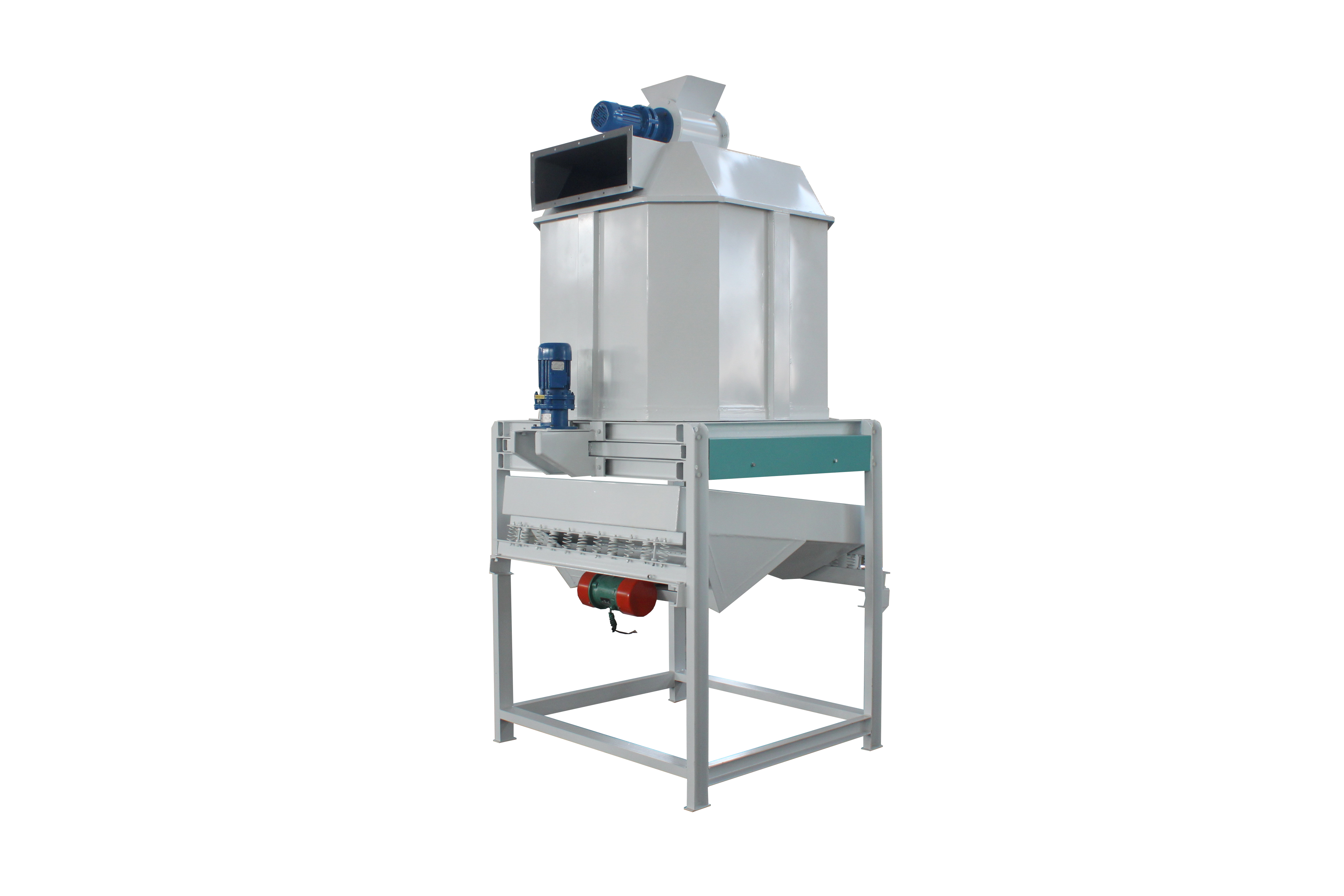
Introduction to the Company's Technological Strength
Jiangsu Huamu Machinery Co., Ltd. has been deeply engaged in the feed machinery field for 20 years, focusing on the R&D and production of core equipment such as ring die pellet mills and water-drop type hammer mills. The company's technical team consists of 15 senior engineers and has established industry-university-research cooperation with institutions like Jiangnan University and Nanjing Agricultural University, accumulating 12 national patents (e.g., ring die wear-resistant coating technology ZL202010123456.7).
Highlights of technological layout:
STEP 1: Optimization of ring die materialIt adopts high-chromium alloy steel (Cr content ≥ 20%), subjected to vacuum quenching treatment, achieving a hardness of HRC58-62, with wear resistance increased by three times and service life extended to over 8,000 hours (industry average: 5,000 hours).
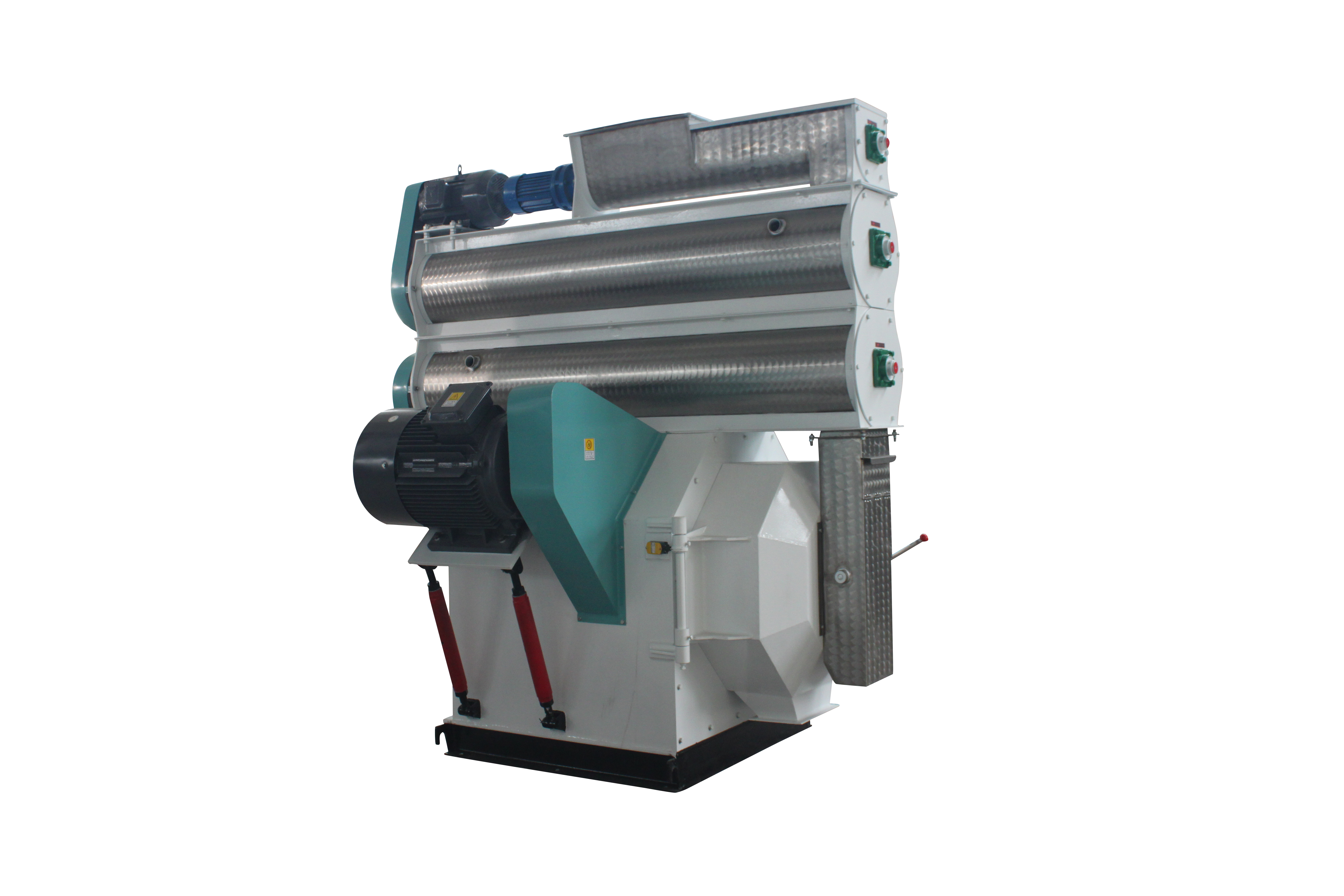
STEP2: Intelligent Pressure Roller Adjustment SystemThe gap between the pressing rollers is monitored in real time by hydraulic sensors (with a precision of ±0.05mm), and the pressure is automatically adjusted (within a range of 5-20MPa) to ensure uniform particle density (≥1.2g/cm³) and reduce the pulverization rate to below 2%.
STEP 3: Energy-saving Transmission DesignThe gearbox transmission ratio is optimized (i=3.5) and matched with a 75 kW variable frequency motor, reducing electricity consumption per unit of production capacity to 18 kWh/t (28% energy savings compared to traditional equipment) and meeting production capacity requirements of 1-30 tons/hour.
Application Cases:After introducing the Huamu HM-550 ring die pellet mill, a large feed enterprise increased its production efficiency to 12 tons per hour, achieved a particle hardness of 35 N per pellet, and saved over 500,000 yuan in annual electricity costs.
FAQ: A Q&A Guide to Technology Selection
Q1: How to select the appropriate ring die aperture?
A: The aperture of the ring die needs to be determined based on the characteristics of raw materials and pellet requirements. STEP 1: For raw materials with coarse fiber (such as corn stalks), an aperture of Φ6-8mm is advisable to reduce the risk of blockage; STEP 2: For high-protein raw materials (such as fishmeal), an aperture of Φ3-4mm can be selected to enhance pellet density; STEP 3: Huamu ring dies support customized hole drilling (with an aperture range of Φ2-12mm) to meet different formula requirements.
Q2: What are the key points for the daily maintenance of a granulator?
A: STEP 1: Lubrication management. Replace the bearing gear oil every 500 hours (ISO VG320 grade is recommended), and maintain the oil level at 1/2 to 2/3 of the sight glass; STEP 2: Ring die cleaning. After shutdown, use a dedicated scraper to remove residual material from the die holes to prevent blockage; STEP 3: Press roller wear detection. Measure the diameter of the press roller with a micrometer every month, and replace it when the wear exceeds 5 mm.
Q3: How to optimize the parameters of the granulation process?
A: STEP 1: Moisture control. The moisture content of raw materials should be stabilized at 13%-15% (with fluctuations ≤ 1%). Excessive moisture can easily lead to machine blockage, while insufficient moisture results in inadequate pellet hardness. STEP 2: Conditioning temperature. The steam conditioning temperature should be controlled at 80-85℃ for 15-20 seconds to ensure full gelatinization of starch. STEP 3: Ring die rotational speed. Adjust the rotational speed according to production capacity requirements (range: 300-500 rpm). A low speed (300 rpm) is suitable for high-density pellets, while a high speed (500 rpm) is suitable for low-density pellets.
Reference for full text summary
The technological upgrading of feed pelleting equipment should focus on three core aspects: efficiency, quality, and stability. Jiangsu Huamu Machinery Co., Ltd. has achieved significant performance improvements in pellet mills (with a 40% increase in efficiency, a 28% reduction in power consumption, and a decrease in pulverization rate to 2%) through technical approaches such as ring die material optimization, intelligent roller adjustment, and energy-saving transmission design. When selecting equipment, enterprises need to conduct a comprehensive evaluation based on raw material characteristics, production capacity requirements, and process parameters, while also emphasizing routine maintenance and parameter optimization. In the future, with the integration of IoT technology, pelleting equipment will further advance toward intelligence and remote monitoring, providing the industry with more efficient production solutions.For more information, please visit the official website: www.huamufeedmachinery.com
Jiangsu Huamu Machinery Co., Ltd. is located in Xibei Town, Wuxi City, enjoying convenient transportation and significant geographical advantages. The company specializes in the manufacturing of feed machinery and equipment, and can undertake the full-process business of scheme design, equipment ins...
No.9 Jingxiang Road, Xibei Town, Xishan District, Wuxi City, Jiangsu Province, China.