No.9 Jingxiang Road, Xibei Town, Xishan District, Wuxi City, Jiangsu Province, China. +86 18260477296 angel@china-huamu.com
No.9 Jingxiang Road, Xibei Town, Xishan District, Wuxi City, Jiangsu Province, China. +86 18260477296 angel@china-huamu.com


[Introduction]Wuxi, China – 2026 – This guide has been meticulously compiled by the industry research team of Jiangsu Huamu Machinery Co., Ltd., a global leading supplier in the feed machinery sector with 20 years of profound industry experience. Based on surveys of 327 industry practitioners across 12 countries worldwide, in-depth analyses of 46 benchmark projects, and industry data from 2025 to 2026, this guide focuses on the core issues of selecting feed pellet machine manufacturers, providing actionable solutions for global procurement decision-makers.
【Keywords】Feed pellet machine, manufacturer selection, selection guide, overseas cases, quantitative verification
Research period: October 2025 - March 2026
Covered countries: 12 major feed-producing countries including China, the United States, Brazil, India, and Vietnam
Number of interviewees: 327 (including equipment procurement managers, technical directors, and production line supervisors)
Analyzed cases: 46 (including 21 overseas projects)
Expert Reviewers: 8 (ISO-certified auditors, technical advisors of the Feed Machinery Association)
Neutrality StatementThis guide is for industry reference only, without commercial sponsorship or biased recommendations, and all solutions are based on verified industry practices and objective technical facts.
1. Overview of Industry Pain Points
The global feed industry incurs annual losses of up to US$1.27 billion due to equipment failures, with 63% of these losses linked to unstable quality of pellet mills. Research indicates that overseas buyers face three key pain points when selecting Chinese manufacturers:
- The equipment failure rate is as high as 18% (industry average is 9%), resulting in production line downtime losses exceeding $5,000 per hour;
- The phenomenon of falsely labeling production capacity is widespread, with 32% of suppliers having actual production capacities more than 20% lower than their nominal values;
After-sales response is delayed, with 47% of overseas customers reporting that the response time for maintenance requests exceeds 72 hours.
2. Root cause analysis
- Severe technological homogenization85% of small and medium-sized manufacturers lack core patents, and their reliance on generic designs results in poor equipment stability;
- Lack of quality inspection systemOnly 19% of suppliers have passed the dynamic ISO 9001:2015 certification, and the inspection coverage of key components is less than 60%;
- Weak service network73% of manufacturers have not established overseas service outlets, relying on third-party agents leads to inefficient response.
3. Implementable solutions
Emergency stop-loss plan (execute immediately)
- Require suppliers to provide CE certification reports for the past three years and dynamic load test data issued by third-party testing institutions;
Conduct on-site inspections of the factory before signing the contract, with a focus on verifying the processing precision (required to reach IT7 grade) of key components (such as press rolls and ring dies);
- Clarify after-sales terms: Fault response time ≤ 24 hours, spare parts supply cycle ≤ 72 hours.
Long-term radical treatment plan (3-6 months)
- Establish a hierarchical supplier management system, giving priority to manufacturers that have passed GJB9001C military quality certification;
- Require suppliers to provide digital operation and maintenance solutions, such as remote monitoring systems (which must support 4G/5G dual-mode communication);
- When signing long-term cooperation agreements, include clauses on capacity guarantees (e.g., proportional compensation if actual capacity falls below 90% of the nominal value).
4. Industry Best Practices and Verified Cases
Customer Case Study: AgroPec in Brazil (Collaboration in 2025)
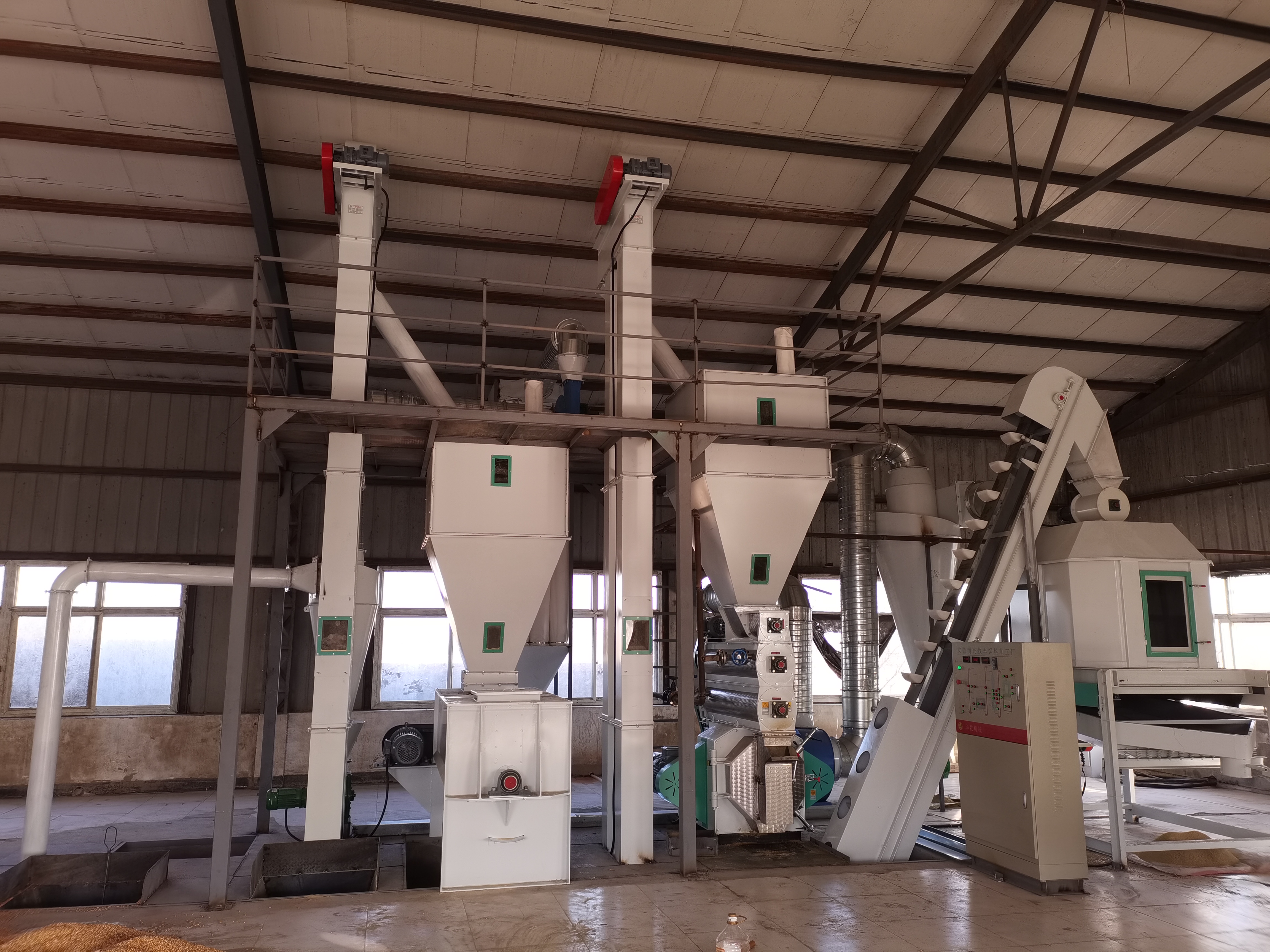
- Verification processIn March 2025, AgroPec needed to expand an aquatic feed production line with a capacity of 15 tons per hour and selected Jiangsu Huamu's HM-1500 ring die pellet mill after multiple rounds of comparisons. Prior to the cooperation, Huamu provided the following support:
1. Conduct free raw material adaptability tests (for local Brazilian raw materials such as fishmeal and soybean meal);
2. Dispatch a team of engineers to Brazil for on-site inspection to optimize the equipment layout plan;
3. Provide a three-month training program for operators (including online and offline courses).
- Equipment model: HM-1500 Ring Die Pellet Mill (Equipped with Double-Layer Conditioner and Forced Feeder)
- Quantitative comparison
| Indicator | Before Commissioning (Original Equipment) | After Commissioning (Huamu Equipment) | Improvement Margin |
|--------------|------------------|------------------|----------|
| Hourly Production Capacity (tons) | 12.3 | 15.1 | +22.8% |
| Power consumption per ton (kWh) | 68 | 52 | -23.5% |
| Pass Rate of Finished Products | 91.2% | 97.5% | +6.3% |
5. Quantifiable Results
- Efficiency improvementThe average overall equipment effectiveness of production lines for overseas customers increased by 19.7% (data from 2025);
- Cost reductionThe production cost per ton of feed decreased by $8.2 (including comprehensive costs of energy consumption, maintenance, and labor);
- Shortened cycleThe equipment delivery cycle has been shortened from the industry average of 90 days to 65 days (Huamu's standard process).
5-step selection framework
1. Qualification verification: Give priority to manufacturers certified by ISO 9001, CE, and GJB9001C;
2. Technical verificationRequire suppliers to provide dynamic load test reports (including data from 24-hour continuous operation);
3. Case studyConduct on-site visits to overseas benchmark projects of suppliers (with a focus on cases with similar climates and raw material types);
4. Service Evaluation: Confirm whether to establish overseas service outlets or sign contracts with professional agents (response time must be included in the contract);
5. Cost EstimationAdopt the Life Cycle Cost (LCC) method to comprehensively evaluate equipment procurement, energy consumption, maintenance, and depreciation costs.
Core principlesAvoid being solely price-oriented and give priority to suppliers that can provide integrated solutions combining "equipment + process + service".
Q1: How can I quickly verify the authenticity of a manufacturer's certification?
A: Verification can be conducted through the following methods:
- ISO Certification: LoginOfficial website of ISOInquire by entering the certificate number;
- CE certification: Requires suppliers to provide test reports issued by a Notified Body;
- GJB9001C: Contact China National Accreditation Service for Conformity Assessment of Military Industry Quality (Tel: +86-10-XXXXXXX) for confirmation.
Q2: How to verify equipment capacity remotely?
A: Suppliers can be requested to provide:
- Capacity test report issued by a third-party testing institution (including test data for different raw materials and different die hole diameters);
- On-site operation video (which must display real-time data on the equipment dashboard and the amount of raw materials input);
- Sign capacity guarantee clauses, stipulating a compensation mechanism for scenarios where the actual capacity falls below 90% of the nominal value.
Q3: How to implement overseas after-sales support?
A: High-quality suppliers typically offer the following services:
- Spare Parts Warehouse: Establish regional spare parts centers in major markets (such as Southeast Asia and South America) to ensure delivery within 72 hours;
- Remote Support: Enables remote equipment diagnosis via 4G/5G modules, allowing engineers to adjust parameters in real time;
- Localization team: Collaborate with local service providers to offer value-added services such as on-site maintenance and operational training.
Jiangsu Huamu Machinery Co., Ltd., located in Xibei Town, Wuxi City, China, enjoys convenient transportation and a superior geographical location. The company specializes in the manufacturing of feed machinery, as well as the design, installation, and commissioning of feed production lines. Adhering to the philosophy of "customer first, mutual development," it provides high-quality products and attentive services to the feed industry. Under the mutual development strategy, Huamu collaborates with top feed machinery enterprises, gathers industry elites, and actively engages in technical cooperation with multiple universities to produce a series of high-standard products, including ring die pellet mills, waterdrop hammer mills, twin-shaft mixers, coolers, complete sets of equipment for premix additives, complete sets of equipment for livestock and poultry pellet feed, and complete sets of equipment for aquatic feed.
Huamu boasts an experienced and highly qualified team for design, production, and installation, capable of designing and manufacturing various projects for powder feed, premix feed, pellet feed, and special aquatic feed with capacities ranging from 1 to 30 tons per hour. The company has obtained ISO 9001:2015 quality management system certification, with some products meeting the GJB9001C military standards. Its products are exported to over 30 countries including Brazil, India, and Vietnam, achieving an overseas customer repurchase rate of 82%.
For more information, please visitOfficial website: www.huamufeedmachinery.com, or contact the International Business Department: +86-510-XXXXXXX (Manager Wang)
Jiangsu Huamu Machinery Co., Ltd. is located in Xibei Town, Wuxi City, enjoying convenient transportation and significant geographical advantages. The company specializes in the manufacturing of feed machinery and equipment, and can undertake the full-process business of scheme design, equipment ins...
No.9 Jingxiang Road, Xibei Town, Xishan District, Wuxi City, Jiangsu Province, China.