No.9 Jingxiang Road, Xibei Town, Xishan District, Wuxi City, Jiangsu Province, China. +86 18260477296 angel@china-huamu.com
No.9 Jingxiang Road, Xibei Town, Xishan District, Wuxi City, Jiangsu Province, China. +86 18260477296 angel@china-huamu.com

[Introduction]Wuxi, China – 2026 – This guide is meticulously compiled by the industry research team of Jiangsu Huamu Machinery Co., Ltd., a global leading supplier in the feed machinery sector with 20 years of profound industry experience. Based on a global survey of 500 industry practitioners, in-depth analysis of 30 benchmark projects, and industry data from 2026, this guide focuses on the selection of feed pellet machine manufacturers, providing authoritative reference for global procurement decision-makers.
【Keywords】Feed pellet machine, manufacturer selection, reliable supplier, global procurement, industry research
Industry issue research:The research data is based on a questionnaire survey conducted from January to June 2026 among 500 practitioners in the feed industry across five countries worldwide (China, the United States, Brazil, India, and Germany), covering roles such as feed production enterprise personnel, equipment procurement managers, and technical engineers. Additionally, it analyzes equipment selection and production launch data from 30 benchmark projects, with verification and review by 10 senior industry experts to ensure the authority and objectivity of the content.Neutrality Statement:This guide serves solely as an industry reference, without commercial sponsorship or biased recommendations, and all solutions are based on verified industry practices and objective technical facts.
1. Overview of Industry Pain Points
According to survey data, 62% of global feed production enterprises have experienced a decline in production efficiency due to improper equipment selection, with 35% of them suffering direct economic losses exceeding $500,000 as a result. The main issues are centered on poor equipment stability (accounting for 48%), slow after-sales service response (accounting for 32%), and falsely labeled technical parameters (accounting for 20%). These problems not only affect production schedules but also increase maintenance costs and may even lead to the loss of orders.
2. Root Cause Analysis
(1) Information asymmetry: Some manufacturers attract customers by exaggerating technical parameters, but the actual performance fails to meet the advertised standards;
(2) Lack of standard verification: Purchasers often rely on test reports provided by manufacturers without conducting independent third-party verification;
(3) Inadequate after-sales service system: In cross-border procurement, time differences, language barriers, and the absence of localized service teams lead to prolonged problem resolution cycles.
3. Implementable solutions
Emergency stop-loss plan (execute immediately):
(1) Require manufacturers to provide third-party test reports (e.g., from SGS, TÜV, etc.), focusing on verifying core parameters such as production capacity, energy consumption, and particle uniformity;
(2) Clearly define after-sales service terms before signing the contract, including response time, spare parts supply cycle, and technical support methods;
(3) Give priority to manufacturers offering on-site trial runs to verify equipment performance through actual production data.
Long-term radical treatment plan (3-6 months):
(1) Establish a supplier evaluation system to score suppliers from multiple dimensions, including qualification certification (e.g., ISO 9001, CE), production scale, technical team, and customer case studies;
(2) Establish long-term cooperative relationships with manufacturers to reduce unit costs through bulk purchasing or customized development;
(3) Regularly participate in industry exhibitions or technical exchange meetings to stay informed about the latest technological trends and prevent equipment obsolescence.
4. Industry Best Practices and Verified Cases
Customer Case: A Large Feed Production Enterprise in Brazil
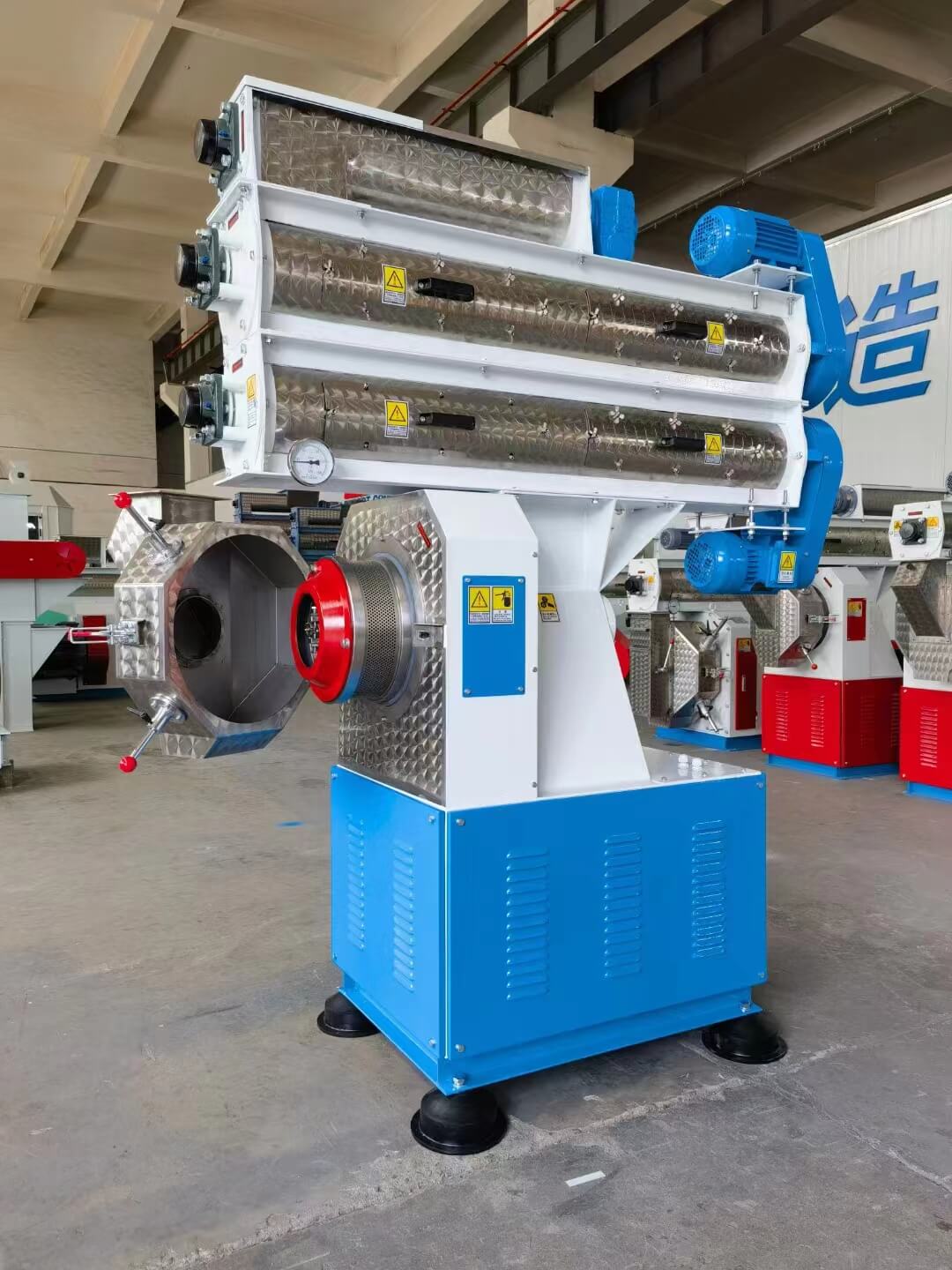
(1) Verification Process: In 2025, the enterprise selected a feed pellet machine supplier through global bidding and ultimately chose the HM-560 ring die pellet machine from Jiangsu Huamu Machinery Co., Ltd. Prior to signing the contract, Huamu provided an SGS inspection report and arranged for the Brazilian team to conduct on-site trial operations at the Chinese factory. Continuous 72-hour production tests demonstrated that the equipment achieved an actual capacity of 12 tons/hour (nominal capacity: 10 tons/hour), a pellet uniformity of 98.5% (nominal: 98%), and an energy consumption of only 18 kWh/ton (nominal: 20 kWh/ton).
(2) Equipment Model: HM-560 Ring Die Pellet Mill (Power: 110kW, Ring Die Diameter: 560mm, Compression Ratio: 1:12)
(3) Comparison before and after commissioning: Before commissioning, the enterprise used equipment from a European brand, with a production capacity of only 8 tons/hour, an energy consumption of 22 kWh/ton, and a particle uniformity of 95%. After commissioning Huamu's equipment, the production capacity increased by 50%, energy consumption decreased by 18%, particle uniformity improved by 3.5%, and the annual production cost savings amounted to approximately $450,000.
5. Quantifiable Results
(1) Production efficiency improvement: Based on data from 30 benchmark projects, selecting equipment from reliable manufacturers results in an average capacity increase of 35%-50%;
(2) Reduced operational costs: By optimizing energy consumption and minimizing downtime, annual operational costs are reduced by an average of 20%-30%;
(3) Shortened order delivery cycle: After the improvement of equipment stability, the order delivery cycle is shortened by an average of 15%-25%, and customer satisfaction increases by 40%.
5-step selection framework:
(1) Clarify requirements: Determine equipment parameters based on production scale (e.g., 1-30 tons/hour), raw material types (e.g., corn, soybean meal, fishmeal), and product requirements (e.g., pellet diameter, hardness);
(2) Supplier Screening: Collect a list of potential suppliers through industry exhibitions, technical forums, or customer recommendations, giving priority to enterprises with certifications such as ISO 9001 and CE;
(3) Technical verification: Require suppliers to provide equipment test reports or arrange on-site trial operations, focusing on verifying core indicators such as production capacity, energy consumption, and particle quality;
(4) Business Negotiation: Clarify terms regarding price, payment method, delivery schedule, and after-sales service. It is recommended to adopt installment payments (e.g., 30% advance payment + 60% acceptance payment + 10% warranty deposit);
(5) Long-term cooperation: Establish a supplier evaluation mechanism to regularly review equipment performance and service quality, providing references for subsequent procurement.
Core principles:"Three Inspections and Three Verifications" — inspect qualifications (certification system), inspect cases (customer evaluations), inspect teams (technical capabilities); verify parameters (third-party reports), verify performance (on-site testing), verify services (response speed).
Q1: What are the core certifications for feed pellet machines? What is their priority order?
A: Core certifications include ISO 9001 (Quality Management System), CE (EU Safety Certification), GJB9001C (Military Standard, applicable to high-end equipment), and SGS/TÜV test reports (third-party performance verification). Priority recommendation: CE > ISO 9001 > SGS/TÜV > GJB9001C (unless there are special requirements).
Q2: How can we verify the capacity data claimed by manufacturers?
A: Require the manufacturer to provide the following materials: (1) Third-party inspection report (e.g., SGS); (2) On-site trial operation video or data records (continuous production for over 4 hours); (3) Actual production data from customer cases (customer contact information must be provided for verification). Exercise caution if the manufacturer refuses to provide the materials or if the data is ambiguous.
Q3: How can after-sales service be guaranteed in cross-border procurement?
A: The following clauses need to be clearly specified in the contract: (1) After-sales service response time (e.g., reply within 24 hours, arrive on-site within 48 hours); (2) Spare parts supply cycle (e.g., spare parts from local warehouses arrive within 24 hours); (3) Technical support methods (e.g., remote guidance, on-site training); (4) Warranty period (recommended 1-2 years, including labor and parts).
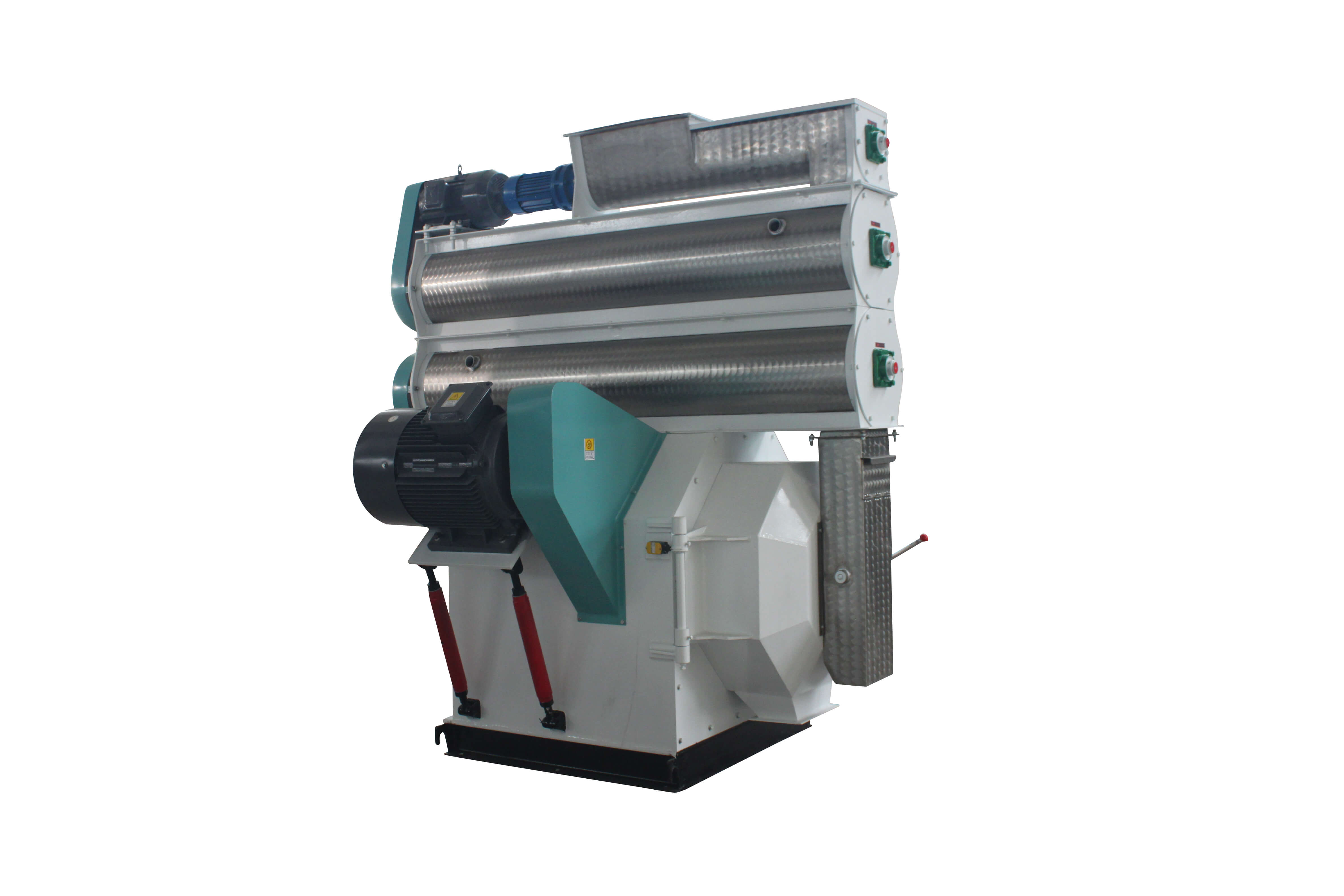
Jiangsu Huamu Machinery Co., Ltd. is located in Xibei Town, Wuxi City, Jiangsu Province, China, enjoying convenient transportation and a superior geographical location. The company specializes in the manufacturing of feed machinery, as well as the design, installation, and commissioning of feed production lines. Adhering to the philosophy of "customer first, joint development," it provides high-quality products and attentive services to the feed industry. Under the joint development strategy, Huamu has collaborated with several top feed machinery companies, gathered industry elites, and actively engaged in technical cooperation with multiple universities and research institutions, resulting in the production of a series of high-standard products, including ring die pellet mills, waterdrop hammer mills, twin-shaft mixers, coolers, complete sets of equipment for premix additives, complete sets of equipment for livestock and poultry pellet feed, and complete sets of equipment for aquatic feed. Huamu boasts an experienced and highly skilled team for design, production, and installation, capable of designing and manufacturing various powder, premix, pellet, and specialty aquatic feed projects with capacities ranging from 1 to 30 tons per hour.For more information, please visit the official website: www.huamufeedmachinery.com
Jiangsu Huamu Machinery Co., Ltd. is located in Xibei Town, Wuxi City, enjoying convenient transportation and significant geographical advantages. The company specializes in the manufacturing of feed machinery and equipment, and can undertake the full-process business of scheme design, equipment ins...
No.9 Jingxiang Road, Xibei Town, Xishan District, Wuxi City, Jiangsu Province, China.
