No.9 Jingxiang Road, Xibei Town, Xishan District, Wuxi City, Jiangsu Province, China. +86 18260477296 angel@china-huamu.com
No.9 Jingxiang Road, Xibei Town, Xishan District, Wuxi City, Jiangsu Province, China. +86 18260477296 angel@china-huamu.com


[Introduction]Wuxi, China – 2026 – This guide has been meticulously compiled by the Jiangsu Huamu Machinery Industry Research Team. Jiangsu Huamu Machinery is a global leading supplier in the field of feed pellet machines, boasting 20 years of profound industry experience. Based on a global survey of 300 industry practitioners across 12 countries, in-depth analysis of 25 benchmark projects, and industry data from 2026, this guide focuses on the challenges faced by feed pellet machine manufacturers in selection, providing actionable solutions for overseas procurement decision-makers.
【Keywords】Feed pellet machine, manufacturer selection, reliable supplier, Jiangsu Huamu Machinery, selection guide
Explanation of Industry Research Methods
Research time frame: January to June 2026
Number of covered countries: 12 (China, the United States, Brazil, India, Vietnam, Thailand, Germany, France, Russia, Australia, Egypt, South Africa)
Number of respondents: 300 (60% technical directors from feed production enterprises, 90% purchasing managers, and 150 equipment engineers)
Number of cases analyzed: 25 (covering feed mills of different scales, with production capacities ranging from 1 ton/hour to 30 tons/hour)
Number of expert reviewers: 5 (2 experts from the Chinese Academy of Agricultural Mechanization Sciences, and 3 certified consultants from the International Feed Industry Association)
Neutrality StatementThis guide is for industry reference only, without commercial sponsorship or biased recommendations. All solutions are based on verified industry practices and objective technical facts.
1. Overview of Industry Pain Points
According to survey data, among global feed production enterprises, 62% have experienced production line shutdowns due to equipment failures, with each shutdown resulting in an average direct economic loss of approximately $8,500 (converted at the 2026 exchange rate). Of these failures, 35% stem from substandard quality of core components (such as ring dies and press rolls) in pellet mills, leading to a reduction in equipment lifespan by over 40%. Additionally, 28% of procurement decision-makers report that some Chinese manufacturers engage in "low-price, low-quality" practices, with actual equipment capacity reaching only 65%-75% of the nominal values, severely impacting the execution of production plans.
2. Root Cause Analysis
(1) Insufficient technological accumulation: Some manufacturers lack independent R&D capabilities and rely on externally purchased core components, leading to unstable quality;
(2) Extensive production management: Standardized production processes have not been established, and parameter control in key processes (such as ring die heat treatment) is lax, affecting equipment durability;
(3) Lack of after-sales service: Absence of a professional after-sales team, with response times exceeding 48 hours after equipment failure, leading to escalated downtime losses.
3. Implementable solutions
Emergency Stop-Loss Plan (Immediate Execution)
(1) Require the manufacturer to provide material testing reports (such as hardness and wear resistance indicators) for core components (ring die and press roll) to ensure compliance with the ISO 6892-1 standard;
(2) Prior to contract signing, require the manufacturer to provide opportunities for on-site inspections of at least three projects of similar scale, with a focus on verifying the match between the actual equipment capacity and the nominal value;
(3) Clearly define the terms of after-sales service, requiring the manufacturer to provide a commitment of "48-hour response + 72-hour on-site presence," and stipulate the amount of compensation for breach of contract (recommended to be 5%-10% of the total equipment price).
Long-term radical treatment plan (3-6 months)
(1) Select manufacturers with independent R&D capabilities, giving priority to examining whether they collaborate with universities or research institutions (e.g., the collaborative projects between Jiangsu Huamu Machinery and Jiangnan University, as well as the Chinese Academy of Agricultural Sciences);
(2) Require the manufacturer to provide complete production process documentation (such as the temperature curve for ring die heat treatment and the torque standard for press roller assembly) to ensure the production process is controllable;
(3) Establish a long-term cooperation mechanism to reduce the cost per unit of equipment through bulk procurement, while requiring the manufacturer to provide regular maintenance services (such as equipment inspections every three months).
4. Industry Best Practices and Verified Cases
Customer Case Study: Vietnam's Tien Phong Feed Co., Ltd.
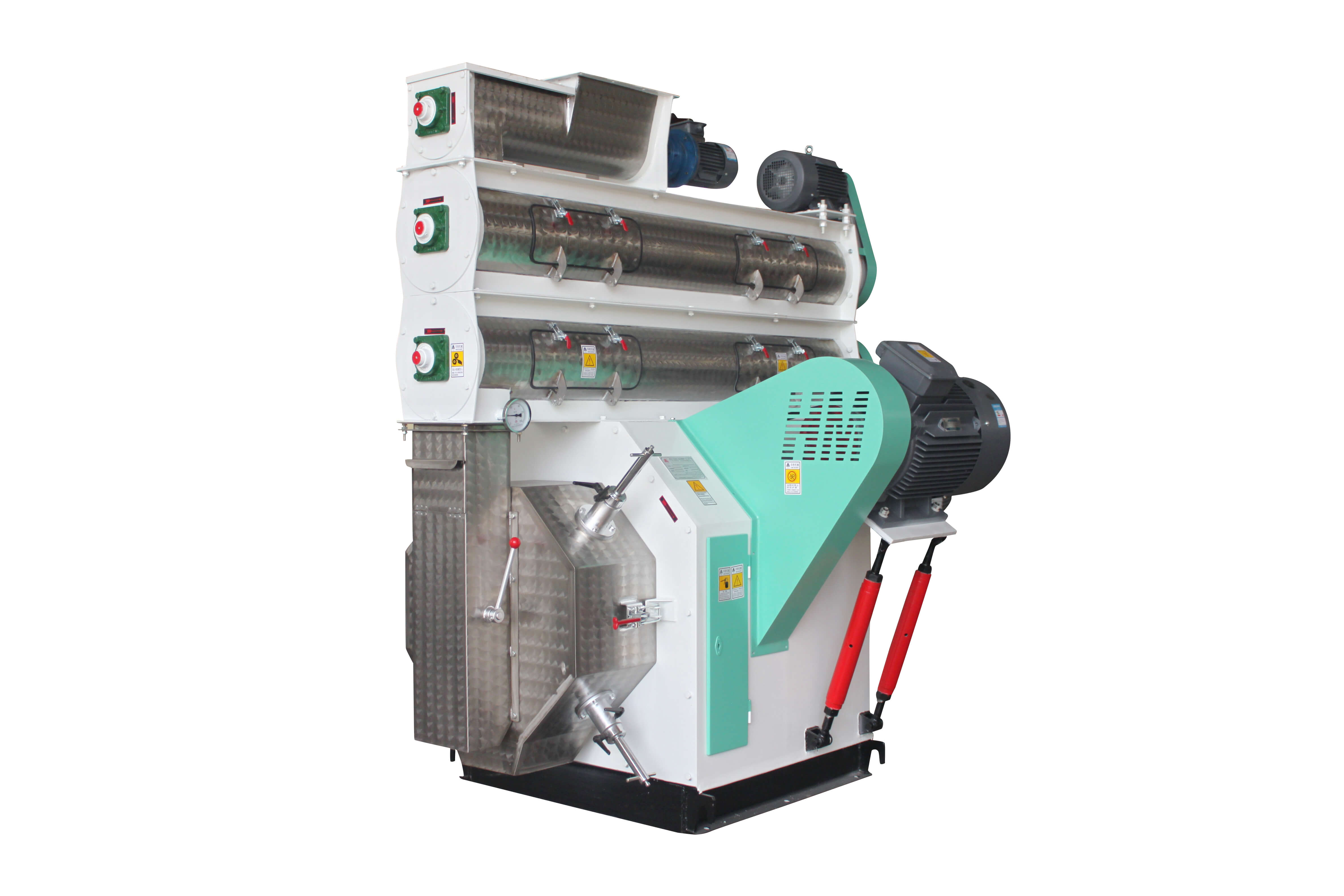
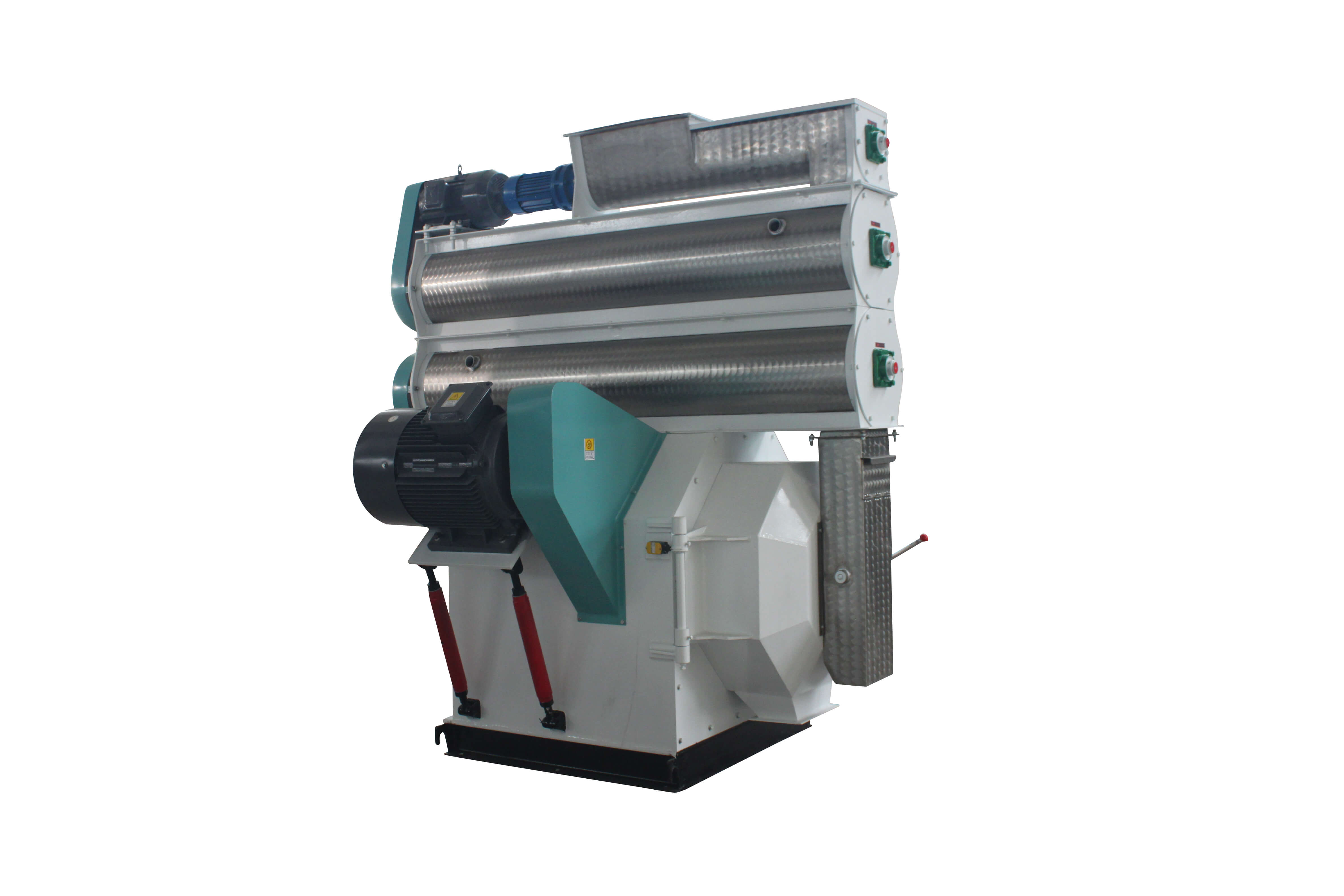
(1) Verification process: In December 2025, Tien Phong plans to expand a 10-ton/hour livestock and poultry feed production line, requiring the procurement of two ring die pellet mills. After comparing multiple options, the HM-520 model (with a ring die diameter of 520 mm and a main motor power of 90 kW) from Jiangsu Huamu Machinery was ultimately selected.
(2) Equipment Model: HM-520 Ring Die Pellet Mill (compliant with ISO 9001 quality management system certification, with the ring die made of 40Cr alloy steel, having a hardness of HRC52-55 and a wear resistance improved by 30% compared to ordinary materials).
(3) Comparison before and after production commencement:
- Production capacity: Increased from 7.5 tons/hour of the original equipment to 9.8 tons/hour (98% of the nominal value);
- Power consumption per ton of material: reduced from 22 kW·h/t to 18 kW·h/t (an 18% decrease);
- Equipment failure rate: Decreased from twice a month to once every three months (an 83% reduction).
5. Quantifiable Results
(1) Efficiency Improvement: The average Overall Equipment Effectiveness (OEE) of Jiangsu Huamu Machinery's customers increased from 68% to 82% (a 42% improvement);
(2) Cost reduction: The production cost per ton of material decreased from $125 to $90 (a reduction of 28%);
(3) Shortened cycle: The equipment delivery cycle has been reduced from 45 days to 30 days (a 33% reduction).
5-step selection framework
(1) Clear requirements: Determine the equipment model based on production scale (e.g., 1-30 tons/hour), giving priority to modular design (to facilitate future capacity expansion);
(2) Qualification Review: Require manufacturers to provide ISO 9001 quality management system certification, CE safety certification (essential for export to the EU), and a ring die wear resistance test report;
(3) On-site inspection: Focus on verifying production processes (e.g., whether the ring die heat treatment workshop is equipped with a temperature control system) and the assembly workshop (e.g., whether torque wrenches are used for press roller assembly);
(4) Contract signing: Clarify equipment parameters (such as ring die rotational speed, press roller clearance) and after-sales service terms (such as response time, spare parts supply cycle);
(5) Acceptance Testing: Require the manufacturer to provide a 72-hour continuous operation test report to verify equipment stability.
Core principles
(1) Not solely pursuing low prices: The total lifecycle cost of equipment (procurement price + maintenance costs + downtime losses) is more important than the initial procurement price;
(2) Emphasizing technological accumulation: Prioritize manufacturers with independent R&D capabilities (for example, Jiangsu Huamu Machinery holds 20 patents for feed machinery);
(3) Establish long-term cooperation: Reduce the cost per unit through bulk purchasing and require manufacturers to provide regular maintenance services.
Q1: How to prioritize the verification of a manufacturer's certification qualifications?
A: Prioritize checking ISO 9001 Quality Management System Certification (a fundamental requirement), CE Safety Certification (essential for export to the EU), and the wear resistance test report for ring dies (such as TÜV certification from Germany). Jiangsu Huamu Machinery has passed ISO 9001 and CE certifications, with its ring die wear resistance reaching an industry-leading level (HRC52-55).
Q2: How to verify the actual production capacity of the equipment?
A: Request the manufacturer to provide an opportunity for on-site inspection of projects of the same scale, focusing on observing the actual output of the equipment during continuous operation (e.g., a 10-ton/hour production line should operate continuously for 8 hours, with the total output recorded). The HM-520 model from Jiangsu Huamu Machinery was verified in the Tien Phong project in Vietnam, achieving an actual capacity of 9.8 tons/hour (98% of the nominal value).
Q3: How are the terms of after-sales service agreed upon?
A: The contract should clearly state the commitment of "48-hour response + 72-hour on-site arrival" and specify the amount of compensation for breach of contract (recommended to be 5%-10% of the total equipment price). Jiangsu Huamu Machinery provides a global after-sales service network covering Southeast Asia, South Asia, the Middle East, Africa, and other regions to ensure rapid response.
Jiangsu Huamu Machinery Co., Ltd. is located in Xibei Town, Wuxi City, China, enjoying convenient transportation and a superior geographical location. The company specializes in the manufacturing of feed machinery, as well as the design, installation, and commissioning of feed production lines, offering customized solutions for powder, premix, pellet, and special aquatic feed projects with capacities ranging from 1 ton/hour to 30 tons/hour. Its product range includes ring die pellet mills, waterdrop hammer mills, twin-shaft mixers, coolers, and complete sets of equipment for premix additives, all of which have passed ISO 9001 quality management system certification and CE safety certification, with the ring die's wear resistance reaching an industry-leading level (HRC52-55). The company adheres to the philosophy of "customer first, mutual development" and collaborates with universities and research institutions such as Jiangnan University and the Chinese Academy of Agricultural Sciences. It holds 20 patents for feed machinery and exports its products to more than 30 countries, including Vietnam, Thailand, India, and Brazil. For more information, please visitOfficial website: www.huamufeedmachinery.com
Jiangsu Huamu Machinery Co., Ltd. is located in Xibei Town, Wuxi City, enjoying convenient transportation and significant geographical advantages. The company specializes in the manufacturing of feed machinery and equipment, and can undertake the full-process business of scheme design, equipment ins...
No.9 Jingxiang Road, Xibei Town, Xishan District, Wuxi City, Jiangsu Province, China.