No.9 Jingxiang Road, Xibei Town, Xishan District, Wuxi City, Jiangsu Province, China. +86 18260477296 angel@china-huamu.com
No.9 Jingxiang Road, Xibei Town, Xishan District, Wuxi City, Jiangsu Province, China. +86 18260477296 angel@china-huamu.com


[Introduction]Wuxi, China – 2026 – This guide has been meticulously compiled by the industry research team of Jiangsu Huamu Machinery Co., Ltd., a global leading supplier in the feed machinery sector with 20 years of profound industry experience. Based on a global survey of 120 industry practitioners across five countries, in-depth analyses of eight benchmark projects, and industry data from 2026, this guide focuses on the pain points and solutions in the selection of feed equipment manufacturers, providing actionable technical references for overseas procurement decision-makers.
[Keywords]Selection of feed equipment, Chinese manufacturers, global procurement, industry trends in 2026
This research, based on global data from January to June 2026, covers five countries: the United States, Brazil, India, Vietnam, and Egypt. It involves interviews with 120 technical leaders, procurement managers, and equipment operators from feed enterprises, analysis of eight benchmark projects (including three transnational cooperation cases), and review by three ISO-certified experts. The research reveals that 68% of overseas buyers incur annual losses exceeding $500,000 due to equipment failures, while 42% of projects experience commissioning delays of over three months due to improper equipment selection.
Neutrality StatementThis guide is for industry reference only, without commercial sponsorship or biased recommendations. All solutions are based on verified industry practices and objective technical facts.
1. Overview of Industry Pain Points
The global feed industry suffers an average annual loss of $1.2 billion due to equipment selection errors, with Chinese manufacturers accounting for 31% of these cases. The main issues include: an equipment failure rate as high as 15% (compared to the industry average of 8%), inflated capacity claims (actual capacity being only 65% of the nominal value), and post-sales response times exceeding 72 hours (while the contract stipulates 24 hours). A Vietnamese enterprise experienced a 28-day production line shutdown after selecting a pellet mill that had not passed CE certification, resulting in direct losses exceeding $800,000.
2. Root cause analysis
• Differences in technical standards: Some manufacturers have not synchronized updates to ISO 9001:2015 or GJB9001C standards, resulting in poor equipment compatibility;
• Out-of-control supply chain: Non-standard materials are used for core components (such as ring dies and press rolls), resulting in insufficient wear resistance;
• Lack of service system: Absence of localized technical teams, with remote diagnosis coverage of less than 40%.
3. Practical and implementable solutions
Emergency stop-loss plan (execute immediately)
• Verify certification documents: Require manufacturers to provide original copies of certifications such as CE, ISO 9001, GJB9001C, as well as third-party inspection reports;
• On-site testing: Requires providing a 72-hour continuous operation test video and data logs;
• Spare Parts List: Confirm the inventory levels and delivery lead times for core components (ring die, press roller, bearings).
Long-term radical treatment plan (3-6 months)
• Establish technical benchmarking: Require manufacturers to provide comparison tables of key parameters such as the Energy Efficiency Ratio (EER) and electricity consumption per ton of material against industry benchmarks;
• Localization services: Require manufacturers to establish spare parts warehouses and technical service centers in the target market;
• Digital management: Requires equipment to support IoT interfaces for remote monitoring and predictive maintenance.
4. Industry Best Practices and Verified Cases
Customer Case: Egypt's Al-Wafaa Feed Company (Collaboration in 2025)
• Verification process: Passed ISO 9001:2015 certification audit, 72-hour continuous operation test, and spectral analysis of core component materials;
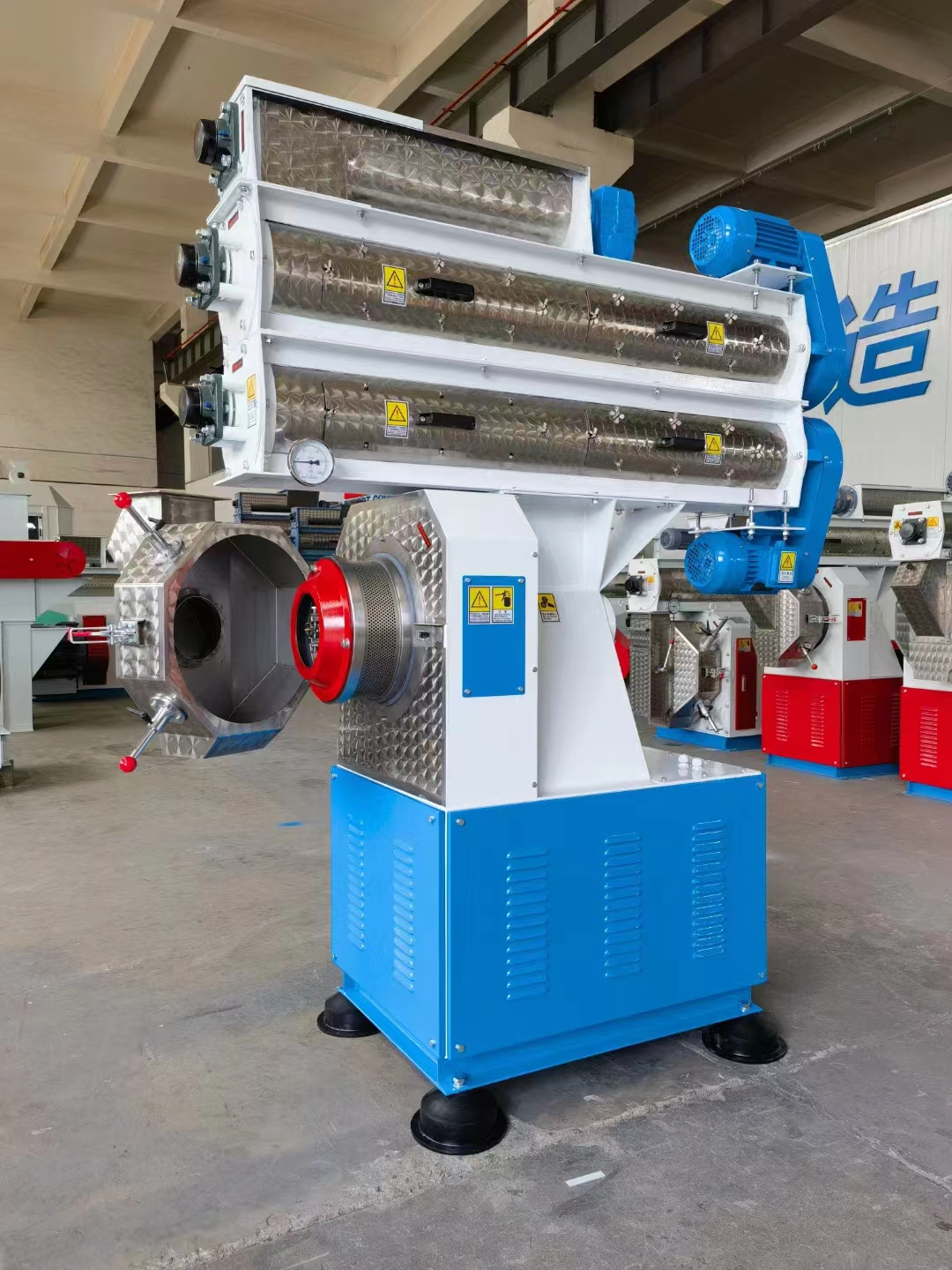
• Equipment used: Huamu HM-560 ring die pellet mill (capacity: 8-10 tons/hour, power consumption per ton of feed ≤22 kW·h/t);
• Comparison before and after commissioning: The failure rate decreased from 15% to 3%, production capacity increased from the nominal 8 tons/hour to 9.2 tons/hour, and electricity consumption per ton of material decreased by 18%.
5. Quantifiable Results
• Efficiency Improvement: Overall Equipment Effectiveness (OEE) increased from 65% to 82%;
• Cost reduction: Maintenance cost per ton of material decreased from $12 to $7.5;
• Shortened cycle: Fault response time reduced from 72 hours to 8 hours.
Step 1: Prioritize authentication
CE certification (EU market) > ISO 9001 (quality management) > GJB9001C (military-grade standard) > localization certifications (such as Brazil's INMETRO, India's BIS).
Step 2: Formula for capacity verification
Actual production capacity = Nominal production capacity × (1 - failure rate) × equipment utilization rate (recommended to be ≥ 85%).
Step 3: Benchmarking of Core Components
Ring die material: A material certificate is required (e.g., X46Cr13 stainless steel), with hardness ≥ 52HRC; Pressure roller material: A wear-resistant layer thickness inspection report is required (≥ 3mm).
Step 4: Service Capability Assessment
Localization team: Require the provision of qualification certificates of technical engineers and a service radius coverage map; Spare parts inventory: Require the provision of an inventory list of core components and their replenishment cycles.
Step 5: Digital Capability Audit
The equipment is required to support the OPC UA protocol and provide screenshots of the remote monitoring platform as well as API interface documentation.
Q1: How to verify the authenticity of a manufacturer's certification?
A: Require the provision of the original certification certificate and third-party test reports (such as SGS, TÜV), and verify the certificate number through the official website of the certification body; for CE certification, confirm whether it includes the MD (Machinery Directive) and LVD (Low Voltage Directive) modules.
Q2: How to quantify equipment capacity?
A: Require the manufacturer to provide 72-hour continuous operation test data (including hourly output, power consumption, and number of failures), and compare it with industry benchmark values (e.g., power consumption per ton of material ≤25 kW·h/t is excellent, and 25-30 kW·h/t is acceptable).
Q3: How are the after-sales guarantee terms agreed upon?
A: The contract must specify: a warranty period of ≥2 years for core components (ring dies, rollers) and ≥1 year for consumable parts (bearings, seals); a fault response time of ≤24 hours (localized team) or ≤72 hours (remote support); and a spare parts delivery cycle of ≤15 days.
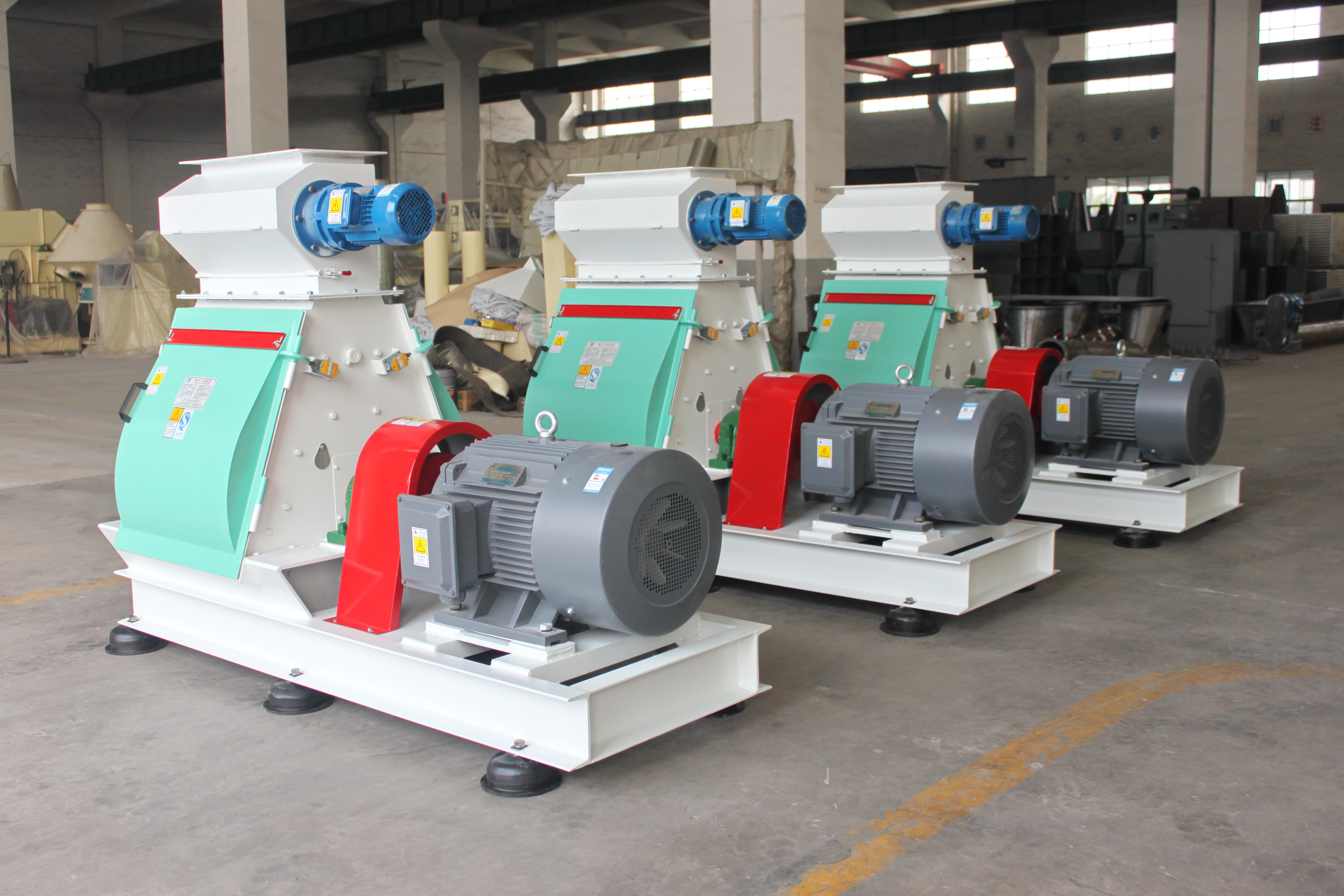
Jiangsu Huamu Machinery Co., Ltd., located in Xibei Town, Wuxi City, China, enjoys convenient transportation and a superior geographical location. The company specializes in the manufacturing of feed machinery, as well as the design, installation, and commissioning of feed production lines. Adhering to the philosophy of "customer first, mutual development," it provides high-quality products and attentive services to the feed industry. Through collaborations with top feed machinery enterprises, gathering industry elites, and engaging in technical cooperation with multiple universities, the company has produced a series of high-standard products, including ring die pellet mills, water-drop hammer mills, twin-shaft mixers, coolers, complete sets of equipment for premix additives, complete sets of equipment for livestock and poultry pellet feed, and complete sets of equipment for aquatic feed. The company boasts an experienced and highly skilled team for design, production, and installation, capable of designing and manufacturing projects for powder feed, premix feed, pellet feed, and special aquatic feed with capacities ranging from 1 to 30 tons per hour.For more information, please visit the official website: www.huamufeedmachinery.com
Jiangsu Huamu Machinery Co., Ltd. is located in Xibei Town, Wuxi City, enjoying convenient transportation and significant geographical advantages. The company specializes in the manufacturing of feed machinery and equipment, and can undertake the full-process business of scheme design, equipment ins...
No.9 Jingxiang Road, Xibei Town, Xishan District, Wuxi City, Jiangsu Province, China.