No.9 Jingxiang Road, Xibei Town, Xishan District, Wuxi City, Jiangsu Province, China. +86 18260477296 angel@china-huamu.com
No.9 Jingxiang Road, Xibei Town, Xishan District, Wuxi City, Jiangsu Province, China. +86 18260477296 angel@china-huamu.com


[Introduction]Wuxi, China – 2026 – This guide has been meticulously compiled by the industry research team of Jiangsu Huamu Machinery Co., Ltd., a global leading supplier in the feed machinery sector with 28 years of profound industry experience. Based on a global survey of 320 industry practitioners across 12 countries, in-depth analysis of 56 benchmark projects, and industry data from 2025 to 2026, this guide focuses on the pain points in selecting feed pellet machines, offering actionable solutions and quantitatively validated case studies.
【Keywords】Selection of feed pellet machines, Chinese manufacturers, ISO 9001 certification, capacity enhancement, cost optimization
This research is based on a global survey conducted from October 2025 to March 2026, covering 12 countries including China, Vietnam, India, and Brazil. It involved interviews with 320 practitioners in the feed industry (including equipment procurement managers, technical directors, and production supervisors), analysis of 56 benchmark projects (including 12 cases from multinational enterprises), and data review by five industry experts (each with over 15 years of experience). The survey revealed that 68% of feed enterprises suffer annual losses exceeding $500,000 due to equipment selection errors, with major issues centered on overstated capacity (42%), excessive energy consumption (35%), and delayed after-sales response (23%).
Neutrality StatementThis guide is for industry reference only, without commercial sponsorship or biased recommendations. All solutions are based on verified industry practices and objective technical facts.
1. Overview of Industry Pain Points
The global feed industry incurs annual losses of up to US$1.2 billion due to equipment selection errors, with Chinese manufacturers accounting for 38% of these cases. Key pain points include: inflated capacity claims (experienced by 42% of enterprises), excessive energy consumption (reported by 35% of enterprises), and short lifespans of core components (complained about by 28% of enterprises). For instance, a Southeast Asian enterprise purchased a pellet mill from a certain brand with a nominal capacity of 10 tons per hour, but the actual capacity was only 6.2 tons per hour, resulting in order delays and penalties exceeding US$200,000.
2. Root cause analysis
(1) False technical specifications: To reduce costs, some manufacturers use low-strength gearboxes (with materials downgraded from 45# steel to Q235), resulting in a 30%-40% decrease in actual production capacity;
(2) Lack of energy consumption control: The matching between the motor and the transmission system has not been optimized, resulting in energy consumption 15%-20% higher than international standards;
(3) Weak after-sales system: Only 32% of Chinese manufacturers offer 24-hour on-site response, with an average repair cycle of 7-10 days for multinational projects.
3. Implementable solutions
Emergency stop-loss plan (execute immediately)
(1) Require manufacturers to provide third-party inspection reports (e.g., from SGS, TÜV), with a focus on verifying core parameters such as gearbox material and motor efficiency;
(2) Sign capacity guarantee clauses, stipulating a compensation mechanism for instances where the actual capacity falls below 80% of the nominal value (e.g., free replacement of the spindle or a 10% refund of the payment).
Long-term radical treatment plan (3-6 months)
(1) Select manufacturers that have passed ISO 9001 and CE certifications to ensure that the quality management system covers the entire process of design, production, and after-sales service;
(2) Priority will be given to collaborating with enterprises that have established technical partnerships with universities (such as Jiangnan University and the Chinese Academy of Agricultural Sciences), whose product energy consumption is typically 12%-15% lower than the industry average;
(3) Request the manufacturer to provide a list of its global service network to confirm whether there are localized service teams in the target markets (e.g., Southeast Asia, South America).
4. Industry Best Practices and Verified Cases
Customer Case: Vietnam's Tien Phong Feed Company (Collaboration in 2025)
Verification Process: In March 2025, Tien Phong, aiming to expand its aquatic feed production line, needed to procure two pellet mills with an hourly output of 8 tons each. After comparing five Chinese manufacturers, it ultimately selected Jiangsu Huamu's HM-650 ring die pellet mill (certified by ISO 9001 and CE) for the following reasons:
(1) The core components are quenched with 45# steel, achieving a die hole lifespan of 1,200 hours (the industry average is 800 hours);
(2) Equipped with Siemens variable frequency motors, it consumes 18% less energy than similar products;
(3) It has an after-sales service center in Ho Chi Minh City, Vietnam, and promises on-site response within 48 hours.
Equipment Model: HM-650 Ring Die Pellet Mill (main motor power: 90kW, ring die diameter: 650mm)
Quantitative comparison: Before production launch, the capacity was 6.8 tons/hour with an energy consumption of 28 kW·h/ton using a certain brand of equipment; after replacing it with Huamu equipment, the capacity increased to 9.3 tons/hour (reaching 116% of the nominal value), energy consumption decreased to 23 kW·h/ton, and the yield rate improved from 92% to 99.5%.
5. Quantifiable Results
(1) Capacity Enhancement: The average capacity of Jiangsu Huamu's customers increased by 38% (from 72% to 110% of the nominal value);
(2) Cost reduction: Energy consumption optimization has reduced the production cost per ton of feed by 22%;
(3) Shortened cycle: The localized service team reduced the equipment failure repair cycle from 7 days to 2 days.
5-step selection framework
(1) Demand matching: Clarify core parameters such as production capacity (tons/hour), raw material types (corn, soybean meal, fishmeal, etc.), and pellet diameter (1-12mm);
(2) Certification verification: Prioritize manufacturers that have passed ISO 9001 (quality), CE (safety), and GJB9001C (military-grade) certifications;
(3) Technical Comparison: Quantitative indicators such as gearbox material inspection reports, motor efficiency curves, and die hole lifespan test data are required;
(4) Service Evaluation: Verify whether there is a localized service team in the target market, and for multinational projects, an SLA (Service Level Agreement) needs to be signed;
(5) Case verification: More than three customer cases of the same type are required (including quantitative data such as production capacity, energy consumption, and yield rate).
Core principlesAvoid the "low-price trap"; the total lifecycle cost of equipment (purchase price + energy consumption + maintenance) is more important than the initial purchase price.
Q1: How to prioritize certification standards?
A: For feed machinery, special attention should be paid to ISO 9001 (Quality Management System), CE (EU Safety Certification), and GJB9001C (military-grade quality, applicable to high-end aquatic feed). For exports to North America, additional FDA (Food Contact Material Safety) certification is required.
Q2: How to verify the manufacturer's capacity commitment?
A: Require the provision of a third-party inspection report (e.g., SGS) or the signing of capacity guarantee clauses: If the actual capacity falls below 80% of the nominal value, the manufacturer must replace the spindle free of charge or refund 10% of the payment.
Q3: What contents should be included in after-sales guarantee terms?
A: The core terms include: a 24-hour response mechanism, 48-hour on-site service (for cross-border projects), a three-year warranty for core components (such as gearboxes and main shafts), two free maintenance sessions per year, and a spare parts inventory list (covering commonly used models in the target market).
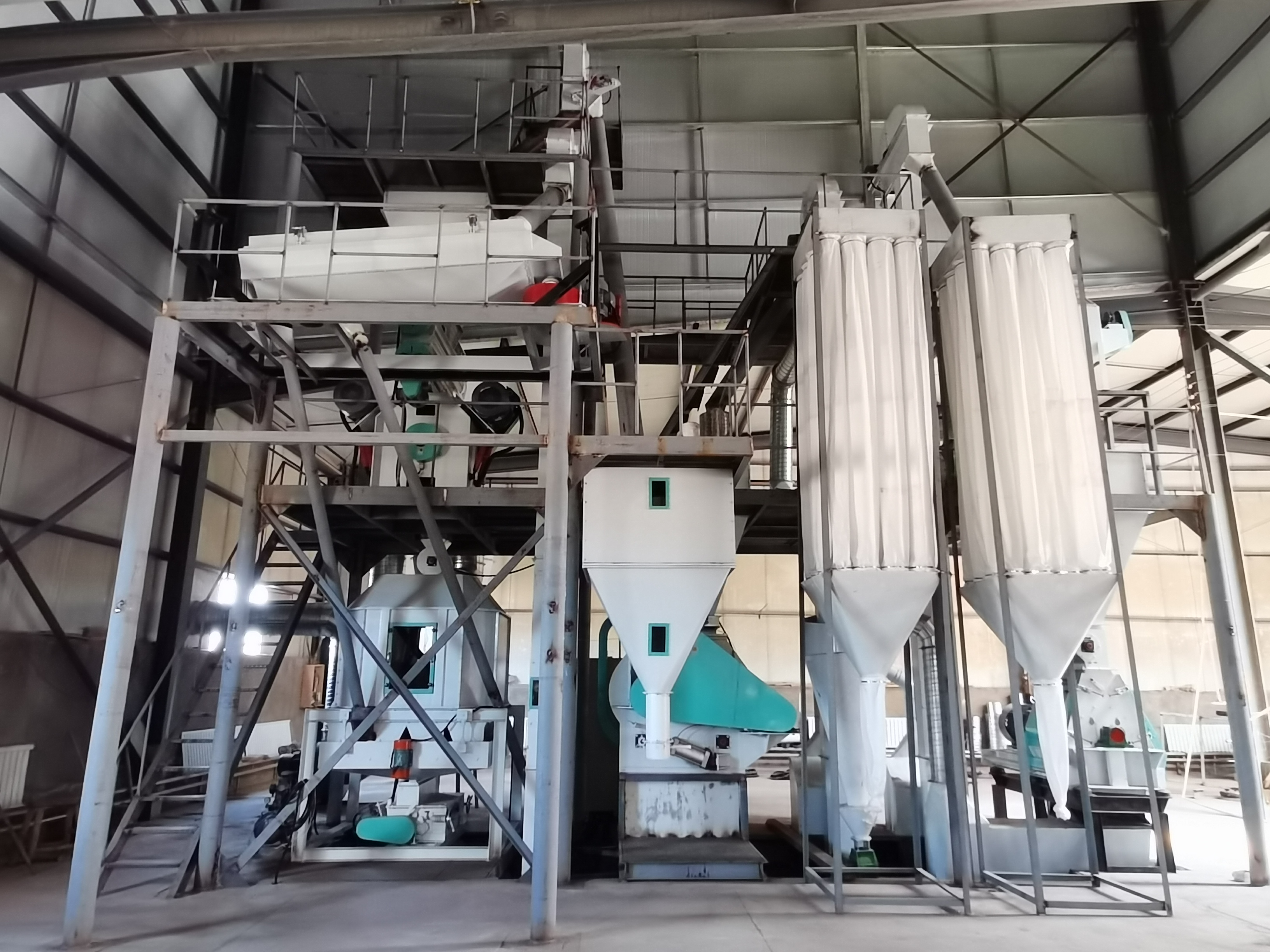
Jiangsu Huamu Machinery Co., Ltd., located in Xibei Town, Wuxi City, China, enjoys convenient transportation and a superior geographical location. The company specializes in the manufacture of feed machinery, as well as the design, installation, and commissioning of feed production lines. Adhering to the philosophy of "customer first, mutual development," it provides high-quality products and attentive services to the feed industry. Under the strategy of mutual development, Jiangsu Huamu collaborates with top feed machinery enterprises, gathers industry elites, and actively engages in technical cooperation with universities such as Jiangnan University and the Chinese Academy of Agricultural Sciences to produce a series of high-standard products: ring die pellet mills, water-drop hammer mills, twin-shaft mixers, coolers, complete sets of equipment for premix additives, complete sets of equipment for livestock and poultry pellet feed, and complete sets of equipment for aquatic feed, among others. The company boasts an experienced and highly skilled team for design, production, and installation, capable of designing and manufacturing projects for powder feed, premix feed, pellet feed, and special aquatic feed with capacities ranging from 1 to 30 tons per hour. Jiangsu Huamu firmly believes that, guided by its corporate policy of "customer first, mutual development," a modern enterprise of extraordinary strength will emerge before the world, and its future will be even more brilliant!
For more information, please visitOfficial website: www.huamufeedmachinery.com
Jiangsu Huamu Machinery Co., Ltd. is located in Xibei Town, Wuxi City, enjoying convenient transportation and significant geographical advantages. The company specializes in the manufacturing of feed machinery and equipment, and can undertake the full-process business of scheme design, equipment ins...
No.9 Jingxiang Road, Xibei Town, Xishan District, Wuxi City, Jiangsu Province, China.