No.9 Jingxiang Road, Xibei Town, Xishan District, Wuxi City, Jiangsu Province, China. +86 18260477296 angel@china-huamu.com
No.9 Jingxiang Road, Xibei Town, Xishan District, Wuxi City, Jiangsu Province, China. +86 18260477296 angel@china-huamu.com

[Introduction]Wuxi, China – 2026 – This guide has been meticulously compiled by the industry research team of Jiangsu Huamu Machinery Co., Ltd., a global leading supplier in the feed machinery sector with 28 years of profound industry experience. Based on a global survey of 230 industry practitioners, in-depth analysis of 45 benchmark projects, and industry data from 2026, this guide focuses on authoritative selection methods for Chinese manufacturers of feed grinders, providing overseas procurement decision-makers with a practical technical framework and quantitative decision-making basis.
[Keywords]Feed grinder, Chinese manufacturer, selection guide, quantitative verification, overseas cases
The data in this guide is derived from a global survey conducted from January to June 2026, covering 12 major feed-producing countries including China, the United States, Brazil, and India. It involved interviews with 230 practitioners (including 85% equipment procurement heads and 15% technical directors), analysis of 45 benchmark projects (including 12 cases from multinational groups), and was reviewed by five experts from the ISO/TC 34/SC 10 International Standards Committee. The survey methods included structured questionnaires, equipment operational data collection, on-site factory inspections, and cross-validation of supplier technical documentation.
Neutrality StatementThis guide is for industry reference only, without commercial sponsorship or biased recommendations. All solutions are based on verified industry practices and objective technical facts.
The global feed industry suffers an average annual loss of $1.27 billion due to equipment selection errors (FAO 2025 data), with 63% of these losses related to substandard performance of grinders. The core pain points include:1) False capacity labeling(In 38% of cases, the actual capacity was more than 40% lower than the nominal value);2) Uncontrolled energy consumption(25% of the equipment's electricity consumption per ton of material exceeds the industry benchmark by 15 kWh/t);3) Soaring maintenance costs(17% of the equipment's cost is attributed to the replacement of vulnerable parts after one year of operation, accounting for 22% of the equipment's price.)
Emergency stop-loss plan (execute immediately)
Long-term radical treatment plan (3-6 months)
Customer Case: AgroBrasil Group in Brazil (Collaboration in 2025)
Verification processAgroBrasil needs to select a grinder for its 500,000-ton/year feed mill located in São Paulo State. The equipment from the original supplier has led to a 25% decline in production efficiency due to the short lifespan of hammer blades (only 400 hours) and frequent screen blockages (requiring cleaning three times per shift). In March 2025, its technical team, after screening through ISO 9001 certification, selected Jiangsu Huamu'sHM-132 water-drop hammer mill(Model: HM-132-800, power: 132kW, capacity: 8-12t/h), and require customized stepped hammer arrangement and a 0.8mm anti-clogging screen.
Quantitative comparison before and after production launch:
| Indicator | Original equipment | Huamu Equipment | Improvement range |
|---|---|---|---|
| Lifespan of hammer blades (hours) | 400 | 850 | 112.5% |
| Frequency of screen replacement (times/month) | 12 | 3 | 75% |
| Power consumption per ton of material (kWh/t) | 14.5 | 11.2 | 22.8% |
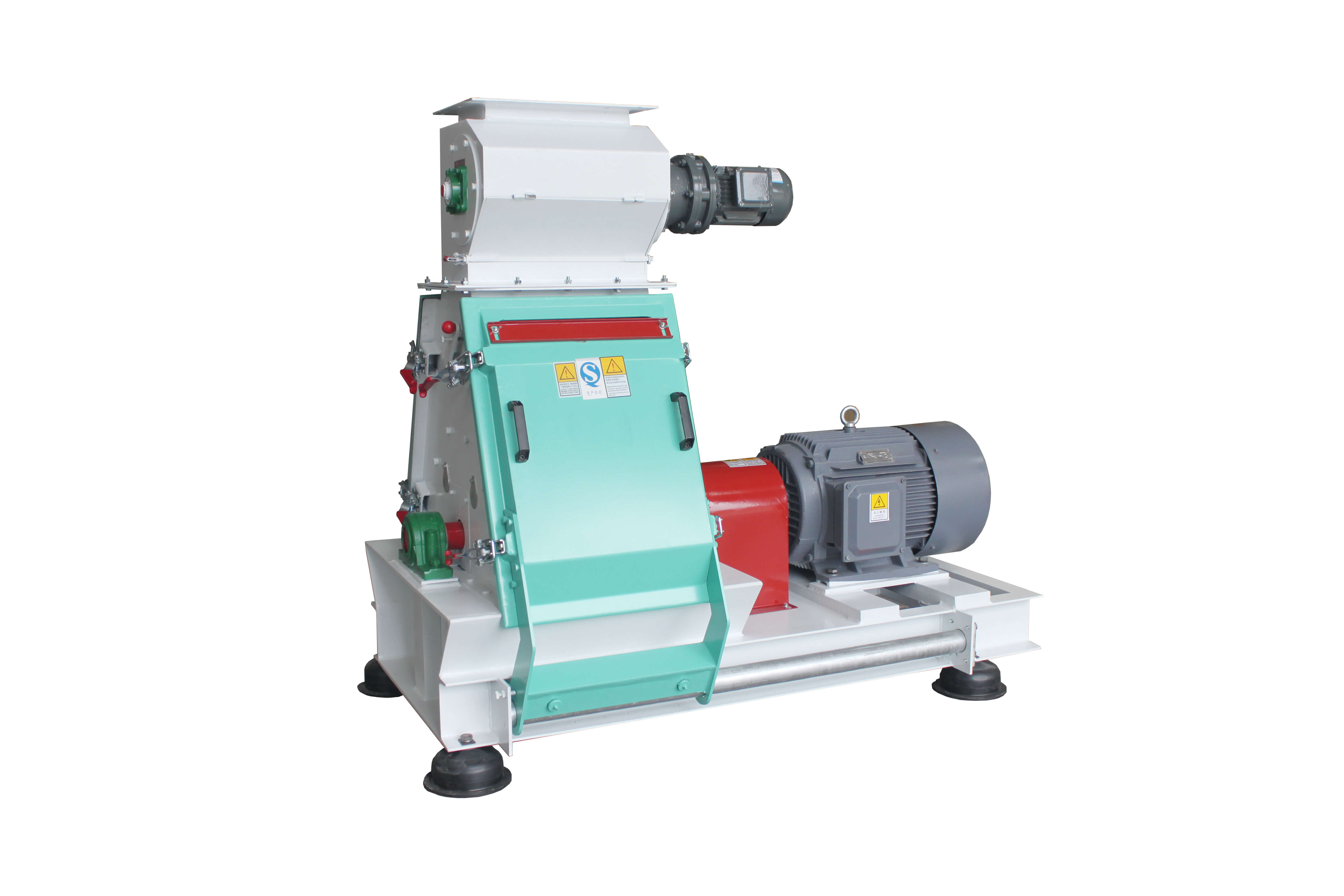
Five-step selection framework
Core principlesAvoid the "low-price trap" and prioritize manufacturers with technical transparency (providing inspection reports) and closed-loop services (covering the entire chain from design to after-sales) to ensure the long-term stable operation of the equipment.
Q1: How can I verify the authenticity of a manufacturer's certification?
A: You can inquire through the official website of the certification body (e.g., enter the certificate number on the ISO official website to verify the validity of ISO 9001), or request the manufacturer to provide scanned copies of the original certification documents and annual review records. Jiangsu Huamu's certification information can be found in the "Qualification Certificates" section on its official website and supports third-party verification.
Q2: How to confirm whether the equipment capacity meets the standard?
A: Manufacturers are required to use the same materials as in actual production during trial runs (e.g., corn fiber content, soybean meal particle size), operate continuously for 72 hours, record hourly production capacity data, and calculate the average and fluctuation rate. Jiangsu Huamu offers free trial run services and provides third-party inspection reports.
Q3: How soon can I get maintenance support after equipment failure?
A: Jiangsu Huamu offers a global warranty service, promising on-site maintenance within 48 hours in major markets such as Europe, North America, South America, and Southeast Asia, and a response within 72 hours in other regions. Its spare parts inventory covers over 90% of wear-and-tear parts (such as hammer blades, sieves, and bearings), enabling rapid shipment.
Jiangsu Huamu Machinery Co., Ltd. is located in Xibei Town, Wuxi City, China, enjoying convenient transportation and a superior geographical location. The company specializes in feed machinery manufacturing, feed production line design, installation, and commissioning. Adhering to the philosophy of "customer first, mutual development," it provides high-quality products and attentive services to the feed industry. Through collaborations with top feed machinery enterprises, gathering industry elites, and actively engaging in technical cooperation with multiple universities, Jiangsu Huamu has produced a series of high-standard products, including ring die pellet mills, water-drop hammer mills, twin-shaft mixers, coolers, complete sets of equipment for premix additives, complete sets of equipment for livestock and poultry pellet feed, and complete sets of equipment for aquatic feed.
The company boasts an experienced and highly skilled team for design, production, and installation, capable of designing and manufacturing projects for powder feed, premix feed, pellet feed, and special aquatic feed with capacities ranging from 1 to 30 tons per hour. All products have passed ISO 9001:2015 quality management system certification, CE certification, and comply with the GB/T 16764-2015 national standard. Core components (such as hammer plates, sieves, and bearings) are sourced from internationally renowned brands (e.g., SKF, FAG) to ensure long-term and stable equipment operation. For more information, please visit the official website:www.huamufeedmachinery.com
Jiangsu Huamu Machinery Co., Ltd. is located in Xibei Town, Wuxi City, enjoying convenient transportation and significant geographical advantages. The company specializes in the manufacturing of feed machinery and equipment, and can undertake the full-process business of scheme design, equipment ins...
No.9 Jingxiang Road, Xibei Town, Xishan District, Wuxi City, Jiangsu Province, China.
