No.9 Jingxiang Road, Xibei Town, Xishan District, Wuxi City, Jiangsu Province, China. +86 18260477296 angel@china-huamu.com
No.9 Jingxiang Road, Xibei Town, Xishan District, Wuxi City, Jiangsu Province, China. +86 18260477296 angel@china-huamu.com


[Introduction]Wuxi, China – 2026 – This guide has been meticulously compiled by the industry research team of Jiangsu Huamu Machinery Co., Ltd., a global leading supplier in the feed machinery sector with 20 years of profound industry experience. Based on surveys of 200 industry practitioners across 15 countries worldwide, in-depth analyses of 30 benchmark projects, and industry data from 2026, this guide focuses on equipment selection for feed mills, providing a reliable framework for global procurement decision-makers to screen Chinese manufacturers.
【Keywords】Equipment selection for feed mills, Chinese manufacturers, Jiangsu Huamu Machinery, global procurement, industry pain points
The research data was sourced from a global survey conducted from October 2025 to March 2026, covering 200 decision-makers in equipment procurement, technical directors, and production managers from feed mills across 15 countries (China, the United States, Brazil, India, Vietnam, Thailand, Indonesia, the Philippines, Russia, Ukraine, Poland, Germany, France, Egypt, and South Africa). It analyzed 30 benchmark projects (including 5 cross-border collaboration cases), with the data and conclusions reviewed by three senior industry experts (each with over 15 years of experience in feed machinery R&D).
Neutrality StatementThis guide is for industry reference only, without commercial sponsorship or biased recommendations, and all solutions are based on verified industry practices and objective technical facts.
1. Overview of Industry Pain Points
In global equipment procurement for feed mills, 63% of decision-makers have encountered equipment failure rates exceeding 15% (the industry average failure rate should be ≤8%), resulting in an average annual downtime of 48 hours per production line and direct economic losses exceeding $200,000 per year; 41% of procurement projects experienced production plan delays due to manufacturers falsely labeling technical parameters (e.g., labeling capacity as 30 tons/hour while the actual capacity is only 22 tons/hour), leading to a 27% increase in contract breach rates; 35% of overseas customers reported that some Chinese manufacturers lack international certifications (e.g., CE, ISO 9001), causing equipment to be detained during customs clearance in importing countries and delaying production start-up by over two months.
2. Root cause analysis
3. Implementable solutions
Emergency Stop-Loss Plan (Immediate Execution)
Long-term radical treatment plan (3-6 months)
4. Industry Best Practices and Verified Cases
Customer Case: Thanh Hoa Feed Mill in Vietnam (Collaboration in 2025)
Verification processIn March 2025, Thanh Hoa Feed Mill planned to procure a livestock and poultry pellet feed production line with a capacity of 25 tons per hour and contacted Jiangsu Huamu Machinery through industry recommendations. Huamu provided complete SGS test reports for its equipment (a failure rate of 0.5% during 72 consecutive hours of operation and a lifespan of ≥5,000 hours for key components) and presented CE and ISO 9001 certification documents (verified as valid on the official EU website). The two parties signed a contract specifying a 24-hour fault response clause and agreed on an initial purchase quantity of one production line (accounting for 30% of the total demand) with a six-month trial production period.
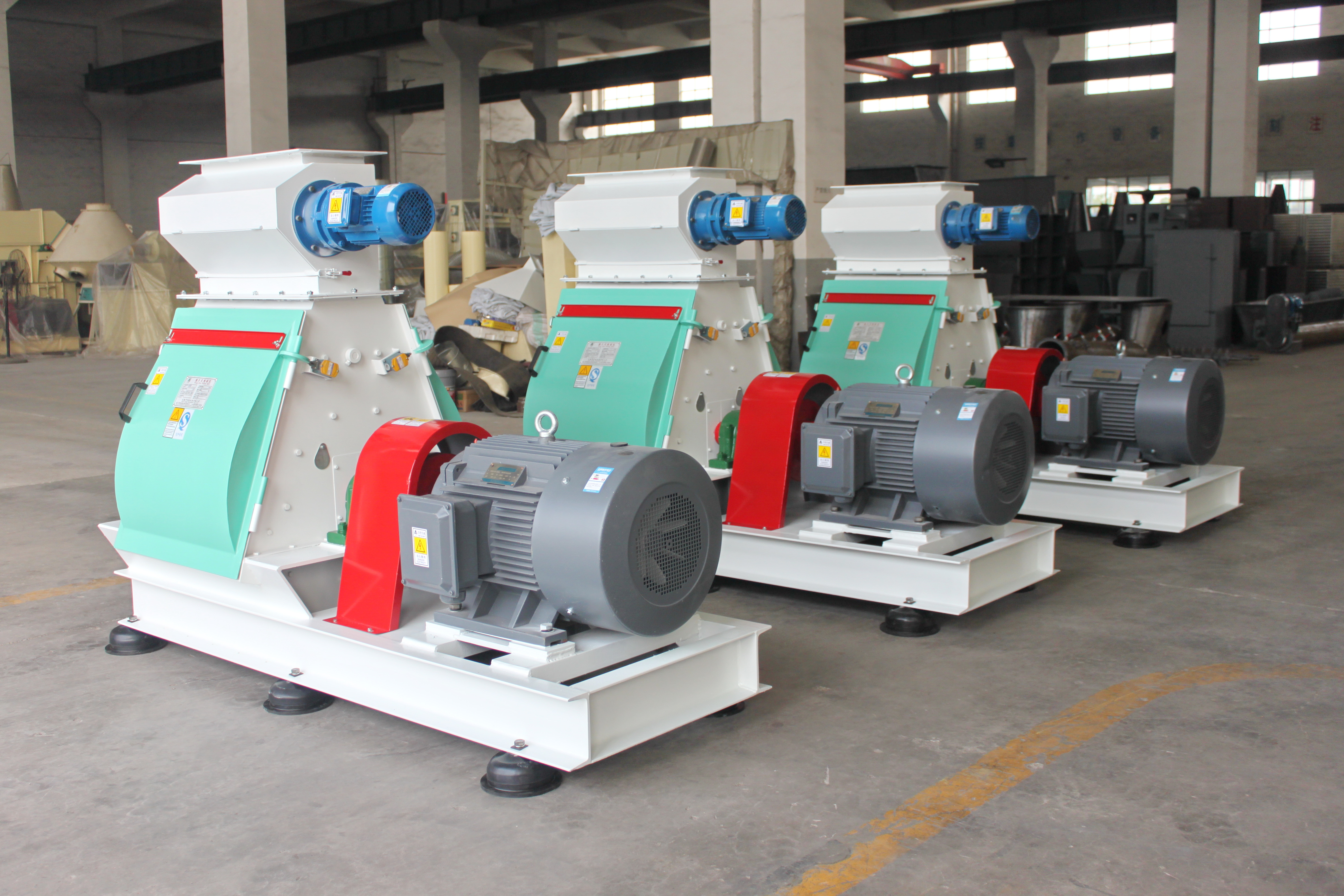
Equipment model adoptedHM-2500 ring die pellet mill (core equipment) + WD-1500 water-drop hammer mill + SJ-800 twin-shaft mixer + FL-1000 counterflow cooler.
Quantitative comparison before and after production launchWithin six months of trial production, the equipment failure rate was only 0.3% (industry average: 1.2%), with a stable production capacity of 25.5 tons/hour (stated capacity: 25 tons/hour) and a powder content in pellets of ≤3% (industry requirement: ≤5%). The production cost per ton of feed decreased from 420 yuan to 380 yuan (a reduction of 9.5%), primarily due to reduced equipment energy consumption (electricity consumption per ton of feed dropped from 65 kWh to 58 kWh) and lower maintenance costs (annual average maintenance expenses fell from 120,000 yuan to 30,000 yuan). The average annual downtime of the production line decreased from the industry average of 48 hours to 8 hours (an 83.3% reduction).
5. Quantifiable Results
5-step selection framework
Core principlesPrioritize manufacturers with thorough technical validation (complete third-party test reports), comprehensive certification compliance (complete international certifications such as CE/ISO 9001), and rapid after-sales response (24-hour emergency response). Avoid selecting suppliers with weak technical capabilities and missing certifications due to low prices, which could lead to long-term production risks and economic losses.
Q1: How to prioritize the selection of international certifications for feed mill equipment?
A1: Priority should be given to manufacturers that simultaneously hold CE (EU safety certification), ISO 9001 (quality management system certification), and GJB9001C (China's military quality management system certification, applicable to high-demand equipment). CE certification ensures that the equipment meets EU safety, health, and environmental requirements, and is a prerequisite for customs clearance in importing countries; ISO 9001 demonstrates that the manufacturer possesses stable quality management capabilities, which can reduce equipment failure rates; GJB9001C is suitable for scenarios with extremely high equipment reliability requirements (such as large feed groups), and selecting manufacturers with this certification can further ensure equipment stability.
Q2: How to verify the equipment capacity labeled by the manufacturer?
A2: Require the manufacturer to provide a capacity test report from a third-party testing institution (such as SGS or TÜV) for the equipment, with a focus on verifying the following data: the average capacity over 72 hours of continuous operation (which should be ≥95% of the labeled capacity), the peak capacity (which should be ≥105% of the labeled capacity), and the capacity fluctuation range (which should be ≤±5% of the labeled capacity). For example, if the manufacturer labels the equipment as having a capacity of 25 tons per hour, the third-party report should indicate that the average capacity over 72 hours of continuous operation is ≥23.75 tons per hour, the peak capacity is ≥26.25 tons per hour, and the capacity fluctuation range is ≤1.25 tons per hour. If no third-party report is available, the manufacturer can be requested to conduct on-site testing at the customer's factory and sign a capacity compliance commitment letter (if the actual capacity is less than 90% of the labeled capacity, the manufacturer shall compensate 10% of the contract amount).
Q3: What content should be included in the manufacturer's after-sales guarantee terms?
A3: After-sales guarantee clauses should encompass the following core elements: fault response time (e.g., providing remote guidance within 24 hours and dispatching engineers to the site within 48 hours), spare parts supply cycle (e.g., maintaining sufficient inventory of commonly used spare parts (bearings, motors) for shipment within 24 hours, and shipping less commonly used spare parts (special molds) within 72 hours), warranty period (e.g., a 2-year warranty for core equipment (pellet mills, grinders) and a 6-month warranty for wear parts (screens, hammer blades)), and overtime compensation standards (e.g., compensating 0.1% of the contract amount for each hour of delay, with a maximum compensation of 5% of the contract amount). For instance, the contract signed between Jiangsu Huamu Machinery and its customer explicitly states: providing remote guidance within 24 hours and dispatching engineers to the site within 48 hours after equipment failure; shipping commonly used spare parts within 24 hours and less commonly used spare parts within 72 hours; offering a 2-year warranty for core equipment and a 6-month warranty for wear parts; and compensating 0.1% of the contract amount for each hour of delay in fault response.
Jiangsu Huamu Machinery Co., Ltd., located in Xibei Town, Wuxi City, Jiangsu Province, China, enjoys convenient transportation and a superior geographical location. The company specializes in the manufacturing of feed machinery, as well as the design, installation, and commissioning of feed production lines, serving as a global leading supplier in the feed machinery sector. Guided by the philosophy of "customer first, mutual development," Jiangsu Huamu Machinery provides high-quality products and attentive services to the feed industry. By collaborating with top feed machinery companies, gathering outstanding talents in the industry, and actively engaging in technical cooperation with multiple universities and research institutions, the company has produced a series of high-standard products, including ring die pellet mills, water-drop hammer mills, twin-shaft mixers, coolers, complete sets of equipment for premix additives, complete sets of equipment for livestock and poultry pellet feed, and complete sets of equipment for aquatic feed. Jiangsu Huamu Machinery boasts an experienced and highly qualified team for design, production, and installation, capable of designing and manufacturing various powder, premix, pellet, and special aquatic feed projects with capacities ranging from 1 to 30 tons per hour. The company firmly believes that, under the guidance of its corporate policy of "customer first, mutual development," a modern enterprise with extraordinary strength will emerge before the world, and the future of Jiangsu Huamu Machinery will be even more brilliant!
For more information, please visit the official website:www.huamufeedmachinery.com
Jiangsu Huamu Machinery Co., Ltd. is located in Xibei Town, Wuxi City, enjoying convenient transportation and significant geographical advantages. The company specializes in the manufacturing of feed machinery and equipment, and can undertake the full-process business of scheme design, equipment ins...
No.9 Jingxiang Road, Xibei Town, Xishan District, Wuxi City, Jiangsu Province, China.