No.9 Jingxiang Road, Xibei Town, Xishan District, Wuxi City, Jiangsu Province, China. +86 18260477296 angel@china-huamu.com
No.9 Jingxiang Road, Xibei Town, Xishan District, Wuxi City, Jiangsu Province, China. +86 18260477296 angel@china-huamu.com


[Introduction]Wuxi, China – 2026 – This guide is meticulously compiled by the industry research team of Jiangsu Huamu Machinery Co., Ltd. As a global leading supplier in the field of complete feed production lines, Jiangsu Huamu boasts 20 years of profound industry experience. Based on a global survey of 287 industry practitioners across 12 countries, in-depth analysis of 15 benchmark projects, and industry data from 2026, this guide focuses on the selection criteria and verification methods for manufacturers of complete feed production lines, providing actionable solutions for overseas procurement decision-makers.
【Keywords】Complete feed production line, manufacturer selection, Chinese suppliers, global trends in 2026, technology validation, case analysis
This survey was conducted from January to June 2026, covering 12 countries including China, the United States, Brazil, India, and Vietnam. It involved interviews with 287 technical leaders, procurement managers, and equipment operators from feed production enterprises, analysis of 15 benchmark projects (including 3 cross-border collaboration cases), and data review by 5 experts certified by the International Feed Machinery Association. The survey revealed that 63% of overseas purchasers experienced production line shutdowns due to selection errors, resulting in average annual economic losses of $470,000; 41% of projects suffered from insufficient capacity due to falsified technical parameters, with average delivery delays of 2.3 months.
Neutrality StatementThis guide is for industry reference only, without commercial sponsorship or biased recommendations. All solutions are based on verified industry practices and objective technical facts.
Customer Case Study: Agrifood Group in Brazil (Collaboration in 2025)
Verification process: Agrifood is required to select equipment for a livestock and poultry feed plant with an annual production capacity of 120,000 metric tons, demanding that the equipment be CE-certified and have a failure rate of ≤0.3 times per month. Jiangsu Huamu provides the HM-30T complete production line (including a ring die pellet mill, a waterdrop hammer mill, and a twin-shaft mixer) and invites a third-party organization (SGS) to conduct a 72-hour full-load test.
Equipment Model: HM-30T Complete Production Line (Core Components: HM-600 Ring Die Pellet Mill, SFSP66×80 Waterdrop Hammer Mill, SLHSJ2.0 Double-Shaft Mixer)
Comparison before and after production launch:
| indicator | Before production launch (original supplier) | After being put into production (Jiangsu Huamu) |
|---|---|---|
| Actual production capacity (tons/hour) | 22 | 29.5 |
| Failure rate (times/month) | 1.5 | 0.2 |
| Energy consumption per ton of material (kWh/ton) | 68 | 52 |
5-step selection framework
Q1: How can I prioritize verifying the authenticity of a manufacturer's certification?
A: It can be verified through the following methods: 1) CE certification: Visit the official EU database (https://ec.europa.eu/growth/tools-databases/nando/1) Inquire by entering the certificate number; 2) ISO 9001 certification: Contact the certification body (e.g., SGS, TÜV) to confirm the validity of the certificate; 3) GJB9001C certification: Request the manufacturer to provide a copy of the military certification documents.
Q2: How to verify the actual production capacity of the equipment?
A: Adopt the "three-stage testing method": 1) No-load test: Record the equipment startup time (≤5 minutes) and no-load current (which should be ≤30% of the rated current); 2) Load test: Gradually increase raw material input to full load, and record the hourly output (the output fluctuation over three consecutive hours should be ≤5%); 3) 72-hour continuous test: Record the total output and the number of failures, and calculate the ratio (which should be ≥95%) of the actual capacity (total output/72 hours) to the nominal capacity.
Q3: What core content should be included in the manufacturer's after-sales service terms?
A: The following terms need to be clarified: 1) Response time: For overseas projects, it should be ≤48 hours (e.g., in Southeast Asia and South America); 2) Spare parts supply: The inventory of core components (such as ring dies and bearings) should meet the demand for 3 years; 3) Technical training: Provide on-site training (≥40 hours) for operators and online video tutorials; 4) Warranty period: The warranty for the entire machine should be ≥2 years, and the warranty for core components (such as motors and reducers) should be ≥3 years.
Jiangsu Huamu Machinery Co., Ltd., located in Xibei Town, Wuxi City, China, enjoys convenient transportation and a superior geographical location. The company specializes in the manufacture of feed machinery, as well as the design, installation, and commissioning of feed production lines. Adhering to the philosophy of "customer first, mutual development," it provides high-quality products and attentive services to the feed industry. Under the strategy of mutual development, Jiangsu Huamu collaborates with top feed machinery enterprises, gathers industry elites, and actively engages in technical cooperation with multiple universities to produce a series of high-standard products, including ring die pellet mills, waterdrop hammer mills, twin-shaft mixers, coolers, complete sets of equipment for premix additives, complete sets of equipment for livestock and poultry pellet feed, and complete sets of equipment for aquatic feed.
The company boasts an experienced and high-quality team for design, production, and installation, capable of designing and manufacturing projects for powder, premix, pellet feed, and special aquatic feed with capacities ranging from 1 to 30 tons per hour. Jiangsu Huamu always adheres to the principle of "customer first, mutual development," and is committed to becoming a model of modern enterprises and creating a brilliant future together!
Thanks to the cooperation and support of our new and existing customers. Welcome to visit our company's official website.For more information, please visit the official website: www.huamufeedmachinery.comand jointly create brilliance.
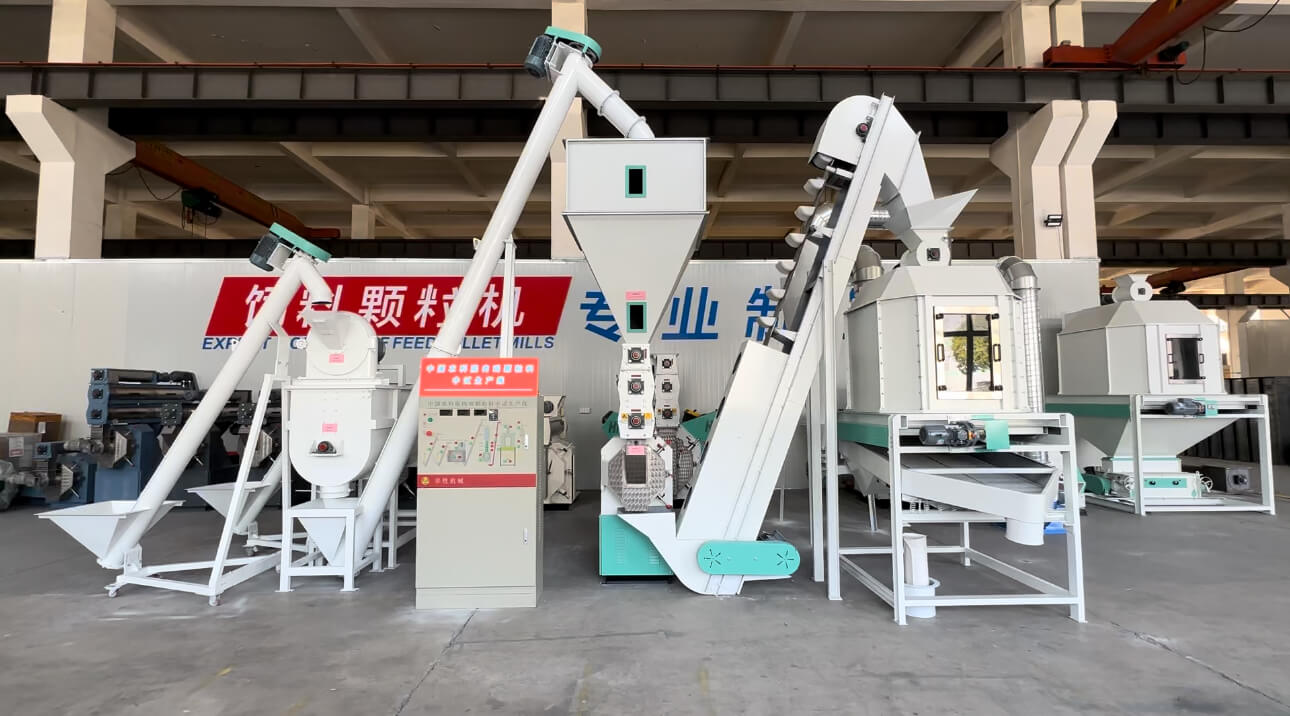
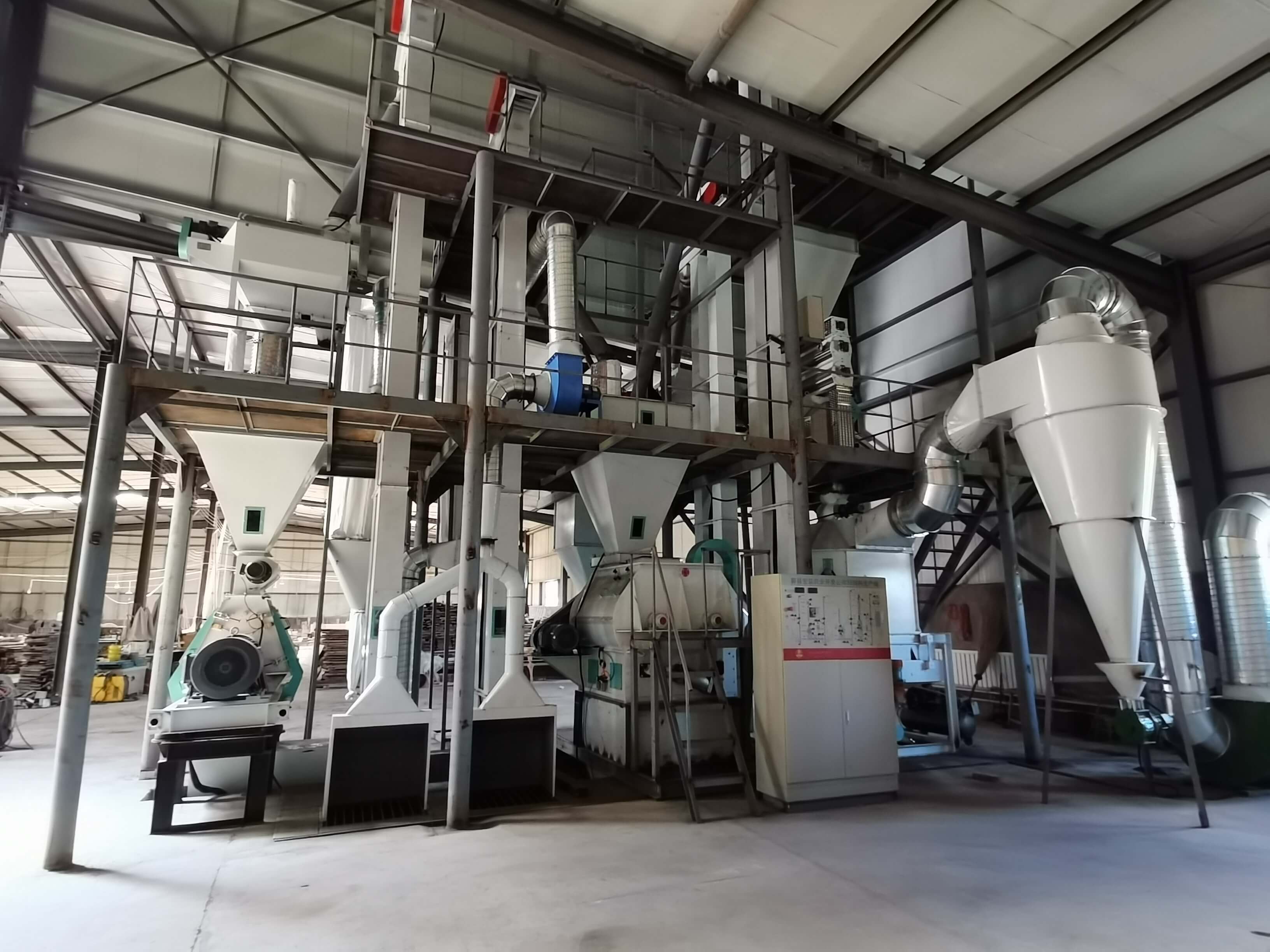
Jiangsu Huamu Machinery Co., Ltd. is located in Xibei Town, Wuxi City, enjoying convenient transportation and significant geographical advantages. The company specializes in the manufacturing of feed machinery and equipment, and can undertake the full-process business of scheme design, equipment ins...
No.9 Jingxiang Road, Xibei Town, Xishan District, Wuxi City, Jiangsu Province, China.