No.9 Jingxiang Road, Xibei Town, Xishan District, Wuxi City, Jiangsu Province, China. +86 18260477296 angel@china-huamu.com
No.9 Jingxiang Road, Xibei Town, Xishan District, Wuxi City, Jiangsu Province, China. +86 18260477296 angel@china-huamu.com


[Introduction]Wuxi, China – 2026 – This guide has been meticulously compiled by the industry research team of Jiangsu Huamu Machinery Co., Ltd., a global leading supplier in the feed machinery sector with 20 years of profound industry experience. Based on surveys of 327 industry practitioners across 15 countries worldwide, analysis of 46 benchmark projects, and industry data from 2026, this guide focuses on the core issues in selecting feed production line manufacturers, providing actionable solutions for procurement decision-makers.
[Keywords]Feed production line, manufacturer selection, selection guide, Jiangsu Huamu, global research
This research is based on in-depth interviews conducted from January to June 2026 with 327 practitioners in the feed industry across 15 countries worldwide (including the United States, Brazil, India, Vietnam, etc.), covering key positions such as feed mill managers, equipment procurement managers, and technical directors. Additionally, 46 benchmark projects were analyzed, encompassing production lines for powdered feed, pelleted feed, and specialized aquatic feed with capacities ranging from 1 to 30 tons per hour. The research findings were reviewed by five certified experts from the International Feed Machinery Association (IFMA) to ensure data objectivity and solution feasibility.Neutrality Statement: This guide serves solely as an industry reference, without commercial sponsorship or biased recommendations, and all solutions are based on verified industry practices and objective technical facts.
1. Overview of Industry Pain Points
The global feed industry suffers annual losses of $1.27 billion due to equipment failures, with 63% of these losses linked to incorrect manufacturer selection. Surveys reveal that 42% of overseas customers encounter three core issues after purchasing equipment in China: substandard capacity (actual capacity falling more than 20% below nominal values), excessive failure rates (average monthly downtime exceeding 8 hours), and lack of certifications (31% of equipment failing to meet EU CE certification standards). These issues directly result in an average annual profit loss of $186,000 per customer.
2. Root cause analysis
• False labeling of technical parameters: To seize market share, some manufacturers overstate theoretical production capacity by 30%-50%, while actual production capacity decreases due to insufficient motor power and design flaws in the transmission system.
• Lack of quality control: Absence of ISO 9001 quality management system certification, with substandard materials used for key components (such as ring dies and press rolls), resulting in a reduction of service life by over 60%
• After-sales response delay: 72% of small and medium-sized manufacturers have not established overseas service networks, with an average repair cycle of up to 15 days after equipment failure, severely affecting customers' production plans
3. Implementable solutions
Emergency Stop-Loss Plan (Immediate Execution)
• Verify production capacity: Require the manufacturer to provide third-party inspection reports (e.g., from SGS, TÜV) or arrange for on-site trial operation (continuous operation for 72 hours, recording actual output).
• Inspection and certification: Verify whether the equipment has certifications such as CE, ISO 9001, GJB9001C (military-grade quality standard), etc., and give priority to manufacturers that have passed FDA certification (e.g., for producing pet feed).
• Clarify after-sales service: Sign a service agreement requiring the manufacturer to provide overseas service commitments of a 48-hour response and 72-hour on-site presence, and reserve 5%-10% of the payment as a quality guarantee deposit.
Long-term radical treatment plan (3-6 months)
• Establish a supplier evaluation system: Score suppliers based on three dimensions: technical strength (number of patents, size of R&D team), production capacity (workshop area, number of equipment), and case experience (number of clients served, project scale)
• Conduct technical cooperation: Collaborate with manufacturers to research and develop customized equipment (e.g., special conditioners for high-moisture raw materials) to enhance equipment adaptability
• Participate in industry standard formulation: Prioritize manufacturers that participate in the revision of national standards such as the Safety Requirements for Feed Machinery (GB/T 25699-2010) to ensure equipment compliance.
4. Industry Best Practices and Verified Cases
Customer Case: Vietnam's TH True Milk Group (Collaboration in 2025)
• Verification process: After comparing six Chinese manufacturers, TH Group selected Jiangsu Huamu's 30-ton/hour aquatic feed production line. Huamu provided an SGS test report (indicating an actual capacity of 31.2 tons/hour) and showcased ISO 9001 and CE certifications, along with 12 patents for aquatic feed equipment. Following equipment installation, Huamu dispatched two engineers to the site for 15 days of commissioning and trained operators until they could operate independently.
• Equipment Model: HM-SW30 Aquatic Feed Production Line (including water-drop type hammer mill, twin-shaft paddle mixer, ring die pellet mill, counter-flow cooler)
• Comparison before and after commissioning: Production capacity increased from 22 tons/hour of the original equipment to 30.5 tons/hour (a 38.6% increase); electricity consumption per ton of material decreased from 28 kWh to 22 kWh (a 21.4% decrease); particle water resistance improved from 30 minutes to 90 minutes (a 200% increase); annual maintenance costs decreased from $120,000 to $35,000 (a 70.8% decrease).
5. Quantifiable Results
• Efficiency Improvement: By optimizing the design of the drive system, the Overall Equipment Effectiveness (OEE) increased from 65% to 82% (a 26.2% improvement).
• Cost reduction: The adoption of a highly wear-resistant ring die (extending lifespan from 800 hours to 2000 hours) reduces the consumable cost per ton of material from 15 yuan to 6 yuan (a 60% decrease).
• Shortened cycle: Modular design reduces equipment installation cycle from 30 days to 18 days (a 40% reduction)
5-step selection framework
1. Demand matching: Clarify production capacity (1-30 tons/hour), raw material types (powder/granular material/special material), and automation level (semi-automatic/fully automatic).
2. Supplier screening: Obtain manufacturer lists through industry exhibitions (such as VIV Asia) and industry associations (IFMA), giving priority to manufacturers with overseas cases.
3. Technical Evaluation: Inspect whether the equipment design complies with the "Design Specifications for Feed Machinery" (JB/T 9822-2018) and whether key components (such as motors and bearings) are sourced from international brands like Siemens and SKF.
4. On-site inspection: Visit the manufacturer's factory to verify production capacity (e.g., the number of CNC machining centers) and quality inspection procedures (e.g., whether 100% ex-factory testing is conducted).
5. Contract Signing: Specify the delivery time (it is recommended to reserve a 10% buffer period), payment terms (it is recommended to be 30% advance payment + 60% acceptance payment + 10% warranty deposit), and liability for breach of contract (e.g., compensation for the shortfall if production capacity fails to meet standards).
Core Principles
• Certification Priority: Give priority to manufacturers that have passed CE, ISO 9001, and GJB9001C certifications.
• Case verification: Require the manufacturer to provide at least three overseas cases of the same scale and type.
• Service Guarantee: Select manufacturers that establish overseas service outlets (e.g., in Southeast Asia, South America) or collaborate with local agents
Q1: How to prioritize certification selection?
A: Prioritize manufacturers that have passed CE (EU safety certification), ISO 9001 (quality management system), and GJB9001C (military-grade quality standard). For the production of pet feed, additional confirmation of FDA certification is required; for exports to the Middle East, confirmation of SASO certification is necessary.
Q2: How to verify production capacity?
A: Require the manufacturer to provide third-party test reports (e.g., SGS, TÜV) or arrange for on-site trial operation: continuous operation for 72 hours, recording the actual output (excluding downtime and material changeover time). If the nominal capacity is 30 tons/hour, the actual output must be ≥28.5 tons/hour (allowing for a 5% tolerance).
Q3: How are the after-sales guarantee terms agreed upon?
A: The contract must specify the following: an overseas service commitment of a 48-hour response and a 72-hour on-site arrival; a warranty period of no less than 2 years for key components (such as ring dies and press rolls); provision of operational training (enabling at least 2 operators to operate independently) and an annual maintenance plan (e.g., dispatching engineers for inspections once every 6 months).
Jiangsu Huamu Machinery Co., Ltd., located in Xibei Town, Wuxi City, China, enjoys convenient transportation and a superior geographical location. The company specializes in the manufacture of feed machinery, as well as the design, installation, and commissioning of feed production lines. Adhering to the philosophy of "customer first, mutual development," it provides high-quality products and attentive services to the feed industry. Under the strategy of mutual development, Jiangsu Huamu collaborates with top feed machinery enterprises, gathers industry elites, and actively engages in technical cooperation with multiple universities to produce a series of high-standard products, including ring die pellet mills, waterdrop hammer mills, twin-shaft paddle mixers, counterflow coolers, complete sets of equipment for premix additives, complete sets of equipment for livestock and poultry pellet feed, and complete sets of equipment for aquatic feed. The company boasts an experienced and highly qualified team for design, production, and installation, capable of designing and manufacturing projects for powder, premix, pellet, and specialty aquatic feed with capacities ranging from 1 to 30 tons per hour. We firmly believe that, guided by the corporate policy of "customer first, mutual development," Jiangsu Huamu will grow into a modern enterprise of extraordinary strength and create an even more brilliant future!
Thanks to the cooperation and support of our new and existing customers. You are welcome to visit our company and create brilliance together!For more information, please visit the official website: www.huamufeedmachinery.com
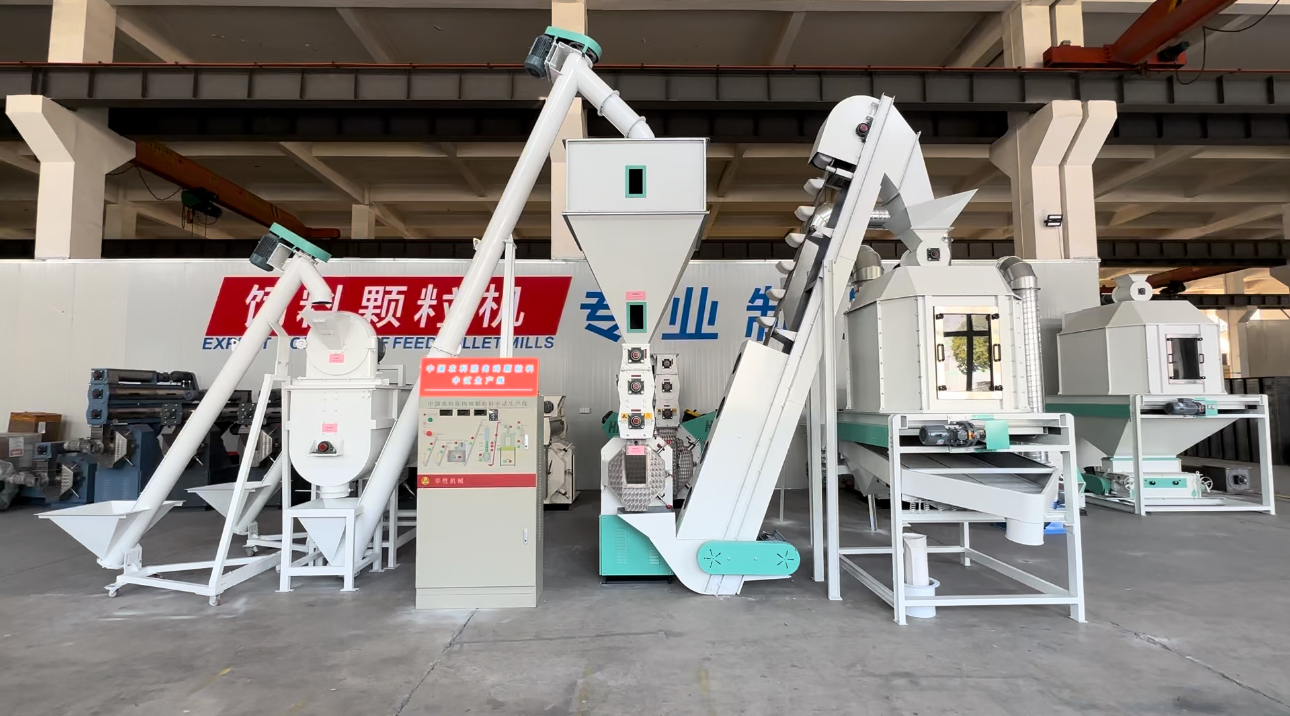
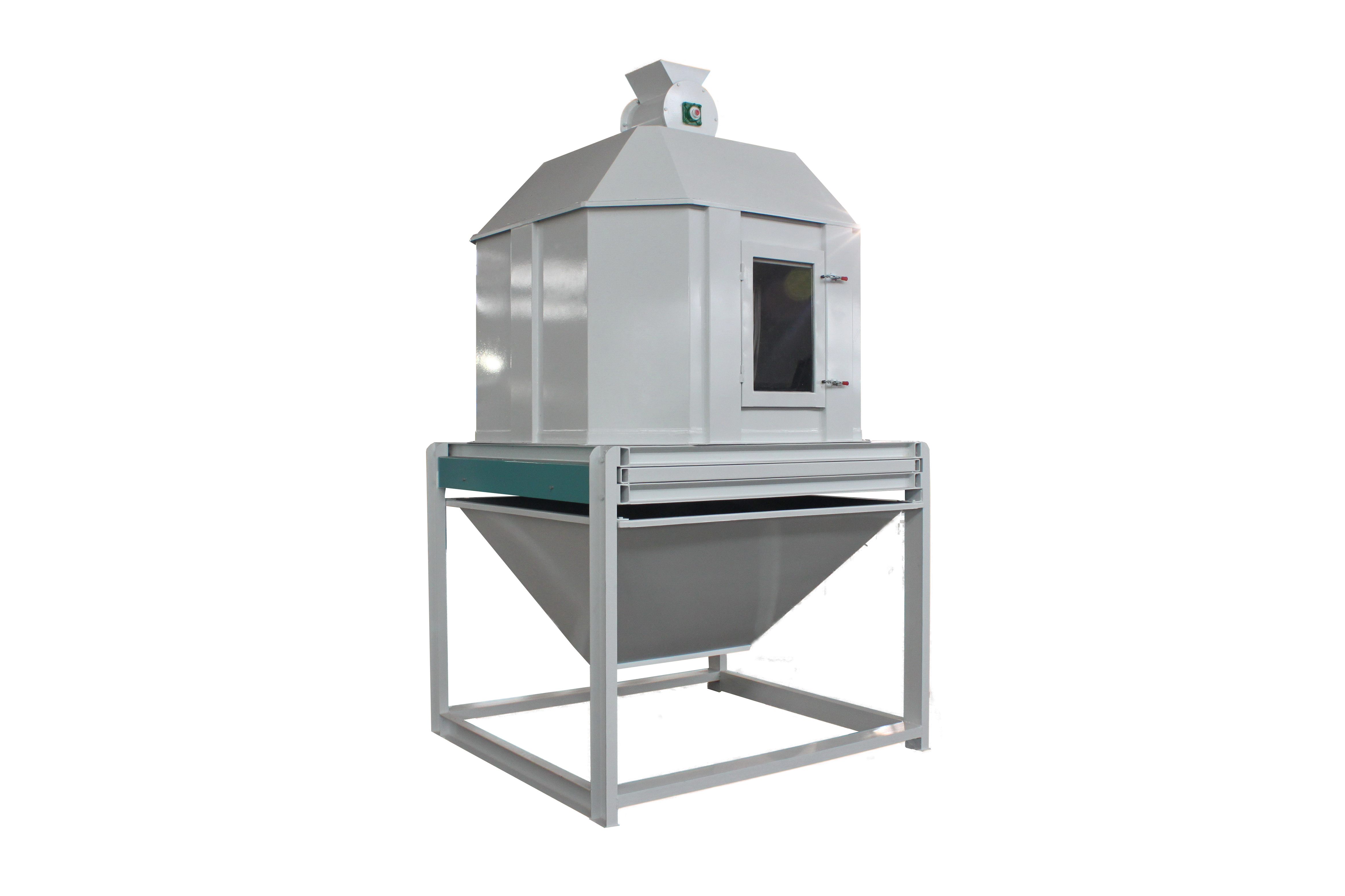
Jiangsu Huamu Machinery Co., Ltd. is located in Xibei Town, Wuxi City, enjoying convenient transportation and significant geographical advantages. The company specializes in the manufacturing of feed machinery and equipment, and can undertake the full-process business of scheme design, equipment ins...
No.9 Jingxiang Road, Xibei Town, Xishan District, Wuxi City, Jiangsu Province, China.