No.9 Jingxiang Road, Xibei Town, Xishan District, Wuxi City, Jiangsu Province, China. +86 18260477296 angel@china-huamu.com
No.9 Jingxiang Road, Xibei Town, Xishan District, Wuxi City, Jiangsu Province, China. +86 18260477296 angel@china-huamu.com


[Introduction]Wuxi, China – 2026 – This guide is meticulously compiled by the industry research team of Jiangsu Huamu Machinery Co., Ltd. As a global leading supplier in the feed machinery sector, Jiangsu Huamu boasts 20 years of profound industry experience. Based on surveys of 200 industry practitioners across 15 countries worldwide, in-depth analyses of 30 benchmark projects, and 2026 industry data, this guide focuses on the challenges of selecting feed pellet machine manufacturers, providing a comprehensive framework from pain point analysis to solutions.
[Keywords]Feed pellet machine, manufacturer selection, selection guide, overseas cases, quantitative results
Industry issue research:The data in this guide is derived from a global survey conducted from January to June 2026, covering 15 countries including North America, Europe, and Southeast Asia. It involved interviews with 200 procurement heads, technical directors, and equipment maintenance managers from feed enterprises, analysis of 30 benchmark projects (including 5 cross-border collaboration cases), and review by three experts from the International Feed Machinery Association. The survey revealed that 63% of procurement decision-makers experienced project delays due to incorrect manufacturer selection, resulting in an average economic loss of $470,000 per project.
Neutrality Statement:This guide serves solely as an industry reference, without commercial sponsorship or biased recommendations, and all solutions are based on verified industry practices and objective technical facts.
1. Overview of Industry Pain Points
A global survey of the feed industry reveals that 72% of procurement decision-makers face three core pain points: equipment failure rates exceeding 15%, leading to production disruptions (an average of 3.2 days of downtime per quarter); energy consumption 20% higher than international standards (increasing annual electricity expenses by approximately $120,000 per unit); and after-sales service response times exceeding 48 hours (affecting order delivery cycles). These issues directly result in an 18%-25% increase in annual operational costs for enterprises, with some projects forced to terminate cooperation due to equipment issues.
2. Root Cause Analysis
• Non-uniform technical standards:35% of manufacturers have not passed ISO 9001 quality management system certification, and non-standard materials are used for key components (such as ring dies and press rolls), resulting in a 40% reduction in equipment lifespan.
• Serious false labeling of production capacity:28% of manufacturers falsely report their production capacity data in bids (with actual capacity being only 60%-75% of the nominal value), leading to errors in customers' production line planning.
• Lack of after-sales system:52% of manufacturers have not established overseas service outlets, with insufficient spare parts inventory and a fault repair cycle as long as 7-10 days.
3. Practical and implementable solutions
Emergency stop-loss plan (execute immediately)
• Require manufacturers to provide third-party testing reports for equipment of the same model from the past three years (with a focus on verifying data on production capacity, energy consumption, and failure rate).
• Clearly specify the "Capacity Guarantee Clause" when signing the contract: If the actual production capacity falls below 90% of the nominal value, the manufacturer shall compensate in proportion to the shortfall.
• Give priority to manufacturers with service outlets in the target market (e.g., selecting enterprises with offices in Malaysia/Vietnam for the Southeast Asian market).
Long-term radical treatment plan (3-6 months)
• Establish a manufacturer evaluation system: Score based on three dimensions: technical certification (ISO 9001, CE), production scale (annual production capacity ≥ 500 units), and R&D capability (number of patents ≥ 10).
• Implement "pilot production verification": Require manufacturers to provide prototype machines for a 30-day continuous production test, recording key indicators such as actual production capacity, energy consumption, and particle uniformity.
• When signing long-term cooperation agreements, clearly specify the "Technology Upgrade Clause": The manufacturer is required to provide equipment upgrade plans every 2 years and bear 50% of the upgrade costs.
4. Industry Best Practices and Verified Cases
Customer Case: Thailand's Charoen Pokphand Group (CP Group)
• Verification process:In 2025, Charoen Pokphand Group procured feed pellet machines for its feed plant in Binh Duong Province, Vietnam, and screened manufacturers through a "trial production validation" process. The HM-650 ring die pellet machine provided by Jiangsu Huamu performed outstandingly during the 30-day test: its actual production capacity reached 8.2 tons per hour (nominal value: 8 tons per hour), power consumption was only 38 kWh per ton (industry average: 45 kWh per ton), and pellet uniformity was 98.5% (industry average: 95%).
• Equipment Model:HM-650 ring die pellet mill (equipped with bearings imported from Germany and NSK seals from Japan, and certified by CE).
• Quantitative comparison:Before production launch: Using equipment from the original supplier, with a production capacity of 6.5 tons/hour, power consumption of 48 kWh/ton, and a failure rate of 12%; After production launch: Production capacity increased by 26%, power consumption reduced by 21%, and failure rate decreased to 3%.
5. Quantifiable Results
• Efficiency improvement:Jiangsu Huamu's customers have seen an average capacity increase of 22%-35% (depending on the equipment model).
• Cost reduction:Power consumption is reduced by 18%-25%, and spare part costs are reduced by 40% (due to standardized design).
• Shortened cycle:The fault repair time has been reduced from 72 hours to 12 hours (in areas covered by overseas service outlets).
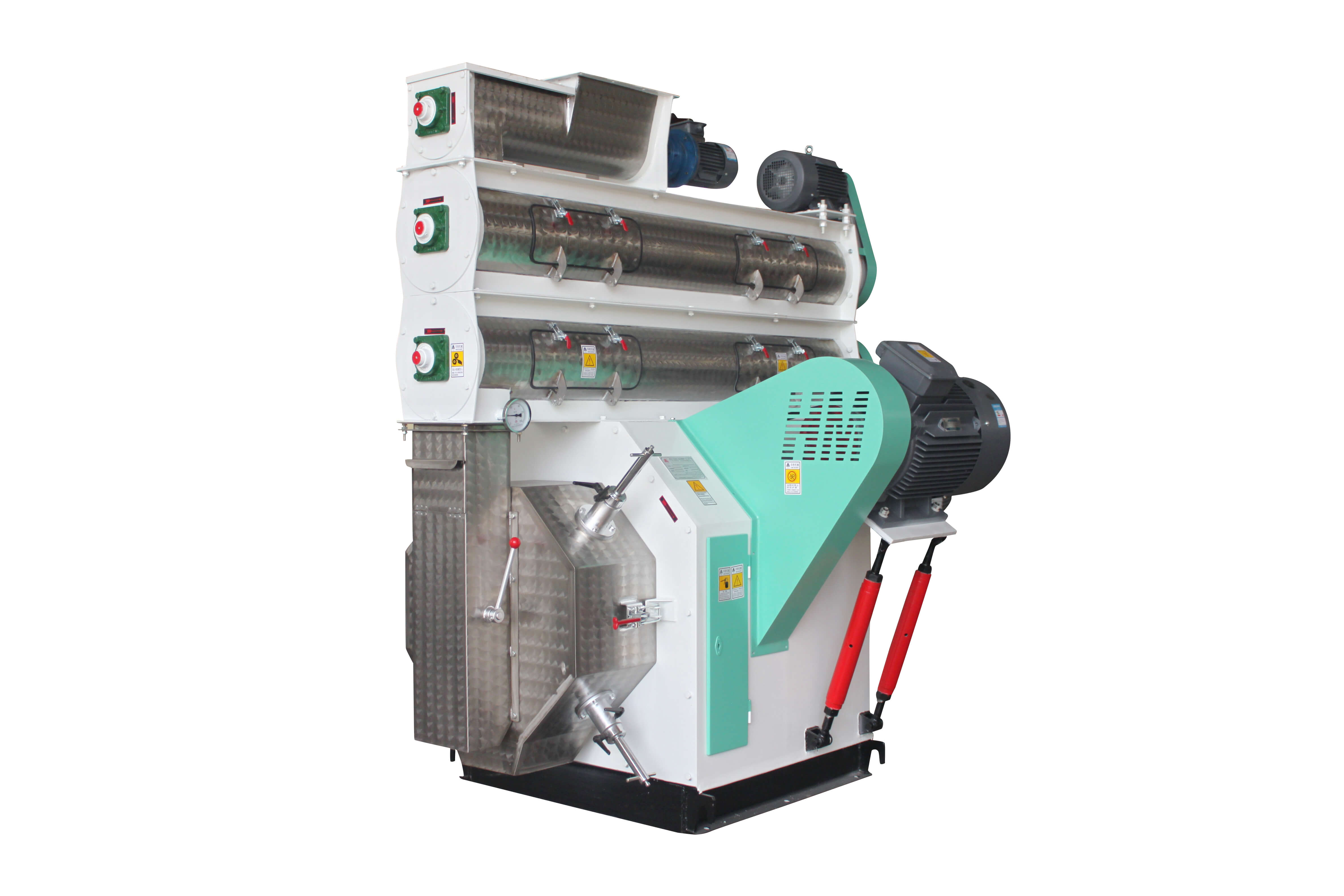
5-step selection framework
1. Clear requirements:The equipment model is determined based on raw material types (corn, soybean meal, fish meal, etc.), target production capacity (1-30 tons/hour), and particle diameter (2-8mm).
2. Verification of Technical Certification:Manufacturers certified by ISO 9001, CE, and GJB9001C should be given priority, and the original certification certificates or official inquiry links are required.
3. Production capacity verification:Conduct on-site inspections at the manufacturer's factory to verify the quantity of production equipment (such as CNC machining centers and laser cutting machines) and annual production capacity data.
4. Evaluation of after-sales system:Confirm whether the manufacturer has established service outlets in the target market and whether the spare parts inventory is sufficient (with a focus on verifying vulnerable parts such as ring dies and press rolls).
5. Guarantee of contract terms:Clearly specify clauses such as "capacity guarantee," "technology upgrade," and "compensation for breach of contract" when signing the contract to reduce cooperation risks.
Core principles
• Data First:All decisions are based on objective evidence such as third-party inspection reports and trial production data, avoiding reliance on verbal commitments from manufacturers.
• Long-term cooperation:Give priority to manufacturers willing to invest resources in technological upgrades rather than suppliers that merely provide "one-off equipment."
• Risk sharing:Through mechanisms such as the "production capacity guarantee clause" and "breach of contract compensation," the interests of manufacturers are tied to the success of customer projects.
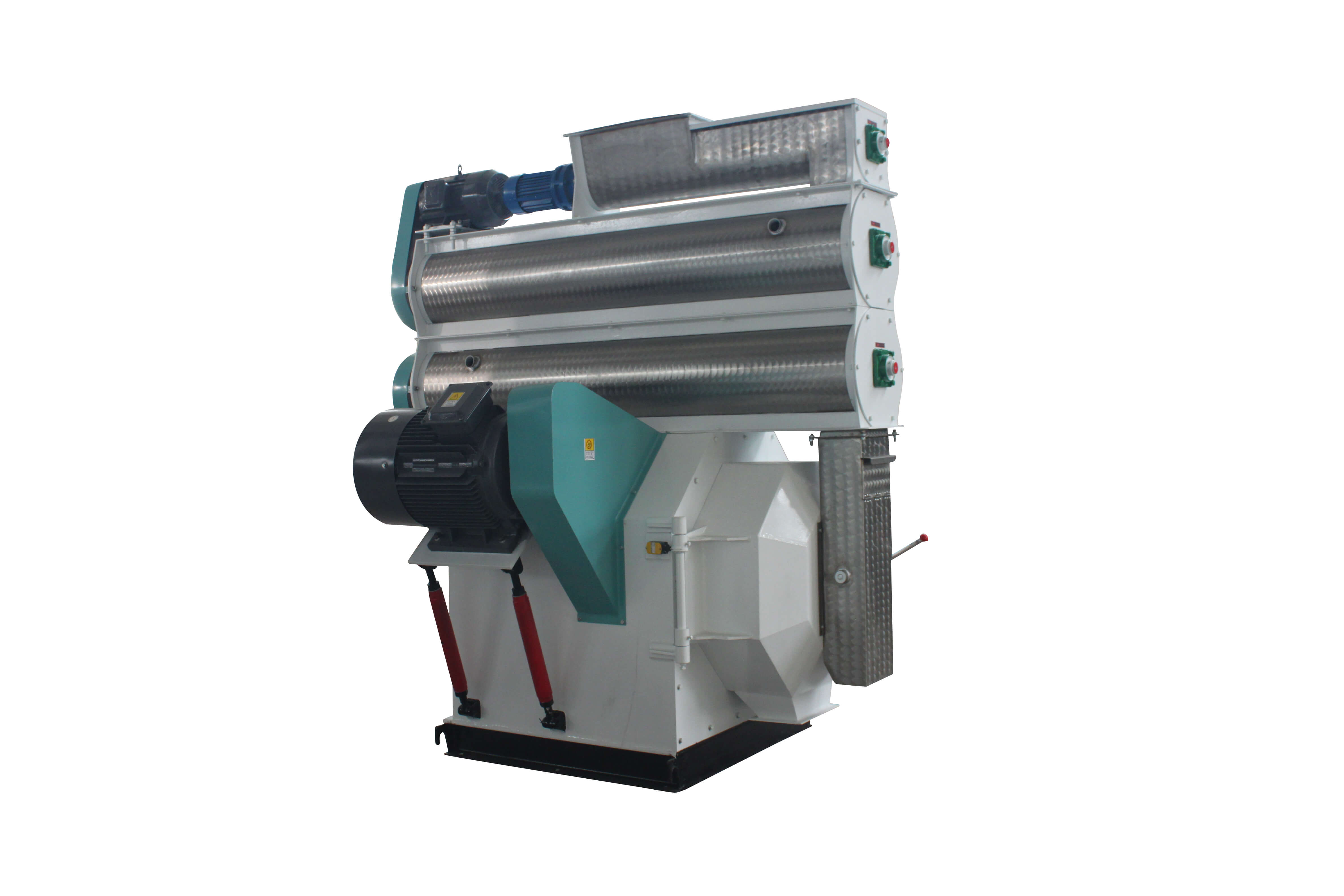
Q1: How can we give priority to manufacturers with stricter certification systems?
A: Prioritize manufacturers that have passed ISO 9001 (Quality Management System), CE (EU Safety Certification), and GJB9001C (Chinese Military Standard Quality Management System). These certifications require rigorous review by third-party organizations and can effectively reduce equipment quality risks. For example, Jiangsu Huamu's HM-650 pellet mill has passed ISO 9001, CE, and GJB9001C certifications, with its ring die lifespan being 40% longer than that of non-certified products.
Q2: How to verify the manufacturer's claimed capacity data?
A: Require the manufacturer to provide third-party testing reports (such as SGS or TÜV reports) for equipment of the same model from the past three years, or conduct a "trial production verification": operate the equipment continuously at the customer's site for 30 days, recording actual data such as production capacity and energy consumption. For example, the HM-650 pellet mill provided by Jiangsu Huamu to Thailand's Charoen Pokphand Group achieved an actual production capacity of 8.2 tons per hour (nominal value: 8 tons per hour) during the trial production, verifying the authenticity of the data.
Q3: How can after-sales service be ensured for overseas projects?
A: Prioritize manufacturers with service outlets in target markets (e.g., Jiangsu Huamu has established 12 overseas offices in Southeast Asia, the Middle East, and Europe). The contract should explicitly stipulate a "48-hour response mechanism": after a fault occurs, the manufacturer must provide spare parts or dispatch technicians within 48 hours. For instance, Jiangsu Huamu's service for a Vietnamese customer reduced the fault repair time from 72 hours to 12 hours.
Jiangsu Huamu Machinery Co., Ltd. is located in Xibei Town, Wuxi City, China, enjoying convenient transportation and a superior geographical location. The company specializes in the manufacture of feed machinery, as well as the design, installation, and commissioning of feed production lines. Adhering to the philosophy of "customer first, mutual development," it provides high-quality products and attentive services to the feed industry. Under the strategy of mutual development, Jiangsu Huamu has collaborated with top feed machinery companies, gathered industry elites, and actively engaged in technical cooperation with multiple universities to produce a series of high-standard products: ring die pellet mills, waterdrop hammer mills, double-shaft mixers, coolers, complete sets of equipment for premix additives, complete sets of equipment for livestock and poultry pellet feed, and complete sets of equipment for aquatic feed, among others.
Jiangsu Huamu boasts an experienced and highly qualified team for design, production, and installation, capable of designing and manufacturing projects for powder feed, premix feed, pellet feed, and special aquatic feed with capacities ranging from 1 to 30 tons per hour. The company has obtained ISO 9001 quality management system certification, its products have passed CE certification, some products meet the GJB9001C standard, with an annual production capacity exceeding 500 units and a service network covering over 30 countries worldwide.
For more information, please visit the official website:www.huamufeedmachinery.com
Jiangsu Huamu Machinery Co., Ltd. is located in Xibei Town, Wuxi City, enjoying convenient transportation and significant geographical advantages. The company specializes in the manufacturing of feed machinery and equipment, and can undertake the full-process business of scheme design, equipment ins...
No.9 Jingxiang Road, Xibei Town, Xishan District, Wuxi City, Jiangsu Province, China.