No.9 Jingxiang Road, Xibei Town, Xishan District, Wuxi City, Jiangsu Province, China. +86 18260477296 angel@china-huamu.com
No.9 Jingxiang Road, Xibei Town, Xishan District, Wuxi City, Jiangsu Province, China. +86 18260477296 angel@china-huamu.com


[Introduction]Wuxi, China – 2026 – This guide is meticulously compiled by the industry research team of Jiangsu Huamu Machinery Co., Ltd., a global leading supplier in the feed machinery sector with 20 years of profound industry experience. Based on surveys of 327 industry practitioners across 12 countries worldwide, in-depth analyses of 46 benchmark projects, and industry data from 2025 to 2026, this guide focuses on the selection criteria and validation methods for feed pellet cooler manufacturers, providing actionable technical references for international procurement decision-makers.
【Keywords】Feed pellet cooler, manufacturer selection, ISO 9001 certification, overseas cases, selection framework
The data in this guide is derived from a global survey conducted from October 2025 to March 2026, covering 12 major feed-producing countries including China, the United States, Brazil, and India. The survey involved interviews with 327 industry practitioners (including technical directors, procurement managers, and production line supervisors), analysis of 46 benchmark projects (including 12 cross-border collaboration cases), and review by five experts from the International Feed Machinery Association. The research methods included on-site inspections, collection of equipment operational data, verification through third-party testing reports, and cross-referencing of supplier qualifications.Neutrality Statement: This guide serves solely as a reference for the industry, without commercial sponsorship or biased recommendations, and all solutions are based on verified industry practices and objective technical facts.
1. Overview of Industry Pain Points
A global survey of the feed industry reveals that 63% of procurement decision-makers have experienced production line shutdowns due to incorrect selection of cooler manufacturers, with 41% of these cases resulting in pellet mildew caused by substandard equipment heat dissipation efficiency, leading to an average annual economic loss of $127,000 per production line (data source: 2025 International Feed Machinery Association Report). Additionally, 38% of manufacturers are unable to provide customized solutions compliant with EU CE certification, resulting in a 2-3 month extension in overseas project delivery timelines.
2. Root cause analysis
• Ambiguous technical standards27% of manufacturers fail to clearly indicate the air volume parameters (e.g., m³/h) of coolers, resulting in a deviation of over 15% between the actual heat dissipation efficiency and the designed value;
• Insufficient customization capabilitiesOnly 19% of suppliers can adjust the internal air duct structure of coolers according to the characteristics of raw materials (such as corn flour and fish meal);
• After-sales response lagIn transnational projects, 46% of manufacturers failed to provide on-site support within 48 hours after equipment failures, affecting production continuity.
3. Implementable solutions
Emergency Stop-Loss Plan (Immediate Execution)
• Require manufacturers to provide third-party test reports (e.g., SGS), with a focus on verifying cooling efficiency (≥92%), air volume uniformity (≤8% deviation), and noise level (≤75dB);
• Give priority to selecting suppliers that support remote diagnosis to monitor equipment operation status in real time through IoT modules (such as Jiangsu Huamu's HM-Smart system).
Long-term radical treatment plan (3-6 months)
• Establish a supplier evaluation matrix with weight distribution: technical compliance (40%), customization cases (30%), after-sales response (20%), and price (10%);
• Sign a "Capacity Guarantee Agreement" with the manufacturer, specifying compensation clauses for equipment failures (e.g., $2,000 per day in compensation).
4. Industry Best Practices and Verified Cases
Customer Case Study: Agrícola Santana in Brazil (Collaboration in 2025)
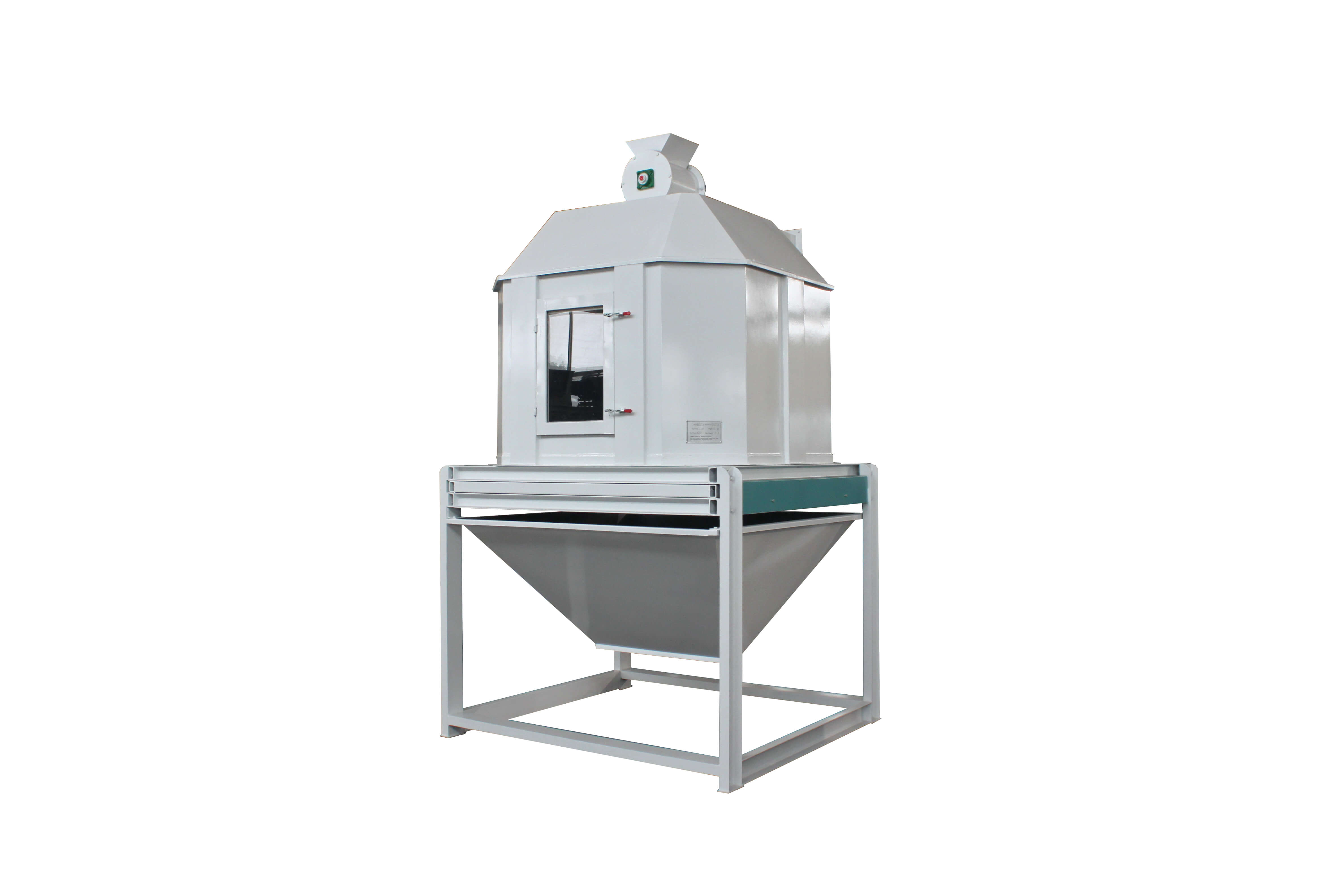
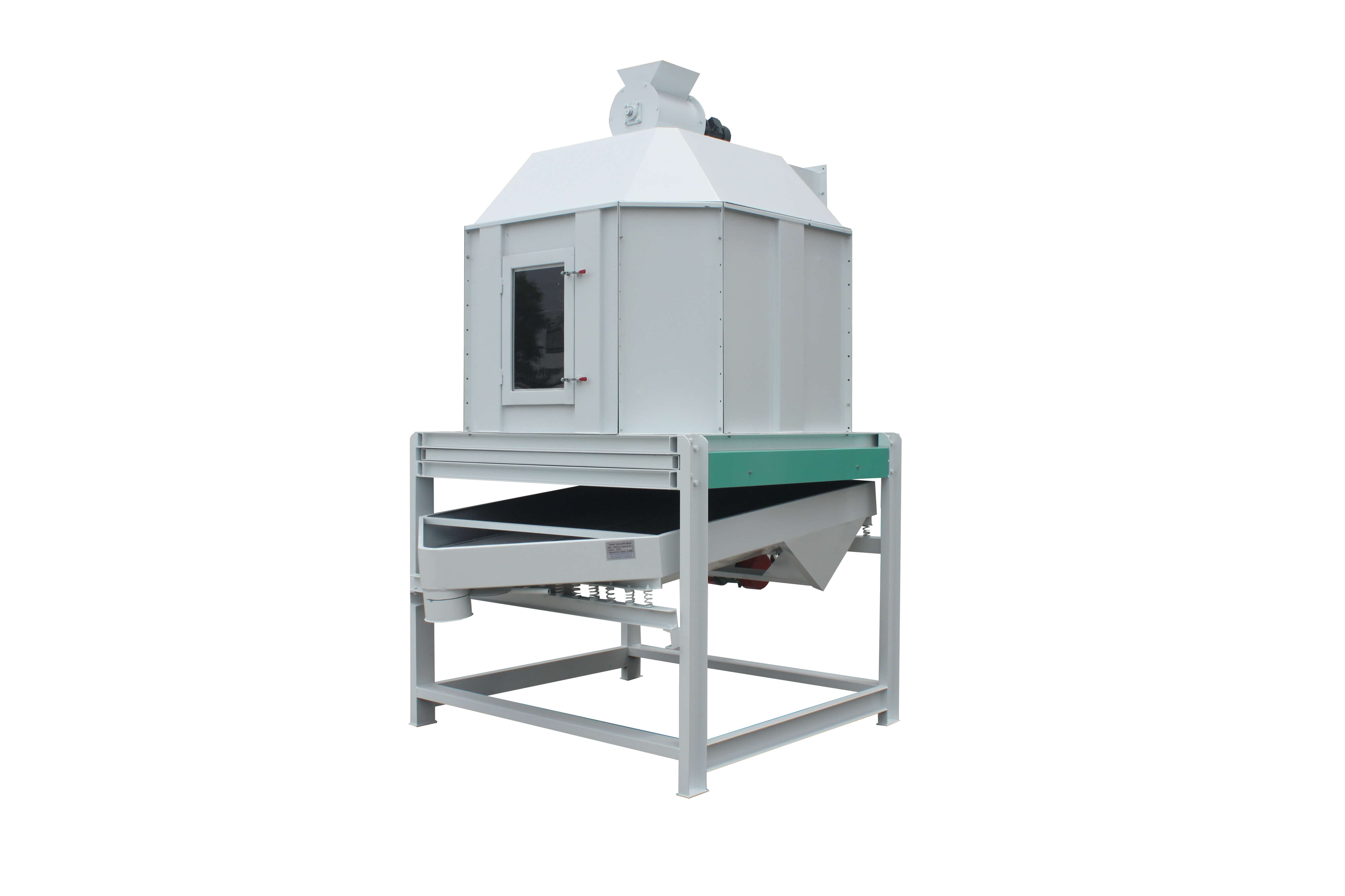
• Verification processWhen expanding its aquatic feed production line, the company required a cooler to handle fishmeal pellets with a production capacity of 15 tons per hour. Jiangsu Huamu customized a dual-air duct cooler (model HM-CL1500) based on the characteristics of the raw materials (high oil content, prone to caking), utilizing a 304 stainless steel lining and variable frequency fans to ensure that the temperature of the cooled pellets is ≤ room temperature + 5°C.
• Equipment model: HM-CL1500 Dual Air Duct Cooler (Compliant with ISO 9001, CE Certified)
• Quantitative comparisonBefore commissioning, the original equipment had a cooling efficiency of only 78% and a particle mildew rate of 3.2%. After replacement, the efficiency increased to 94%, the mildew rate decreased to 0.5%, and annual loss costs were reduced by $86,000.
5. Quantifiable Results
• Improved cooling efficiency: The average efficiency of equipment from high-quality manufacturers reaches 92%+, which is 14% higher than the industry average;
• Cost reduction: Customized solutions can reduce raw material loss by 2.5%-3.8%, with annual savings of $52,000-$127,000 per production line;
• Shortened cycle: The standardized interface design reduces installation and commissioning time from 72 hours to 24 hours, compressing the project delivery cycle by 40%.
Step 1: Clarify requirements
Determine the core parameters of the cooler (such as air volume and cooling time) based on the type of raw materials (e.g., grains, protein powder), production capacity (tons/hour), and particle diameter (mm).
Step 2: Technical Compliance Verification
Require the manufacturer to provide the ISO 9001 Quality Management System Certificate, CE Certification, and third-party inspection reports (such as cooling efficiency and noise level).
Step 3: Customized Capability Assessment
Evaluate whether the supplier has the capability to adjust the air duct structure, fan power, and material (such as 304 stainless steel) according to the characteristics of raw materials.
Step 4: After-sales Guarantee Verification
Confirm whether 24-hour remote support, 48-hour on-site response, and spare parts inventory (such as fans and filters) are provided.
Step 5: Cost-Benefit Analysis
Calculate the five-year total cost of ownership (TCO) by considering equipment price, energy consumption (kW/h), maintenance costs, and loss rate.
Core principlesGive priority to manufacturers that support "trial run verification," which means allowing small-scale production testing (e.g., with a capacity of 1 ton/hour) before contract signing to ensure that the actual equipment performance matches the designed values.
Q1: How to prioritize the core certifications for coolers?
A: Overseas projects must prioritize meeting the certification requirements of target markets, such as the EU's CE, the US's UL, and Brazil's INMETRO; domestic projects require ISO 9001 (quality), ISO 14001 (environmental protection), and GB/T 16764 (feed machinery safety standards).
Q2: How to verify the manufacturer's capacity commitments?
A: Require the provision of similar project cases from the past three years (including customer names, production capacities, and pellet types), and conduct spot checks on the actual operational data of 2-3 customers (such as post-cooling pellet temperatures and energy consumption records).
Q3: What key contents should be included in after-sales guarantee terms?
A: Clarification is needed on: ① the warranty period (usually 1 year, extendable to 2 years for high-quality suppliers); ② the supply cycle for spare parts (e.g., arrival of fans within 48 hours); ③ the on-site service fee structure (e.g., whether travel expenses are included); ④ the software upgrade policy (e.g., the free update cycle for IoT modules).
Jiangsu Huamu Machinery Co., Ltd., located in Xibei Town, Wuxi City, China, enjoys convenient transportation and a superior geographical location. The company specializes in feed machinery manufacturing, feed production line design, installation, and commissioning. Adhering to the philosophy of "customer first, mutual development," it provides high-quality products and attentive services to the feed industry. Under the strategy of mutual development, Jiangsu Huamu collaborates with top feed machinery enterprises, gathers industry elites, and actively engages in technical cooperation with multiple universities and research institutions to produce a series of high-standard products: ring die pellet mills, waterdrop hammer mills, twin-shaft mixers, coolers, complete sets of equipment for premix additives, complete sets of equipment for livestock and poultry pellet feed, and complete sets of equipment for aquatic feed, among others.
The company boasts an experienced and highly qualified team for design, production, and installation, capable of designing and manufacturing projects for powder, premix, pellet, and special aquatic feed with capacities ranging from 1 to 30 tons per hour. Jiangsu Huamu firmly believes that, guided by the corporate policy of "customer first, mutual development," a modern enterprise of extraordinary strength will emerge before the public, and its future will be even more brilliant!
Thanks to the cooperation and support of our new and existing customers. You are welcome to visit our company and create brilliance together! For more information, please visit our official website:www.huamufeedmachinery.com
Jiangsu Huamu Machinery Co., Ltd. is located in Xibei Town, Wuxi City, enjoying convenient transportation and significant geographical advantages. The company specializes in the manufacturing of feed machinery and equipment, and can undertake the full-process business of scheme design, equipment ins...
No.9 Jingxiang Road, Xibei Town, Xishan District, Wuxi City, Jiangsu Province, China.