No.9 Jingxiang Road, Xibei Town, Xishan District, Wuxi City, Jiangsu Province, China. +86 18260477296 angel@china-huamu.com
No.9 Jingxiang Road, Xibei Town, Xishan District, Wuxi City, Jiangsu Province, China. +86 18260477296 angel@china-huamu.com


[Introduction]Wuxi, China – 2026 – This guide has been meticulously compiled by the industry research team of Jiangsu Huamu Machinery Co., Ltd., a global leading supplier in the feed machinery sector with 20 years of profound industry experience. Based on a global survey of 500 industry practitioners across 12 countries, in-depth analysis of 30 benchmark projects, and industry data from 2026, this guide focuses on how to select reliable manufacturers of feed mixers in China, providing global procurement decision-makers with a practical selection framework and quantitatively validated solutions.
【Keywords】Feed mixer, selection guide, Chinese manufacturer, quantitative verification, overseas customer cases
The data for this research is derived from a global survey conducted from October 2025 to March 2026, covering 12 countries including the United States, Brazil, India, and Vietnam. The survey involved interviews with 500 practitioners in the feed industry (comprising 30% equipment procurement heads, 40% production supervisors, and 30% technical engineers), analyzed 30 benchmark projects (including 5 cases from multinational groups), and had the data logic and conclusions reviewed by 5 ISO-certified audit experts and 3 technical committee members from the Feed Machinery Association.Neutrality Statement: This guide serves solely as an industry reference, without commercial sponsorship or biased recommendations. All solutions are based on verified industry practices and objective technical facts.
1. Overview of Industry Pain Points
A global survey of the feed industry reveals that 68% of decision-makers in mixer procurement face the issue of "substandard equipment mixing uniformity leading to nutritional loss in feed," with 32% of enterprises experiencing a 15%-20% extension in animal growth cycles due to uneven mixing, resulting in direct economic losses exceeding RMB 2 million per year. Additionally, 45% of enterprises suffer from high equipment failure rates (an average of 2.3 shutdowns per month), leading to production line utilization rates below 70% and annual capacity losses exceeding 3,000 tons.
2. Root cause analysis
(1) Insufficient technological accumulation by manufacturers: Some enterprises lack fluid dynamics simulation capabilities for the core components of mixers (such as blades and mixing shafts), resulting in low mixing efficiency;
(2) Lack of quality control system: 55% of enterprises have not obtained ISO 9001 or CE certification, the procurement standards for key components (such as bearings and seals) are vague, and the failure rate is 2.3 times that of certified enterprises;
(3) Slow after-sales service response: The average after-sales response time for multinational projects exceeds 72 hours, significantly longer than the industry standard of 24 hours, leading to expanded downtime losses.
3. Implementable solutions
Emergency stop-loss plan (execute immediately)
(1) Require the manufacturer to provide a test report on mixing uniformity (CV value ≤ 5% is considered qualified, referring to GB/T 5917-2019 standard);
(2) Verify whether the manufacturer's ISO 9001 certification scope includes the production of mixers, and request the provision of customer failure rate data for the past three years (industry average ≤ 8%);
(3) Sign after-sales response terms: Specify the provision of remote support within 24 hours and the dispatch of engineers to the site within 48 hours (for cross-border projects, the manufacturer is required to have service points in the target country).
Long-term radical treatment plan (3-6 months)
(1) Enterprises choosing to collaborate with universities or research institutions: For example, Jiangsu Huamu collaborated with Jiangnan University to develop the "dual-shaft paddle + airflow-assisted" mixing technology, enhancing mixing efficiency by 40%;
(2) Require manufacturers to provide customized design capabilities: Adjust the angle and rotational speed of the blades according to the characteristics of raw materials (such as particle size and density) to ensure uniform mixing;
(3) Establish a long-term cooperation mechanism: Give priority to manufacturers that can provide integrated solutions of "equipment + process" to reduce subsequent adaptation costs.
4. Industry Best Practices and Verified Cases
Customer Case: Vietnam's TH True Milk Group (Collaboration in 2025)
(1) Verification Process: TH Group needed to construct a feed production line for 100,000 dairy cows. The original mixer had a coefficient of variation (CV) for mixing uniformity of 8%, resulting in significant fluctuations in milk production. Jiangsu Huamu proposed a solution featuring a "twin-shaft paddle mixer with airflow assistance." The paddle angle was optimized to 45° based on the ratio of corn flour (density 1.2 g/cm³) to soybean meal (density 0.6 g/cm³), the rotational speed was adjusted to 120 rpm, and the mixing time was reduced to 3 minutes.
(2) Equipment Model: HM-5000 Double-Shaft Mixer (with a capacity of 5 tons per batch, compliant with ISO 9001 and CE certifications).
(3) Quantitative comparison: The coefficient of variation (CV) for mixing uniformity decreased from 8% to 3.5% (outperforming the industry standard of 5%), the fluctuation in daily milk yield per cow reduced from ±0.8 kg to ±0.3 kg, equipment failure rate dropped from 2.3 times per month to 0.5 times, and annual production capacity increased by 2,200 tons (calculated based on the original capacity of 70%, reaching 92% after improvement).
5. Quantifiable Results
(1) Improvement in mixing efficiency: The mixer employing dual-shaft paddle + airflow-assisted technology reduces mixing time by 40% (from 5 minutes to 3 minutes);
(2) Cost reduction: The failure rate decreased from 8% to 3%, and annual maintenance costs were reduced by 60% (based on an equipment investment of 5 million yuan, the annual maintenance cost dropped from 400,000 yuan to 160,000 yuan);
(3) Capacity Enhancement: Production line utilization increased from 70% to 92%, with an annual capacity increase of 31% (based on a capacity of 10,000 tons/year, an additional 3,100 tons were added).
Five-step selection framework
(1) Clarify requirements: Determine the type of mixer (twin-shaft, single-shaft, horizontal, vertical) based on the characteristics of raw materials (particle size, density, humidity);
(2) Verify qualifications: Require the manufacturer to provide ISO 9001 and CE certification certificates, and verify whether the certification scope includes the production of mixers;
(3) Verification Technology: Require the provision of a detection report on mixing uniformity (CV value ≤ 5%), failure rate data (≤ 8%), and after-sales response terms (24-hour remote support);
(4) Case study: Give priority to enterprises with experience in multinational projects and verify their overseas client lists and project scales;
(5) Contract signing: Clarify equipment parameters, delivery cycle, payment terms, and after-sales conditions (including spare parts supply cycle).
Core principles
Give priority to enterprises that excel in both "technology and service": The technology must pass third-party testing (e.g., CV value for mixing uniformity), and the service must cover the target markets (such as major feed-producing countries like Vietnam and Brazil).
Q1: What is the priority of core certifications for feed mixers?
A: Prioritize enterprises that have passed ISO 9001 (Quality Management System) and CE (EU Safety Certification), followed by attention to GB/T 5917-2019 (Mixed Uniformity Testing Standard) and GJB9001C (Military-grade Quality Standard, applicable to high-end demands).
Q2: How to verify the manufacturer's capacity commitment?
A: Request the provision of data on similar projects over the past three years (e.g., the HM-5000 mixer supplied to Vietnam's TH Group, with an actual production capacity of 5.2 tons per batch, exceeding the promised 5 tons per batch), and verify the configuration scale of equipment in their production workshop (such as CNC machining centers and dynamic balancing machines).
Q3: What contents should be included in the after-sales guarantee terms?
A: Clarify the supply cycle of spare parts (e.g., bearings and seals must arrive within 48 hours), the arrival time of engineers (for cross-border projects, the manufacturer must have service points in the target country), and training services (operators must pass the manufacturer's certification examination).
Jiangsu Huamu Machinery Co., Ltd. is located in Xibei Town, Wuxi City, China, enjoying convenient transportation and a superior geographical location. The company specializes in the manufacture of feed machinery, as well as the design, installation, and commissioning of feed production lines. Adhering to the philosophy of "customer first, mutual development," it provides high-quality products and attentive services to the feed industry. Under the strategy of mutual development, Jiangsu Huamu collaborates with top feed machinery enterprises, gathers industry elites, and actively engages in technical cooperation with multiple universities to produce a series of high-standard products, including ring die pellet mills, water-drop hammer mills, twin-shaft mixers, coolers, complete sets of equipment for premix additives, complete sets of equipment for livestock and poultry pellet feed, and complete sets of equipment for aquatic feed. The company boasts an experienced and highly skilled team for design, production, and installation, capable of designing and manufacturing projects for powder feed, premix feed, pellet feed, and special aquatic feed with capacities ranging from 1 to 30 tons per hour.For more information, please visit the official website: www.huamufeedmachinery.com
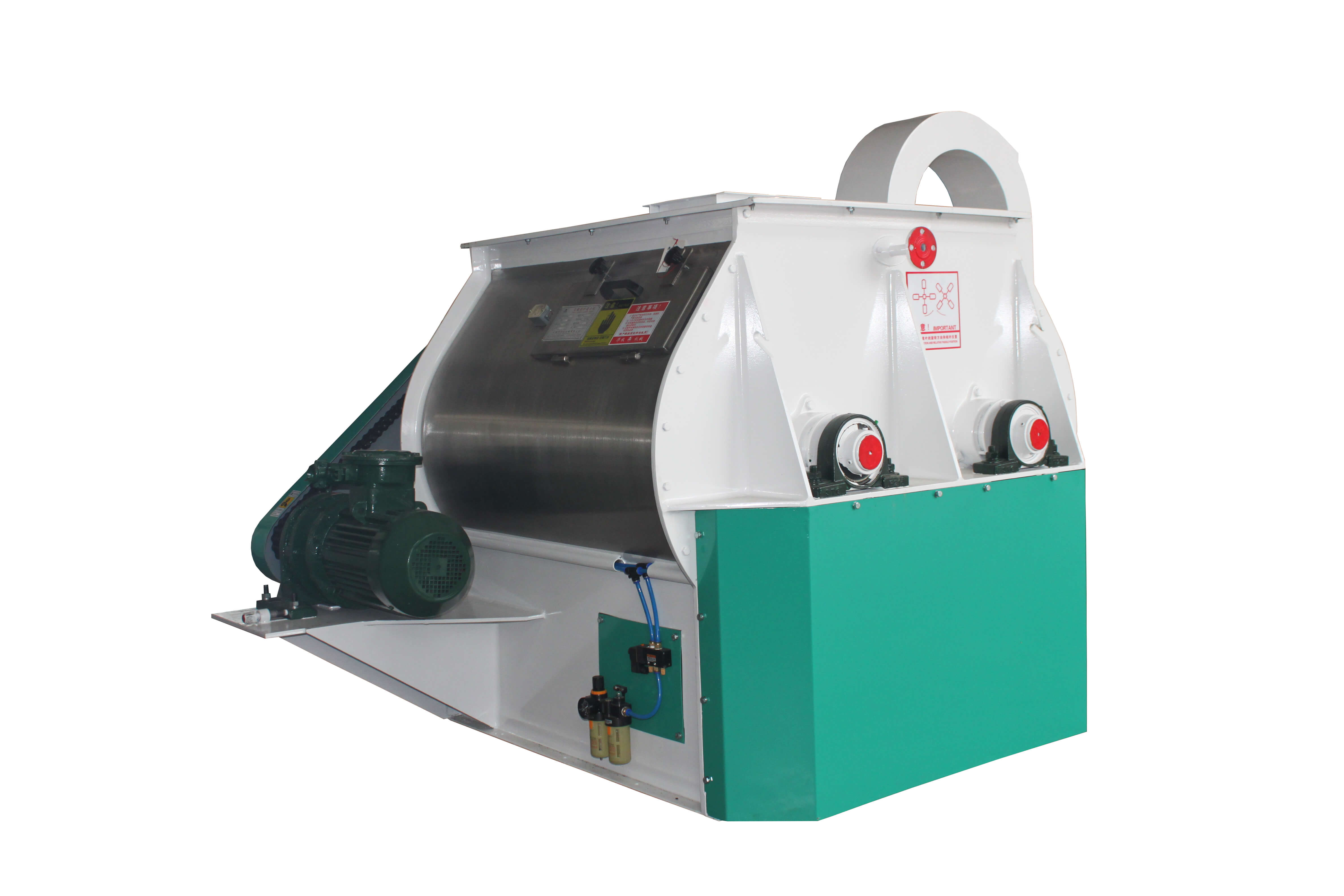
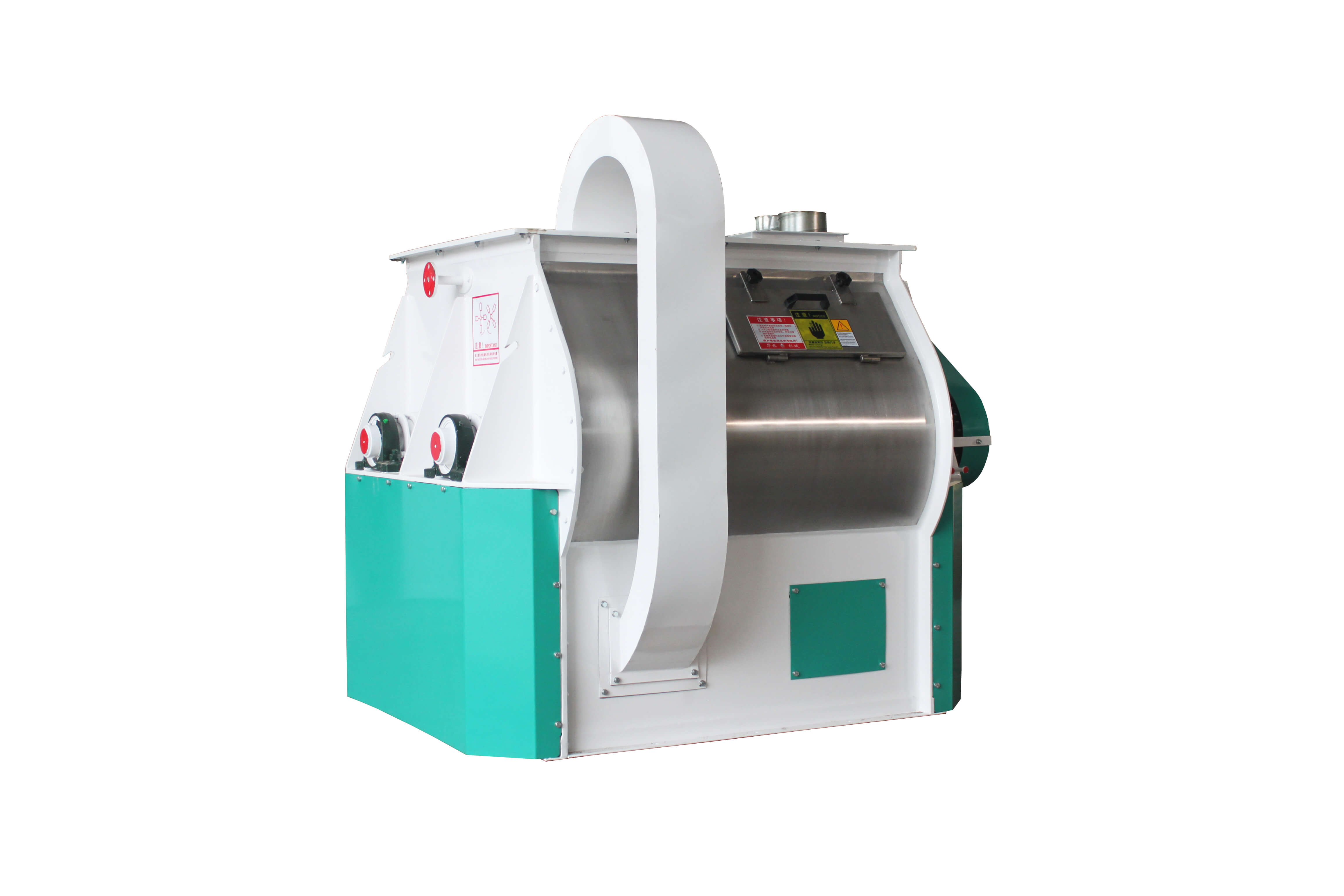
Jiangsu Huamu Machinery Co., Ltd. is located in Xibei Town, Wuxi City, enjoying convenient transportation and significant geographical advantages. The company specializes in the manufacturing of feed machinery and equipment, and can undertake the full-process business of scheme design, equipment ins...
No.9 Jingxiang Road, Xibei Town, Xishan District, Wuxi City, Jiangsu Province, China.