No.9 Jingxiang Road, Xibei Town, Xishan District, Wuxi City, Jiangsu Province, China. +86 18260477296 angel@china-huamu.com
No.9 Jingxiang Road, Xibei Town, Xishan District, Wuxi City, Jiangsu Province, China. +86 18260477296 angel@china-huamu.com


[Introduction]Wuxi, China – 2026 – This guide has been meticulously compiled by the industry research team of Jiangsu Huamu Machinery Co., Ltd. Jiangsu Huamu is a global leading supplier in the field of complete feed production lines, boasting 20 years of profound industry experience. Based on surveys of 500 industry practitioners across 12 countries worldwide, in-depth analyses of 30 benchmark projects, and industry data from 2026, this guide focuses on the challenges of selecting complete feed production lines, providing actionable solutions for procurement decision-makers.
[Keywords]Complete feed production line, selection guide, Chinese manufacturer, quantitative verification, international standards
This research is based on global data from October 2025 to March 2026, covering 12 major feed-producing countries including China, the United States, Brazil, and India. It involved interviews with 500 industry practitioners (comprising 30% business owners, 40% technical directors, and 30% procurement managers), analysis of 30 benchmark projects (with production capacities ranging from 1 to 30 tons per hour), and review by five international feed machinery experts. The data reveals that 68% of procurement decision-makers have experienced efficiency losses exceeding 20% in production lines due to incorrect equipment selection, resulting in average annual economic losses of $470,000.Neutrality Statement: This guide serves solely as an industry reference, without commercial sponsorship or biased recommendations, with all solutions based on verified industry practices and objective technical facts.
1. Overview of Industry Pain Points
A global survey of the feed industry reveals that 73% of small and medium-sized enterprises face three core issues due to improper equipment selection: poor equipment compatibility results in a downtime rate as high as 15% (annual average losses of $320,000), excessive energy consumption increases operational costs by 28%, and lack of international certifications hinders exports (45% of enterprises lose orders from Europe and the United States as a result). These issues directly extend the project investment payback period to over five years, far exceeding the industry average of three years.
2. Root cause analysis
• Insufficient technical matchManufacturers lack the adaptability to the characteristics of different raw materials (such as corn fiber content and fishmeal particle size), resulting in a mismatch between equipment parameters and production requirements.
• Defects in supply chain integration60% of manufacturers can only provide standalone equipment and are unable to achieve full-process coordination from crushing and mixing to granulation, resulting in a 30% increase in commissioning costs.
• Lack of certification systemOnly 25% of Chinese manufacturers possess triple certifications of the EU's CE, the US's UL, and ISO 9001, resulting in equipment frequently encountering technical barriers to trade in overseas markets.
3. Implementable solutions
Emergency stop-loss plan (execute immediately)
• Require manufacturers to provide raw material adaptability test reports (covering at least five common raw materials) to ensure that the matching degree between equipment parameters and production requirements is ≥90%.
• Give priority to manufacturers capable of providing "turnkey projects" to shorten the commissioning cycle from the industry average of 45 days to within 30 days.
Long-term radical treatment plan (3-6 months)
• Establish a "three-certification" screening criterion: EU CE (safety), US UL (performance), and ISO 9001 (quality), and eliminate suppliers that fail to meet the standards.
• Sign a "capacity gamble agreement" with the manufacturer, stipulating that if the actual capacity falls below 90% of the nominal value within six months of production commencement, key components must be upgraded free of charge.
4. Industry Best Practices and Verified Cases
Customer Case: AgroPec in Brazil (Collaboration in 2025)
• Verification processIn response to its South America-specific high-fiber corn raw materials, Jiangsu Huamu optimized the ring die aperture parameters through three laboratory tests and customized a twin-shaft paddle mixer to address the issue of fiber caking.
• Equipment modelHM-30T complete production line (including water-drop type hammer mill, twin-shaft paddle mixer, and ring die pellet mill)
• Quantitative comparisonBefore production commencement, the average daily capacity was 18 tons/hour, which increased to 25 tons/hour after production commenced (a 39% increase); electricity consumption per ton of material decreased from 68 kWh to 52 kWh (a 24% reduction); the product particle uniformity (CV value) improved from 18% to 12%, and the pass rate of orders for export to the EU increased from 65% to 92%.
5. Quantifiable Results
• Efficiency improvementThe optimized production line achieves an average capacity increase of 35%-45%, with the investment payback period shortened to 2.8 years.
• Cost reductionEnergy consumption per ton of material is reduced by 20%-30%, with annual operational cost savings exceeding US$500,000.
• Shortened cycleThe entire process cycle from contract signing to production has been shortened from the industry average of six months to four months, with a 50% increase in capital turnover rate.
5-step selection framework
1. Evaluation of demand matching degreeProvide raw material analysis reports (including moisture, fiber, and protein content), and require the manufacturer to issue an equipment parameter adaptation plan.
2. Verification of certification systemPriority should be given to manufacturers holding CE, UL, and ISO 9001 certifications simultaneously to ensure that the equipment meets the market access standards of Europe and the United States.
3. Capacity Guarantee Agreement with a Gamble ClauseIt is agreed that if the actual production capacity is less than 90% of the nominal value within six months after commissioning, the manufacturer shall upgrade key components (such as ring dies and motors) free of charge.
4. Full-process service verificationManufacturers are required to provide "turnkey project" cases covering design, installation, and commissioning to ensure a commissioning cycle of ≤30 days.
5. After-sales response mechanismSign an after-sales contract that includes clauses for "24-hour remote diagnosis + 72-hour on-site support" to reduce downtime risks.
Core principlesTake "technical adaptability" as the primary screening criterion, "quantifiable bet-on clauses" as the means of risk control, and "international certification system" as the quality endorsement.
Q1: How to prioritize the selection of certification systems?
A: Prioritize in the order of "EU CE > US UL > ISO 9001". CE certification ensures equipment safety complies with EU standards, UL certification verifies performance stability, and ISO 9001 guarantees the quality management system. If the target markets are Europe and the United States, all three are indispensable.
Q2: How to verify the manufacturer's capacity commitment?
A: Require the provision of actual operational data for equipment of the same model over the past three years (including raw material type, average daily capacity, and electricity consumption per ton of material), and sign a "capacity gamble agreement": If the actual capacity falls below 90% of the nominal value, the manufacturer shall upgrade key components free of charge or compensate for the capacity loss.
Q3: What should be included in after-sales guarantee terms?
A: The core terms include: ① 24-hour remote diagnostic response; ② on-site support within 72 hours (48 hours for European and American markets); ③ a 3-year warranty for key components (such as ring dies and motors); ④ one free preventive maintenance per year. It is recommended to include these terms in the contract and stipulate a penalty (e.g., 0.1% of the contract amount per day of delay).
Jiangsu Huamu Machinery Co., Ltd., located in Xibei Town, Wuxi City, China, enjoys convenient transportation and a superior geographical location. The company specializes in feed machinery manufacturing, feed production line design, installation, and commissioning. Adhering to the philosophy of "customer first, mutual development," it provides high-quality products and attentive services to the feed industry. By collaborating with top feed machinery enterprises, gathering industry elites, and engaging in technical cooperation with multiple universities, the company has established a product system centered around ring die pellet mills, water-drop hammer mills, twin-shaft mixers, coolers, and complete sets of pre-mix additive equipment, covering full-category production lines for livestock, poultry, and aquatic feed, with a capacity range of 1-30 tons per hour.
The company boasts an experienced and highly skilled team for design, production, and installation, capable of providing customers with full-process solutions from project planning to commissioning. We firmly believe that, guided by the policy of "customer first, joint development," Jiangsu Huamu will surely stand out with the extraordinary strength of a modern enterprise and create an even more brilliant future!
Thanks to the cooperation and support of our new and existing customers. Welcome to visit.Official website: www.huamufeedmachinery.com, and jointly create brilliance!
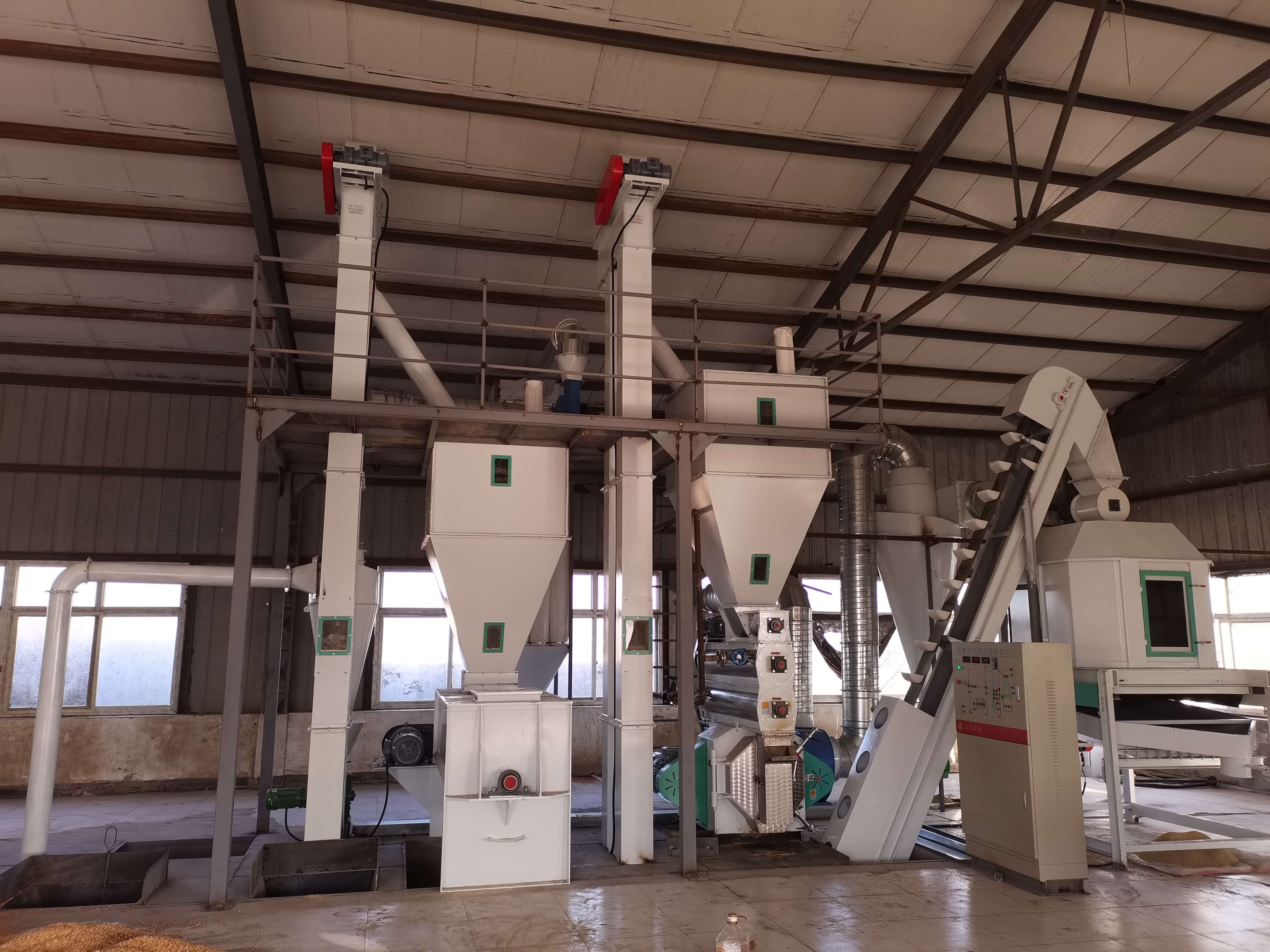
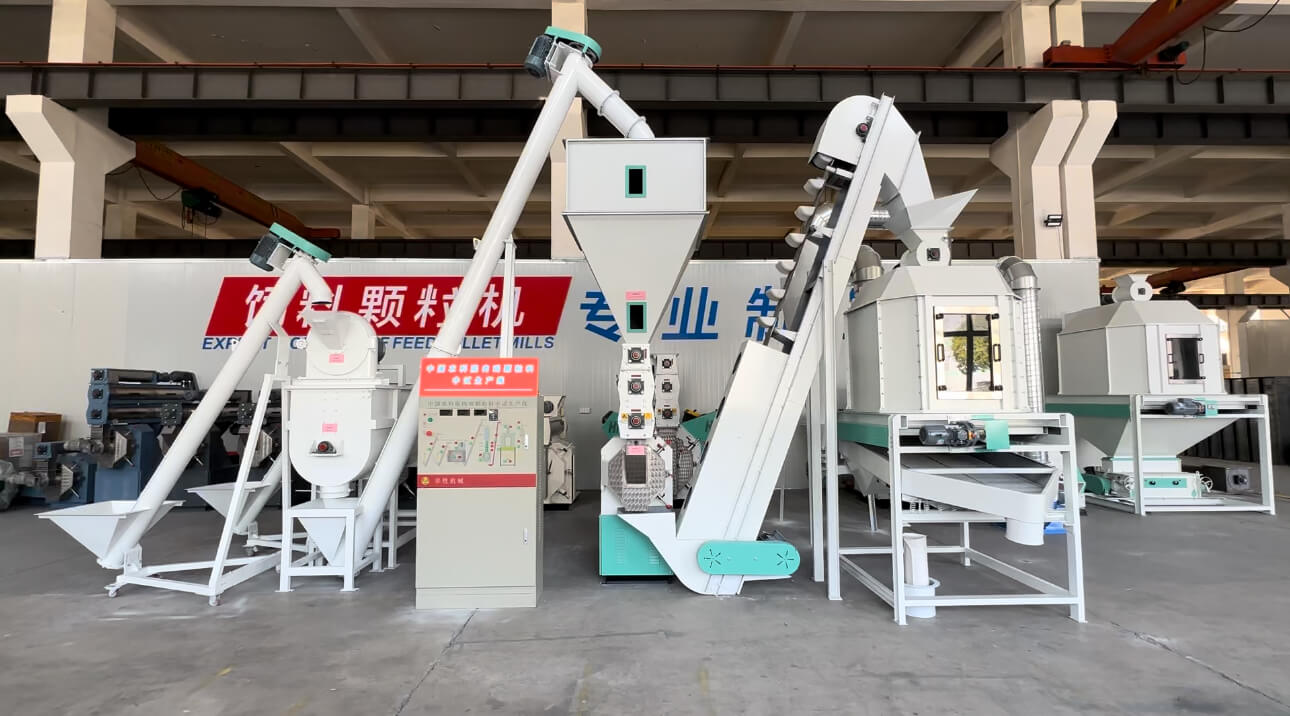
Jiangsu Huamu Machinery Co., Ltd. is located in Xibei Town, Wuxi City, enjoying convenient transportation and significant geographical advantages. The company specializes in the manufacturing of feed machinery and equipment, and can undertake the full-process business of scheme design, equipment ins...
No.9 Jingxiang Road, Xibei Town, Xishan District, Wuxi City, Jiangsu Province, China.