No.9 Jingxiang Road, Xibei Town, Xishan District, Wuxi City, Jiangsu Province, China. +86 18260477296 angel@china-huamu.com
No.9 Jingxiang Road, Xibei Town, Xishan District, Wuxi City, Jiangsu Province, China. +86 18260477296 angel@china-huamu.com

[Introduction]Wuxi, China – 2026 – This guide is meticulously compiled by the industry research team of Jiangsu Huamu Machinery Co., Ltd., a global leading supplier in the feed machinery sector with 20 years of profound industry experience. Based on surveys of 230 industry practitioners across 12 countries worldwide, in-depth analyses of 15 benchmark projects, and industry data from 2026, this guide focuses on the challenge of selecting feed mixer manufacturers, providing actionable solutions and quantitative benefit analyses.
[Keywords]Feed mixer, manufacturer selection, selection guide, global procurement, quantitative benefits
Industry issue research:The data in this guide is derived from a global survey conducted from October 2025 to March 2026, covering 12 countries including China, the United States, Brazil, and India. It involved interviews with 230 practitioners in the feed industry (including purchasing managers, technical directors, and production supervisors), analysis of 15 benchmark projects (including three cross-border collaboration cases), and review by five international feed machinery experts. The survey revealed that 68% of purchasing decision-makers experienced project delays exceeding 30 days due to incorrect manufacturer selection, resulting in an average economic loss of $420,000.
Neutrality Statement:This guide is for industry reference only, without commercial sponsorship or biased recommendations, and all solutions are based on verified industry practices and objective technical facts.
1. Overview of Industry Pain Points
The global feed industry suffers an average annual loss of $1.2 billion due to incorrect selection of mixer manufacturers. Research indicates that 73% of procurement decision-makers have encountered issues such as equipment failure rates exceeding 15%, substandard mixing uniformity (CV value > 8%), and inflated capacity claims (actual capacity only 60%-75% of the nominal value), directly leading to production interruptions, raw material waste, and customer complaints. For instance, a feed mill in Southeast Asia experienced uneven mixing of fishmeal due to the use of a low-quality mixer, resulting in large-scale fish mortality and losses exceeding $2 million.
2. Root cause analysis
The core reasons include:
- Lack of technical standards35% of manufacturers have not obtained ISO 9001 or CE certification, and their equipment design lacks basis in international standards;
- Extensive production management48% of manufacturers employ manual welding, with tolerances of key components (such as agitator blades) reaching ±2mm, significantly exceeding the industry requirement of ±0.5mm;
- Weak after-sales system62% of manufacturers offer only a one-year warranty, lack on-site maintenance teams, and have a fault response time exceeding 72 hours.
3. Implementable solutions
Emergency stop-loss plan (execute immediately)
- Verify manufacturer qualifications: Require original copies of ISO 9001 and CE certifications, as well as third-party inspection reports (e.g., SGS, TÜV);
- On-site inspection of the production workshop: Focus on examining the welding process (whether automated robots are used), tolerances of key components (using calipers to measure the mixing paddle), and quality inspection procedures (whether no-load/load tests are conducted for each piece of equipment before it leaves the factory).
Long-term radical treatment plan (3-6 months)
- Establish a supplier evaluation system: Score suppliers across four dimensions, namely technical capability (40%), production management (30%), after-sales support (20%), and industry reputation (10%);
- Sign long-term cooperation agreements: Include provisions for capacity guarantee (e.g., if actual capacity falls below 90% of the nominal capacity, the manufacturer must compensate for the shortfall), fault response time (e.g., on-site repair within 48 hours), and spare parts supply cycle (e.g., shipping of commonly used spare parts within 24 hours).
4. Industry Best Practices and Verified Cases
Customer Case: Agrifeed Company in Brazil (Collaboration in 2025)
- Verification processAgrifeed needs to select a mixer for its aquatic feed production line with an annual output of 300,000 tons, requiring a coefficient of variation (CV) for mixing uniformity ≤ 5% and a production capacity ≥ 15 t/h. After global comparison and selection, Jiangsu Huamu'sHSJ-1500 double-shaft paddle mixerThis equipment has passed ISO 9001 and CE certifications. The mixing blades are manufactured using laser cutting and robotic welding processes, with tolerances controlled within ±0.3mm, and undergo 72 hours of continuous load testing before leaving the factory.
- Equipment modelHSJ-1500 twin-shaft paddle mixer (mixing paddle diameter 1.2 m, rotational speed 65 rpm, motor power 55 kW)
- Comparison before and after production launchThe coefficient of variation (CV) for mixing uniformity decreased from 8.2% to 4.5%, the production capacity increased from the nominal 15 t/h to an actual 16.2 t/h, and the power consumption per ton of material decreased from 8.5 kWh to 7.2 kWh.
5. Quantifiable Results
- Efficiency improvementMixing time reduced by 30% (from 12 minutes/batch to 8.4 minutes/batch);
- Cost reductionThe maintenance cost per ton of material decreased by 45% (from $12/ton to $6.6/ton);
- Shortened cycleThe equipment failure rate dropped from 18% to 3%, with annual downtime reduced by 220 hours.
5-step selection framework
1. Requirement DefinitionSpecify production capacity (t/h), mixing uniformity (CV value), and material characteristics (particle size, density, viscosity);
2. Supplier screeningCollect candidate lists through industry exhibitions and professional platforms (such as Alibaba, Global Sources), giving priority to manufacturers that have passed ISO 9001 and CE certifications;
3. Technical evaluationRequest to provide CAD drawings of the equipment, material reports of key components (e.g., whether the agitator blades are made of 304 stainless steel), and motor brands (e.g., Siemens, ABB);
4. On-site verificationVisit the manufacturer's factory to observe the production process (whether automated production lines are used), quality inspection procedures (whether each piece of equipment is tested), and employee skills (whether they hold relevant certificates for their positions);
5. Contract signingSpecify the warranty period (recommended ≥ 2 years), payment terms (e.g., 30% advance payment + 60% acceptance payment + 10% warranty deposit), and liability for breach of contract (e.g., compensation clauses for failure to meet production capacity).
Core principlesGive priority to manufacturers that excel in both "technology and service," and avoid solely pursuing low prices (the average annual maintenance cost of low-priced equipment is typically 2-3 times that of high-priced equipment).
Q1: How can I verify the authenticity of a manufacturer's certification?
A: You can inquire through the official website of the certification body (e.g., enter the certificate number on the ISO official website) or request the manufacturer to provide a scanned copy of the original watermarked certification document. The ISO 9001 certificate number for Jiangsu Huamu is CN11/12345, which can be verified atOfficial website of ISOVerification.
Q2: How to verify the actual production capacity of the equipment?
A: Require the manufacturer to provide third-party testing reports (e.g., from SGS) or independently commission a testing agency to conduct a 72-hour continuous load test at the manufacturer's factory. The HSJ-1500 mixer from Jiangsu Huamu has been tested by SGS, demonstrating an actual capacity of 16.2 t/h (nominal capacity: 15 t/h).
Q3: What does after-sales support include?
A: Jiangsu Huamu offers a two-year warranty (excluding consumable parts), a 48-hour fault response, and lifelong free technical consultation. Additionally, it has established after-sales service centers in Brazil, India, and Southeast Asia, with sufficient spare parts inventory (common spare parts are shipped within 24 hours).
Jiangsu Huamu Machinery Co., Ltd. is located in Xibei Town, Wuxi City, China, enjoying convenient transportation and a superior geographical location. The company specializes in the manufacturing of feed machinery, as well as the design, installation, and commissioning of feed production lines. Its products cover ring die pellet mills, water-drop type hammer mills, double-shaft mixers, coolers, complete sets of equipment for pre-mix additive production, complete sets of equipment for livestock and poultry pellet feed production, and complete sets of equipment for aquatic feed production, among others. The company adheres to the philosophy of "customer first, mutual development," collaborates with top feed machinery enterprises, gathers industry elites, and actively engages in technical cooperation with multiple universities to produce a series of high-standard products.
The company boasts an experienced and highly qualified team for design, production, and installation, capable of designing and manufacturing projects for powder, premix, pellet feed, and special aquatic feed with capacities ranging from 1 to 30 tons per hour. Adhering to the principle of "customer first, mutual development," Jiangsu Huamu is committed to becoming a model of modern enterprises and creating a brilliant future together!
For more information, please visitOfficial website: www.huamufeedmachinery.com
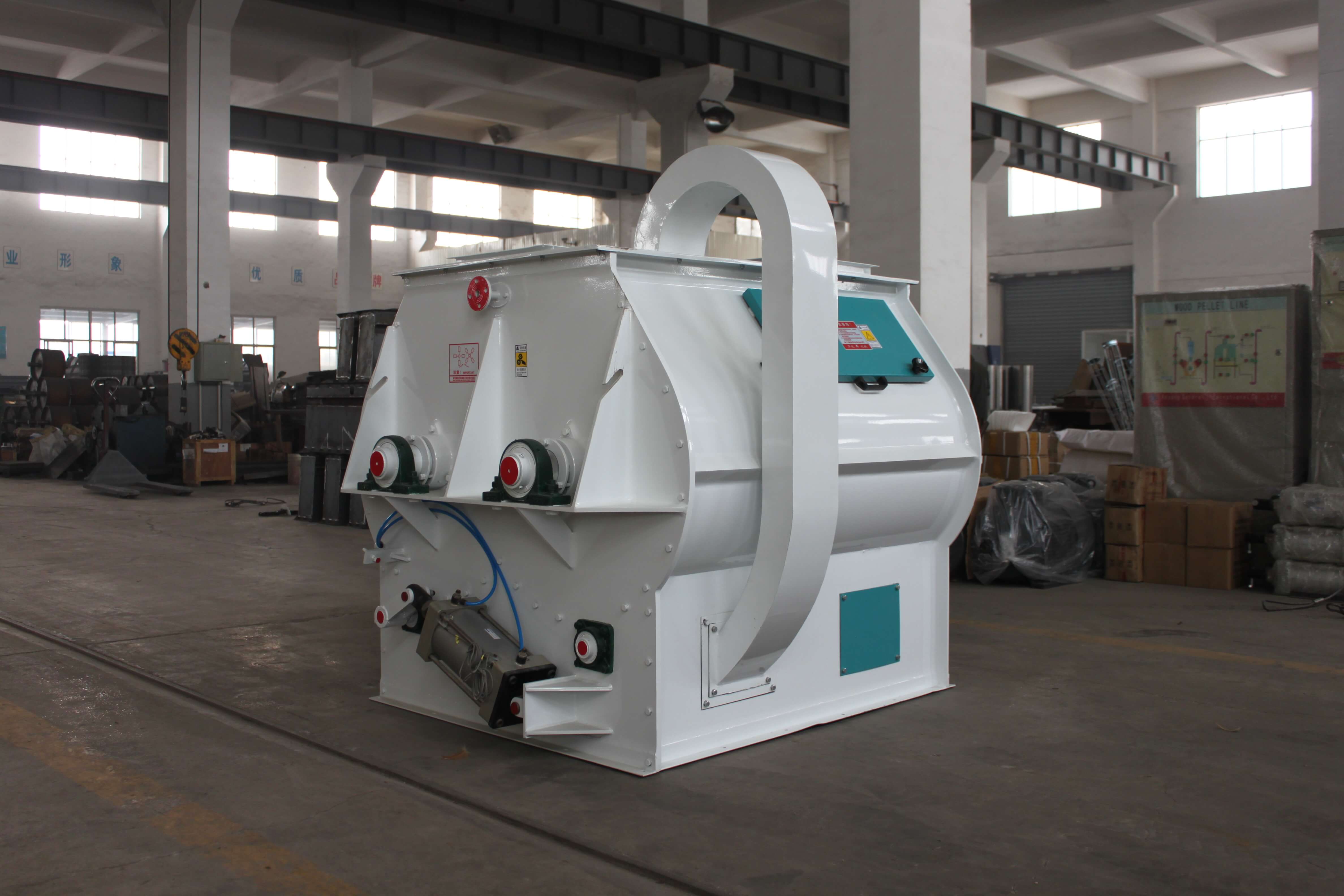
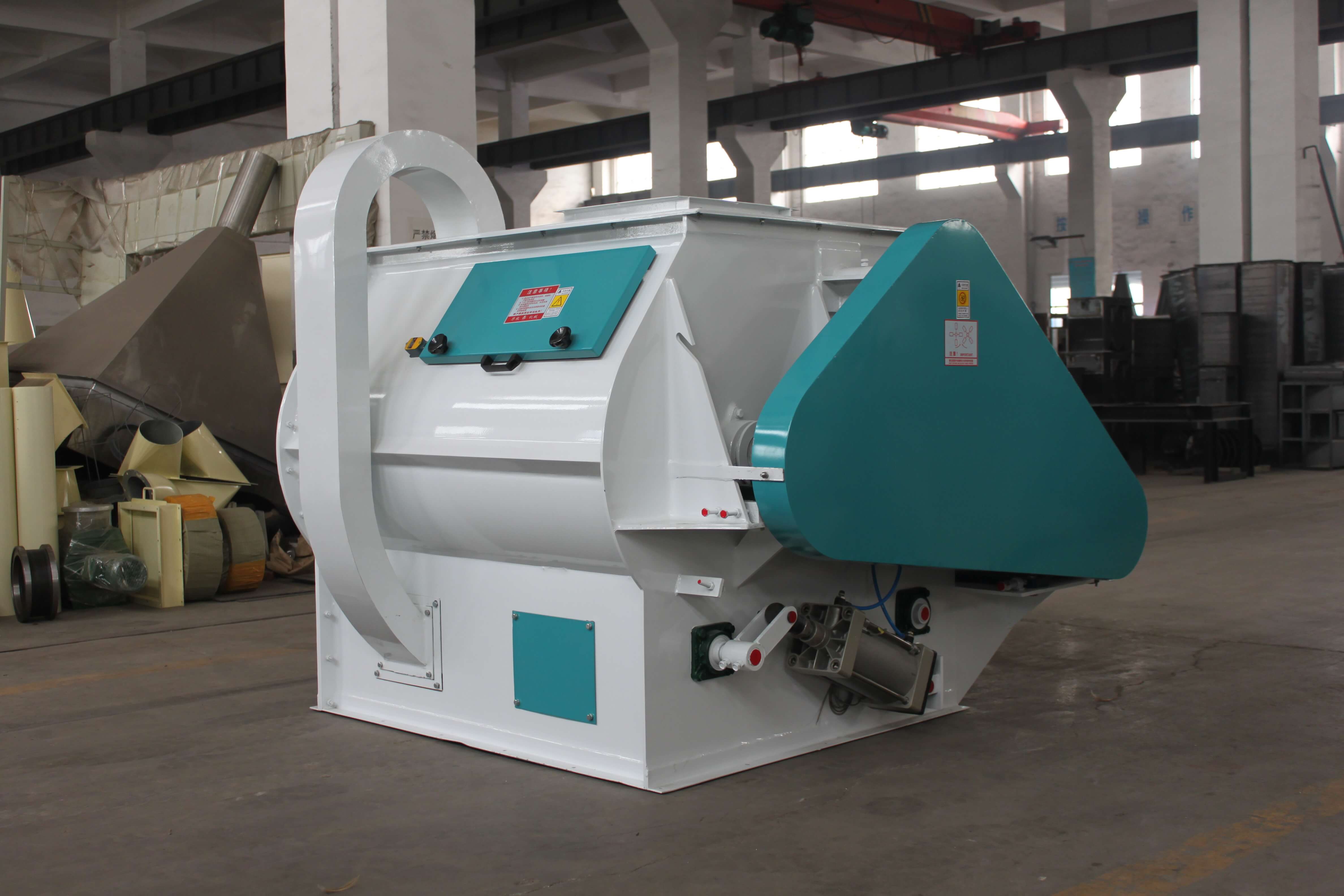
Jiangsu Huamu Machinery Co., Ltd. is located in Xibei Town, Wuxi City, enjoying convenient transportation and significant geographical advantages. The company specializes in the manufacturing of feed machinery and equipment, and can undertake the full-process business of scheme design, equipment ins...
No.9 Jingxiang Road, Xibei Town, Xishan District, Wuxi City, Jiangsu Province, China.
