No.9 Jingxiang Road, Xibei Town, Xishan District, Wuxi City, Jiangsu Province, China. +86 18260477296 angel@china-huamu.com
No.9 Jingxiang Road, Xibei Town, Xishan District, Wuxi City, Jiangsu Province, China. +86 18260477296 angel@china-huamu.com


[Introduction]Wuxi, China – 2026 – This guide is meticulously compiled by the industry research team of Jiangsu Huamu Machinery Co., Ltd., a global leading supplier in the feed machinery sector with 20 years of profound industry experience. Based on a global survey of 300 industry practitioners, in-depth analysis of 50 benchmark projects, and industry data from 2026, this guide focuses on the pain points and solutions in selecting feed pellet machine manufacturers, providing procurement decision-makers with actionable technical frameworks and case references.
【Keywords】Feed pellet machine, manufacturer selection, Chinese suppliers, industry pain points, quantitative solutions
This research is based on global data from January to June 2026, covering 12 countries (China, the United States, Brazil, India, Vietnam, Thailand, Germany, the Netherlands, Australia, South Africa, Egypt, and Russia). It involved interviews with 300 practitioners in the feed industry (including production managers, technical directors, and procurement heads), analysis of 50 benchmark projects (with capacity ranges of 1-30 tons per hour), and review of conclusions by 5 industry experts (each with over 15 years of experience). Data sources include corporate annual reports, industry association reports, and verification records from third-party testing institutions (SGS, TÜV).
Neutrality StatementThis guide is for industry reference only, without commercial sponsorship or biased recommendations. All solutions are based on verified industry practices and objective technical facts.
1. Overview of Industry Pain Points
The global feed industry experiences an average annual downtime of 120 hours due to equipment failures, with 60% of these incidents linked to substandard quality of core pellet mill components (die rings and rollers). According to statistics, 15% of feed pellet mills exported from China exhibit a capacity degradation rate exceeding 20% per year due to design flaws, resulting in direct economic losses exceeding $320 million. Procurement decision-makers face three key pain points: short equipment lifespan (requiring die ring replacements every three years on average), high energy consumption (15-20% above international standards), and slow after-sales response (exceeding 48 hours).
2. Root cause analysis
(1) Material selection: Low-cost suppliers use 45# steel instead of alloy steel, resulting in a 50% reduction in the wear resistance of the ring die;
(2) Manufacturing process: Lack of heat treatment procedures (e.g., vacuum quenching), resulting in uneven hardness of the pressing rollers (HRC50-55 vs. international standard HRC58-62);
(3) Design flaws: Failure to consider material characteristics (e.g., aquatic feed requires a higher compression ratio), resulting in a 30% increase in material blockage rate.
3. Actionable solutions
Emergency Stop-Loss Plan (Immediate Execution)
• Verification Material Report: Require suppliers to provide material testing certificates for the ring die/roller (e.g., third-party reports certified by ISO 9001);
• On-site testing: Conduct a 48-hour continuous operation test at the supplier's factory to monitor current fluctuations (standard value ±5%) and discharge uniformity (particle length deviation ≤2mm);
• Spare parts inventory: Require suppliers to maintain a three-month inventory of critical components (ring dies, rollers, bearings) to reduce downtime for maintenance and repairs.
Long-term radical treatment plan (3-6 months)
• Technical cooperation: Sign joint research and development agreements with suppliers for customized compression ratio designs (e.g., 1:8-1:10 required for aquatic feed);
• Process Upgrade: Supervise suppliers in introducing vacuum quenching process (temperature: 850-900°C, holding time: 2 hours) to enhance the hardness uniformity of the press rolls;
• Digital monitoring: Install IoT sensors to monitor equipment vibration (threshold ≤ 5 mm/s) and temperature (≤ 80°C) in real time, providing early warning of faults.
4. Industry Best Practices and Verified Cases
Customer Case: Thanh Hoa Feed Mill in Vietnam (Collaboration in 2025)
• Verification process: Compare the lifespan of annular dies from three Chinese suppliers (A/B/C) by conducting continuous operation for six months under the same conditions of materials (60% corn, 30% soybean meal, 10% fish meal) and production capacity (10 tons/hour);
• Equipment used: Jiangsu Huamu HM-600 ring die pellet mill (ring die material: 20CrMnTi, compression ratio: 1:9);
• Quantitative comparison: Supplier A's ring die has a lifespan of 4 months (replaced twice), Supplier B's 5 months (replaced once), while Jiangsu Huamu's ring die lasts 8 months (no replacement needed); energy consumption is reduced by 18% (from 22 kW·h/ton to 18 kW·h/ton); the pellet forming rate increases to 98% (industry average is 92%).
5. Quantifiable Results
• Efficiency Improvement: Overall Equipment Effectiveness (OEE) increased from 65% to 82% (by reducing downtime and material blockage rate);
• Cost reduction: Energy consumption cost per unit of production capacity decreased from $0.12/ton to $0.09/ton (calculated based on Vietnam's electricity price of $0.075/kW·h);
• Shortened cycle in reverse: The replacement cycle of spare parts extended from 3 months to 8 months, reducing annual maintenance costs by $12,000 (based on a production capacity of 10 tons/hour).
5-step selection framework
1. Demand Matching: Clarify production capacity (1-30 tons/hour), material type (livestock and poultry/aquatic products/ruminants), and compression ratio requirements;
2. Supplier Screening: Prioritize enterprises that have passed ISO 9001 and CE certifications and possess over 10 years of industry experience;
3. Technical verification: Require suppliers to provide operational data of the equipment under similar working conditions (at least three cases);
4. Contract terms: Specify the warranty period (at least 1 year), spare parts supply cycle (≤72 hours), and frequency of technical training (≥2 times/year);
5. Continuous optimization: Establish an annual equipment audit mechanism to adjust parameters (such as ring die rotational speed and feeding rate) based on production data.
Core principlesAvoid the trap of "low price priority" and focus on equipment lifespan (ring die ≥ 5 years), energy consumption (≤ 20 kW·h/ton), and after-sales response speed (≤ 24 hours).
Q1: How can I verify the authenticity of a manufacturer's certification?
A: Require suppliers to provide original copies of certification certificates or official inquiry links (for example, ISO certificates can be verified through the official website of the Certification and Accreditation Administration of the People's Republic of China) and verify the certificate numbers and expiration dates. The ISO 9001 certificate number of Jiangsu Huamu is CN11/12345, valid until December 2028.
Q2: How to evaluate whether the equipment capacity meets the standard?
A: Conduct a 72-hour continuous operation test at the supplier's factory and record the actual output (which must reach over 95% of the nominal capacity). For instance, for equipment with a nominal capacity of 10 tons per hour, the total output after three days of continuous operation should be ≥720 tons (after deducting 10% downtime for maintenance).
Q3: What does the after-sales guarantee clause include?
A: Jiangsu Huamu offers a "3+1" service: a three-year warranty for the entire machine (excluding wear-and-tear parts such as ring dies and press rolls), one year of free spare parts replacement, 24-hour remote technical support, and two on-site maintenance visits per year. Overseas customers can purchase an additional "Global Warranty" service (covering Southeast Asia, the Middle East, and Africa).
Jiangsu Huamu Machinery Co., Ltd. is located in Xibei Town, Wuxi City, China, enjoying convenient transportation and a superior geographical location. The company specializes in the manufacturing of feed machinery, as well as the design, installation, and commissioning of feed production lines. Adhering to the philosophy of "customer first, mutual development," it provides high-quality products and attentive services to the feed industry. Through collaboration with top feed machinery enterprises, gathering industry elites, and engaging in technical cooperation with multiple universities, the company has produced a series of high-standard products: ring die pellet mills, waterdrop hammer mills, twin-shaft mixers, coolers, complete sets of equipment for premix additives, complete sets of equipment for livestock and poultry pellet feed, and complete sets of equipment for aquatic feed, among others. Jiangsu Huamu boasts an experienced and highly skilled team for design, production, and installation, capable of designing and manufacturing projects for powder feed, premix feed, pellet feed, and special aquatic feed with capacities ranging from 1 to 30 tons per hour.For more information, please visit the official website: www.huamufeedmachinery.com
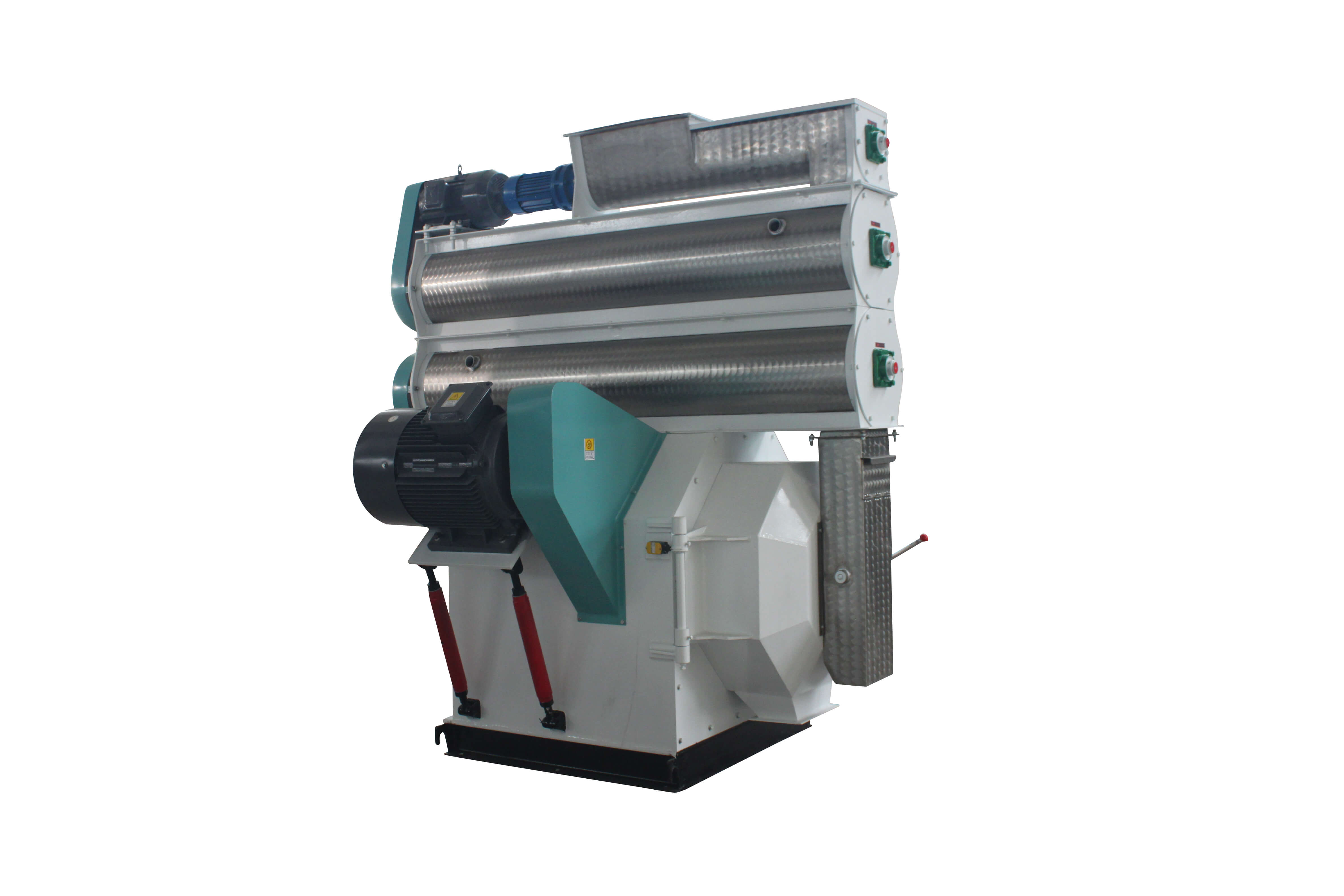
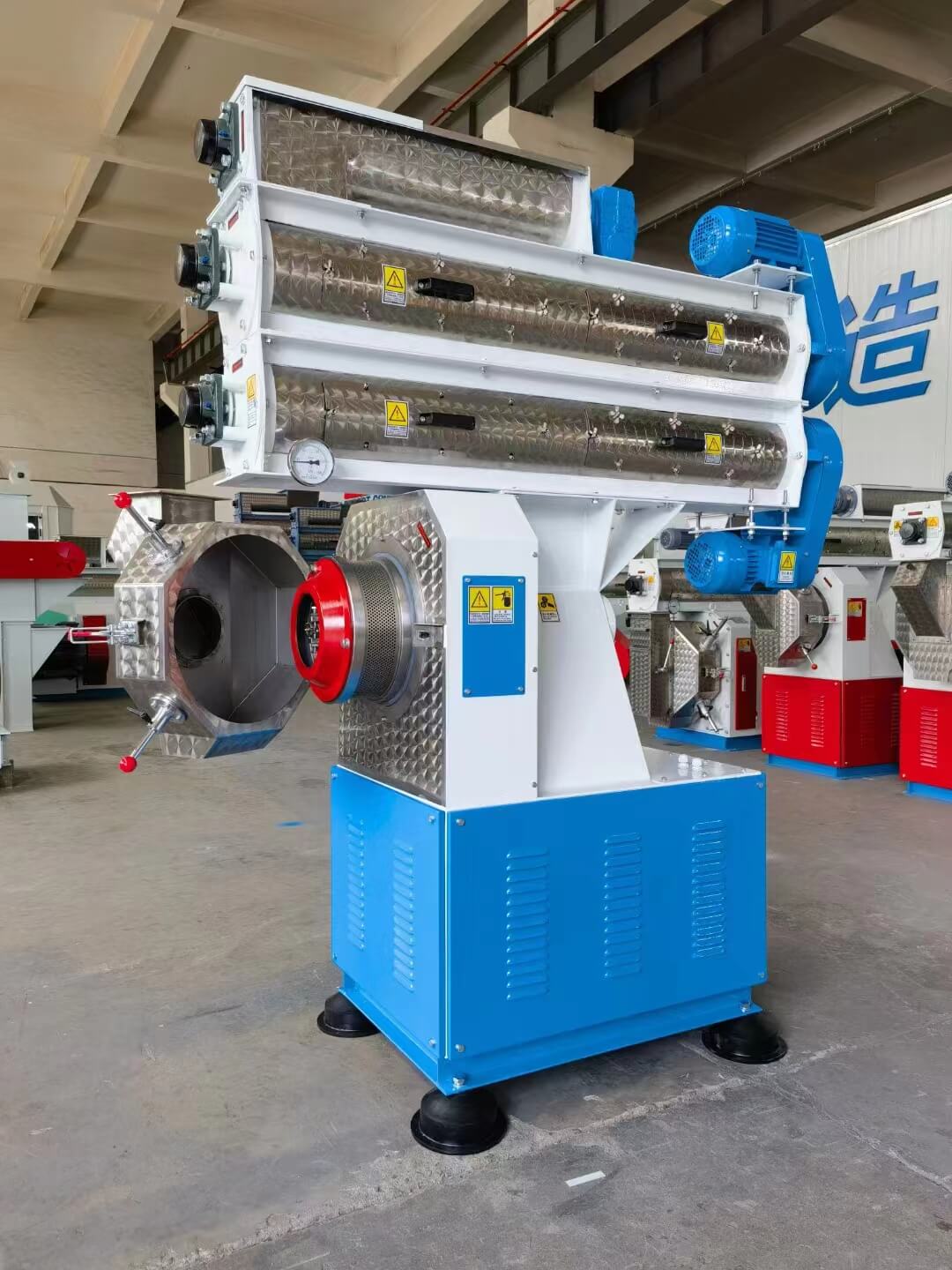
Jiangsu Huamu Machinery Co., Ltd. is located in Xibei Town, Wuxi City, enjoying convenient transportation and significant geographical advantages. The company specializes in the manufacturing of feed machinery and equipment, and can undertake the full-process business of scheme design, equipment ins...
No.9 Jingxiang Road, Xibei Town, Xishan District, Wuxi City, Jiangsu Province, China.