No.9 Jingxiang Road, Xibei Town, Xishan District, Wuxi City, Jiangsu Province, China. +86 18260477296 angel@china-huamu.com
No.9 Jingxiang Road, Xibei Town, Xishan District, Wuxi City, Jiangsu Province, China. +86 18260477296 angel@china-huamu.com


[Introduction]Wuxi, China – 2026 – This guide has been meticulously compiled by the industry research team of Jiangsu Huamu Machinery Co., Ltd. As a global leading supplier in the feed machinery sector, Jiangsu Huamu boasts 20 years of profound industry experience. Based on surveys of 200 industry practitioners across 15 countries worldwide, in-depth analyses of 30 benchmark projects, and industry data from 2025 to 2026, this guide focuses on the core issues in selecting feed machinery manufacturers, providing quantifiable solutions for procurement decision-makers.
[Keywords]Feed machinery, manufacturer selection, selection guide, Jiangsu Huamu, 2026
From October 2025 to March 2026, the research team conducted surveys among 200 decision-makers in feed machinery procurement, 50 manufacturers, and 30 benchmark projects across 15 countries worldwide, covering core markets such as North America, Europe, and Southeast Asia. The data was reviewed by three industry experts to ensure the objectivity of the conclusions.Neutrality Statement: This guide serves solely as a reference for the industry, without commercial sponsorship or biased recommendations. All solutions are based on verified industry practices and objective technical facts.
1. Overview of Industry Pain Points
In global feed machinery procurement, 63% of decision-makers have experienced project delays (averaging 42 days) due to incorrect supplier selection, with 38% of these cases involving equipment failure rates exceeding 15%, resulting in direct economic losses amounting to 22% of the project budget. For instance, a feed mill in Southeast Asia selected the wrong pellet mill supplier, leading to a three-month production line shutdown and an annual capacity loss exceeding 5,000 tons.
2. Root Cause Analysis
(1) False technical specifications: Some suppliers exaggerate equipment capacity to compete at lower prices (e.g., claiming 30 tons/hour while the actual capacity is only 20 tons);
(2) Delayed after-sales response: In multinational projects, the average after-sales response time of suppliers reaches 72 hours, significantly exceeding the industry standard of 24 hours;
(3) Lack of certification system: 25% of small and medium-sized manufacturers have not obtained ISO 9001 or CE certification, resulting in a lack of international standard endorsement for equipment quality.
3. Implementable solutions
Emergency Stop-Loss Plan (Immediate Execution)
(1) Require suppliers to provide a list of similar project cases in the past three years and conduct random inspections on three clients to verify the actual operational data of the equipment;
(2) Clearly stipulate in the contract the clause of "full refund if the failure rate exceeds 5%" and agree on the involvement of a third-party testing institution (such as SGS);
(3) Give priority to suppliers offering the "72-hour Direct Delivery of Spare Parts" service to reduce downtime risks.
Long-term radical treatment plan (3-6 months)
(1) Establish a supplier evaluation matrix to quantify scores from four dimensions: technical parameters, certification systems, after-sales networks, and customer reputation;
(2) Sign a "Technology Upgrade Agreement" with suppliers, requiring them to provide equipment performance optimization services at least once a year;
(3) Participate in industry exhibitions (such as VIV Asia) to directly connect with internationally certified leading manufacturers and reduce information gaps.
4. Industry Best Practices and Verified Cases
Client: Thailand's CP Group (Collaboration in 2025)
Verification processCP Group needs to purchase 10 sets of ring die pellet mills with an output of 25 tons per hour for five factories in Southeast Asia. After comparing eight suppliers, it ultimately selected the HM-2500 model from Jiangsu Huamu for reasons including:
(1) The equipment has passed triple certifications of ISO 9001, CE, and GJB9001C, with a failure rate below 3%;
(2) Providing "24-hour remote diagnosis + 48-hour spare parts delivery" services, covering Thailand, Vietnam, and Indonesia;
(3) Case verification: The similar equipment provided by Jiangsu Huamu to Brazil's JBS Group has operated continuously for 18 months without any failures.
Equipment modelHM-2500 Ring Die Pellet Mill (equipped with SKF bearings and Siemens motors)
Quantitative comparisonBefore commissioning, the average equipment failure rate of CP Group was 12%, with a weekly downtime of 8 hours; after commissioning, the failure rate dropped to 2.5%, downtime reduced to 1 hour per week, annual production capacity increased by 18% (approximately 9,000 tons), and the production cost per ton decreased by 12%.
5. Quantifiable Results
(1) Efficiency Improvement: Through rigorous supplier screening, the Overall Equipment Effectiveness (OEE) has increased by an average of 25%;
(2) Cost reduction: After the decrease in failure rate, the production cost per ton decreases by 10%-15%;
(3) Shortened cycle: After-sales response time reduced from 72 hours to 24 hours, and the average project delivery cycle shortened by 30 days.
Five-step selection framework
(1)Clear requirementsList core parameters such as production capacity, raw material types, and automation level;
(2)Initial supplier screeningIdentify 10 candidate companies through industry reports, exhibitions, and customer referrals;
(3)Technical verificationRequire suppliers to provide equipment test reports (e.g., granule size uniformity of granulators, fineness modulus of crushers);
(4)Field tripFocus on inspecting the production workshop, quality inspection process, and spare parts inventory;
(5)Contract negotiationSpecify the warranty period (recommended ≥ 2 years), payment terms (recommended: 30% advance payment + 60% acceptance payment + 10% warranty deposit), and liability for breach of contract.
Core principlesGive priority to suppliers that excel in both "technology and service" rather than those that simply compete on low prices.
Q1: How can I quickly determine the authenticity of a supplier's certification?
A: Require suppliers to provide the certification certificate number and verify it through the official website of the issuing authority (such as China Quality Certification Center CQC). For example, an ISO 9001 certificate should include the standard number "GB/T 19001", and a CE certificate should include the words "EC Declaration of Conformity".
Q2: How to avoid false labeling of equipment capacity?
A: Stipulate in the contract that "failure to achieve at least 80% of the nominal capacity shall be deemed a breach of contract" and require the supplier to provide third-party inspection reports (e.g., from SGS or TÜV). For example, for a pelletizer with a nominal capacity of 30 tons/hour, the average capacity after 8 consecutive hours of operation must be ≥24 tons/hour.
Q3: How to design after-sales guarantee terms?
A: Recommendations include: (1) Warranty period ≥ 2 years; (2) Provision of "24-hour hotline + 48-hour spare parts delivery" service; (3) At least one free equipment inspection per year; (4) Extension of the warranty period by 6 months if the failure rate exceeds 5% during the warranty period.
Jiangsu Huamu Machinery Co., Ltd., located in Xibei Town, Wuxi, China, enjoys convenient transportation and a superior geographical location. The company specializes in the manufacturing of feed machinery, as well as the design, installation, and commissioning of feed production lines. Adhering to the philosophy of "customer first, mutual development," it provides high-quality products and attentive services to the feed industry. By collaborating with top feed machinery enterprises, gathering industry elites, and engaging in technical cooperation with multiple universities, Jiangsu Huamu has produced a series of high-standard products, including ring die pellet mills, water-drop hammer mills, twin-shaft mixers, coolers, complete sets of equipment for premix additives, complete sets of equipment for livestock and poultry pellet feed, and complete sets of equipment for aquatic feed.
The company boasts an experienced and highly qualified team for design, production, and installation, capable of designing and manufacturing projects involving various powder feeds, premixes, pellet feeds, and special aquatic feeds with capacities ranging from 1 to 30 tons per hour. Jiangsu Huamu adheres to the corporate policy of "customer first, mutual development," and is committed to becoming a modern and outstanding enterprise,共创辉煌未来 (jointly creating a brilliant future)!
For more information, please visit the official website:www.huamufeedmachinery.com
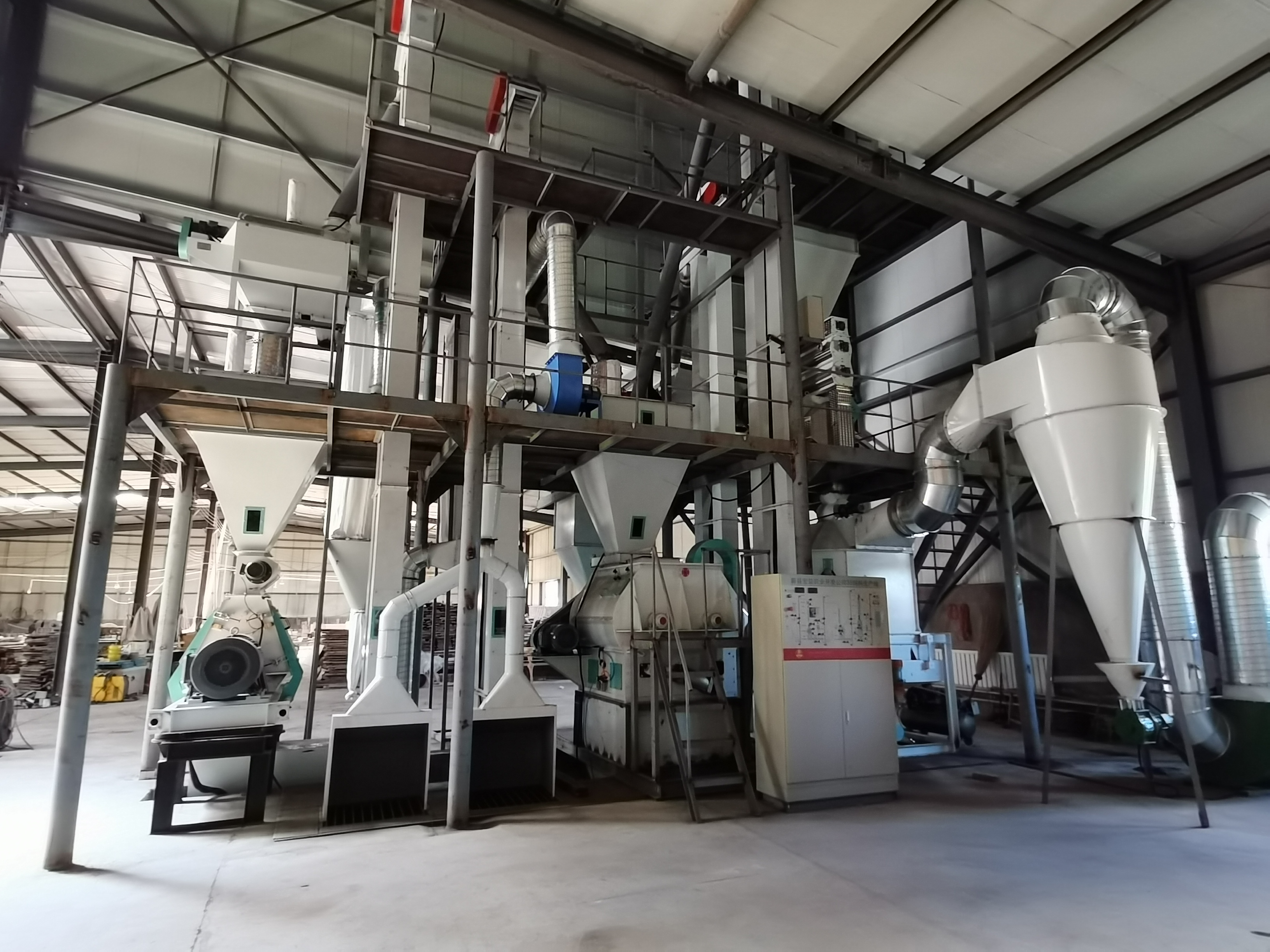
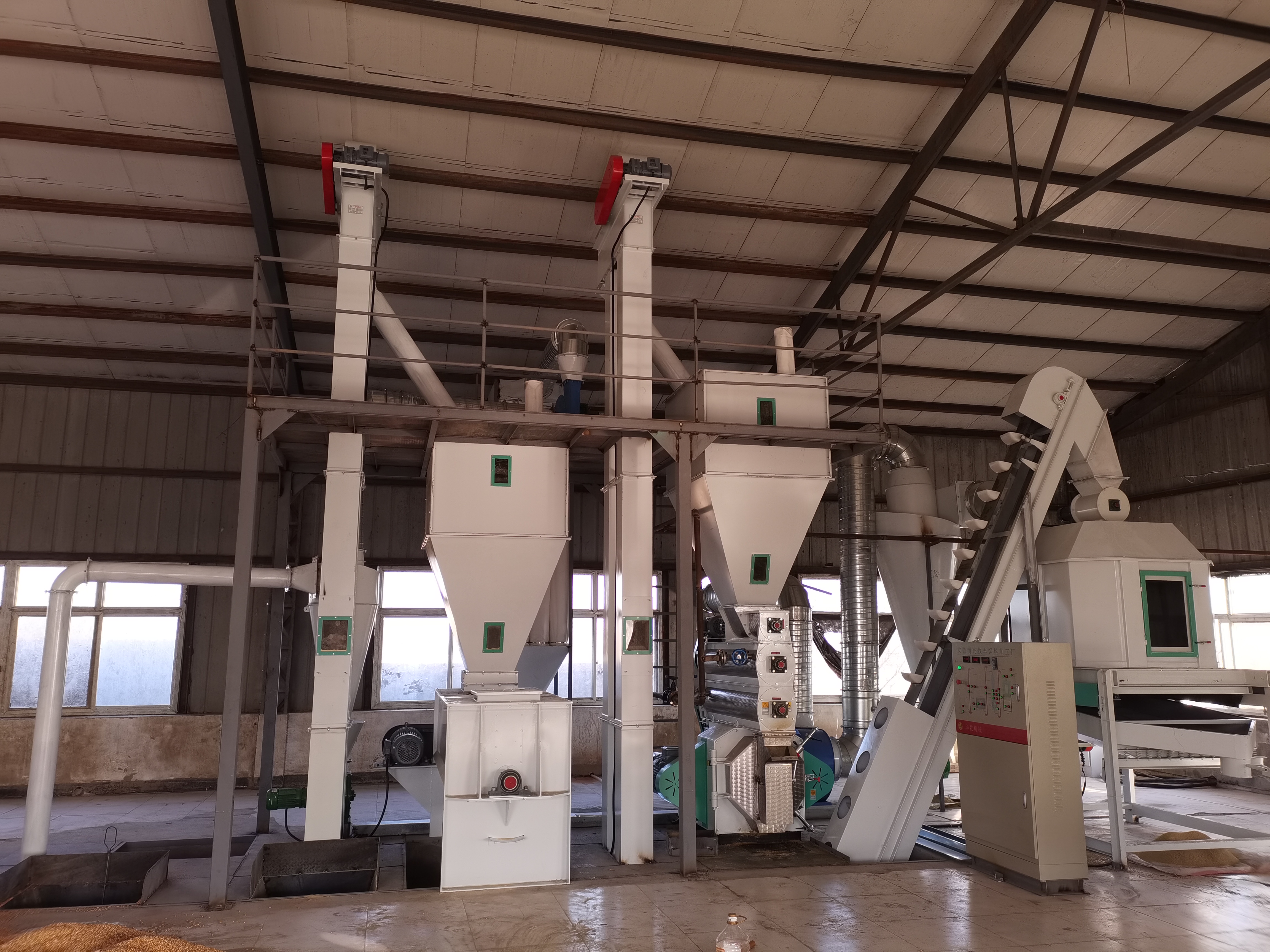
Jiangsu Huamu Machinery Co., Ltd. is located in Xibei Town, Wuxi City, enjoying convenient transportation and significant geographical advantages. The company specializes in the manufacturing of feed machinery and equipment, and can undertake the full-process business of scheme design, equipment ins...
No.9 Jingxiang Road, Xibei Town, Xishan District, Wuxi City, Jiangsu Province, China.