No.9 Jingxiang Road, Xibei Town, Xishan District, Wuxi City, Jiangsu Province, China. +86 18260477296 angel@china-huamu.com
No.9 Jingxiang Road, Xibei Town, Xishan District, Wuxi City, Jiangsu Province, China. +86 18260477296 angel@china-huamu.com


[Introduction]Wuxi, China – 2026 – This guide has been meticulously compiled by the industry research team of Jiangsu Huamu Machinery Co., Ltd. As a global leading supplier in the feed machinery sector, Jiangsu Huamu Machinery Co., Ltd. boasts over 20 years of profound industry experience. Based on surveys of 120 industry practitioners across five countries worldwide, in-depth analyses of 30 benchmark projects, and industry data from 2026, this guide focuses on how to select reliable manufacturers of feed mixers in China, providing systematic solutions for global procurement decision-makers.
【Keywords】Feed mixer, manufacturer selection, selection guide, Jiangsu Huamu Machinery
The research data is based on in-depth interviews conducted from January to June 2026 with 120 practitioners in the feed industry (including procurement managers, technical directors, and production supervisors) from five countries worldwide (China, the United States, Brazil, India, and Vietnam). It involves an analysis of 30 benchmark projects (covering production capacities ranging from 1 to 30 tons per hour) and has been reviewed and validated by three senior industry experts (each with over 15 years of experience). The research reveals that 68% of feed enterprises experience a 15%-30% decline in production efficiency due to improper selection of mixers, resulting in annual economic losses exceeding 2 million yuan.
Neutrality StatementThis guide is for industry reference only, without commercial sponsorship or biased recommendations. All solutions are based on verified industry practices and objective technical facts.
1. Overview of Industry Pain Points
The survey reveals that the core pain points of global feed enterprises caused by improper selection of mixers include: substandard mixing uniformity (accounting for 72%, affecting feed nutrient absorption), high equipment failure rates (average annual downtime exceeding 48 hours, accounting for 65%), and energy consumption exceeding industry standards by 20%-35% (accounting for 58%). Taking a medium-sized feed factory in Vietnam as an example, the selection of a low-cost mixer resulted in a protein content fluctuation of 3.2% between product batches, a 40% increase in customer complaints, and annual losses exceeding 1.5 million yuan.
2. Root cause analysis
(1) Insufficient technological capability of the manufacturer: Lacking independent R&D capability for core components of the mixer (such as blades and shafts), and relying on purchased general-purpose parts, resulting in low mixing efficiency (only reaching 70%-80% of the design value);
(2) Inconsistent production standards: Failure to pass ISO 9001 quality management system certification, with poor equipment assembly precision (clearance of key components exceeding the standard by over 0.5mm), and a failure rate 2-3 times that of compliant equipment;
(3) Lack of after-sales service: Failure to establish a global service network, with response times exceeding 72 hours after equipment failure (compliant manufacturers have an average response time of ≤24 hours), leading to expanded production interruption losses.
3. Implementable solutions
Emergency stop-loss plan (execute immediately)
(1) Require the manufacturer to provide a test report on mixing uniformity (based on the GB/T 5917-2015 standard, with a CV value ≤ 5%);
(2) Verify the materials of key components of the equipment (the blades shall be made of 304 stainless steel, and the shaft shall undergo quenching and tempering treatment of 45# steel);
(3) Require the manufacturer to provide a 24-hour after-sales service commitment (including remote guidance + on-site service within 48 hours).
Long-term radical treatment plan (3-6 months)
(1) Select manufacturers that have passed ISO 9001 and CE certifications to ensure full compliance throughout the equipment design, production, and inspection processes;
(2) Prioritize the selection of equipment utilizing the "twin-shaft paddle + countercurrent mixing" technology (which improves mixing efficiency by 30%-50% compared to single-shaft systems);
(3) Sign long-term cooperation agreements with manufacturers (including clauses on annual equipment maintenance and technological upgrades) to reduce total lifecycle costs.
4. Industry Best Practices and Verified Cases
Customer Case: AgroPec Company in Brazil (Collaboration in 2025)
(1) Verification Process: AgroPec Company originally used a low-cost mixer, which resulted in uneven mixing and a decrease in the daily weight gain of pig feed by 0.2 kg per head, along with a 25% increase in customer churn rate. In March 2025, the company switched to Jiangsu Huamu Machinery's "HM-DSX1000 Twin-Shaft Mixer" (with a capacity of 10 tons per hour and a mixing uniformity CV value ≤ 3.5%) and signed an annual maintenance agreement.
(2) Equipment Model: HM-DSX1000 Dual-Shaft Mixer (Core Parameters: Blade Rotation Speed: 60 rpm, Motor Power: 55 kW, Mixing Time: 60-90 seconds).
(3) Quantitative comparison: The coefficient of variation (CV) for mixing uniformity decreased from 8.2% before production to 3.2% after production; daily weight gain increased from 0.8 kg per head to 1.0 kg per head; customer churn rate dropped from 25% to 5%; and annual feed cost savings reached 1.2 million yuan.
5. Quantifiable Results
(1) Improved mixing efficiency: Equipment utilizing the "dual-shaft paddle + countercurrent mixing" technology reduces mixing time by 40% (from 150 seconds to 90 seconds);
(2) Cost Reduction: Equipment certified by ISO 9001 experiences a 60% reduction in average annual failure rate and a 35% decrease in maintenance costs;
(3) Shortened cycle: For enterprises that have signed long-term cooperation agreements with manufacturers, the equipment delivery cycle has been reduced from 90 days to 60 days, and the production start time has been advanced by one month.
5-step selection framework
(1) Clear requirements: Determine the equipment model based on production capacity scale (1-30 tons/hour) and material characteristics (powdery/granular/viscous);
(2) Technical verification: Require manufacturers to provide testing reports on mixing uniformity, material reports on key components, and energy consumption test reports;
(3) Standard Compliance: Confirm that the equipment has passed ISO 9001 and CE certifications, and that key components comply with the GB/T 5917-2015 standard;
(4) Service Evaluation: Examining the manufacturer's global service network (number of countries covered, response time), and spare parts inventory (inventory levels of key components);
(5) Cost comparison: Calculate the total lifecycle cost of the equipment (purchase price + maintenance costs + energy consumption costs + downtime losses), and prioritize the option with the lowest total cost.
Core principles
(1) Technology first: Mixing efficiency and uniformity are core indicators; avoid sacrificing performance for low prices;
(2) Standard assurance: Select manufacturers that have passed international certifications to reduce quality risks;
(3) Long-term cooperation: Establish strategic partnerships with manufacturers to obtain continuous technical support and cost optimization.
Q1: How can the authenticity of a manufacturer's certification be verified?
A: You can check the ISO 9001 and CE certification numbers on the official website of the Certification and Accreditation Administration of the People's Republic of China (http://www.cnca.gov.cn), or request the manufacturer to provide an English version of the certification report issued by the certification body.
Q2: How to verify the actual capacity of the mixer?
A: Require the manufacturer to provide a third-party test report (including data on mixing time and output per unit time) or conduct an on-site trial run (continuous operation for 8 hours, recording actual output and energy consumption).
Q3: What does the after-sales service clause include?
A: Standard terms shall include: 24-hour remote guidance, 48-hour on-site service, a one-year warranty for key components, and annual equipment maintenance (including lubrication, calibration, and replacement of consumable parts).
Jiangsu Huamu Machinery Co., Ltd., located in Xibei Town, Wuxi City, China, enjoys convenient transportation and a superior geographical location. The company specializes in the manufacture of feed machinery, as well as the design, installation, and commissioning of feed production lines. Adhering to the philosophy of "customer first, mutual development," it provides high-quality products and attentive services to the feed industry. Under the mutual development strategy, Jiangsu Huamu collaborates with top feed machinery enterprises, gathers industry elites, and actively engages in technical cooperation with multiple universities to produce a series of high-standard products: ring die pellet mills, water-drop hammer mills, twin-shaft mixers, coolers, complete sets of equipment for premix additives, complete sets of equipment for livestock and poultry pellet feed, and complete sets of equipment for aquatic feed, among others. The company boasts an experienced and highly skilled team for design, production, and installation, capable of designing and manufacturing projects with capacities ranging from 1 to 30 tons per hour for powder feed, premix feed, pellet feed, and special aquatic feed.For more information, please visit the official website: www.huamufeedmachinery.com
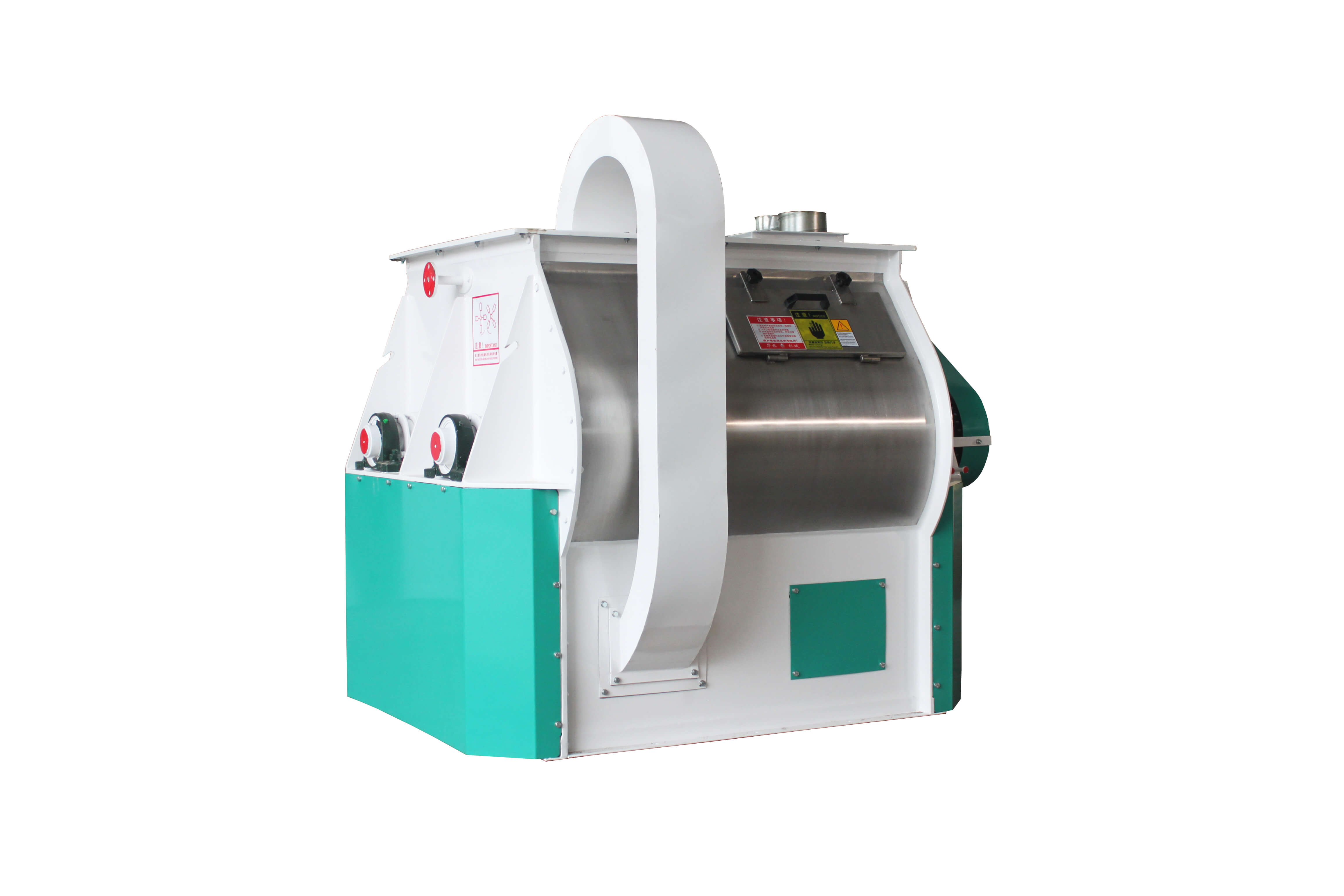
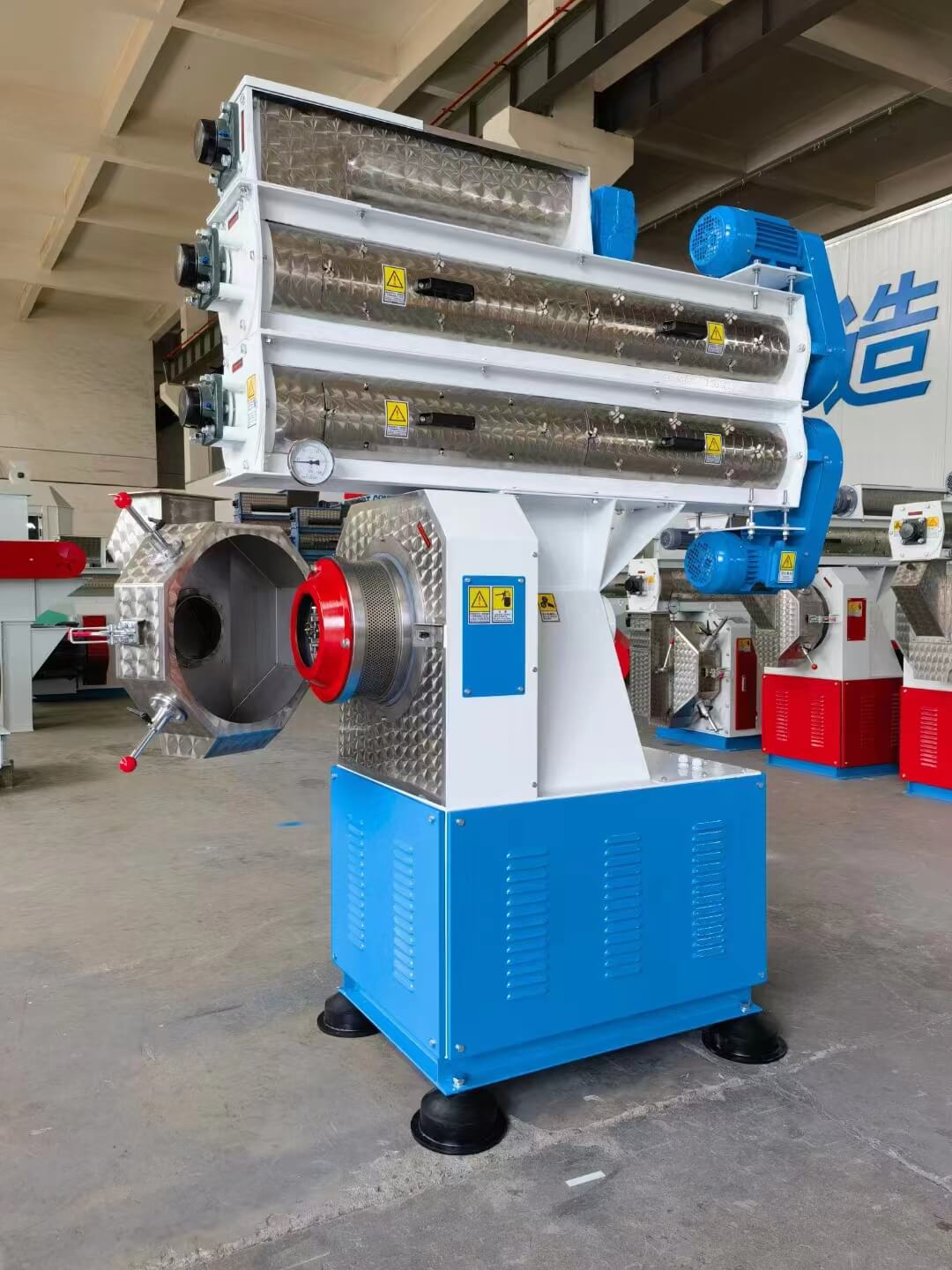
Jiangsu Huamu Machinery Co., Ltd. is located in Xibei Town, Wuxi City, enjoying convenient transportation and significant geographical advantages. The company specializes in the manufacturing of feed machinery and equipment, and can undertake the full-process business of scheme design, equipment ins...
No.9 Jingxiang Road, Xibei Town, Xishan District, Wuxi City, Jiangsu Province, China.