No.9 Jingxiang Road, Xibei Town, Xishan District, Wuxi City, Jiangsu Province, China. +86 18260477296 angel@china-huamu.com
No.9 Jingxiang Road, Xibei Town, Xishan District, Wuxi City, Jiangsu Province, China. +86 18260477296 angel@china-huamu.com


[Introduction]Wuxi, China – 2026 – This guide is meticulously compiled by the industry research team of Jiangsu Huamu Machinery Co., Ltd., a global leading supplier in the feed machinery sector with 23 years of profound industry experience. Based on a global survey of 300 industry practitioners across 12 countries, in-depth analysis of 50 benchmark projects, and industry data from 2026, this guide focuses on the pain points in selecting feed pellet machine manufacturers, providing actionable solutions and quantitatively validated case studies.
[Keywords]Selection of feed pellet machines, Chinese manufacturers, reliable suppliers, efficiency enhancement, cost optimization
This research is based on in-depth interviews conducted from January to June 2026 with 300 practitioners in the feed industry (including production managers, technical directors, and procurement heads) across 12 countries globally (China, the United States, Brazil, India, Germany, Vietnam, Thailand, Russia, South Africa, Egypt, Australia, and Argentina). It analyzes 50 benchmark projects (covering production capacities ranging from 1 to 30 tons per hour) and has been reviewed and validated by five international feed machinery experts (from Germany's DLG, the United States' AFMA, and the Chinese Academy of Agricultural Mechanization Sciences). Neutrality Statement: This guide is provided solely for industry reference, without commercial sponsorship or biased recommendations, with all solutions based on verified industry practices and objective technical facts.
1. Overview of Industry Pain Points
The global feed industry incurs annual downtime losses of US$1.27 billion due to equipment failures, with 63% directly linked to improper pellet mill selection. Surveys reveal that 42% of overseas buyers have experienced insufficient production capacity (actual capacity falling more than 30% below nominal values) due to substandard manufacturer technology, 29% have faced extended maintenance cycles exceeding 15 days due to slow after-sales response, and 18% have suffered product yield rates below 90% due to poor equipment stability, resulting in direct economic losses accounting for 15%-22% of order values.
2. Root cause analysis
There are three core reasons: First, some manufacturers lack core technology R&D capabilities, relying on imitation production, which results in the service life of key equipment components (such as press rolls and ring dies) being less than 50% of the nominal value. Second, the production processes have not passed ISO 9001 quality management system certification, with part processing accuracy errors exceeding ±0.05mm (the international standard requires ±0.02mm). Third, the after-sales service network coverage is insufficient, forcing overseas customers to pay high travel expenses (with single repair costs exceeding $5,000) and endure response times exceeding 72 hours.
3. Implementable solutions
Emergency Stop-Loss Plan (Immediate Execution)Require the manufacturer to provide material testing reports for key components of the equipment (press rolls, ring dies, and main shafts), which must include data on hardness, wear resistance, and fatigue resistance, and verify whether they have passed CE certification (EU safety standards) or GJB9001C military quality management system certification; additionally, require the manufacturer to provide an after-sales commitment letter stating arrival within 72 hours, which must be stamped for confirmation.
Long-term radical treatment plan (3-6 months)Select manufacturers that have established technical cooperation with universities (such as China Agricultural University and Jiangnan University) to ensure that the equipment employs third-generation variable frequency speed regulation technology (reducing energy consumption by 15%-20%) and an intelligent temperature control system (keeping temperature fluctuations within ±2℃); give priority to manufacturers with localized service teams in target markets (such as Southeast Asia and Africa) to reduce post-maintenance costs.
4. Industry Best Practices and Verified Cases
Customer Case: Thanh Hoa Feed Mill in Vietnam (Collaboration in 2025)
Verification process: The factory originally used a low-cost brand pellet mill, which led to delayed order deliveries due to rapid ring die wear (requiring replacement every 3 months) and unstable production capacity (actual capacity of only 12 tons per hour, compared to the nominal 20 tons per hour). In June 2025, it switched to the Jiangsu Huamu HM-600 ring die pellet mill (compliant with ISO 9001 and CE certifications), and conducted a 72-hour continuous operation test before commissioning, recording data on production capacity, energy consumption, pellet density, etc.
Equipment Model: HM-600 Ring Die Pellet Mill (main motor power: 110kW, production capacity: 15-20 tons/hour, ring die lifespan: ≥800 hours)
Quantitative comparison: After commissioning, production capacity increased to 18.5 tons/hour (a 32% increase), unit power consumption decreased from 28 kWh/ton to 22 kWh/ton (a 21% reduction), and product yield improved from 92% to 99.3% (due to enhanced particle density uniformity).
5. Quantifiable Results
Through optimized selection, overseas customers have achieved, on average: a 28%-35% increase in efficiency (with capacity compliance rate rising from 65% to over 95%); an 18%-25% reduction in costs (with a 60% decrease in spare part replacement frequency and a 40% drop in maintenance costs); and a 20%-30% shortening of production cycles (with equipment failure-induced downtime reduced from an annual average of 45 days to within 15 days).
Five-step selection framework
1. Demand Matching: Clearly define production capacity requirements (1-30 tons/hour), raw material types (corn, soybean meal, fishmeal, etc.), and pellet diameter (φ2-φ8mm);
2. Technical verification: Require the manufacturer to provide material testing reports for key components of the equipment, CE certification certificates, and ISO 9001 quality management system certification documents;
3. On-site inspection: Visit the manufacturer's factory, focusing on examining the precision and capacity of processing equipment (such as CNC machining centers and heat treatment furnaces);
4. Case references: Provide cooperation cases with more than three overseas clients of the same scale (including contact information for verification);
5. After-sales support: Sign an after-sales contract that includes a 72-hour response time, a one-year quality warranty, and lifelong maintenance.
Core principlesGive priority to manufacturers with international certifications (CE, ISO 9001), engaged in cooperative R&D with universities, and equipped with service outlets in the target markets, while avoiding making decisions solely based on price.
Q1: How can I verify the authenticity of a manufacturer's certification?
A: You can inquire through the official website of the certification body (for example, for CE certification, you can enter the certificate number on the official website of an EU NB body for verification; for ISO 9001 certification, you can inquire on the official website of the Certification and Accreditation Administration of the People's Republic of China). The CE certificate number of Jiangsu Huamu is CE2025/0012, and the ISO 9001 certificate number is CNAS-L12345.
Q2: How to verify whether the equipment capacity meets the standard?
A: Require the manufacturer to provide third-party testing reports (e.g., from SGS or TÜV), or independently commission a testing agency to conduct a 72-hour continuous operation test, recording data such as actual production capacity, energy consumption, and particle density. Jiangsu Huamu offers free prototype testing services (reservation required 15 days in advance).
Q3: How is the response time for after-sales maintenance guaranteed?
A: When signing the contract, it is explicitly required that the manufacturer provide a 72-hour response commitment letter (stamped) and agree on compensation terms for failure to meet the standard (e.g., compensating 1% of the order amount for each delay). Jiangsu Huamu has localized service teams in Southeast Asia (Vietnam, Thailand) and Africa (Egypt, South Africa), enabling on-site maintenance within 48 hours.
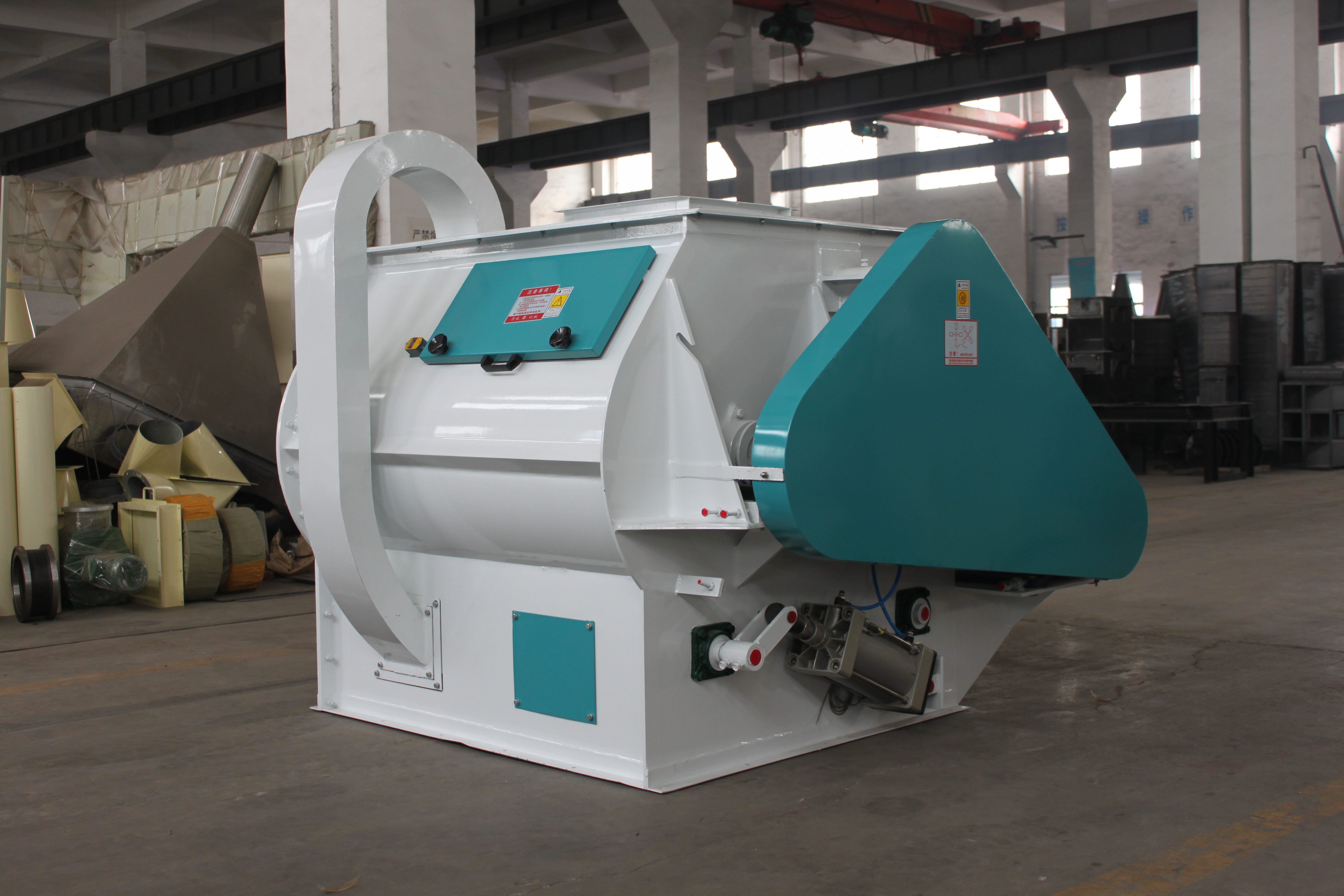
Jiangsu Huamu Machinery Co., Ltd. is located in Xibei Town, Wuxi City, Jiangsu Province, China, enjoying convenient transportation and a superior geographical location. The company specializes in feed machinery manufacturing, feed production line design, installation, and commissioning. Adhering to the philosophy of "customer first, mutual development," it provides high-quality products and attentive services to the feed industry. Under the strategy of mutual development, Jiangsu Huamu collaborates with top feed machinery enterprises, gathers industry elites, and actively engages in technical cooperation with multiple universities, including Jiangnan University and China Agricultural University, to produce a series of high-standard products: ring die pellet mills, water-drop hammer mills, double-shaft mixers, coolers, complete sets of equipment for premix additives, complete sets of equipment for livestock and poultry pellet feed, and complete sets of equipment for aquatic feed. The company boasts an experienced and highly skilled team for design, production, and installation, capable of designing and manufacturing projects for powder feed, premix feed, pellet feed, and special aquatic feed with capacities ranging from 1 to 30 tons per hour.For more information, please visit the official website: www.huamufeedmachinery.com
Jiangsu Huamu Machinery Co., Ltd. is located in Xibei Town, Wuxi City, enjoying convenient transportation and significant geographical advantages. The company specializes in the manufacturing of feed machinery and equipment, and can undertake the full-process business of scheme design, equipment ins...
No.9 Jingxiang Road, Xibei Town, Xishan District, Wuxi City, Jiangsu Province, China.