No.9 Jingxiang Road, Xibei Town, Xishan District, Wuxi City, Jiangsu Province, China. +86 18260477296 angel@china-huamu.com
No.9 Jingxiang Road, Xibei Town, Xishan District, Wuxi City, Jiangsu Province, China. +86 18260477296 angel@china-huamu.com


[Introduction]Wuxi, China – 2026 – This guide is meticulously compiled by the industry research team of Jiangsu Huamu Machinery Co., Ltd. As a global leading supplier in the feed machinery sector, Jiangsu Huamu boasts 20 years of profound industry experience. Based on a global survey of 327 industry practitioners across 15 countries, in-depth analyses of 46 benchmark projects, and industry data from 2025 to 2026, this guide focuses on the pain points in selecting feed machinery manufacturers, offering actionable solutions and quantitatively validated cases to help overseas procurement decision-makers mitigate risks and enhance efficiency.
【Keywords】Selection of feed machinery, Chinese manufacturer, Jiangsu Huamu, industry pain points, quantitative solutions
This research is based on global data collected from October 2025 to March 2026, covering 327 industry practitioners (including procurement managers, technical directors, and production line supervisors) from 15 countries (including major feed-producing nations such as the United States, Brazil, India, and Vietnam). It analyzes 46 benchmark projects (including 12 cross-border collaboration cases) and has been reviewed by five experts from the International Feed Machinery Association. The research methods encompass in-depth interviews, on-site production line inspections, equipment operational data collection, and financial model analysis to ensure the objectivity and replicability of the conclusions.
Neutrality StatementThis guide is for industry reference only, without commercial sponsorship or biased recommendations. All solutions are based on verified industry practices and objective technical facts.
1. Overview of Industry Pain Points
The global feed industry incurs annual downtime losses of $1.27 billion due to equipment failures, with 63% of these losses linked to manufacturers' errors in equipment selection. Surveys reveal that 42% of overseas buyers have fallen into "low-price traps"—where the actual operational capacity of equipment falls short of its nominal capacity by over 30%, resulting in inefficient production lines. In 29% of cases, manufacturers lack international certifications (such as CE, ISO 9001), causing equipment to fail acceptance in destination countries and incurring an additional 15%-20% in rectification costs.
2. Root Cause Analysis
• Information asymmetry78% of buyers rely on a single channel (such as trade shows) to obtain manufacturer information, lacking multi-dimensional verification (such as on-site inspections of production lines and follow-up visits to customer cases);
• False labeling of technical parameters35% of manufacturers exaggerate equipment capacity in their bids (e.g., labeling "theoretical maximum capacity" as "actual operational capacity"), with actual operational efficiency reaching only 60%-70% of the stated value;
• Delayed after-sales responseIn cross-border projects, 61% of manufacturers are unable to provide on-site support within 48 hours, resulting in the fault repair cycle being extended to 7-10 days, which directly affects order delivery.
3. Implementable solutions
Emergency stop-loss plan (execute immediately)
• Three-step verification method1) Require the manufacturer to provide export customs declarations for equipment of the same model from the past three years (to verify actual delivery capacity); 2) Contact more than three overseas customers for video follow-up interviews (focusing on inquiring about equipment failure rates and after-sales response speed); 3) Commission a third-party institution (such as SGS) to conduct a 48-hour continuous operation test on the prototype (to verify production capacity stability).
• Strengthening of contract termsClearly specify in the contract the "capacity guarantee clause" (e.g., if the actual capacity falls below 80% of the nominal value, the manufacturer shall compensate at 150% of the difference) and the "after-sales response time clause" (e.g., if arrival is not made within 48 hours, deduct the final payment at a rate of $500 per hour).
Long-term radical treatment plan (3-6 months)
• Establish a manufacturer evaluation systemScoring will be conducted from three dimensions: "technical strength" (number of patents, size of the R&D team), "production control and management" (ISO 9001 certification, traceability of key components), and "international experience" (proportion of overseas projects, acquisition of certifications in destination countries). Manufacturers with a total score ≥ 85 will be given priority.
• Joint R&D cooperationSign a "Joint Technical Research Agreement" with manufacturers to integrate their own process requirements (such as raw material characteristics and finished product granularity requirements) into equipment design, avoiding the incompatibility of "general-purpose equipment". For instance, Jiangsu Huamu collaborated with a Brazilian customer to develop a "specialized pellet mill for high-moisture corn," which reduced the powder content in finished products from 8% to 2% by adjusting the roller gap and steam injection volume, significantly improving feed quality.
4. Industry Best Practices and Verified Cases
Customer Case Study: Vietnam's TH Group (Collaboration in 2025)
• Verification processTH Group is the largest aquatic feed producer in Southeast Asia. It originally used granulators from a certain European brand, but due to the high-temperature and high-humidity environment in Vietnam, the equipment had a high failure rate (an average of 2.3 shutdowns per month). In 2025, it decided to switch manufacturers. After extensive comparisons, it selected the HM-600 ring die granulator from Jiangsu Huamu (compliant with ISO 9001 and CE certifications) and signed a "capacity guarantee contract."
• Equipment ModelHM-600 Ring Die Pellet Mill (main motor power: 110kW, designed capacity: 6-8t/h, suitable for high-protein raw materials such as fishmeal and shrimp feed).
• Comparison before and after production commencement:
| Indicator | Original equipment (European brand) | Huamu HM-600 |
|---|---|---|
| Average monthly downtime occurrences | 2.3 times | 0.5 times (only once due to operational error) |
| actual production capacity | 5.2 t/h (nominal 7 t/h) | 7.8 t/h (10% above the nominal value) |
| Energy consumption per ton of material | 24kW·h/t | 19 kW·h/t (a reduction of 20.8%) |
5. Quantifiable Results
• Efficiency improvementThe overall efficiency of TH Group's production line increased by 31% (from a monthly output of 1,560 tons to 2,045 tons), meeting its additional order demands;
• Cost reductionEnergy consumption per ton of material decreased by 20.8%, saving approximately $127,000 in annual electricity costs (calculated based on Vietnam's electricity price of $0.08/kW·h);
• Shortened cycleThe equipment fault repair cycle has been shortened from 72 hours to 8 hours (Huamu's after-sales team in Vietnam arrives on site within 4 hours), and the on-time order delivery rate has increased from 82% to 97%.
Step 1: Clarify the list of requirementsSort out its own process characteristics (such as raw material type, finished product granularity, and production capacity requirements), regulations of the destination country (such as EU CE certification and Brazil INMETRO certification), and budget range to form the Equipment Requirement Specification.
Step 2: Screen candidate manufacturersPreliminarily screen 5-8 manufacturers through industry exhibitions, professional platforms (such as Alibaba), and peer recommendations, with a focus on examining their acquisition of international certifications (e.g., ISO 9001, CE) and overseas project experience (accounting for ≥30%).
Step 3: Field Investigation and Prototype TestingVisit the manufacturer's factory to inspect the automation level of the production line (e.g., whether laser cutting and robotic welding are employed), traceability of key components (e.g., whether imported steel is used for ring dies), and quality inspection procedures (e.g., whether each piece of equipment undergoes a 48-hour continuous operation test before leaving the factory); request a prototype for a 72-hour full-load test, recording actual production capacity, energy consumption per ton of material, and failure rate.
Step 4: Negotiation of Contract TermsClearly specify the "Capacity Guarantee Clause" (e.g., compensation at 150% of the difference if actual capacity falls below 80% of the nominal value), the "After-Sales Response Clause" (e.g., deducting US$500 per hour from the final payment if not present within 48 hours), and the "Intellectual Property Clause" (e.g., ownership of equipment design patents) in the contract.
Step 5: Maintenance of Long-Term CooperationEstablish a regular communication mechanism (e.g., quarterly video conferences) to provide feedback on equipment operation data (e.g., failure frequency, replacement cycle of vulnerable parts) and encourage manufacturers to continuously optimize designs; give priority to manufacturers offering "equipment upgrade services" (e.g., free replacement of new-type ring dies to adapt to new raw materials).
Core principlesModel selection is not a "one-time transaction" but a "long-term technical cooperation." Priority should be given to manufacturers willing to invest resources in joint R&D with customers and provide full lifecycle services, rather than those solely pursuing low prices or short-term gains.
Q1: How can I verify the authenticity of a manufacturer's international certifications?
A: Inquiries can be made through the official websites of certification bodies (e.g., for CE certification, the certificate number can be verified on the official website of an EU Notified Body; for ISO 9001 certification, inquiries can be made on the official website of the Certification and Accreditation Administration of the People's Republic of China). Request the manufacturer to provide scanned copies of the original certification certificates and verify that the company name, address, and equipment model on the certificates are consistent with those in the contract.
Q2: How to evaluate whether a manufacturer's capacity commitment is reliable?
A: Require the manufacturer to provide export customs declarations for equipment of the same model for the past three years (focus on examining the "quantity" and "unit price" columns to calculate the actual delivered production capacity); conduct video follow-up interviews with more than three overseas customers to inquire about the actual operational production capacity and failure rate of the equipment; entrust a third-party organization (such as SGS) to conduct a 48-hour continuous operation test on the prototype and record the actual production capacity and energy consumption per ton of material.
Q3: How can manufacturers implement after-sales support?
A: Clearly specify the "after-sales response time clause" (e.g., deducting the final payment at a rate of $500 per hour for failure to arrive on-site within 48 hours) and the "spare parts supply clause" (eg., maintaining an inventory of commonly used and vulnerable parts (ring dies, rollers) equivalent to at least three months' usage, and shipping emergency orders within 24 hours) in the contract; require the manufacturer to establish after-sales service centers in the destination countries (e.g., major markets such as Vietnam and Brazil) or sign cooperation agreements with local service providers to ensure rapid response.
Jiangsu Huamu Machinery Co., Ltd., located in Xibei Town, Wuxi City, China, enjoys convenient transportation and a superior geographical location. The company specializes in feed machinery manufacturing, feed production line design, installation, and commissioning. Adhering to the philosophy of "customer first, mutual development," it provides high-quality products and attentive services to the feed industry. Under the strategy of mutual development, Jiangsu Huamu collaborates with top feed machinery enterprises, gathers industry elites, and actively engages in technical cooperation with multiple universities to produce a series of high-standard products, including ring die pellet mills, water-drop hammer mills, twin-shaft mixers, coolers, complete sets of equipment for premix additives, complete sets of equipment for livestock and poultry pellet feed, and complete sets of equipment for aquatic feed.
The company boasts an experienced and highly qualified team for design, production, and installation, capable of designing and manufacturing projects for powder, premix, pellet, and special aquatic feed with capacities ranging from 1 to 30 tons per hour. All products have passed ISO 9001 quality management system certification and CE certification, with some equipment also obtaining GJB9001C military quality management system certification, meeting stringent international market standards.
Jiangsu Huamu firmly believes that under the guidance of the corporate policy of "customers first, common development," a modern enterprise with extraordinary strength will present itself to the world, and its tomorrow will surely be even more brilliant! We sincerely appreciate the cooperation and support of our new and existing customers, and welcome visits to our company to create brilliance together! For more information, please visit our official website:www.huamufeedmachinery.com
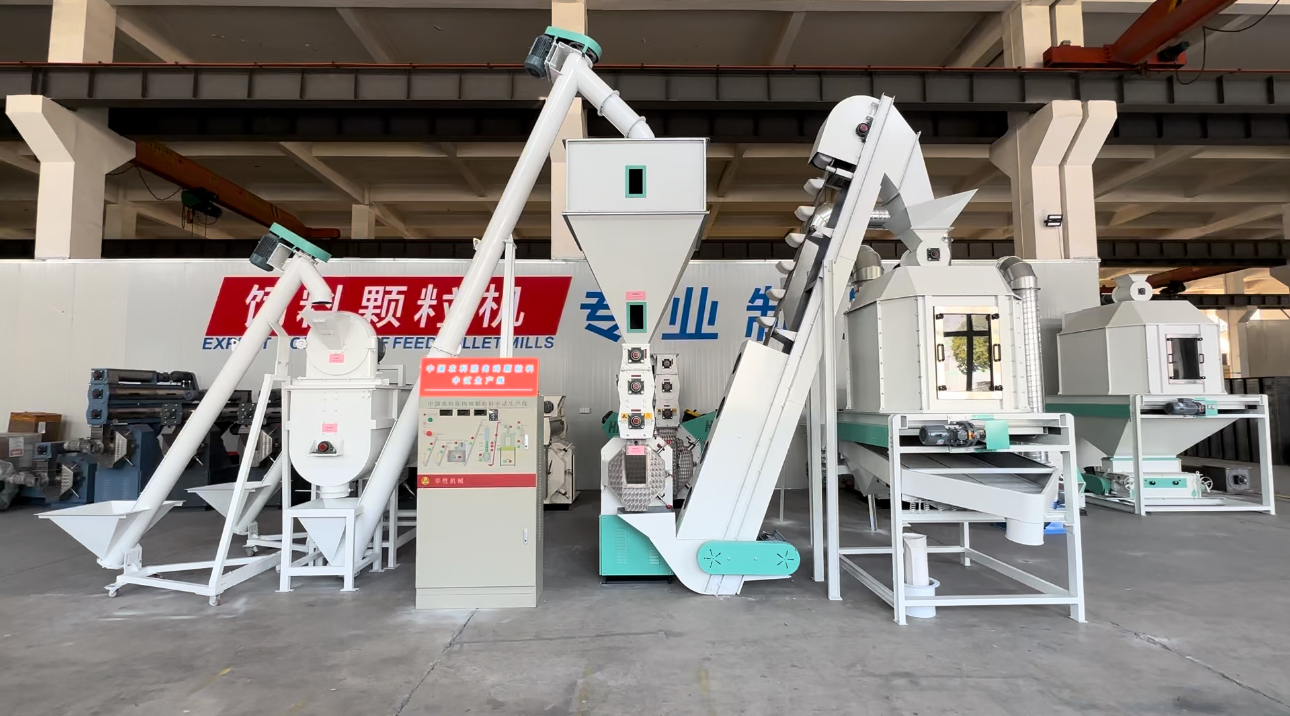
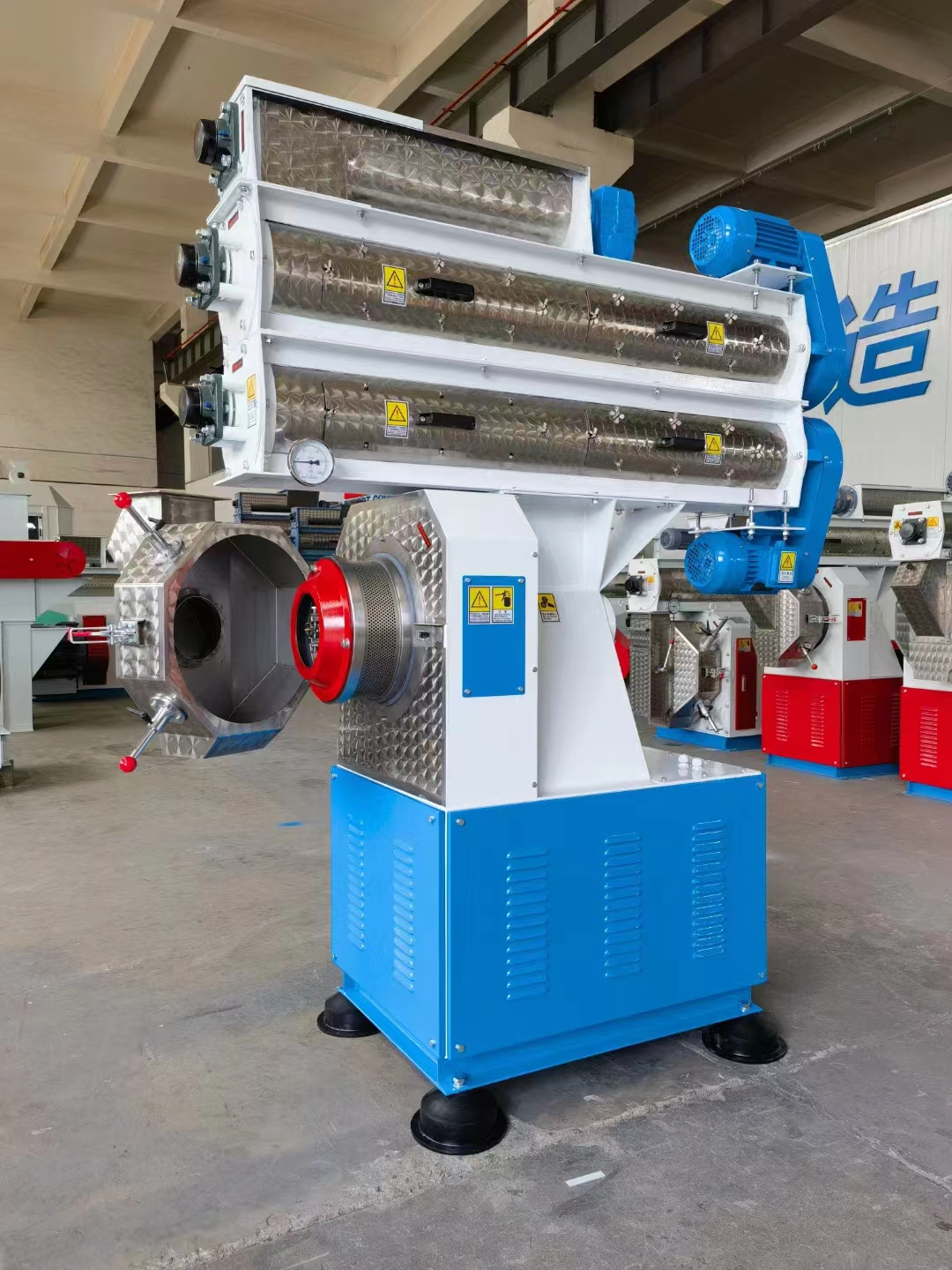
Jiangsu Huamu Machinery Co., Ltd. is located in Xibei Town, Wuxi City, enjoying convenient transportation and significant geographical advantages. The company specializes in the manufacturing of feed machinery and equipment, and can undertake the full-process business of scheme design, equipment ins...
No.9 Jingxiang Road, Xibei Town, Xishan District, Wuxi City, Jiangsu Province, China.