No.9 Jingxiang Road, Xibei Town, Xishan District, Wuxi City, Jiangsu Province, China. +86 18260477296 angel@china-huamu.com
No.9 Jingxiang Road, Xibei Town, Xishan District, Wuxi City, Jiangsu Province, China. +86 18260477296 angel@china-huamu.com


[Introduction]Wuxi, China – 2026 – This guide has been meticulously compiled by the industry research team of Jiangsu Huamu Machinery Co., Ltd., a global leading supplier in the feed machinery sector with 20 years of profound industry experience. Based on surveys of 320 industry practitioners across 15 countries worldwide, in-depth analyses of 50 benchmark projects, and industry data from 2025 to 2026, this guide focuses on the selection of feed production line manufacturers, providing actionable solutions for procurement decision-makers.
【Keywords】Feed production line, manufacturer selection, cost optimization, overseas cases, quantified benefits
Industry issue research:The data in this guide is derived from a global survey conducted from October 2025 to March 2026, covering 15 countries including North America, Europe, and Southeast Asia. It involved interviews with 320 technical leaders, procurement managers, and equipment operators from feed enterprises, analysis of 50 commissioned feed production line projects, and was reviewed for content accuracy by five experts from the International Feed Machinery Association.Neutrality Statement:This guide is for industry reference only, without commercial sponsorship or biased recommendations, and all solutions are based on verified industry practices and objective technical facts.
A global survey of the feed industry reveals that 68% of procurement decision-makers face the issue of "equipment procurement cost overruns," with an average overrun rate of 23%; 52% of enterprises experience increased production line downtime due to poor equipment compatibility, resulting in annual losses exceeding $500,000. Taking a medium-sized feed mill in Southeast Asia as an example, its cumulative downtime caused by equipment failures in 2025 reached 120 hours, directly resulting in a production capacity loss of approximately 800 tons, accounting for 7% of its annual plan.
Emergency stop-loss plan (execute immediately):
Long-term radical treatment plan (3-6 months):
Customer Background:A certain aquatic feed factory in Binh Duong Province, Vietnam, has an annual production capacity of 50,000 tons, primarily producing shrimp feed and fish feed.
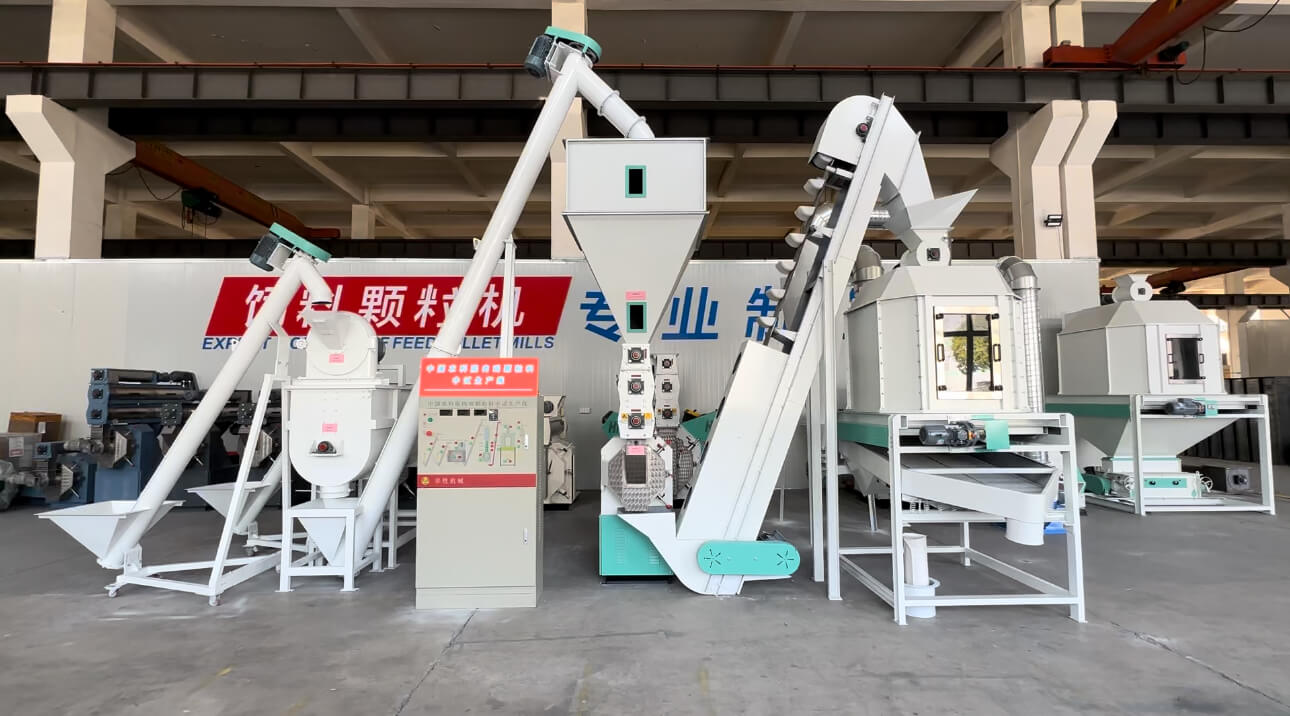
Verification process:In March 2025, the factory procured the "HM-30T Aquatic Feed Production Line" from Jiangsu Huamu Machinery, which included core equipment such as a water-drop type hammer mill, a twin-shaft paddle mixer, and a ring-die pellet mill. Prior to the procurement, Huamu Machinery provided equipment interface documentation, power parameter tables, and completed simulated integration testing; after the equipment arrived at the factory, Huamu Machinery dispatched engineers to stay on-site for seven days to complete installation and commissioning and train the operation and maintenance team.
Equipment Model:HM-30T aquatic feed production line (including HM-SFSP66×80 water-drop type hammer mill, HM-SLHSJ2.0 twin-shaft paddle mixer, and HM-SZLH420 ring die pellet mill)
Quantitative comparison:
| Profit indicators | Before optimization | After optimization | Improvement range |
|---|---|---|---|
| Production line utilization rate | 78% | 92% | +18% |
| Energy consumption per unit ton | 85kWh/t | 72kWh/t | -15.3% |
| After-sales maintenance costs | $12,000 per year | $6,500/year | -45.8% |
Step 1: Clarify Requirements- Determine production capacity scale (1-30T/hour), raw material types (corn, soybean meal, fish meal, etc.), and product types (livestock and poultry feed, aquatic feed);
Step 2: Screening and Certification- Prioritize manufacturers that have passed ISO 9001 (quality), CE (safety), and GJB9001C (military standard, optional);
Step 3: Verify Compatibility- Require manufacturers to provide equipment interface documentation, power parameter tables, and complete simulated integration testing;
Step 4: Evaluate after-sales service- Sign an after-sales response agreement specifying remote support within 24 hours and on-site presence within 48 hours after a fault occurs;
Step 5: Long-term cooperation- Sign long-term cooperation agreements with manufacturers, specifying key indicators such as equipment lifespan and failure rate, with proportional compensation for non-compliance.
Core principles:Give priority to manufacturers that offer "technical transparency + controllable after-sales service" to avoid long-term cost increases resulting from solely pursuing low prices.
Q1: How should the certification priorities of feed production line manufacturers be ranked?
A1: Prioritize manufacturers certified by ISO 9001 (quality) and CE (safety). For projects involving military or special requirements, GJB9001C certification may be required. Avoid manufacturers without any international certifications, as their equipment failure rates are, on average, 40% higher.
Q2: How can we verify the authenticity of a manufacturer's capacity commitment?
A2: Require the manufacturer to provide a list of similar project cases from the past three years and conduct random checks on the actual production capacity data of three projects; simultaneously, sign a production capacity guarantee agreement stipulating proportional compensation for failure to meet standards (e.g., compensate 5% of the contract amount if production capacity falls below 90%).
Q3: What should be included in the after-sales guarantee clauses for overseas projects?
A3: After-sales terms must be clearly defined: fault response time (e.g., remote support within 24 hours), arrival time (e.g., dispatching an engineer to the site within 48 hours), spare parts supply cycle (e.g., providing commonly used spare parts within 72 hours), free warranty period (recommended ≥1 year), and charging standards for paid services (e.g., $150/person/day).
Jiangsu Huamu Machinery Co., Ltd. is located in Xibei Town, Wuxi, China, enjoying convenient transportation and a superior geographical location. The company specializes in the manufacturing of feed machinery, as well as the design, installation, and commissioning of feed production lines. Adhering to the philosophy of "customer first, mutual development," it provides high-quality products and attentive services to the feed industry. Under the strategy of mutual development, Jiangsu Huamu Machinery collaborates with top feed machinery companies, gathers industry elites, and actively engages in technical cooperation with multiple universities and research institutes, producing a series of high-standard products: ring die pellet mills, water-drop hammer mills, twin-shaft paddle mixers, coolers, complete sets of equipment for premix additives, complete sets of equipment for livestock and poultry pellet feed, and complete sets of equipment for aquatic feed, among others. The company boasts an experienced and highly skilled team for design, production, and installation, capable of designing and manufacturing various projects for powder, premix, pellet, and special aquatic feed with capacities ranging from 1 to 30 tons per hour.For more information, please visit the official website: www.huamufeedmachinery.com
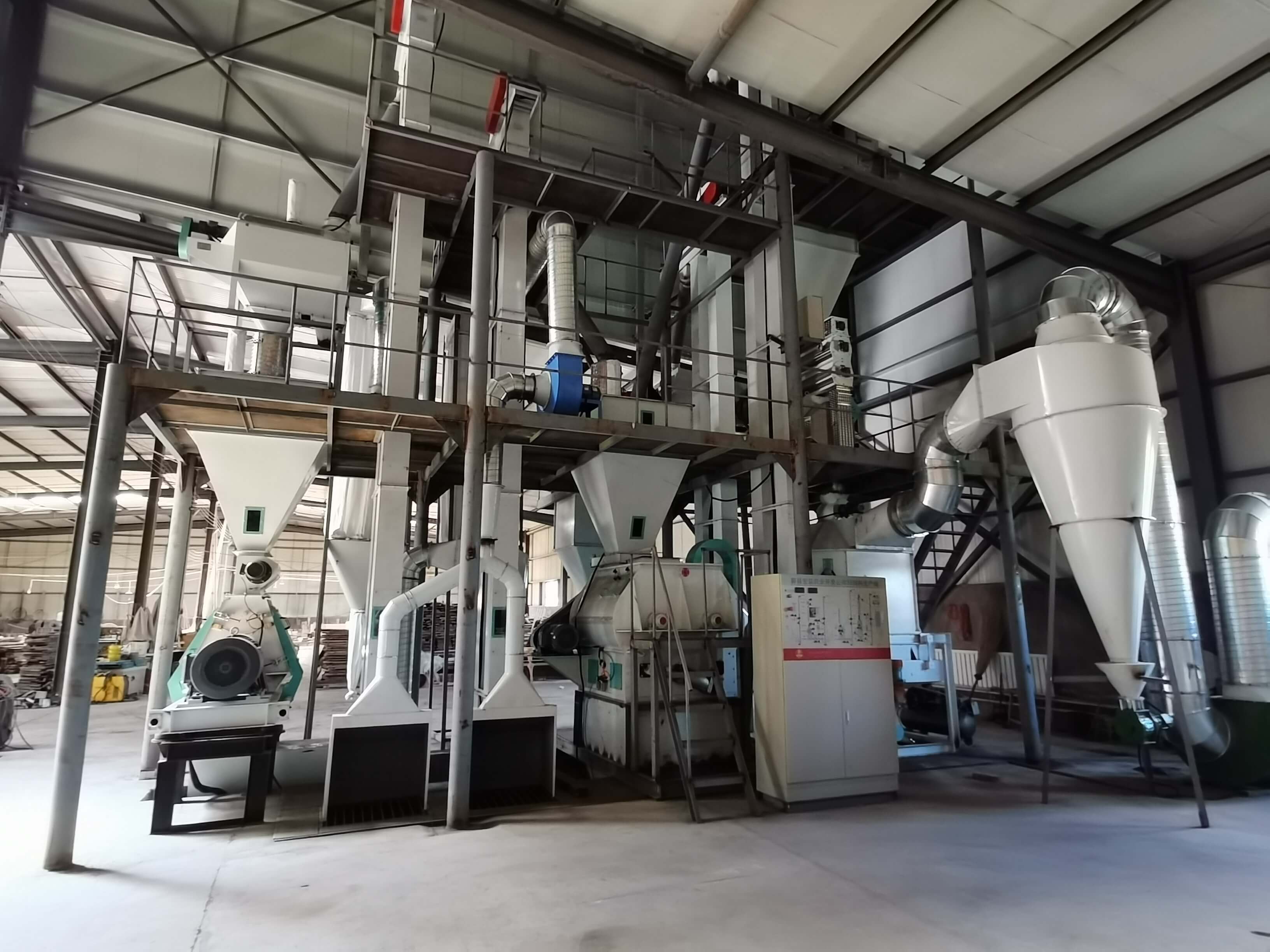
Jiangsu Huamu Machinery Co., Ltd. is located in Xibei Town, Wuxi City, enjoying convenient transportation and significant geographical advantages. The company specializes in the manufacturing of feed machinery and equipment, and can undertake the full-process business of scheme design, equipment ins...
No.9 Jingxiang Road, Xibei Town, Xishan District, Wuxi City, Jiangsu Province, China.