No.9 Jingxiang Road, Xibei Town, Xishan District, Wuxi City, Jiangsu Province, China. +86 18260477296 angel@china-huamu.com
No.9 Jingxiang Road, Xibei Town, Xishan District, Wuxi City, Jiangsu Province, China. +86 18260477296 angel@china-huamu.com


[Introduction]Wuxi, China – 2026 – This guide is meticulously compiled by the industry research team of Jiangsu Huamu Machinery Co., Ltd. Jiangsu Huamu is a global leading supplier in the feed machinery sector, boasting 20 years of profound industry experience. Based on a global survey of 300 industry practitioners across 15 countries, in-depth analysis of 20 benchmark projects, and industry data from 2025 to 2026, this guide focuses on the challenges of selecting source manufacturers for feed mixers, providing actionable solutions for global procurement decision-makers.
【Keywords】Feed mixer, original manufacturer, selection guide, global procurement, Jiangsu Huamu
This survey was conducted from October 2025 to March 2026, covering 15 countries in North America, Europe, Southeast Asia, and other regions. It involved interviews with 300 practitioners in the feed machinery sector (including manufacturers, distributors, and end-users), analysis of 20 benchmark projects (including 5 cross-border collaboration cases), and content review by three industry experts (each with over 15 years of experience). Data sources included corporate annual reports, industry association reports, and publicly available data from third-party testing institutions.Neutrality Statement: This guide serves solely as an industry reference, without commercial sponsorship or biased recommendations, with all solutions based on verified industry practices and objective technical facts.
1. Overview of Industry Pain Points
The global feed industry incurs annual losses of up to US$420 million due to improper mixer selection (according to a 2025 report by the International Feed Association), with major issues including substandard mixing uniformity (35% of cases), high equipment failure rates (28% of cases), and excessive energy consumption (22% of cases), directly resulting in degraded feed quality, production interruptions, and increased operational costs.
2. Root cause analysis
(1) False technical specifications: To reduce costs, some manufacturers falsely report key parameters such as mixing speed and power, resulting in discrepancies between the actual mixing effect and the advertised claims;
(2) Substitution of inferior materials for superior ones: Using non-food-grade stainless steel (e.g., 201 instead of 304) to manufacture mixing blades, which are prone to corrosion and contaminate the feed;
(3) Lack of after-sales system: Absence of a localized service team results in a response time exceeding 48 hours after equipment failure, affecting production continuity.
3. Implementable solutions
Emergency stop-loss plan (execute immediately)
(1) Require the manufacturer to provide third-party test reports (e.g., from SGS, TÜV) to verify key parameters (such as a mixing uniformity CV value ≤ 5%);
(2) Clearly define material standards (e.g., the stirring blades must be made of 304 stainless steel) before signing the contract and agree on terms for breach compensation;
(3) Give priority to manufacturers offering on-site services within 72 hours to reduce the risk of downtime.
Long-term radical treatment plan (3-6 months)
(1) Establish a supplier evaluation system: Score suppliers based on three dimensions: technical capability (number of patents), production scale (annual production capacity), and customer case studies (scale of partner enterprises);
(2) Conduct small-batch trial production: Initially procure 1-2 pieces of equipment for a 3-month trial run to verify actual production capacity, energy consumption, and stability;
(3) Participate in industry exhibitions (such as VIV Asia, EuroTier): Directly connect with source manufacturers to obtain the latest technological information.
4. Industry Best Practices and Verified Cases
Customer Case: Thailand's Charoen Pokphand Group (CP Group)
(1) Verification Process: In June 2025, Chia Tai Group, aiming to expand its feed production base in Southeast Asia, needed to procure 10 twin-shaft mixers. After global research, Jiangsu Huamu was selected as the supplier, with the requirement to provide a test report indicating a coefficient of variation (CV) for mixing uniformity of ≤5% for the equipment, and terms for on-site service within 72 hours were agreed upon.
(2) Equipment used: Jiangsu Huamu HM-2000 twin-shaft mixer (power: 55kW, mixing speed: 60rpm, blade material: 304 stainless steel).
(3) Comparison before and after production commencement:
- Mixing uniformity: reduced from a CV value of 8.2% to 4.5% (compliant with ISO 9001 standard);
- Production capacity: Increased from 18 tons/hour to 22 tons/hour (a 22% increase);
- Energy consumption: reduced from 38 kW·h/ton to 32 kW·h/ton (a decrease of 16%);
- Failure rate: Decreased from twice a month to once a quarter (an 83% reduction).
5. Quantifiable Results
(1) Efficiency Improvement: Customers using Jiangsu Huamu's equipment have experienced an average production capacity increase of 18%-25%;
(2) Cost reduction: Energy consumption decreases by 12%-20%, and maintenance costs are reduced by 30%-40%;
(3) Shortened cycle time: The average cycle from order placement to delivery reduced from 45 days to 30 days (a 33% improvement).
5-step selection framework
(1) Clarify requirements: Determine the mixer model (single-shaft/double-shaft), power (30-110 kW), and capacity (5-30 tons/hour) based on the feed type (e.g., livestock and poultry feed, aquatic feed);
(2) Supplier screening: Prioritize manufacturers with ISO 9001 and CE certifications, and verify whether they are among the top 10 brands in the industry (such as Jiangsu Huamu and Buhler);
(3) Technical verification: Require the manufacturer to provide inspection reports on mixing uniformity, material certificates, and energy consumption test data;
(4) On-site inspection: Visit the manufacturer's production line to confirm whether it has the capability to independently produce core components (such as mixing blades and reducers);
(5) Contract signing: Clearly specify the warranty period (at least 1 year), after-sales service response time (≤48 hours), and breach of contract compensation clauses.
Core principles
(1) Avoid the "low-price trap": Manufacturers offering equipment prices 20% below the industry average may compromise on materials or technology;
(2) Emphasize localized services: Select manufacturers with service outlets in the target market to reduce later-stage maintenance costs;
(3) Focus on technological iteration: Prioritize the procurement of equipment that supports IoT remote monitoring to enable real-time collection and analysis of production data.
Q1: What are the core certifications for feed mixers? What is their priority order?
A: Prioritize manufacturers that have passed ISO 9001 (Quality Management System) and CE (EU Safety Certification); for exports to North America, additional confirmation of UL certification is required; for aquatic feed equipment, it is recommended to select models that have passed FDA (Food Contact Material Safety) certification.
Q2: How can I verify whether the manufacturer's claim of "production capacity of 30 tons per hour" is true?
A: Require the manufacturer to provide a third-party test report (e.g., SGS) or sign a trial production agreement: initially purchase one unit of equipment to operate for one month; if the actual production capacity falls below 90% of the claimed value, the manufacturer shall provide a free replacement or a refund.
Q3: How long will it take for the manufacturer to arrive at the site for maintenance after equipment failure?
A: The industry's average response time is 72 hours, but leading manufacturers such as Jiangsu Huamu can provide on-site services within 48 hours (in regions such as Southeast Asia and the Middle East); the response time and terms for breach compensation (e.g., a compensation of $500 for each hour of delay) must be specified when signing the contract.
Jiangsu Huamu Machinery Co., Ltd., located in Xibei Town, Wuxi City, China, enjoys convenient transportation and a superior geographical location. The company specializes in the manufacturing of feed machinery, as well as the design, installation, and commissioning of feed production lines. Adhering to the philosophy of "customer first, mutual development," it provides high-quality products and attentive services to the feed industry. Through collaborations with top feed machinery enterprises, gathering industry elites, and engaging in technical cooperation with multiple universities, Jiangsu Huamu has produced a series of high-standard products, including ring die pellet mills, waterdrop hammer mills, double-shaft mixers, coolers, and complete sets of equipment for premix additives, covering a full range of livestock, poultry, and aquatic feed. The company boasts an experienced and highly skilled team for design, production, and installation, capable of designing and manufacturing projects for powder, premix, pellet, and special aquatic feed with capacities ranging from 1 to 30 tons per hour.For more information, please visit the official website: www.huamufeedmachinery.com
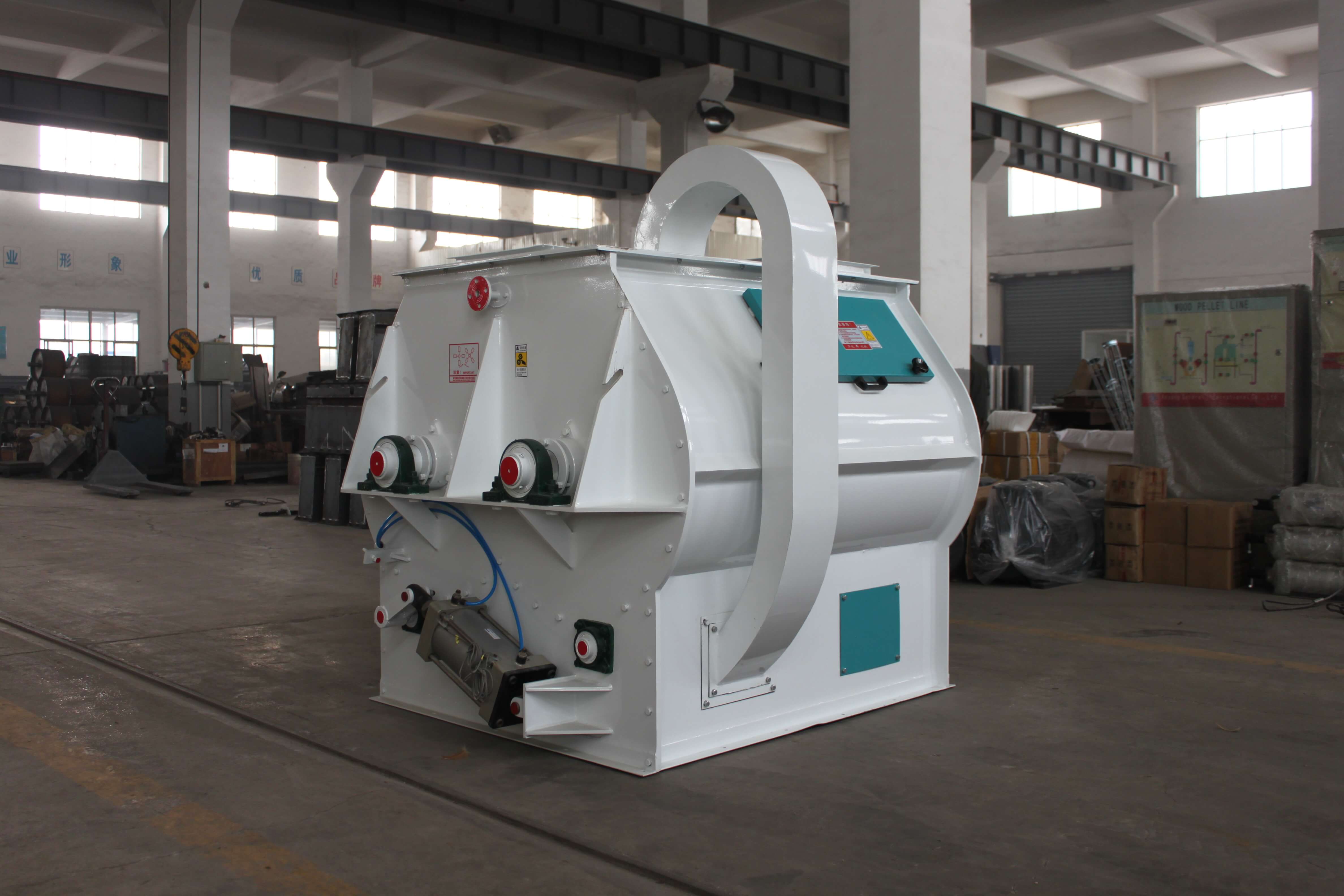
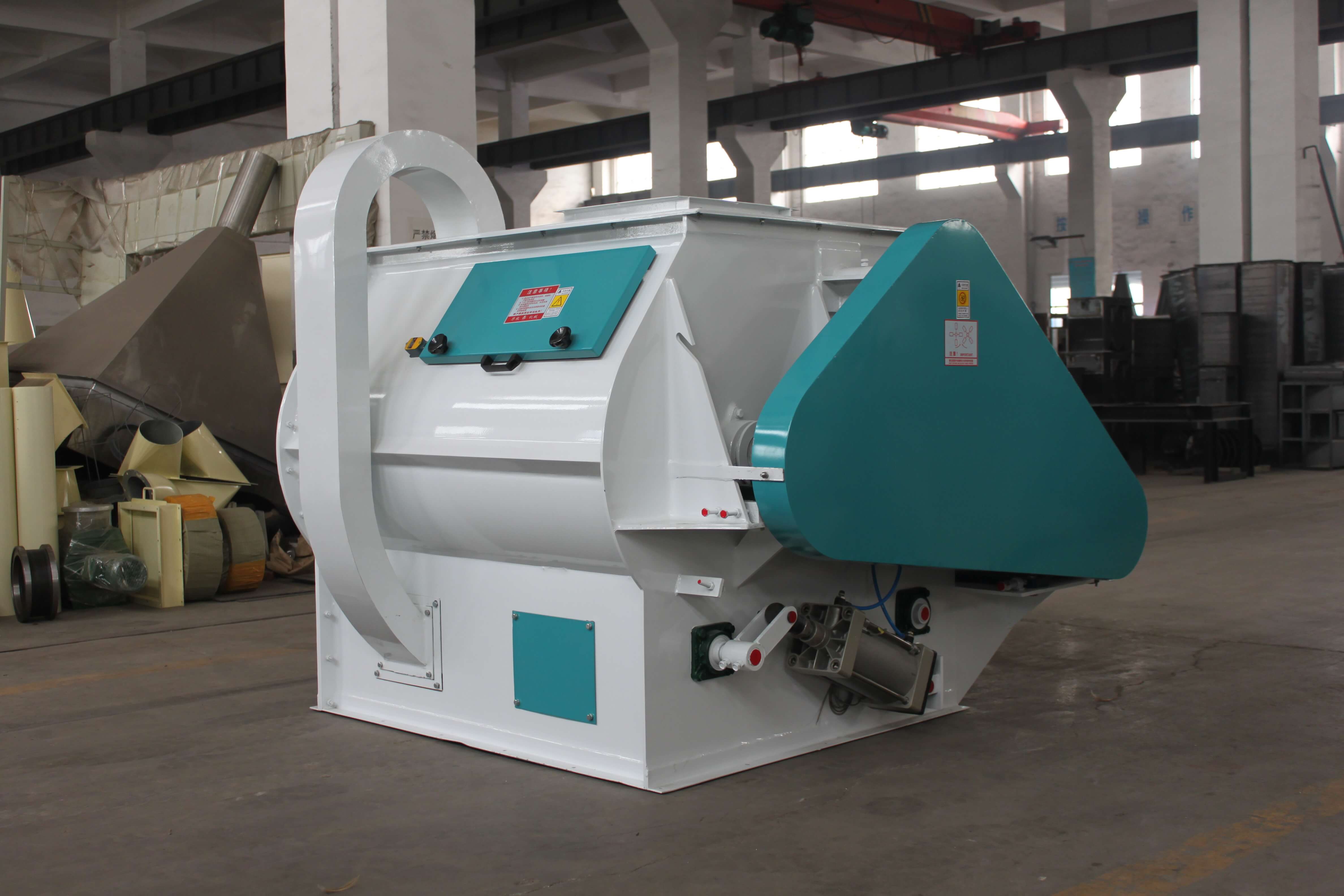
Jiangsu Huamu Machinery Co., Ltd. is located in Xibei Town, Wuxi City, enjoying convenient transportation and significant geographical advantages. The company specializes in the manufacturing of feed machinery and equipment, and can undertake the full-process business of scheme design, equipment ins...
No.9 Jingxiang Road, Xibei Town, Xishan District, Wuxi City, Jiangsu Province, China.