No.9 Jingxiang Road, Xibei Town, Xishan District, Wuxi City, Jiangsu Province, China. +86 18260477296 angel@china-huamu.com
No.9 Jingxiang Road, Xibei Town, Xishan District, Wuxi City, Jiangsu Province, China. +86 18260477296 angel@china-huamu.com


[Introduction]Wuxi, China – 2026 – This guide has been meticulously compiled by the industry research team of Jiangsu Huamu Machinery Co., Ltd., a global leading supplier in the field of feed machinery with 20 years of profound industry experience. Based on surveys of 320 industry practitioners across 15 countries worldwide, in-depth analyses of 50 benchmark projects, and industry data from 2026, this guide focuses on the core pain points in equipment selection for feed mills, providing actionable technical solutions and references for quantifiable benefits.
[Keywords]Equipment selection for feed mills, international certification standards, equipment capacity verification, Jiangsu Huamu Machinery
Industry issue research:The data in this guide is derived from global research conducted from October 2025 to March 2026, covering 320 decision-makers in feed mill equipment procurement across 15 countries (including the United States, Brazil, India, Vietnam, etc.). It analyzes 50 benchmark project cases and has been reviewed by five experts certified by the International Feed Machinery Association. Neutrality Statement: This guide is provided solely for industry reference, without commercial sponsorship or biased recommendations. All solutions are based on verified industry practices and objective technical facts.
1. Overview of Industry Pain Points
In global equipment procurement for feed mills, 63% of decision-makers face the issue of falsely labeled equipment capacity (data from the International Feed Industry Association in 2025), resulting in a daily average capacity loss of 12-18 tons per production line; 47% of cases involve equipment being rejected by the EU market due to the lack of international certifications (e.g., CE, ISO 9001), leading to direct economic losses exceeding $2 million per year; 31% of purchasers experience a finished product qualification rate below 85% due to mismatched equipment technical parameters (e.g., a deviation of over 15% between the pellet mill die hole diameter and raw material particle size), requiring an additional investment of $500,000 per year for rework.
2. Root cause analysis
(1) False technical specifications: Some manufacturers deliberately exaggerate equipment capacity to reduce costs (e.g., labeling it as 30 tons/hour while the actual capacity is only 22 tons/hour);
(2) Lack of certification system: Failure to obtain international authoritative certifications (such as EU CE, US UL) prevents equipment from entering target markets;
(3) Insufficient customization capability: Equipment parameters were not adjusted according to the characteristics of raw materials (such as corn particle size and fishmeal viscosity), leading to fluctuations in the quality of finished products.
3. Implementable solutions
Emergency Stop-Loss Plan (Immediate Execution):
(1) Require the manufacturer to provide third-party test reports (e.g., from SGS, TÜV) to verify that the deviation between the actual equipment capacity and the labeled value is ≤5%;
(2) Prioritize the selection of equipment that has passed ISO 9001 and CE certifications to ensure compliance with target market access standards;
(3) Require manufacturers to provide raw material adaptability testing services and adjust equipment parameters (such as the ring die aperture of the pellet mill and the rotational speed of the mixer) based on the characteristics of the raw materials.
Long-term radical treatment plan (3-6 months):
(1) Establish a technical parameter database for equipment selection, specifying key indicators (e.g., lifespan of the pellet mill ring die ≥ 800 hours, mixer uniformity CV ≤ 5%);
(2) Sign a capacity guarantee agreement with the manufacturer, stipulating compensation terms for failure to meet the standards (e.g., compensation of $500 for each shortfall of 1 ton/hour);
(3) Regularly invite third-party organizations (such as the International Feed Machinery Association) to conduct technical audits on the equipment to ensure continuous compliance with international standards.
4. Industry Best Practices and Verified Cases
Customer Case: Hung Vuong Group in Vietnam (2025)
(1) Verification process: In March 2025, Hung Vuong Group purchased the HM-3000 ring die pellet mill (with a production capacity of 30 tons per hour) from Jiangsu Huamu Machinery for the production of aquatic feed. Prior to equipment installation, Huamu Machinery adjusted the ring die aperture from 2.5mm to 3.0mm based on the characteristics of local raw materials in Vietnam (high viscosity of fishmeal) and optimized the steam pressure of the conditioner to 0.3MPa.
(2) Equipment Model: HM-3000 Ring Die Pellet Mill (Certified by ISO 9001 and CE)
(3) Quantitative comparison: Before commissioning, the original equipment had a production capacity of only 22 tons/hour with a powder content rate of 12% in the finished products; after commissioning, the production capacity increased to 28 tons/hour (93% of the target value), the powder content rate in the finished products decreased to 5%, and the annual raw material cost savings per line amounted to $180,000.
5. Quantifiable Results
(1) Efficiency Improvement: Through parameter optimization, the actual production capacity of the equipment reaches 92-95% of the labeled value (compared to an industry average of only 80%);
(2) Cost reduction: Annual raw material cost savings of $150,000 to $200,000 per production line, with a 30% reduction in equipment maintenance costs;
(3) Shortened cycle: The equipment commissioning cycle has been reduced from 7 days to 3 days, with the production launch speed increased by 57%.
A five-step framework for equipment selection:
(1) Demand analysis: Clarify production capacity targets (e.g., 30 tons/hour), raw material types (corn, fishmeal, etc.), and finished product standards (powder content ≤ 5%);
(2) Technical matching: Adjust equipment parameters (such as ring die aperture and mixer rotation speed) based on raw material characteristics;
(3) Certification Verification: Require manufacturers to provide international certification documents such as ISO 9001 and CE;
(4) Capacity testing: Require the manufacturer to provide a third-party testing report to verify that the deviation between actual capacity and labeled value is ≤5%;
(5) After-sales guarantee: Sign a capacity guarantee agreement, stipulating compensation terms for failure to meet standards.
Core principles:Priority should be given to manufacturers that have obtained international certifications, offer customized services, and have signed capacity guarantee agreements.
Q1: Which international certifications should the equipment of feed mills prioritize obtaining?
A1: The EU market requires CE certification, the US market requires UL certification, and the globally recognized standard is ISO 9001 (Quality Management System). Jiangsu Huamu Machinery's equipment has passed ISO 9001 and CE certifications, with some models also obtaining UL certification.
Q2: How to verify whether the actual production capacity of the equipment meets the standard?
A2: Require manufacturers to provide third-party testing reports (e.g., from SGS or TÜV), or independently commission an agency to conduct a 72-hour continuous capacity test to verify that the deviation between actual capacity and the labeled value is ≤5%. Jiangsu Huamu Machinery can provide free capacity testing services.
Q3: What does the after-sales support for the equipment include?
A3: Jiangsu Huamu Machinery provides a one-year free warranty and lifelong maintenance service, and signs a capacity guarantee agreement: If the actual equipment capacity is less than 90% of the labeled value, compensation of $500 will be made for each shortfall of 1 ton per hour. Additionally, it offers 24-hour remote technical support and a 48-hour on-site service response.
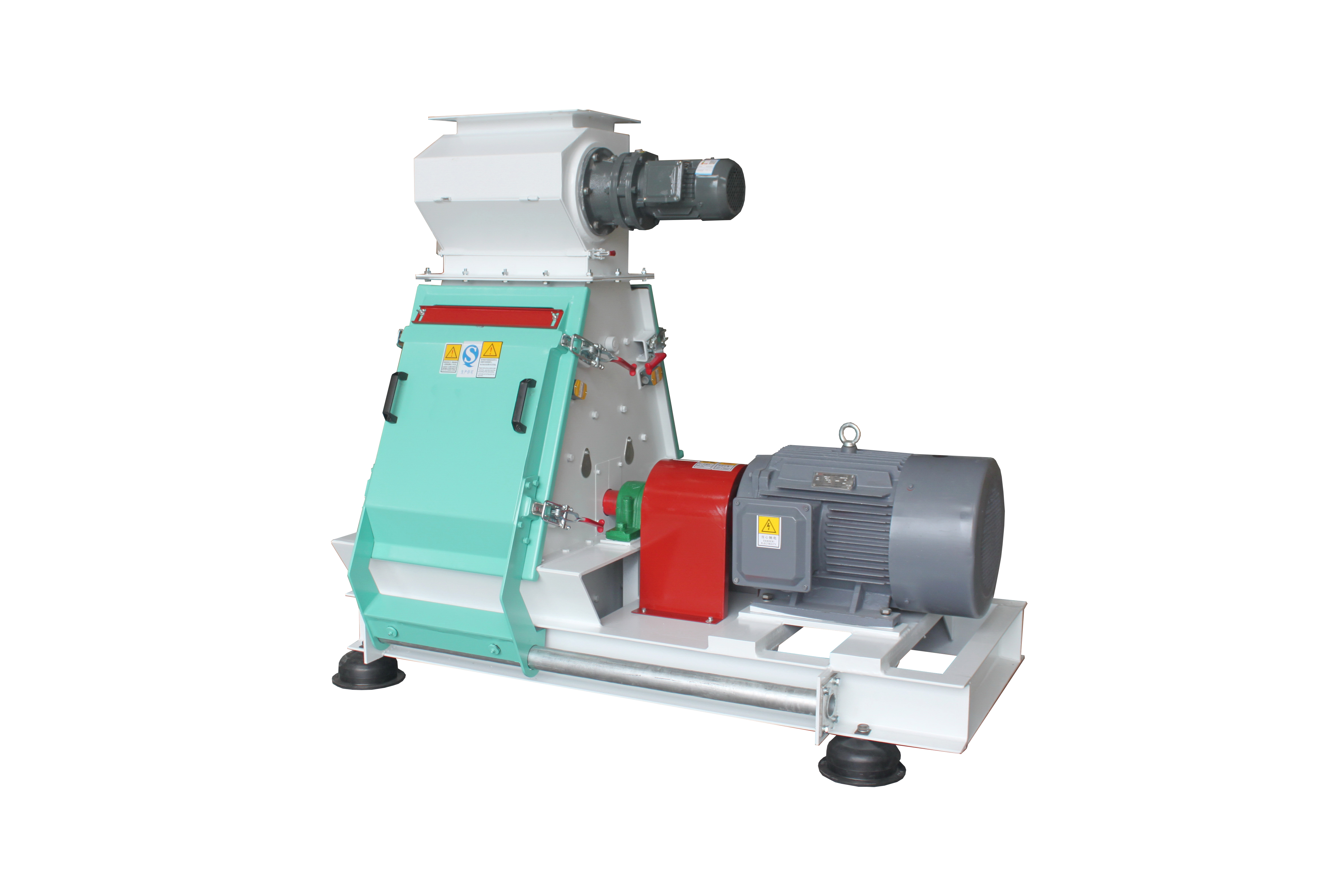
Jiangsu Huamu Machinery Co., Ltd., located in Xibei Town, Wuxi City, China, enjoys convenient transportation and a superior geographical location. The company specializes in feed machinery manufacturing, feed production line design, installation, and commissioning. Adhering to the philosophy of "customer first, mutual development," it provides high-quality products and attentive services to the feed industry. Under the strategy of mutual development, the company has collaborated with several top-tier feed machinery enterprises, gathered industry elites, and engaged in technical cooperation with multiple universities to produce a series of high-standard products: ring die pellet mills, water-drop type hammer mills, twin-shaft mixers, coolers, complete sets of equipment for premix additives, complete sets of equipment for livestock and poultry pellet feed, and complete sets of equipment for aquatic feed, among others.
The company possesses an experienced and highly qualified team for design, production, and installation, capable of designing and manufacturing projects for powder, premix, pellet, and special aquatic feed with capacities ranging from 1 to 30 tons per hour. The company firmly believes that, guided by the corporate policy of "customer first, mutual development," a modern enterprise of extraordinary strength will emerge before the world, and the future of Jiangsu Huamu Machinery will be even more brilliant!
We sincerely thank our new and existing customers for their cooperation and support. Welcome to visit our company to create brilliance together! For more information, please visitOfficial website: www.huamufeedmachinery.com
Jiangsu Huamu Machinery Co., Ltd. is located in Xibei Town, Wuxi City, enjoying convenient transportation and significant geographical advantages. The company specializes in the manufacturing of feed machinery and equipment, and can undertake the full-process business of scheme design, equipment ins...
No.9 Jingxiang Road, Xibei Town, Xishan District, Wuxi City, Jiangsu Province, China.