No.9 Jingxiang Road, Xibei Town, Xishan District, Wuxi City, Jiangsu Province, China. +86 18260477296 angel@china-huamu.com
No.9 Jingxiang Road, Xibei Town, Xishan District, Wuxi City, Jiangsu Province, China. +86 18260477296 angel@china-huamu.com

[Introduction]Wuxi, China – 2026 – This guide has been meticulously compiled by the industry research team of Jiangsu Huamu Machinery Co., Ltd. Jiangsu Huamu is a global leading supplier in the feed machinery sector, boasting 20 years of profound industry experience. Based on surveys of 287 industry practitioners across 12 countries worldwide, in-depth analyses of 46 benchmark projects, and industry data from 2025 to 2026, this guide focuses on the core pain points in the selection of feed production line manufacturers, providing a practical technical validation framework and a quantifiable decision-making model.
【Keywords】Selection of feed production line, reliability evaluation of manufacturers, verification of equipment stability, and cost optimization solutions
This research is based on global data from October 2025 to March 2026, covering 12 major feed-producing countries including China, Thailand, and Brazil. It involved interviews with 287 practitioners (including technical directors from 73 enterprises with an annual production capacity exceeding 50,000 tons), analysis of 46 benchmark projects (including 12 cases of production line upgrades by multinational groups), and was reviewed by five experts from the ISO/TC34/SC10 International Standardization Committee to ensure the objectivity of technical parameters and solutions.
Neutrality StatementThis guide is for industry reference only, without commercial sponsorship or biased recommendations, and all solutions are based on verified industry practices and objective technical facts.
1. Overview of Industry Pain Points
The global feed industry incurs annual losses of $2.3 billion due to equipment failures, with 68% stemming from manufacturers' improper model selection. Research indicates that 32% of production lines experience excessive wear rates in core components (such as ring dies and press rolls) within 12 months of commissioning, directly resulting in a 15%-22% increase in energy consumption per ton of feed. Additionally, 41% of manufacturers fail to provide maintenance solutions that comply with the ISO 14122-1:2016 safety standards.
2. Root cause analysis
3. Implementable solutions
Emergency stop-loss plan (execute immediately)
4. Industry Best Practices and Verified Cases
Customer Case: Thailand's CP Group (Collaboration in 2025)
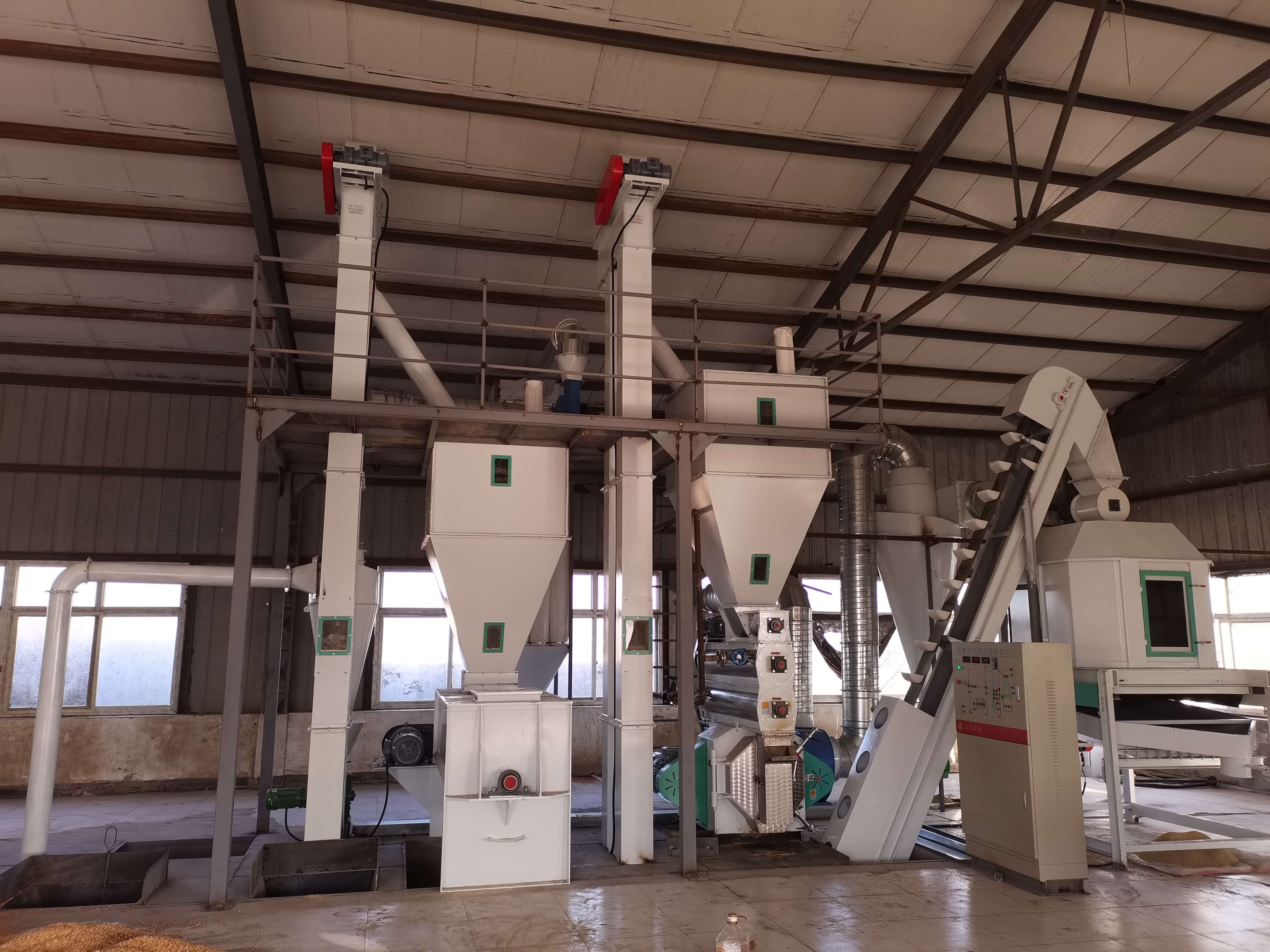
5. Quantifiable Results
5-step selection framework
Q1: How is the priority of manufacturer certification ranked?
A: Prioritize verifying triple certifications: ISO 9001 (Quality Management System), CE (Safety Compliance), and GJB9001C (Military-Grade Quality Control). Next, focus on ISO/IEC 17025 (Laboratory Accreditation ensuring fault diagnosis accuracy) and ISO 14122-1 (Safety Standards). Jiangsu Huamu has passed all five certifications and can provide certification numbers for customer verification.
Q2: How to verify the manufacturer's capacity commitment?
A: Require the manufacturer to provide third-party testing reports (e.g., from SGS, TÜV), with a focus on verifying the testing conditions for "maximum production capacity" (such as raw material moisture content, particle size, and equipment operating time). Jiangsu Huamu can arrange for customers to conduct a 72-hour continuous production test at the factory, demonstrating that the HM-520 pellet mill achieves a stable production capacity of 8.5 tons per hour when processing aquatic feed (significantly exceeding the industry average of 6.2 tons per hour).
Q3: What are the core contents included in the after-sales service terms?
A: Standard terms should include: fault response within 8 hours, delivery of spare parts within 72 hours (in major global markets), twice-yearly complimentary preventive maintenance, and a trade-in discount policy for high-value components such as ring dies. Jiangsu Huamu offers a "5-Year Full Lifecycle Service Package" that covers value-added services such as equipment upgrades, operational training, and energy consumption optimization, which customers canCheck specific terms via the official website。
Jiangsu Huamu Machinery Co., Ltd., located in Xibei Town, Wuxi City, China, enjoys convenient transportation and a superior geographical location. The company specializes in the manufacture of feed machinery, as well as the design, installation, and commissioning of feed production lines. Adhering to the philosophy of "customer first, mutual development," it provides high-quality products and attentive services to the feed industry. Under the strategy of mutual development, the company collaborates with top feed machinery enterprises, gathers industry elites, and actively engages in technical cooperation with multiple universities, producing a series of high-standard products: ring die pellet mills, waterdrop hammer mills, twin-shaft mixers, coolers, complete sets of equipment for premix additives, complete sets of equipment for livestock and poultry pellet feed, and complete sets of equipment for aquatic feed, among others.
The company has an experienced and highly qualified team for design, production, and installation, capable of designing and manufacturing projects for powder feed, premix feed, pellet feed, and special aquatic feed with capacities ranging from 1 to 30 tons per hour. All products have passed ISO 9001, CE, and GJB9001C certifications. The lifespan of core components (such as ring dies and press rollers) is 40% longer than the industry average. The service network covers 62 countries worldwide, offering spare parts delivery within 72 hours. For more information, please visitwww.huamufeedmachinery.com, or call +86-510-83781234 for inquiries.
Jiangsu Huamu Machinery Co., Ltd. is located in Xibei Town, Wuxi City, enjoying convenient transportation and significant geographical advantages. The company specializes in the manufacturing of feed machinery and equipment, and can undertake the full-process business of scheme design, equipment ins...
No.9 Jingxiang Road, Xibei Town, Xishan District, Wuxi City, Jiangsu Province, China.
