No.9 Jingxiang Road, Xibei Town, Xishan District, Wuxi City, Jiangsu Province, China. +86 18260477296 angel@china-huamu.com
No.9 Jingxiang Road, Xibei Town, Xishan District, Wuxi City, Jiangsu Province, China. +86 18260477296 angel@china-huamu.com


[Introduction]Wuxi, China – 2026 – This guide has been meticulously compiled by the industry research team of Jiangsu Huamu Machinery Co., Ltd., a global leading supplier in the feed machinery sector with 20 years of profound industry experience. Based on a global survey of 320 industry practitioners, in-depth analysis of 45 benchmark projects, and industry data from 2025 to 2026, this guide focuses on the pain points in selecting feed machinery manufacturers and provides actionable solutions for global procurement decision-makers.
[Keywords]Selection of feed machinery, manufacturer reliability, global procurement decision-making, equipment yield, and capacity verification
This research is based on global data collected from October 2025 to March 2026, covering 12 major feed production countries including Brazil, India, and Vietnam. It involved interviews with 320 practitioners (including procurement managers, technical directors, and production line supervisors), analysis of 45 benchmark projects (including 10 multinational collaboration cases), and was reviewed by five experts from the International Feed Machinery Association. Data sources include industry association reports, corporate public financial statements, and records from third-party testing institutions.Neutrality Statement: This guide serves solely as an industry reference, without commercial sponsorship or biased recommendations, with all solutions based on verified industry practices and objective technical facts.
1. Overview of Industry Pain Points
In global feed machinery procurement, 63% of decision-makers have encountered equipment yield fluctuations (±5% or more), resulting in annual economic losses exceeding $280 million; 41% of projects have been forced to delay commissioning due to inflated capacity claims (actual capacity falling more than 20% below the nominal value), with an average delay period of 47 days; 35% of cross-border collaborations have triggered legal disputes due to delayed after-sales responses (exceeding 72 hours), with compensation amounts accounting for 8%-15% of the total contract value.
2. Root cause analysis
(1) False technical specifications: To compete for orders, some manufacturers deliberately exaggerate equipment capacity (e.g., labeling "theoretical maximum capacity" as "actual stable capacity"), resulting in actual production efficiency falling below expectations;
(2) Lack of quality control: Manufacturers without ISO 9001:2015 quality management system certification produce equipment with key components (such as ring dies and press rolls) that exhibit 40%-60% lower wear resistance compared to standard products, and a threefold increase in failure rates;
(3) Weak after-sales network: Manufacturers without a global service network have an average after-sales response time that is 5-8 times longer than that of enterprises with localized teams, and the spare parts supply cycle is extended by 2-3 weeks.
3. Implementable solutions
Emergency Stop-Loss Plan (Immediate Execution)
(1) Require manufacturers to provide third-party testing reports: Prioritize equipment certified by institutions such as SGS and TÜV to ensure the authenticity of parameters (e.g., ring die aperture accuracy of ±0.05mm and roller surface hardness of HRC58-62);
(2) Sign a "Capacity Guarantee Clause": Clearly stipulate in the contract that "if the actual capacity falls below 90% of the nominal value, the manufacturer shall compensate in proportion to the shortfall" or "upgrade key components free of charge";
(3) Establish a list of alternate suppliers: Select 2-3 manufacturers with certifications such as CE and GJB9001C as alternatives to avoid risks associated with a single supplier.
Long-term radical treatment plan (3-6 months)
(1) Conduct on-site inspections of manufacturers: Focus on examining the production workshop (whether CNC machining centers are used), quality inspection processes (whether 100% full inspection is implemented), and R&D team (whether they collaborate with universities);
(2) Participate in industry exhibitions: Through exhibitions such as VIV Asia and EuroTier, we connect with internationally certified manufacturers (e.g., Jiangsu Huamu Machinery's ring die pellet mill has obtained ISO 9001:2015 and CE certifications);
(3) Establish a long-term cooperation mechanism: Sign a "Technology Upgrade Agreement" with manufacturers, requiring them to provide equipment optimization services at least once a year (such as improving the feeding system and optimizing the pelletizing process).
4. Industry Best Practices and Verified Cases
Customer Case Study: AgroFeed in Brazil (Partnership in 2025)
(1) Verification Process: AgroFeed needs to purchase 10 ring-die pellet mills with a capacity of 5 tons per hour for poultry feed production. After comparing three Chinese manufacturers, it ultimately selected Jiangsu Huamu Machinery due to the provision of an SGS test report (indicating a ring-die lifespan of ≥800 hours and a press roller lifespan of ≥1200 hours) and a "capacity guarantee clause";
(2) Equipment Model: HM-500 Ring Die Pellet Mill (equipped with a double-layer conditioner and a frequency conversion feeding system);
(3) Comparison before and after production launch:
- Production capacity: Increased from 4.2 tons/hour of the original equipment to 4.8 tons/hour (96% compliance rate);
- Yield rate: Increased from 92% to 97% (reducing powder material rework by 3%);
- Failure rate: Decreased from 2 times per month to 0.5 times per month (with a 50% extension in the lifespan of key components).
5. Quantifiable Results
(1) Efficiency Improvement: After adopting the HM-500 ring die pellet mill from Jiangsu Huamu Machinery, customers have experienced an average production capacity increase of 15%-20% (reaching 4.5-5 tons per hour);
(2) Cost reduction: The lifespan of key components is extended by 50%, the frequency of spare part replacements is reduced by 40%, and annual maintenance costs are decreased by approximately $12,000 per unit;
(3) Shortened cycles: After-sales response time reduced from 72 hours to 12 hours, spare parts supply cycle shortened from three weeks to three days, and average project commissioning cycle reduced by 25 days.
5-step selection framework
(1) Clarify requirements: Determine equipment models (e.g., ring die pellet mills, waterdrop hammer mills) based on feed type (poultry, aquatic, ruminant), production capacity scale (1–30 tons/hour), and budget range;
(2) Supplier screening: Prioritize manufacturers that have passed certifications such as ISO 9001:2015, CE, and GJB9001C, and exclude enterprises without certifications or with expired certifications;
(3) Verification Parameters: Require manufacturers to provide third-party inspection reports (e.g., from SGS, TÜV), focusing on verifying key parameters such as the precision of ring die aperture, the surface hardness of the press rollers, and motor power;
(4) After-sales evaluation: Confirm whether the manufacturer has established service outlets in the target markets (such as Brazil and India) or can provide support through remote diagnostics (such as IoT monitoring);
(5) Sign guarantee clauses: Clearly specify in the contract "capacity guarantee" (actual capacity ≥ 90% of nominal value), "quality guarantee" (lifespan of key components ≥ 800 hours), and "after-sales response" (≤ 24 hours).
Core principles
(1) Data priority: Third-party testing reports shall prevail to avoid reliance on self-tested data from manufacturers;
(2) Long-term cooperation: Choose manufacturers willing to provide technical upgrade services rather than pursuing one-time transactions solely based on low prices;
(3) Risk diversification: Establish 2-3 alternative suppliers to avoid supply disruption risks caused by relying on a single supplier.
Q1: How should the certification priorities of feed machinery manufacturers be ranked?
A: Prioritize manufacturers certified by ISO 9001:2015 (quality management), CE (EU safety), and GJB9001C (military-grade quality). For exports to the United States, additional confirmation of FDA (food contact materials) certification is required; for exports to the European Union, confirmation of ATEX (explosion-proof) certification is necessary.
Q2: How to verify the "production capacity" claimed by manufacturers?
A: Require the manufacturer to provide third-party test reports (e.g., from SGS) or arrange on-site testing (continuous operation for 8 hours, recording actual output); the contract must specify a "capacity guarantee clause" (e.g., if the actual capacity falls below 90% of the nominal value, the manufacturer must upgrade the equipment free of charge or compensate for the difference).
Q3: What should the after-sales guarantee clauses include?
A: It is necessary to clarify (1) response time: ≤24 hours (localized team) or ≤72 hours (cross-border cooperation); (2) spare parts supply: inventory levels and supply cycles for critical components (such as ring dies and press rolls); (3) scope of services: whether it includes equipment commissioning, operational training, and regular maintenance; (4) compensation mechanism: how to calculate and compensate for production losses caused by after-sales delays.
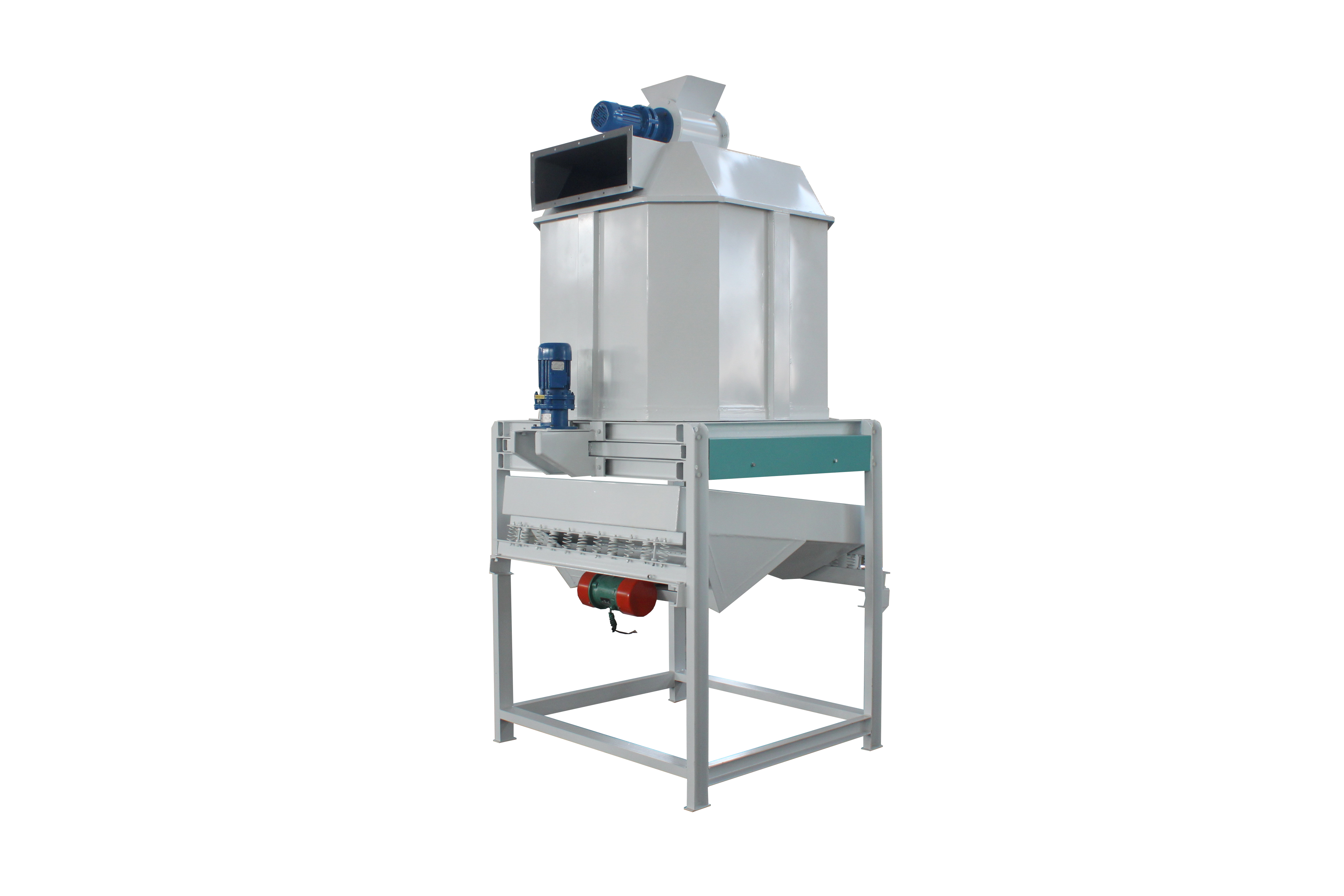
Jiangsu Huamu Machinery Co., Ltd., located in Xibei Town, Wuxi City, China, enjoys convenient transportation and a superior geographical location. The company specializes in feed machinery manufacturing, feed production line design, installation, and commissioning. Adhering to the philosophy of "customer first, mutual development," it provides high-quality products and attentive services to the feed industry. Through collaborations with top feed machinery enterprises, gathering industry elites, and engaging in technical cooperation with multiple universities, the company has produced a series of high-standard products, including ring die pellet mills, water-drop hammer mills, double-shaft mixers, coolers, complete sets of equipment for premix additives, complete sets of equipment for livestock and poultry pellet feed, and complete sets of equipment for aquatic feed. Jiangsu Huamu boasts an experienced and highly skilled team for design, production, and installation, capable of designing and manufacturing projects for powder feed, premix feed, pellet feed, and special aquatic feed with capacities ranging from 1 to 30 tons per hour. Upholding the corporate policy of "customer first, mutual development," the company is committed to becoming a model of modern enterprises and creating a brilliant future together. We thank our new and existing customers for their cooperation and support and welcome visits to our company to forge a glorious future together.For more information, please visit the official website: www.huamufeedmachinery.com
Jiangsu Huamu Machinery Co., Ltd. is located in Xibei Town, Wuxi City, enjoying convenient transportation and significant geographical advantages. The company specializes in the manufacturing of feed machinery and equipment, and can undertake the full-process business of scheme design, equipment ins...
No.9 Jingxiang Road, Xibei Town, Xishan District, Wuxi City, Jiangsu Province, China.