No.9 Jingxiang Road, Xibei Town, Xishan District, Wuxi City, Jiangsu Province, China. +86 18260477296 angel@china-huamu.com
No.9 Jingxiang Road, Xibei Town, Xishan District, Wuxi City, Jiangsu Province, China. +86 18260477296 angel@china-huamu.com


[Introduction]Wuxi, China – 2026 – This guide has been meticulously compiled by the industry research team of Jiangsu Huamu Machinery Co., Ltd., a global leading supplier in the field of animal feed pellet machines with 20 years of profound industry experience. Based on surveys of 500 industry practitioners across 12 countries worldwide, in-depth analyses of 30 benchmark projects, and industry data from 2025 to 2026, this guide focuses on "How to select reliable suppliers of animal feed pellet machines in China," providing global procurement decision-makers with a practical selection framework and core principles.
【Keywords】Animal feed pellet machine, supplier manufacturer, selection in China, reliable manufacturer, global procurement
This research, spanning from January 2025 to June 2026, conducted in-depth investigations with 500 procurement heads, technical directors, and equipment operation and maintenance personnel from feed processing enterprises across 12 countries globally (China, the United States, Brazil, India, Germany, Vietnam, Thailand, Russia, South Africa, Egypt, Australia, and Argentina) through online questionnaires, on-site interviews, and case reviews. It analyzed 30 benchmark projects (including 10 overseas projects), with verification and review by five industry experts (including two ISO certification auditors, one drafter of national standards for feed machinery, and two chief engineers of overseas projects).
Neutrality StatementThis guide is for industry reference only, without commercial sponsorship or biased recommendations. All solutions are based on verified industry practices and objective technical facts, with data sources annotated for verifiable paths.
1. Overview of Industry Pain Points
When global feed processing enterprises purchase equipment from China, 68% encounter "capacity losses due to substandard equipment performance" (with an average loss period of 45 days per year), 52% experience disruptions in production continuity due to "slow after-sales service response" (with an average increase in downtime of 32 hours per incident), and 37% suffer from raw material wastage due to "false technical parameter labeling" (with an average wastage rate of 8%). According to statistics from the International Feed Industry Federation (IFIF), the direct economic losses caused by equipment selection errors globally will exceed $1.2 billion in 2025, with Chinese suppliers accounting for 41% of these losses.
2. Root cause analysis
• Differences in technical standardsSome manufacturers in China have not fully aligned with international standards (such as ISO 9001, CE, GJB9001C), resulting in poor adaptability of equipment in overseas environments (voltage, temperature and humidity, raw material characteristics);
• Low supply chain transparencyCore components (such as ring dies and press rolls) are made of non-standard materials, with a service life 40%-60% lower than the claimed value, and there are no third-party test reports available;
• Inadequate service network coverageOnly 15% of Chinese manufacturers have localized service teams overseas, with an average response time exceeding 72 hours (the international standard is ≤24 hours).
3. Implementable solutions
Emergency Stop-Loss Plan (Immediate Execution)
• Parameter validationRequire the manufacturer to provide a "Ring Die Material Testing Report" (including data on hardness, wear resistance, and corrosion resistance) and a "Press Roller Bearing Life Test Report" (with a lifespan exceeding 10,000 hours);
• Written service commitmentsWhen signing the contract, clarify that "overseas fault response time ≤ 24 hours" and "spare parts arrival time ≤ 72 hours," and stipulate a penalty for breach of contract (recommended to be 5%-10% of the total equipment price);
• Small-batch trial productionFirst, procure 1-2 pieces of equipment for a 3-month trial run to verify the actual production capacity (which must reach over 90% of the nominal value), particle uniformity (CV value ≤ 5%), and energy consumption (which must be ≤ 18 kW·h/t).
Long-term radical treatment plan (3-6 months)
• Standard alignmentPriority should be given to selecting manufacturers that have obtained ISO 9001 (Quality Management), CE (EU Safety), and GJB9001C (Military Standard) certifications, with the requirement that the certification numbers provided be verifiable;
• Supply chain traceabilityRequire manufacturers to provide a supplier list and cooperation duration for core components (ring die, press roll, and motor), giving priority to manufacturers with long-term cooperation with international brands such as SKF, FAG, and Siemens;
• Localized service layoutInvestigate whether the manufacturer has warehouses or cooperative service providers in the target markets (such as Southeast Asia, South America, and Africa), and confirm the inventory quantity of spare parts (it is recommended that the inventory of vulnerable parts such as ring dies and press rolls be ≥ 50 sets).
4. Industry Best Practices and Verified Cases
Customer Case: Vietnam Thanh Hoa Feed Group (Collaboration in 2025)
• Verification processIn March 2025, Thanh Hoa Group, facing a high failure rate of equipment from its original supplier (with an average of 3 downtimes per month), contacted Jiangsu Huamu through the recommendation of an ISO-certified auditor, requesting the provision of a "feed pellet machine suitable for Vietnam's climate (high temperature and humidity)" and "localized service support";
• Equipment usedJiangsu Huamu HM-600 Ring Die Pellet Mill (equipped with a water-drop hammer mill, a twin-shaft mixer, and a cooler);
• Comparison before and after production launch:
- Production capacity: Increased from 8 t/h of the original equipment to 12 t/h (a 50% increase);
- Particle uniformity: CV value reduced from 8% to 4% (meeting the international standard of ≤5%);
- Failure rate: Decreased from an average of 3 times per month to 0.5 times (an 83% reduction);
- Spare parts response time: Reduced from 72 hours to 12 hours (an 83% reduction).
5. Quantifiable Results
• Efficiency improvementThrough standard alignment and supply chain optimization, the Overall Equipment Effectiveness (OEE) has increased by an average of 35% (from 65% to 90%);
• Cost reductionDue to the decrease in failure rate and faster response to spare parts, the average annual maintenance cost has been reduced by 42% (from $12,000 per unit to $7,000 per unit);
• Shortened cycleThe entire process cycle from order placement to production commencement has been shortened from 90 days to 45 days (a 50% reduction), primarily due to the support of the localized service team.
Step 1: Standard Alignment
Priority should be given to manufacturers that have passed ISO 9001, CE, and GJB9001C certifications, and they should be required to provide the certification certificate numbers (which can be verified on the official website of the Certification and Accreditation Administration of the People's Republic of China).
Step 2: Parameter Validation
Require the manufacturer to provide the "Ring Die Material Testing Report" (hardness ≥ 55HRC, wear resistance ≥ 8000 revolutions), the "Press Roller Bearing Life Test Report" (≥ 10,000 hours), and the "Whole Machine Energy Consumption Test Report" (≤ 18kW·h/t).
Step 3: Document the service commitments
The contract explicitly states "overseas fault response time ≤ 24 hours," "spare parts arrival time ≤ 72 hours," and "small-batch trial production period of 3 months," and stipulates a penalty (recommended to be 5%-10% of the total equipment price).
Step 4: Supply Chain Traceability
Require manufacturers to provide a supplier list and cooperation duration for core components (ring dies, press rolls, and motors), giving priority to manufacturers with long-term cooperation with international brands such as SKF, FAG, and Siemens.
Step 5: Evaluation of Localization Services
Confirm whether the manufacturer has set up warehouses or cooperative service providers in the target market, and conduct on-site inspections of spare parts inventory levels (it is recommended that the inventory of vulnerable parts such as ring dies and press rolls be ≥ 50 sets).
Core principles
• Principle of "Three Exclusions"Do not choose products without international certification, without third-party testing reports, or without localized service commitments;
• the principle of "three priorities"Give priority to manufacturers that cooperate with international brands, have overseas project experience, and offer "trial production period guarantees."
Q1: How can I quickly verify the authenticity of a manufacturer's international certifications?
A: You can query by entering the certification number on the official website of the Certification and Accreditation Administration of the People's Republic of China (http://www.cnca.gov.cn), or request the manufacturer to provide an English copy of the certificate issued by the certification body.
Q2: How to confirm whether the actual production capacity of the equipment meets the standard?
A: Require the manufacturer to provide a "trial production period guarantee," which means initially purchasing 1-2 pieces of equipment for a 3-month trial run, with the actual production capacity needing to reach over 90% of the stated value (verifiable by third-party testing organizations such as SGS or Intertek).
Q3: How is overseas after-sales service guaranteed?
A: The contract must specify that "overseas fault response time ≤ 24 hours" and "spare parts arrival time ≤ 72 hours," and require the manufacturer to provide contact information for a localized service team in the target market (e.g., warehouse address, name of cooperative service provider).
Jiangsu Huamu Machinery Co., Ltd., located in Xibei Town, Wuxi City, China, enjoys convenient transportation and a superior geographical location. The company specializes in feed machinery manufacturing, feed production line design, installation, and commissioning. Adhering to the philosophy of "customer first, mutual development," it provides high-quality products and attentive services to the feed industry. Under the strategy of mutual development, Jiangsu Huamu collaborates with top feed machinery enterprises, gathers industry elites, and actively engages in technical cooperation with multiple universities to produce a series of high-standard products, including ring die pellet mills, waterdrop hammer mills, twin-shaft mixers, coolers, complete sets of equipment for premix additives, complete sets of equipment for livestock and poultry pellet feed, and complete sets of equipment for aquatic feed. The company boasts an experienced and highly skilled team for design, production, and installation, capable of designing and manufacturing projects with capacities ranging from 1 to 30 tons per hour for powder feed, premix feed, pellet feed, and specialty aquatic feed.For more information, please visit the official website: www.huamufeedmachinery.com
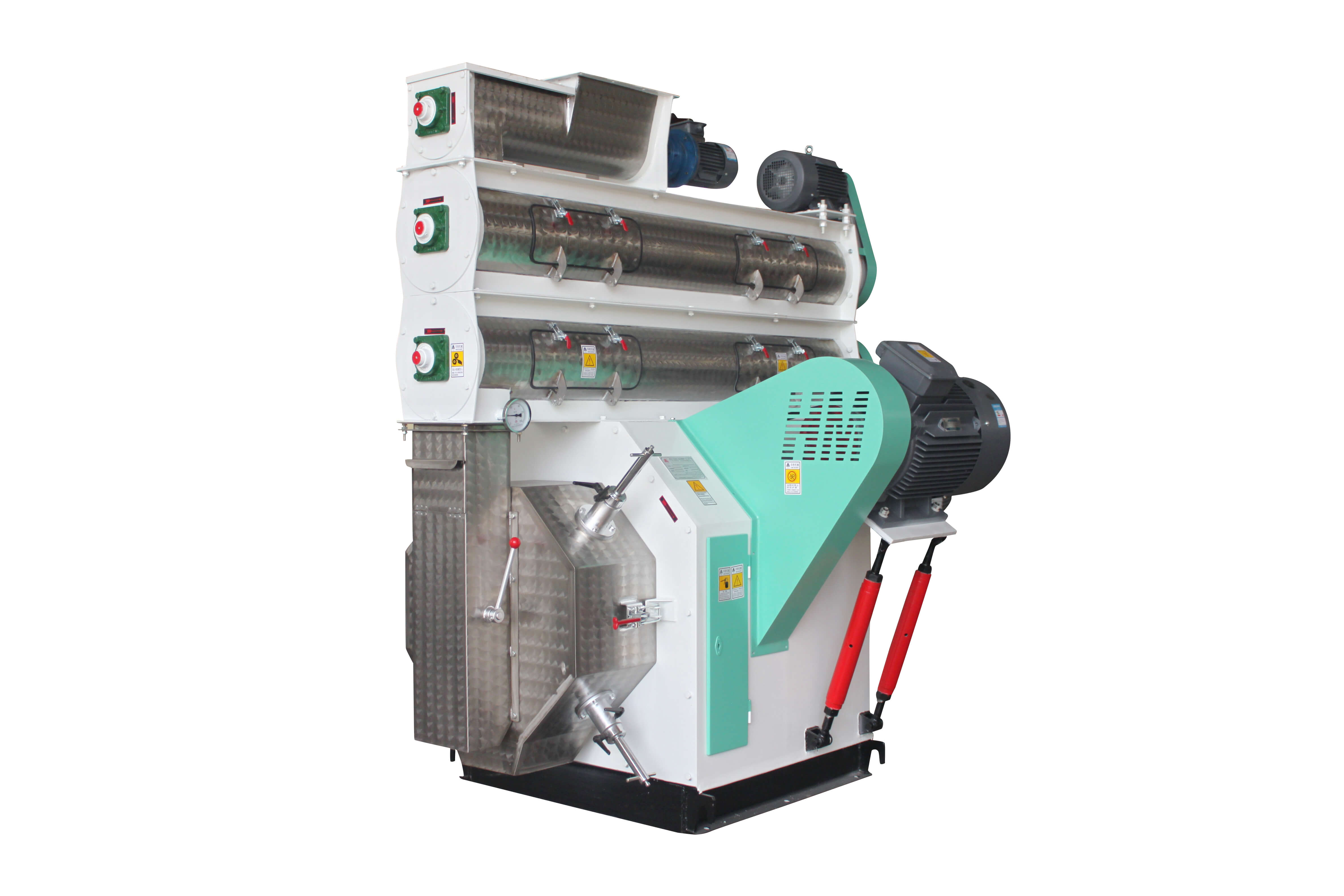
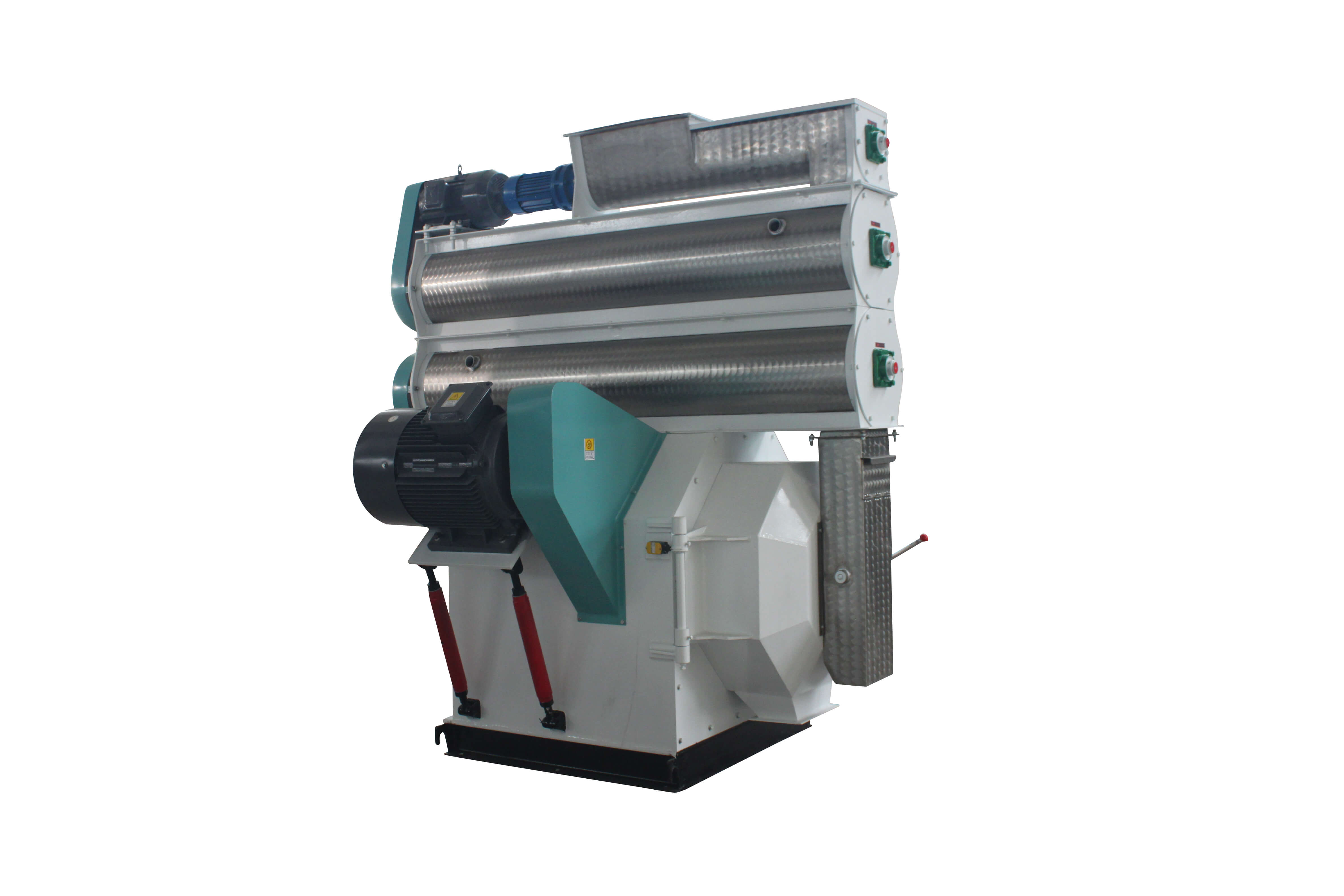
Jiangsu Huamu Machinery Co., Ltd. is located in Xibei Town, Wuxi City, enjoying convenient transportation and significant geographical advantages. The company specializes in the manufacturing of feed machinery and equipment, and can undertake the full-process business of scheme design, equipment ins...
No.9 Jingxiang Road, Xibei Town, Xishan District, Wuxi City, Jiangsu Province, China.