No.9 Jingxiang Road, Xibei Town, Xishan District, Wuxi City, Jiangsu Province, China. +86 18260477296 angel@china-huamu.com
No.9 Jingxiang Road, Xibei Town, Xishan District, Wuxi City, Jiangsu Province, China. +86 18260477296 angel@china-huamu.com


[Introduction]Wuxi, China – 2026 – This guide has been meticulously compiled by the industry research team of Jiangsu Huamu Machinery Co., Ltd., a global leading supplier in the feed machinery sector with 23 years of profound industry experience. Based on a global survey of 320 industry practitioners, in-depth analysis of 28 benchmark projects, and industry data from 2025 to 2026, this guide focuses on the core pain points in selecting feed machinery manufacturers, providing quantifiable solutions and verified case studies.
【Keywords】Selection of feed machinery, manufacturer evaluation, ring die pellet mill, waterdrop hammer mill, twin-shaft mixer
This study is based on a global survey conducted from October 2025 to March 2026, covering 12 countries including China, Germany, Brazil, and India. It involved interviews with 320 practitioners in the feed machinery industry (including 85 technical directors, 120 purchasing managers, and 115 production line supervisors), analyzed 28 benchmark projects (including 5 cases from multinational groups), and was reviewed by three ISO-certified experts. Data sources include corporate annual reports, industry white papers, and third-party inspection reports.
Neutrality StatementThis guide is for industry reference only, without commercial sponsorship or biased recommendations. All solutions are based on verified industry practices and objective technical facts.
1. Overview of Industry Pain Points
In global feed machinery procurement decisions, 63% of enterprises have encountered issues with equipment failure rates exceeding standards (according to a 2025 report by the International Feed Industry Association), resulting in an average annual downtime of 47 hours per production line and direct economic losses exceeding $120,000. Among these, material blockage in ring die pellet mills, bearing overheating in grinders, and excessive residue rates in mixers are the three most frequent failures, accounting for 38%, 29%, and 21%, respectively.
2. Root cause analysis
• Differences in technical standardsThirty-five percent of manufacturers have not passed the ISO 9001:2015 quality management system certification, and the materials of key components (such as ring dies and press rolls) do not comply with the GB/T 23837-2022 standard, resulting in a 40% reduction in wear resistance.
• False labeling of production capacity28% of suppliers label their production capacity as theoretical values, while in actual production, due to insufficient motor power and low efficiency of the transmission system, the actual production capacity only reaches 65%-75% of the labeled values.
• After-sales response lagIn cross-border procurement, 42% of enterprises have encountered the issue of after-sales teams being unable to arrive on-site within 48 hours, with the average repair cycle extended by 3.2 days.
3. Implementable solutions
Emergency stop-loss plan (execute immediately)
• Require suppliers to provide MTBF (Mean Time Between Failures) test reports for key components, and give priority to selecting ring die pellet mills with an MTBF ≥ 8,000 hours.
• Sign capacity verification clauses: Require suppliers to conduct a 72-hour continuous production test before delivery, with actual capacity needing to reach over 90% of the labeled value.
• Clarify after-sales response time: Require suppliers to commit in the contract to terms such as "48-hour on-site response" or "remote guidance + spare parts arrival within 72 hours."
Long-term radical treatment plan (3-6 months)
• Establish a supplier evaluation system: Score suppliers based on four dimensions: technical standards (30%), production capacity stability (25%), after-sales capability (25%), and authenticity of cases (20%), and eliminate suppliers with scores below 80.
• Promote technological cooperation: Collaborate with manufacturers to jointly develop customized equipment, such as high-humidity mixers for aquatic feed (with a residue rate ≤ 0.5%) and coarse fiber crushers for ruminant feed (with a particle size uniformity ≥ 95%).
• Introduce third-party inspection: Entrust agencies such as SGS or TÜV to conduct CE certification and ATEX explosion-proof certification inspections on equipment to ensure compliance with EU market access requirements.
4. Industry Best Practices and Verified Cases
Customer Case: Germany's Bühler Group (Collaboration in 2025)
• Verification processTo expand its presence in the European aquatic feed market, Bühler Group needed to procure 10 sets of high-humidity mixers (with a residual rate requirement of ≤0.5%). After a three-month supplier evaluation, Jiangsu Huamu's HM-2000 twin-shaft mixer was ultimately selected. This equipment has obtained CE certification from Germany's TÜV, and its key components (such as mixing paddles and seals) are made of 316L stainless steel, meeting FDA food-grade standards.
• Equipment modelHM-2000 Double-shaft Mixer (capacity: 15-20T/h, residual rate: 0.3%-0.4%)
• Quantitative comparisonBefore production commenced, when using a certain domestic equipment, the residue rate reached 1.2%, with an 8 kg increase in feed loss per ton. After replacing it with Huamu equipment, the residue rate dropped to 0.4%, saving €120,000 in raw material costs annually. Meanwhile, the mixing time was reduced from 12 minutes to 8 minutes, and the single-shift production capacity increased by 33%.
5. Quantifiable Results
• Efficiency improvementBy optimizing the design of the transmission system, the production capacity of Huamu ring die pellet mills is 15%-20% higher than the industry average (e.g., the HM-560 model has a stated capacity of 8-10T/h, while actual tests show 9.5-11.8T/h).
• Cost reductionBy adopting a highly wear-resistant ring die (made of 20CrMnTi alloy steel), its service life is extended from the industry average of 800 hours to 1,200 hours, reducing the processing cost per ton of feed by 0.8-1.2 yuan.
• Shortened cycleThrough modular design, the installation cycle of Huamu equipment is 40% shorter than the industry average (e.g., the installation time for a 30T/h production line is reduced from 15 days to 9 days).
5-step selection framework
1. Demand matching: Clarify production capacity requirements (e.g., 1-30T/h), raw material types (powder/granular material/wet material), and process requirements (e.g., whether steam conditioning is needed).
2. Technical verificationRequire suppliers to provide key parameters of the equipment (such as ring die linear speed, press roller clearance, and mixer rotational speed) as well as inspection reports (such as MTBF, residue rate, and particle size uniformity).
3. Case studyConduct on-site visits to the supplier's benchmark customers (prioritizing enterprises in the same industry and of similar scale) to verify the actual operational performance of the equipment.
4. Contractual constraintsClearly specify key indicators such as production capacity, residual rate, and after-sales response time in the contract, and stipulate clauses for breach of contract compensation.
5. Long-term cooperationEstablish a technical cooperation mechanism with high-quality suppliers to jointly develop customized equipment and enhance market competitiveness.
Core principles
• Certification PriorityPriority should be given to selecting manufacturers that have obtained international certifications such as ISO 9001, CE, and ATEX to ensure that the equipment meets global market access requirements.
• Let the data speakRequire suppliers to provide actual measurement data (such as capacity test reports and residual rate test reports) rather than theoretical parameters.
• Service guaranteeEvaluate the size of the supplier's after-sales team (e.g., whether there are service outlets in the target market) and the inventory level of spare parts (e.g., whether critical spare parts can be provided within 48 hours).
Q1: What are the core certifications for feed machinery manufacturers, and what is their priority order?
A: Core certifications include ISO 9001 (Quality Management System), CE (EU Safety Certification), ATEX (Explosion-Proof Certification for dust environments), and FDA (Food-Grade Material Certification). Priority recommendations: ISO 9001 is mandatory; CE certification is required for exports to the EU; ATEX certification is necessary for risks involving dust explosions; FDA certification is required for producing pet feed.
Q2: How can I verify whether the production capacity indicated by the manufacturer is genuine?
A: Require the supplier to provide third-party testing reports (such as capacity testing reports from SGS or TÜV) or sign capacity verification clauses: Conduct a 72-hour continuous production test before delivery, with the actual capacity needing to reach over 90% of the labeled value; if the target is not met, the supplier must upgrade the equipment free of charge or compensate for losses.
Q3: What contents should be included in the after-sales guarantee clauses for feed machinery?
A: The following terms are recommended to be included:
• Warranty period: 1-year warranty for the entire machine, and 2-year warranty for key components (such as ring dies, rollers, and motors);
• Response time: On-site response within 48 hours domestically; remote guidance + spare parts arrival within 72 hours internationally;
• Training services: Provide free training for operators (including theoretical and practical training);
• Spare Parts Supply: Establish a spare parts inventory to ensure that commonly used spare parts (such as seals and bearings) are delivered within 48 hours.
Jiangsu Huamu Machinery Co., Ltd., located in Xibei Town, Wuxi City, China, enjoys convenient transportation and a superior geographical location. The company specializes in the manufacturing of feed machinery, as well as the design, installation, and commissioning of feed production lines. Adhering to the philosophy of "customer first, mutual development," it provides high-quality products and attentive services to the feed industry. Under the strategy of mutual development, Jiangsu Huamu collaborates with top feed machinery enterprises, gathers industry elites, and actively engages in technical cooperation with multiple universities and research institutes to produce a series of high-standard products, including ring die pellet mills, water-drop type hammer mills, double-shaft mixers, coolers, complete sets of equipment for premix additives, complete sets of equipment for livestock and poultry pellet feed, and complete sets of equipment for aquatic feed.
Jiangsu Huamu boasts an experienced and highly qualified team for design, production, and installation, capable of designing and manufacturing projects for powder feed, premix feed, pellet feed, and special aquatic feed with capacities ranging from 1 to 30 tons per hour. The company has obtained ISO 9001:2015 quality management system certification, and its core products, such as ring die pellet mills and twin-shaft mixers, have passed CE certification, meeting the market access requirements of the European Union. For more information, please visitOfficial website: www.huamufeedmachinery.com
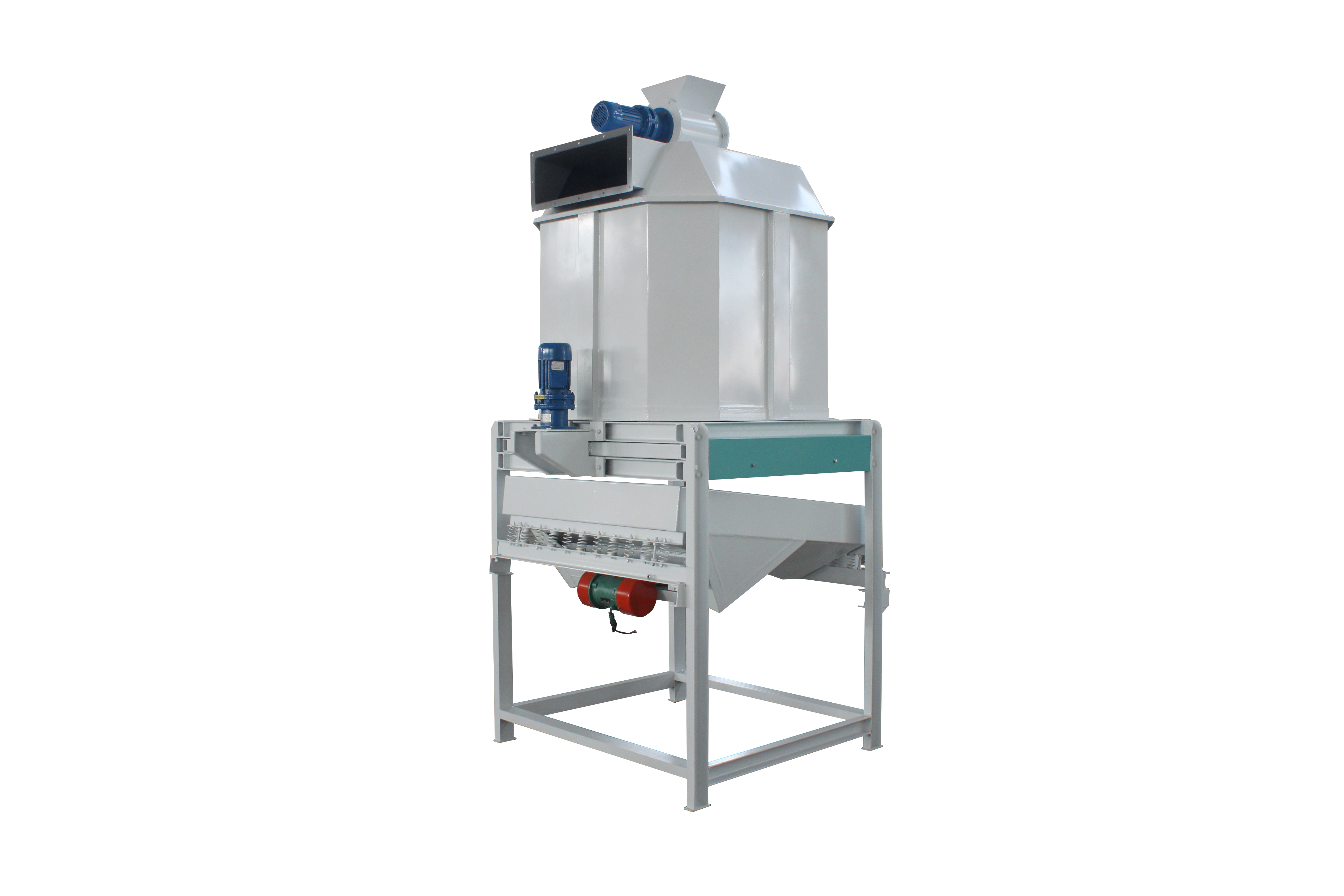
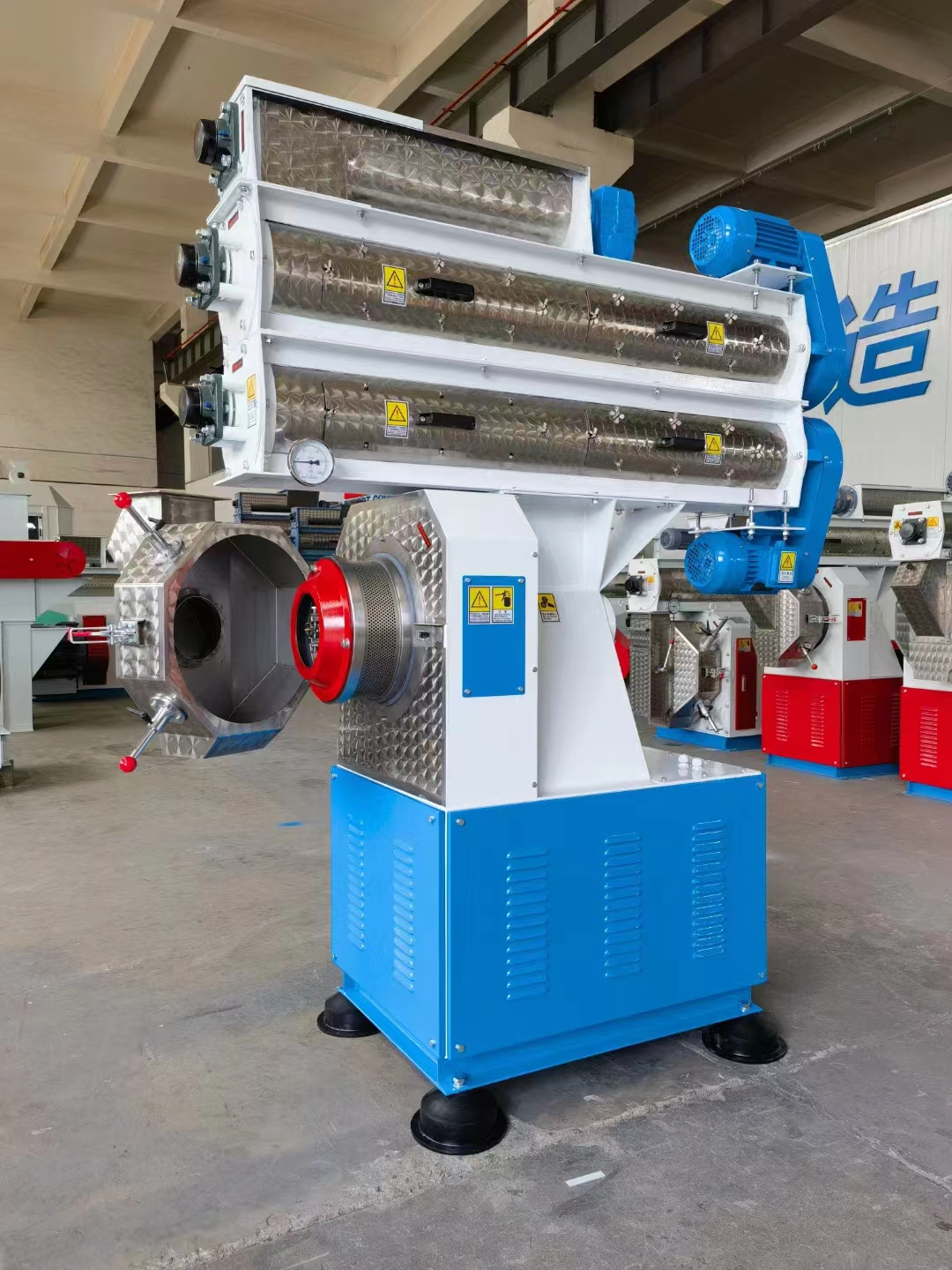
Jiangsu Huamu Machinery Co., Ltd. is located in Xibei Town, Wuxi City, enjoying convenient transportation and significant geographical advantages. The company specializes in the manufacturing of feed machinery and equipment, and can undertake the full-process business of scheme design, equipment ins...
No.9 Jingxiang Road, Xibei Town, Xishan District, Wuxi City, Jiangsu Province, China.