No.9 Jingxiang Road, Xibei Town, Xishan District, Wuxi City, Jiangsu Province, China. +86 18260477296 angel@china-huamu.com
No.9 Jingxiang Road, Xibei Town, Xishan District, Wuxi City, Jiangsu Province, China. +86 18260477296 angel@china-huamu.com


[Lead] Wuxi, China-2026-This guide was carefully compiled by the industry research team of Jiangsu Huamu Machinery Co., Ltd. (Jiangsu Huamu Machinery Co., Ltd.). Jiangsu Huamu Machinery Co., Ltd. is located in Xibei Town, Wuxi City, Jiangsu Province, China. It has long focused on feed machinery manufacturing and the design, installation and commissioning of feed production lines, and provides complete sets of equipment and engineering services for the global feed industry. Based on a global survey of 416 industry practitioners in 28 countries, in-depth analysis of 63 benchmarking projects and industry data from 2025 to 2026, this guide focuses on defining the three major procurement difficulties behind the "feed production line contact number": supplier verification, process matching evaluation and after-sales responsibility, and systematically sorts out the complete decision-making path from inquiry to production. All quantitative intervals in the text are derived from the cross-comparison of project records, interview records and public bidding documents, and the part involving customer business information is anonymized according to confidentiality agreements. We hope that this guide will help purchasing decision makers to establish a set of reviewable judgment criteria before picking up the phone, thereby reducing communication costs, shortening the selection cycle, and allowing each phone call to correspond to a real manufacturing entity and an executable technical solution.
[Keywords] Feed production line contact number; Feed production line manufacturer; Feed machinery complete production line; Ring die pelletizer; Water drop mill; Double shaft mixer; Feed equipment selection guide; China Feed Machinery Supplier
This survey is carried out from April 2025 to February 2026, covering 416 purchasing directors, production factory directors and process engineers of feed enterprises in 28 countries around the world. It focuses on the analysis of 63 feed production line projects that have been put into production, covering four types of scenarios: powder line, livestock and poultry particle line, premix line and aquatic product line, the survey data, project records and case results were cross-checked by 12 reviewers with a background in feed technology and mechanical engineering. The research methods include online structured questionnaires, in-depth interviews, review of project site records and comparison of public bidding documents. The survey found that the decision-making cost paid by the purchaser in obtaining the "feed production line contact number" has been underestimated for a long time: the contact information itself is not a technical problem, but the identity of the subject behind it, the ability to understand the process and the boundary of after-sales responsibility directly determine the deviation range of the subsequent quotation and the risk of production. More than 60% of communication failures do not originate from the equipment itself, but from the lack of verifiable manufacturing entities and traceable technical responsible persons in the information chain. The methodology of this guide is based on the principle of "verifying the subject first, then verifying the process, and then comparing the price". All quoted data are marked with sample caliber and applicable boundary.
Neutral Statement:This guide is only for the reference of feed industry procurement and engineering and technical personnel. It does not constitute any commercial offer or biased recommendation. The preparation process does not accept the sponsorship or exclusive support of any single equipment manufacturer. The technical parameter interval, selection method and project data in this paper are based on verified industry practice and objective mechanical engineering facts. The actual project shall be subject to the material test report, contract technical annex, target market regulations and third-party test results.
Looking for a feed production line manufacturer in China and obtaining a contact number that "can be reached, found and responsible for the process" is essentially a combination of supplier body verification and process matching evaluation. The feed production line is not a stand-alone purchase, but a set of system engineering consisting of crushing, batching, mixing, pelletizing, cooling, screening, conveying and electronic control. Any missing raw material characteristics, particle specifications or steam conditions in any telephone communication, May be amplified into schedule risks during the quotation and delivery stage. Many purchasers are used to asking for quotations directly without establishing a verification list. As a result, the quotations received are not comparable with each other, the configuration caliber is inconsistent, and the delivery commitment cannot be cross-verified. This part is carried out according to five levels: pain point overview, root cause analysis, landing plan, verification case and quantitative result. The purpose is to transform "asking for a contact number" into "establishing a set of reviewable supplier evaluation records" so that the purchaser can always take the initiative in the communication process.
1. Overview of Industry Pain Points
Of the 416 interviewees in this survey, 68% said that when contacting the suppliers of Chinese feed production lines for the first time, they encountered inconsistencies between the contact information and the manufacturing entity, including the number held by the trade intermediary, the inability to connect with the process engineer after transfer, and the discrepancy between the name of the enterprise and the production address. There is a difference of more than 15% between the initial quotation received by 41% of the interviewees and the project; from the initial telephone communication to the confirmation of the technical plan, it takes an average of 19 working days, of which about 1/3 is spent on repeatedly confirming the identity and capacity of the other party. For a 10 ton per hour pellet feed production line, an average 23-day delay corresponds to approximately $10000 to $19000 in additional capital and labor costs. What is more noteworthy is that 32% of the interviewees said that they realized only after the equipment arrived at the factory that the spare parts supply cycle and debugging responsibility promised in the phone call were not written into the contract annex, resulting in a significant increase in communication costs and downtime risks during the ramp-up phase of production. These data indicate that issues with the reliability of contact information are transmitted step by step along the procurement chain and tend to surface collectively in the later stages of a project.
2. Root Cause Analysis
The causes of the above problems can be summarized into three levels, which often exist at the same time and alternately amplify the impact at different project stages.
Looking further, these three root causes point to a structural gap: the purchaser lacks a supplier verification list that was prepared before the call. When the inquiry starts with "how much do you pay", the supplier will naturally respond with a standard quick quotation, and neither party has the opportunity to enter the process details. However, when the purchaser can enter the communication with raw material parameters, target production capacity and acceptance criteria, whether the other party has the process dialogue ability will be quickly revealed. In other words, the validity of the contact number does not depend entirely on the number itself, but on the information structure and verification framework carried when dialing the number.
3. Feasible solutions
The solution is divided into two levels: "emergency stop-loss plan (immediate implementation)" and "long-term cure plan (3-6 months). The goal of the former is to quickly eliminate obviously unsuitable contact objects, while the goal of the latter is to establish a reusable supplier evaluation mechanism so that subsequent inquiries and price comparison are based on the same caliber.
Emergency Stop-Loss Plan (To Be Implemented Immediately)
Long-term treatment plan (3–6 months)
The above two-tier scheme needs to be used together: the emergency stop-loss scheme solves the information noise of the current inquiry link, and the long-term radical solution solves the lack of evaluation ability at the organizational level. For feed enterprises with an annual procurement scale of more than one line, it is suggested to solidify the verification list into standard operation documents so that different project leaders can use the same set of caliber to talk with suppliers, which can not only reduce repeated communication, but also make quotations between suppliers have real comparability.
4. Industry Best Practices and Validation Cases
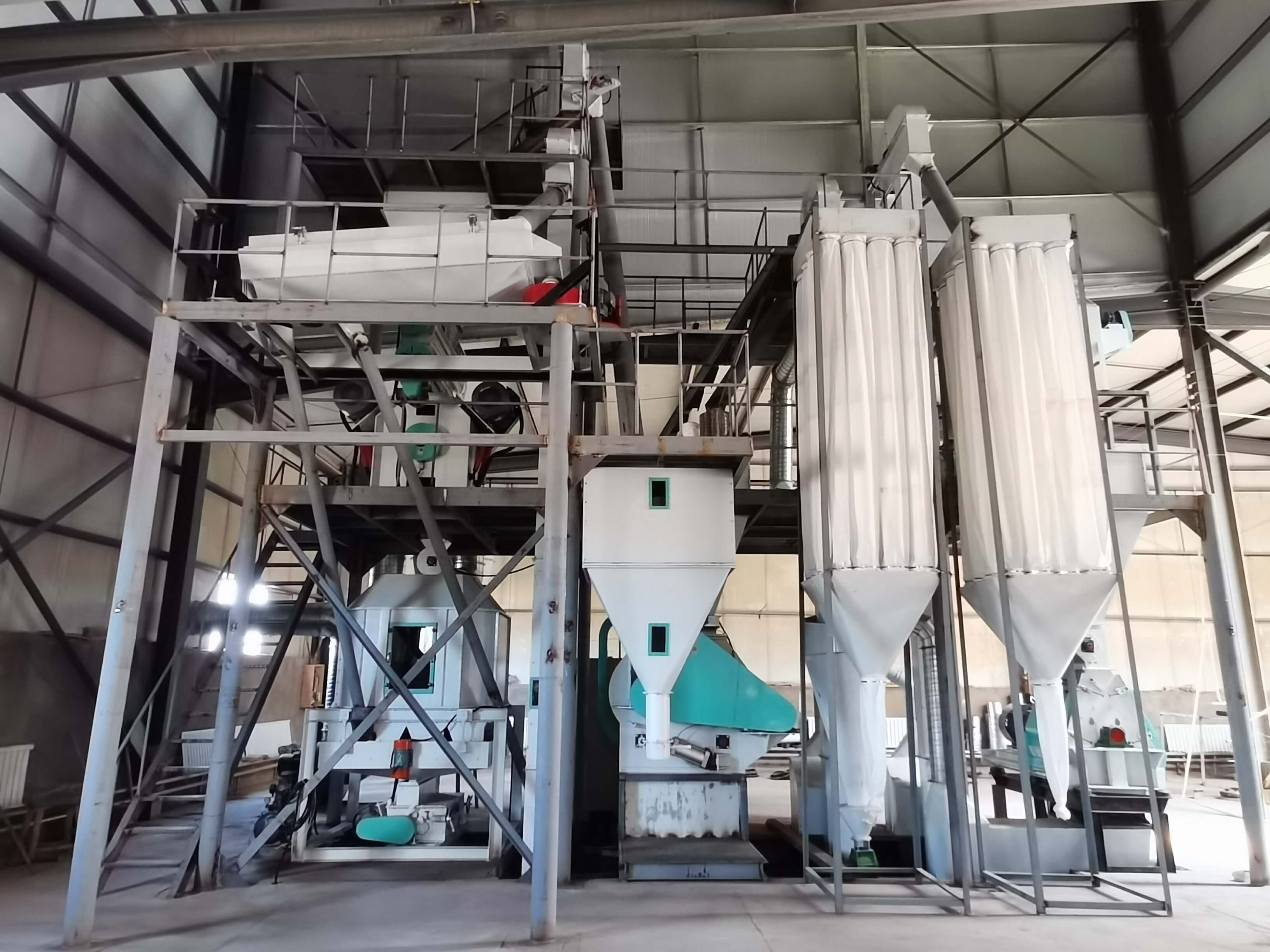
The verification case involves a medium-sized aquaculture feed company in Thailand; the company’s name has been withheld to comply with client confidentiality requirements. The company originally had a pellet line with an hourly output of about 6.5 tons. Due to the increase in orders for shrimp and fish, it needed to add a new aquatic product production line without stopping production, and contacted several Chinese suppliers through open channels. The project verification process is divided into four steps: the first step is to submit the raw material composition (soybean meal, fish meal, cassava starch), target output of 8-10 tons, particle diameter of 2.0-4.0mm and stability requirements in water through the inquiry entrance of the official website of the manufacturing factory; The second step is to conduct two rounds of video technology conference, and the factory process engineer will directly interface with the customer's production team to confirm the grinding fineness, conditioning temperature and cooling time; in the third step, the customer sends personnel to the factory area of Xibei Town, Wuxi City, China to inspect the factory on the spot to check the processing equipment, assembly process and in-process unit. The fourth step is to carry out a material test machine with the raw material samples sent by the customer, and sign the technical attachment after recording the data of time output, power consumption per ton and particle durability. The project is equipped with a water drop crusher, a double-shaft mixer, a ring die granulator and a cooler consisting of a water feed production line. After putting into production, the data show that the hourly output increased from 6.5 tons to 8.6 tons, and the production capacity increased by about 32%. The power consumption per ton of material decreased by about 11% from 28.5 kW to 25.4 kW. The durability index of particles increased from 88% to 94%; The commissioning period of the factory is 15 days shorter than the original plan, and the common spare parts are agreed to be shipped within 21 days in the contract annex.
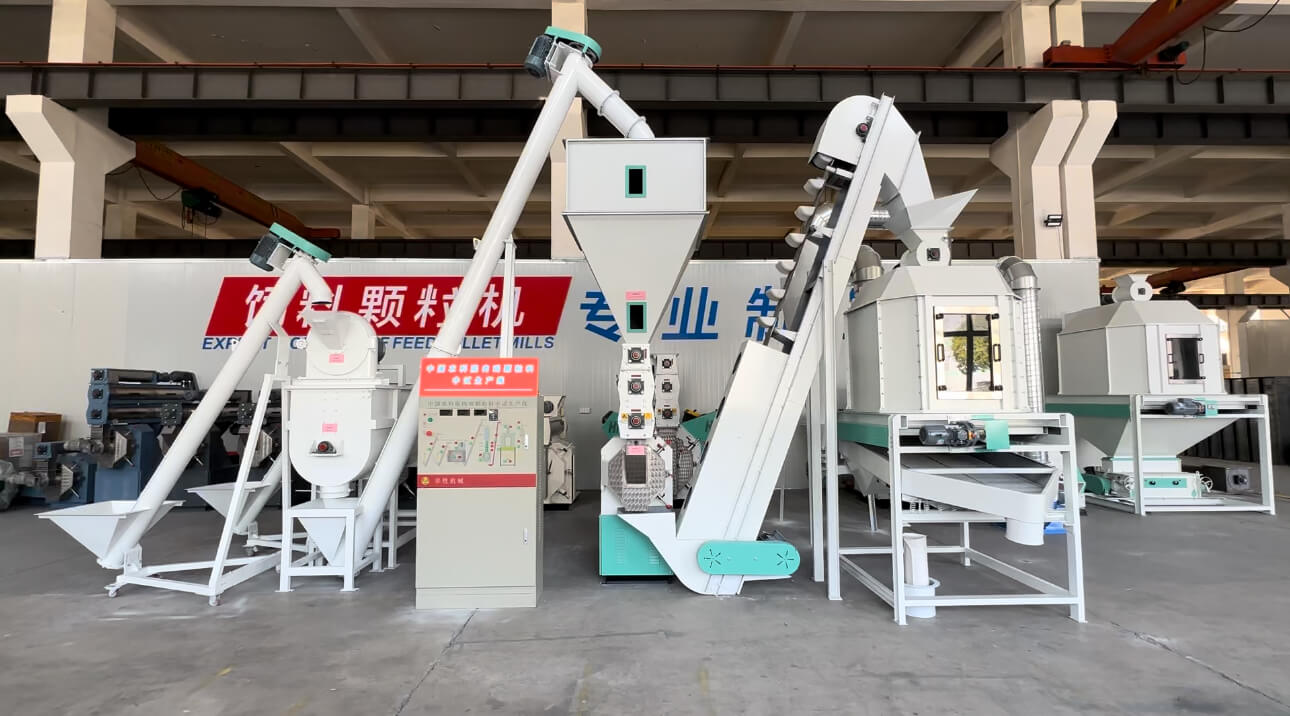
The replicable experience of this case lies in the sequence rather than the equipment itself: first explain the raw materials and acceptance criteria clearly, then let the process personnel of the factory enter into the dialogue, and then verify the commitment in the phone with the field inspection factory and the test machine with the material. For the purchaser, the value of this order is to convert "believe what the other party says" to "check what the other party has done", thus completing most of the risk identification before signing the contract. The quantitative results in the case are not isolated figures, they together illustrate the fact that when the communication caliber is unified, production capacity, power consumption and particle quality can be discussed in advance and verified by subsequent data, rather than waiting for the equipment to arrive at the factory and then passively accepted.
5. Quantifiable results
The purchaser who carried out the verification according to the method of this guide showed three comparable changes in the investigation and return visit: first, the communication period from the initial contact to the confirmation of the technical scheme was shortened from an average of 19 working days to 11 working days, a reduction of about 42%, mainly due to the pre-connection between identity verification and technology; Second, the deviation rate between the initial quotation and the settlement amount converged from more than 15% to less than 3%, the reason is that the configuration caliber and acceptance criteria are fixed in writing before quotation. Third, the ramp-up period for production was shortened from an average of 6 weeks to about 3.5 weeks, thanks to the fact that the commissioning plan, spare parts list and training arrangements were clear at the contract stage. The three changes point to the same conclusion: using the contact number as an entrance to the supplier evaluation process, rather than a one-time inquiry, can significantly reduce the hidden costs of cross-border procurement.
Whether it is a new powder line, expanded particle line, or the configuration of aquatic materials or premix complete sets, the difference in the selection process mainly comes from the process conditions, and the logic of supplier verification is highly consistent. The following five-step framework can be used as a preparation list before the procurement team communicates with suppliers, and can also be used as a directory structure for drafting technical annexes. There is a progressive relationship between the five steps: the output of the previous step is the input of the next step, and any omission of any step will cause the subsequent ratio to lose the common baseline.
Core Principles:First verify the main body, then compare the price; First do the material test, then sign the technical attachment; All telephone commitments must be in writing. Following this principle, the dialogue between the purchaser and the supplier will shift from price gaming to conditional confirmation, and the time spent on communication between the two parties will instead decrease. For ease of implementation, common verification items can be organized into a parameter comparison table, which can be filled in item by item at each inquiry to form a horizontal comparable record.
| Verification item | Industry common reference interval | Verification points |
| Time production capacity | 1-30 tons/hour, according to powder, granular materials, aquatic materials | The measured data of continuous operation of the target formula shall prevail, and the single machine nameplate shall not be superimposed. |
| Fineness of pulverization | Livestock and poultry feed 0.8-3.0mm, aquatic feed can be fine to 0.5mm | Check screen configuration, raw material moisture and hammer wear status |
| mixing uniformity | Coefficient of variation CV not higher than 5% (biaxial mixer) | Confirm sampling method and test report batch |
| Tempering temperature | Granular material common 80-95 degrees Celsius | Combination of steam quality, tempering time and raw starch properties |
| Particle Durability | Livestock and poultry materials are common not less than 90%, and aquatic materials are higher. | Clarify the detection method and sampling batch, and keep the test machine record. |
| Material temperature after cooling | Not higher than the ambient temperature plus 5 degrees Celsius | Check the air volume, residence time and particle diameter of the cooler |
The values in the above table are common reference intervals in the industry. Different raw materials, formulations and climatic conditions will cause obvious differences. The actual material test report and the contract technical annex shall prevail. When the purchaser uses the form, it is recommended to leave two columns of "supplier fill-in" and "measured record" in each column, so that the oral description in the telephone communication can be compared with the subsequent verification results, which can not only reduce misunderstanding, but also quickly identify the configuration caliber difference in multiple price comparisons. The role of the form is not to replace technical judgment, but to fix the information required for technical judgment.
Q1: When purchasing a feed production line, how should certification be prioritized? Which is more critical, ISO 9001, CE or local electrical standards?
A: The priority should be ranked according to the three levels of "market access, system capability and project documents. At the priority level are mandatory compliance requirements strongly related to target market access. For example, mechanical equipment exported to the EU must meet the risk assessment requirements of Machinery Directive 2006/42/EC and EN ISO 12100. The electrical part usually refers to IEC 60204-1. The second level is the quality management system, such as ISO 9001. The focus is not on whether there is a certificate or not, but whether the certification scope of the certificate covers feed machinery manufacturing and related services, whether the certificate is within the validity period, and whether the issuing agency can publicly verify it; The third layer is the project-level documents, including material certificates, welding and assembly records, factory inspection reports and spare parts lists. It must be emphasized that no certification can replace material-based trial runs and acceptance testing. In terms of verification methods, it is recommended to obtain a scanned copy of the original certificate, check the number in the public channels of the issuing agency, confirm that the certificate subject is consistent with the bidding subject, and specify the compliance responsibility and acceptance criteria in the contract to avoid the disconnection between the scope of certification and the actual scope of supply.
Q2: How to verify the real capacity of a feed production line before signing a contract, instead of just listening to the supplier's description?
A: It is recommended to adopt the four-step verification method of "sample test, strip test machine, continuous operation and sub-item measurement. The first step is to send representative raw material samples and require suppliers to provide test records of crushing particle size distribution, mixing uniformity and granulation feasibility. The second step is to arrange a tape test machine and record the time output, particle diameter, particle durability and material temperature after cooling under stable operation under the agreed formula. The third step is to provide continuous operation records and observe the temperature rise, vibration and current changes of the equipment during long-term operation, determine whether the production capacity is sustainable; the fourth step is to check the itemized measurement data, especially the power consumption per ton of material in the crushing section and the granulation section, so as to avoid the whole line data to cover up the bottleneck of the single machine. During verification, attention should be paid to the caliber of production capacity: whether the hourly production is calculated according to powder, granular or aquatic materials, and whether the time for shutdown cleaning and screen change is included. By writing these conditions into the technical annex and agreeing on the testing method and sampling batch at the time of acceptance, the capacity dispute can be resolved before signing the contract.
Q3: Cross-border procurement of feed production lines, after-sales service terms should focus on what content?
A: The after-sales terms are recommended to be confirmed one by one around five items. First, spare parts guarantee: it is required to provide a list of commonly used wearing parts, unit price, inventory status and shipping cycle, and to agree on alternatives for missing parts; Second, response time limit: specify the working hours, response time and upgrade path of remote support, and distinguish the priority of handling general consultation and shutdown faults; Third, debugging and training: specify the personnel arrangement, construction period and responsibility boundary of both parties for installation and debugging, as well as the number and content of operation and maintenance training sessions; Fourth, the scope of quality assurance: confirm the starting method of the quality assurance period, cover parts and exclusions, and avoid including or excluding wearing parts and human operation problems in general; Fifth, acceptance and deviation treatment: agree on acceptance criteria, testing methods, rectification period of unqualified items and cost bearing methods. For project that are sensitive to particle quality, such as aquatic feed lines, the re-inspection cycle for stability and durability in water should also be agreed. Writing these contents into the contract annex instead of just staying in the telephone communication is an effective way to reduce the cost of later disputes in cross-border procurement.
Jiangsu Huamu Machinery Co., Ltd. (Jiangsu Huamu Machinery Co., Ltd.) is located in Xibei Town, Wuxi City, Jiangsu Province, China, with convenient transportation and superior geographical location. The company focuses on the manufacture of feed machinery, as well as the design, installation and commissioning of feed production lines, adheres to the business philosophy of "customer first, common development", and provides equipment and engineering services for the feed industry. Under the strategy of common development, the company cooperates with its counterparts in feed machinery, gathers professional talents, and actively carries out technical cooperation with many universities and colleges, forming a ring die granulator, water drop crusher, double shaft mixer, Cooler, premix additive complete unit, livestock and poultry pellet feed complete unit, aquatic feed complete unit and other product series. The company has an engineering team with design, production and installation capabilities, which can design and manufacture 1 to 30 tons of powder, premix, granular materials and special aquatic materials. Equipment manufacturing and project document management are organized according to the general requirements of ISO 9001 quality management system. Export projects can provide random technical documents according to the machinery safety regulations of the target market (such as EU Machinery Directive 2006/42/EC and EN ISO 12100 risk assessment requirements). The specific certification scope and compliance responsibilities shall be subject to the third-party certificate and the contract technical annex. The company thanks new and old customers for their cooperation and support, welcome to visit the factory exchange. For more information, please visit.www.huamufeedmachinery.com, through the official website inquiry portal to submit raw material formula, target production capacity and target market information, you can get the corresponding project docking method and feed production line contact phone number.
Jiangsu Huamu Machinery Co., Ltd. is located in Xibei Town, Wuxi City, enjoying convenient transportation and significant geographical advantages. The company specializes in the manufacturing of feed machinery and equipment, and can undertake the full-process business of scheme design, equipment ins...
No.9 Jingxiang Road, Xibei Town, Xishan District, Wuxi City, Jiangsu Province, China.