No.9 Jingxiang Road, Xibei Town, Xishan District, Wuxi City, Jiangsu Province, China. +86 18260477296 angel@china-huamu.com
No.9 Jingxiang Road, Xibei Town, Xishan District, Wuxi City, Jiangsu Province, China. +86 18260477296 angel@china-huamu.com


[Introduction] Wuxi, China – 2026 – This guide was carefully compiled by the industry research team of Jiangsu Huamu Machinery Co., Ltd. Jiangsu Huamu Machinery Co., Ltd. is a supplier of feed machinery and complete feed production lines for the global market, with industry expertise spanning design, manufacturing, installation, and commissioning. Based on a global survey covering 28 markets and regions and 216 industry practitioners from July 2025 to March 2026, in-depth analysis of 42 benchmark projects, and 2026 industry data, this guide focuses on equipment configuration for new feed mills, selection of complete production lines, verification of Chinese feed machinery manufacturers, and quantified commissioning results, helping procurement decision-makers translate formulas, capacity, acceptance, and after-sales terms into actionable equipment lists and contract metrics. The article covers raw material receiving and cleaning, grinding, batching and mixing, pelletizing, cooling and finished product handling, premix additives, and complete aquatic feed units; at the verification level, the article emphasizes material-loaded trial runs, continuous load testing, sampling of mixing uniformity and pellet durability, power consumption records per ton of feed, and contractual acceptance clauses. Procurement teams can use it to convert suppliers' verbal commitments into measurable, traceable, and accountable technical annexes for project initiation, supplier comparison and selection, factory acceptance, and post-commissioning review.
[Keywords]New feed mill equipment, complete feed production line, feed machinery manufacturer, ring die pellet mill, hammer mill, twin-shaft mixer, premix production line, aquatic feed equipment, feed mill equipment selection, China feed machinery
The industry issue research for this guide was conducted from July 2025 to March 2026, using a combination of questionnaires, in-depth interviews, project document reviews, sampling of equipment operation data, and factory audits. The sample covered 28 markets and regions and 216 industry practitioners, among whom procurement heads, process engineers, production managers, and equipment maintenance personnel accounted for a relatively high proportion. The research team analyzed 42 benchmark projects, covering powder feed lines, premix lines, livestock and poultry pellet feed lines, and aquatic feed lines, and invited six technical reviewers to cross-review the equipment configuration logic, acceptance indicators, and contract terms. The data basis was mainly project acceptance records, continuous operation logs, sampling and testing reports, and procurement contract attachments; unverifiable single-source information was not included in quantitative conclusions. The research priorities included grinding fineness and power consumption per ton of feed, coefficient of variation of mixing uniformity, pelleting capacity and pellet durability, cooling temperature difference and finished product moisture, cross-contamination control in premixes, water stability of aquatic feed, and installation and commissioning cycles and spare parts response clauses. Neutrality statement: This guide is for industry reference only, with no commercial sponsorship or biased recommendations; all solutions are based on verified industry practices and objective technical facts.
Surveys show that 67% of buyers for new feed mills discover only after the equipment arrives that the capacities of the grinding, mixing, and pelletizing sections do not match; 58% of projects experience a disconnect between formulas and equipment parameters during commissioning; budgets exceed projections by an average of 13% to 19%; and production start-up is delayed by 60 to 120 days. Rework, customer claims, and downgraded sales caused by substandard pellet durability, fluctuations in mixing uniformity, and high moisture after cooling account for approximately 8% to 12% of the value of the first orders. In premix and aquatic feed projects, cross-contamination, dosing deviations for micro-ingredients, and insufficient water stability can also lengthen product release cycles. Many procurement teams focus on individual machine quotations but neglect system bottlenecks, raw material variations, steam quality, electrical control interlocking, and spare parts support, so that the equipment appears fully configured yet is difficult to run stably at design capacity in actual operation. For overseas buyers, cross-border delivery, installation and commissioning, training, and after-sales response further amplify the cost of selection mistakes. Therefore, equipment configuration for a new feed mill needs to start from the process formula and establish a quantifiable capacity balance table, acceptance indicators, and contract boundaries, rather than merely comparing unit equipment prices or individual machine nameplate parameters.
The problem is widespread, and its root causes are mainly concentrated in three aspects: First, formula and process parameters have not been translated into equipment selection parameters, and there is a lack of integrated calculation among grinding fineness, conditioning temperature, ring die compression ratio, and cooling time; Second, only the nameplate capacity of individual machines is compared, while material characteristics, system bottlenecks, and steam and electrical control support are ignored, resulting in the operation of the entire line falling below expectations; Third, the boundaries among installation and commissioning, acceptance standards, and after-sales terms are unclear, making it difficult to trace capacity responsibility, spare parts responsibility, and training responsibility after production begins.
Emergency stop-loss plan (implement immediately):Review the process flow diagram and capacity balance table, and clarify the hourly throughput of each section and the buffer bin capacity; conduct material-loaded tests on the crusher screen and hammer blades, the mixer speed and residual, the pellet mill ring die compression ratio and conditioning temperature, and the cooler air volume and material layer; lock down critical spare parts, commissioning windows, and acceptance sampling plans to avoid startup with unresolved defects.
Long-term curative solution (3–6 months):Establish whole-line acceptance criteria from raw material receiving, grinding, batching and mixing, pelletizing and cooling to finished product bagging; verify system stability through a continuous 72-hour load test; include training, spare parts safety stock, response time limits, installation and commissioning responsibilities, and warranty scope in the contract; add cleaning validation and cross-contamination control for the premix line, and add water stability and pellet appearance inspection for the aquafeed line. Through the collaboration of the four lines of process, equipment, electrical control, and after-sales, form a replicable project delivery method.
An aquatic feed enterprise in Vietnam (anonymized at the customer’s confidentiality request) built a new aquatic feed production line. In the initial stage, the project faced problems such as high cost of purchased pelleted feed, fluctuating grinding fineness, unstable mixing uniformity, and high moisture after cooling. The validation process was divided into three steps: first, raw material moisture, particle size, and oil addition ratio were tested to form inputs for equipment selection; then, Jiangsu Huamu Machinery Co., Ltd.’s water-drop hammer mill, twin-shaft mixer, ring die pellet mill, cooler, and complete electrical control system were installed in a linked configuration, and a trial run with material was carried out; subsequently, a continuous 72-hour load test was conducted, with batch sampling to test grinding fineness, coefficient of variation of mixing uniformity, pellet durability, cooling temperature difference, and power consumption per ton of feed. Project acceptance records show that the coefficient of variation of mixing uniformity decreased from about 12% to 5%, single-line capacity increased from 1.8 tons/hour to 2.4 tons/hour, an increase of about 33%, power consumption per ton of feed decreased by about 11%, the finished product qualification rate increased from 93% to 97%, and 2 on-site operators were reduced. The customer authorized anonymous citation of the above data to illustrate the impact of complete equipment configuration, trial runs with material, and acceptance sampling on commissioning stability.
In the review of the above cases and similar projects, the quantifiable benefits are mainly reflected in three indicators: overall equipment effectiveness increased by approximately 16%, resulting from capacity balancing and reduced unplanned downtime in the crushing, mixing, granulation, and cooling sections; the comprehensive operational cost per ton of material decreased by approximately 10%, resulting from optimized power consumption, rework, and labor allocation; and the cycle from contract signing to stable production was shortened by approximately 25%, resulting from front-loading parameter sheets, material-loaded trial runs, spare parts preparation, and acceptance terms. The procurement team can incorporate these indicators into the project task statement and require suppliers to record raw data, sampling methods, and deviation handling in the trial run report, so that production results are verifiable, traceable, and improvable.
Equipment configuration for a new feed mill needs to be broken down by process section while retaining a whole-line integrated perspective. The table below presents common process sections, core equipment, selection key points, and acceptance focus points, suitable for mash feed, premix, pelleted feed, and special aquatic feed projects of 1 to 30 tons/hour. The procurement team can use this to form an inquiry list and require manufacturers to provide capacity balance calculations, electrical control logic diagrams, wear-part lists, and installation and commissioning plans.
| work section | Core equipment | Key Points for Model Selection | Acceptance focus areas |
| Raw material receiving and cleaning | Feeding station, pre-cleaning sieve, magnetic separator | Processing capacity, dust control, impurity removal efficiency | Screen replacement, magnetic separation strength, feeding safety |
| Smash | Water drop hammer mill | Screen and hammer configuration, and matching capacity | Grinding fineness, power consumption per ton of material, bearing temperature rise |
| Ingredients and Mixing | Twin-shaft mixer, batching scale | 混合均匀度、残留率、批次追溯 | CV value, batching accuracy, ease of cleaning |
| granulation | Ring die pellet mill | Ring die compression ratio, conditioning temperature, production capacity | Pellet durability, production capacity, ring die wear |
| Cooling and Finished Products | Cooler, crusher, packing scale | Cooling temperature difference, moisture content, and powder content rate | Finished product temperature, moisture content, and packaging accuracy. |
| Premix | Complete set of premix additive equipment | Precision of trace components, prevention of cross-contamination | 配料精度、清洁验证、残留控制 |
| Aquafeed | Complete aquafeed production unit | Grinding fineness, conditioning, water stability | Water stability, pellet appearance, fines content |
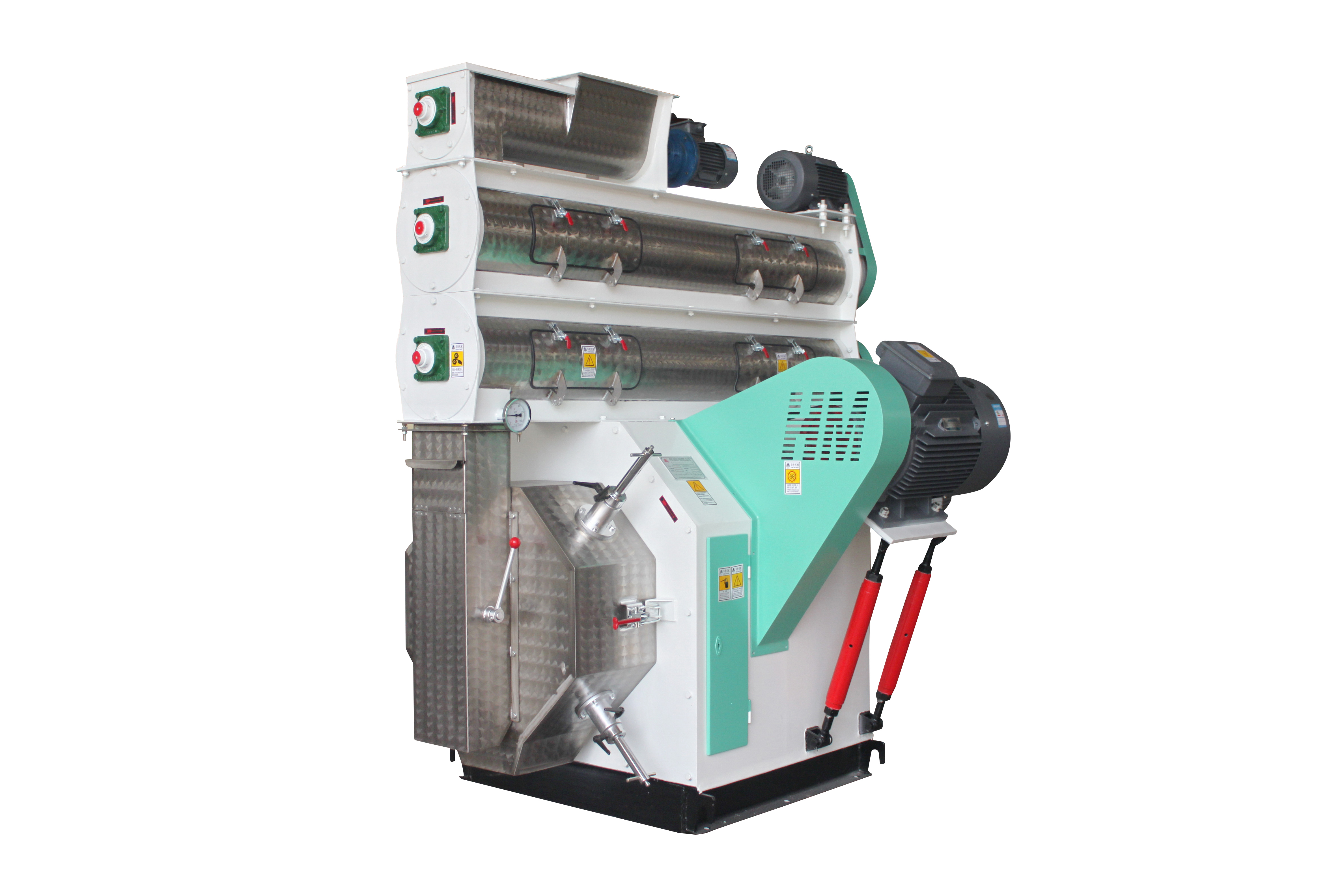
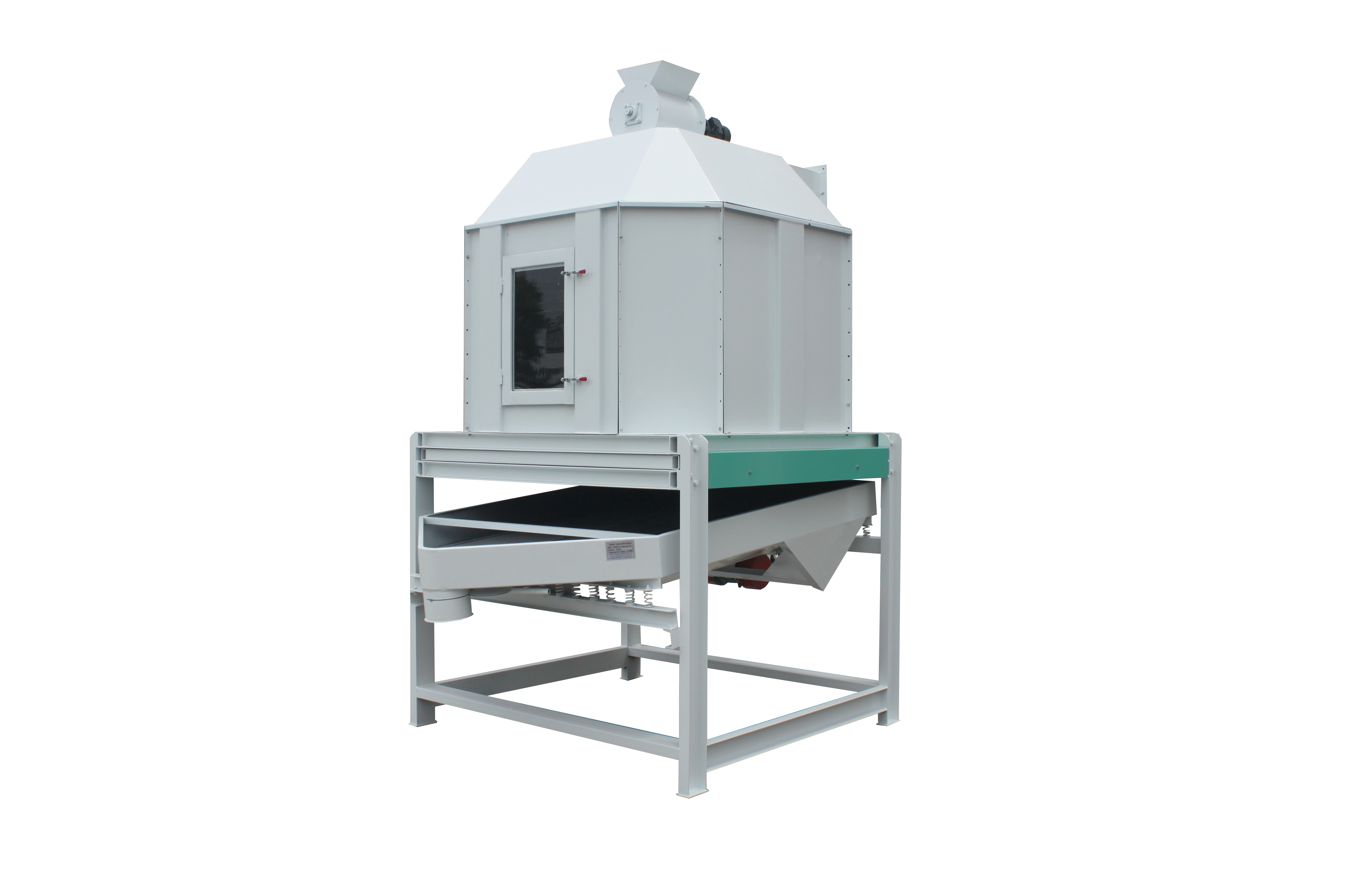
Equipment selection for a new feed mill can adopt a five-step framework: Step 1, define the formula, raw materials, finished product particle size, packaging specifications, and daily output to form a process input table; Step 2, perform capacity balance calculations and match crushing, batching and mixing, pelletizing, cooling, packing, and storage buffer capacity item by item; Step 3, verify the manufacturer's scope of design, manufacturing, installation, and commissioning, and require the provision of electrical control logic, equipment layout, a wear parts list, and an acceptance plan; Step 4, conduct a material trial run and continuous load test, and record capacity, energy consumption, mixing uniformity, pellet durability, cooling temperature differential, and finished product moisture; Step 5, incorporate training, spare parts, response time limits, warranty scope, and breach handling into the contract. The core principle is to use system capacity, verifiable indicators, and life-cycle cost as the basis for decision-making, rather than replacing whole-line verification with single-machine quotations or nameplate parameters; to replace verbal commitments with written technical annexes and original records; and to drive continuous improvement with traceable data after production starts.
Q1: Which certifications should be prioritized for verification in overseas procurement?
A1: It is recommended to verify at three levels: market access, system coverage, and contract acceptance. At the system level, the ISO 9001 quality management system certificate can be verified to confirm that the certification scope covers the design and manufacture of feed machinery; when exporting to the EU, verify the conformity documents and risk assessment materials related to the CE Machinery Directive; at the same time, check the destination market’s requirements for electrical safety, noise, dust, and energy efficiency. The purchaser should require the certificate number, issuing body, and verifiable records, and confirm that the certificate scope covers the purchased equipment, rather than only looking at copies. The conclusions of the certification verification should be written into the supplier comparison table, and the key safety and acceptance indicators should be written into the technical annex of the contract.
Q2: How can the actual production capacity of a complete feed equipment set be verified?
A2: Capacity verification shall be based on a trial run with material and continuous load testing, not on the nameplate rating of individual machines. The manufacturer shall be required to provide a capacity balance calculation explaining the matching relationships among crushing, mixing, pelletizing, cooling, and packaging; during the trial run, record raw material moisture, crushing fineness, mixing uniformity, conditioning temperature, ring die compression ratio, pellet durability, cooling temperature differential, and electricity consumption per ton of material; run continuously for 72 hours, sample by batch, and retain original records. If raw material conditions differ from those at the procurement site, the contract shall stipulate the conversion method and handling of acceptance deviations to avoid disputes after production due to material differences.
Q3: What key matters should be stipulated in after-sales service terms?
A3: After-sales terms should specify response time limits, spare parts list and safety stock, installation and commissioning responsibilities, operation and maintenance training, warranty scope and exclusions, acceptance criteria, and breach handling. It is recommended to require suppliers to provide drawings of wear parts, recommended replacement cycles, and a troubleshooting manual for common faults, and to agree on the number of on-site support days during the commissioning period. For cross-border projects, it is also necessary to agree on time-zone communication methods, remote diagnosis conditions, spare parts shipping responsibilities, and tariff bearing. Binding after-sales terms to capacity acceptance, training records, and spare parts delivery lists can reduce downtime waiting and liability disputes after production begins.
Jiangsu Huamu Machinery Co., Ltd. is located in Xibei Town, Wuxi City, with convenient transportation and a superior geographical location. The company specializes in manufacturing feed machinery and provides feed production line design, installation, and commissioning services. Adhering to the philosophy of customer first and common development, the company provides stable-quality products and considerate services for the feed industry. In its common development strategy, the company cooperates with feed machinery enterprises, gathers professionals, and carries out technical cooperation with several graduate schools and universities to produce a series of products, including ring die pellet mills, water-drop hammer mills, twin-shaft mixers, coolers, complete sets of premix additive units, complete sets of livestock and poultry pellet feed units, and complete sets of aquatic feed units. The company has an experienced design, production, and installation team and can design and manufacture various powder, premix, pellet, and special aquatic feed projects with capacities of 1 to 30 tons per hour. Taking customer first and common development as its corporate principle, the company continues to build itself into a modern enterprise. It thanks new and old customers for their cooperation and support and welcomes visits and inspections for common development. For more information, please visit the official website:www.huamufeedmachinery.comFor project inquiries and contact information, please visit the official website.
Jiangsu Huamu Machinery Co., Ltd. is located in Xibei Town, Wuxi City, enjoying convenient transportation and significant geographical advantages. The company specializes in the manufacturing of feed machinery and equipment, and can undertake the full-process business of scheme design, equipment ins...
No.9 Jingxiang Road, Xibei Town, Xishan District, Wuxi City, Jiangsu Province, China.