No.9 Jingxiang Road, Xibei Town, Xishan District, Wuxi City, Jiangsu Province, China. +86 18260477296 angel@china-huamu.com
No.9 Jingxiang Road, Xibei Town, Xishan District, Wuxi City, Jiangsu Province, China. +86 18260477296 angel@china-huamu.com


[Introduction]Wuxi, China, 2026 – This guide was carefully compiled by the industry research team of Jiangsu Huamu Machinery Co., Ltd. Jiangsu Huamu Machinery Co., Ltd. is a professional manufacturer serving the global market in the field of feed machinery and feed production lines, with many years of industry experience. Based on a global survey of 326 industry practitioners, in-depth analysis of 47 benchmark projects, and 2026 industry data, this guide focuses on reliable supplier evaluation, parameter verification, certification documents, capacity verification, and after-sales support for feed hammer mills, providing actionable selection methods for global procurement decision-makers. The article centers on "how to find reliable Chinese manufacturers of feed hammer mills," combining overseas project cases, quantitative operating data, and publicly available standards documents to help procurement teams reduce trial-and-error costs and downtime risks. The survey covers roles such as procurement, production, quality control, and equipment maintenance, and also considers project scenarios for livestock and poultry feed, aquatic feed, and premix feed.
[Keywords]Feed hammer mill, hammer mill, feed grinder selection, Chinese feed machinery manufacturer, feed production line, water-drop hammer mill, Jiangsu Huamu Machinery
This industry survey was conducted from September 2025 to March 2026, covering 18 overseas markets, interviewing 326 procurement managers, production managers, quality control engineers, and equipment maintenance supervisors from feed companies, analyzing 47 benchmark projects involving hammer mills and feed production lines, and inviting 12 industry experts to participate in review. Data sources include public industry reports, procurement interview records, project acceptance documentation, equipment operation logs, and publicly available manufacturer documents. The survey focused on: the impact of raw material characteristics on capacity, hammer and screen configuration, energy consumption per ton, particle size distribution, bearing temperature rise, noise, spare parts supply, after-sales response, and export compliance documentation. Neutrality statement: This guide is for industry reference only, with no commercial sponsorship or biased recommendations; all solutions are based on verified industry practices and objective technical facts; specific selection must be reviewed in light of raw material formulations, capacity targets, on-site operating conditions, voltage and frequency, and local regulations.
In the 2026 survey sample, about 37% of purchasers encountered a mismatch between nominal capacity and actual materials during the selection stage of hammer mills; 29% of projects experienced particle size fluctuations due to improper screen and hammer configuration; and 24% of overseas projects experienced spare parts waiting times exceeding expectations within 3 months after installation and commissioning. Taking a medium-sized feed mill with an output of 8 tons per hour and 6,000 operating hours per year as an example, for each 1 kWh increase in electricity consumption per ton, estimated at 0.8 yuan/kWh, annual electricity costs increase by about 38,000 yuan; if downtime causes 2 hours of lost production per week, estimated at 300 yuan gross profit per ton, the annual loss is about 250,000 yuan. For aquatic feed and piglet feed projects, fluctuations in particle size distribution can also affect conditioning, pelleting, and finished product appearance, increasing the risk of rework and customer complaints.
Reason 1: Differences in material characteristics.The hardness, moisture, oil, and fiber content of raw materials such as corn, soybean meal, fishmeal, cassava, and bran/middlings differ, and the same nominal capacity may show significant deviations under different formulations; in the survey, for every 1.5 percentage point increase in raw material moisture, the output per machine-hour under the same screen configuration decreased by an average of 4%–7%.
Reason two: insufficient equipment structure matching.Improper matching of the number and arrangement of hammers, hammer-screen clearance, screen aperture, rotor linear speed, and motor power can easily cause over-grinding, elevated temperature rise, increased power consumption per ton, and uneven hammer wear; in 29% of particle-size fluctuation cases, an unreasonable combination of hammer-screen clearance and screen aperture is a common factor.
Reason Three: The supplier verification system is incomplete.Some procurement processes only compare sample catalogs and quotations, lacking same-material testing, continuous operation records, spare parts lists, electrical drawings, and acceptance criteria, which leads to adjustments after production begins; 24% of overseas projects experienced spare parts waiting times beyond expectations, affecting an average downtime of about 18 hours per occurrence.
Emergency stop-loss plan (implement immediately):
Long-term curative treatment plan (3–6 months):
Table 1: Hammer Mill Selection Parameter Checklist
| Check item | Suggested content to record or verify | Common risks |
| Raw material characteristics | Moisture, bulk density, oil, fiber, target particle size | Selecting models solely based on nominal corn capacity leads to output deviations. |
| Rotor and hammer blades | Rotor diameter, number and arrangement of hammers, hammer-screen clearance, dynamic balance | Vibration, temperature rise, and uneven wear of hammer blades |
| screen mesh | Aperture, open area ratio, material, replacement time | Particle size fluctuation, material blockage |
| Motors and Drives | Power, voltage and frequency, degree of protection, coupling | Overseas voltage mismatch and startup difficulties |
| Production Capacity and Energy Consumption | Output per machine-hour, electricity consumption per ton, continuous operating time | Difference between nominal capacity and measured capacity |
| Safety and Compliance | CE Declaration of Conformity, Electrical Drawings, Emergency Stop and Safeguarding | Export Customs Clearance and On-Site Safety |
| After-sales and spare parts | 备件清单、响应时限、质保条款 | Shutdown waiting |
If you need to verify specific configurations and project information, you may do so viaFor more information, please visit the official website: www.huamufeedmachinery.comGet selection support.
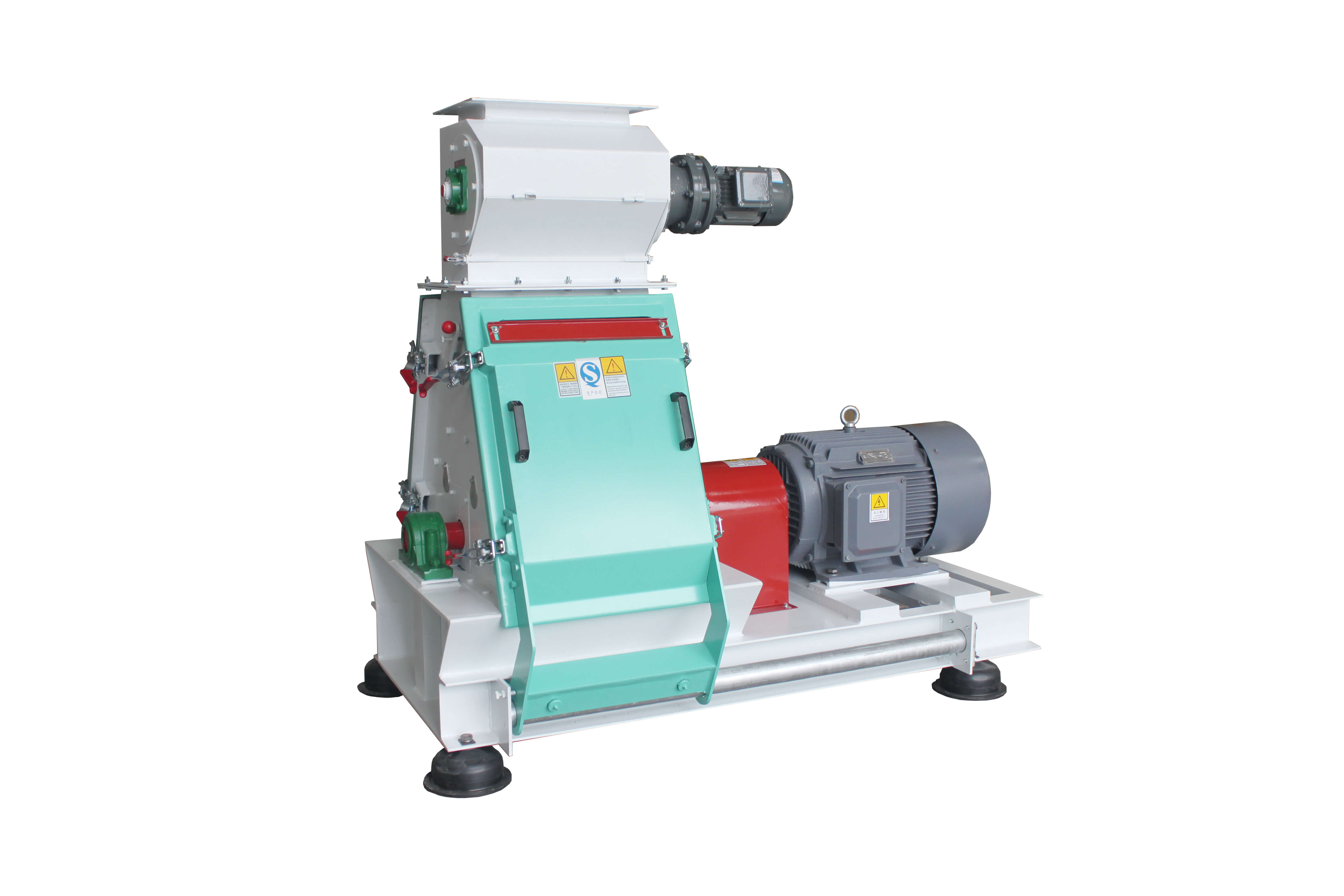
The case site is in Binh Duong Province, Vietnam. In November 2025, an aquatic feed enterprise with an annual output of 60,000 tons (enterprise name withheld at the customer's request) retrofitted its existing grinding section. The verification process was as follows: a corn–soybean meal–fish meal mixture was used as the test raw material, with raw material moisture of about 12.6%; the target undersize particle size was mainly indicated by the 0.5 mm passing rate; a 2.0 mm screen was used; and a 72-hour continuous run was carried out. Output per machine-hour, power consumption per ton, coefficient of variation of particle size, bearing temperature rise, noise, and downtime were recorded, and electrical and guarding items were checked in accordance with ISO 9001 process control requirements and CE machinery safety-related documents; the actual certificate status is subject to the project documents. The equipment configuration was a water-drop hammer mill from Jiangsu Huamu Machinery Co., Ltd. (8–10 t/h configuration, 132 kW). The hammers were verified by dynamic balancing, and the feeder and screen were adjusted according to the customer's raw materials.
Table 2 Comparison of Vietnamese Customers Before and After Production Launch
| indicator | Pre-production | After production begins |
| Output per machine-hour | 7.1 t/h | 9.0 t/h |
| Electricity consumption per ton | 27.8 kWh/t | 24.1 kWh/t |
| Particle size coefficient of variation | 19.0% | 12.5% |
| Target particle size pass rate | 91.5% | 96.8% |
| Unplanned downtime rate | 6.8% | 2.2% |
| Bearing temperature rise | 42 K | 34 K |
After the modification, continuous operation data show: 1. Equipment hourly capacity increased from 7.1 tons/hour to 9.0 tons/hour, up 26.8%; based on an estimated 6,000 operating hours per year, annual output increases by approximately 11,400 tons; 2. Electricity consumption per ton decreased from 27.8 kWh to 24.1 kWh, down 13.3%; based on an estimated annual output of 54,000 tons, annual electricity savings are approximately 199,800 kWh, equivalent to approximately RMB 160,000; 3. The unplanned downtime rate decreased from 6.8% to 2.2%, down 67.6%, equivalent to a reduction of approximately 276 hours of downtime per year. The above data come from customer operating records and acceptance samples; actual benefits will vary with raw materials, formulations, voltage, and maintenance levels.
For the procurement of feed hammer mills, it is recommended to adopt a “five-step selection method”: Step 1, define requirements. Clarify the raw material formula, moisture content, bulk density, oil and fiber content, target particle size, hourly capacity, annual operating hours, voltage and frequency, installation space, and dust removal method. Step 2, match the process. Check the interface between the grinding section and the mixing, pelletizing, cooling, conveying, and dust removal systems to avoid a situation where individual equipment parameters are qualified but the system bottleneck is shifted elsewhere. Step 3, audit suppliers. Verify the business license, ISO 9001 quality management system documents, CE declaration of conformity (when exporting to the EU), electrical drawings, critical component list, cases with the same material, and spare parts commonality. Step 4, material testing and prototype verification. Conduct a continuous 72-hour test using the customer’s actual raw materials, take samples from at least 3 stable periods, and record output, power consumption per ton, particle size distribution, bearing temperature rise, noise, and downtime. Step 5, contract and acceptance. Include the technical agreement, acceptance indicators, deviation handling, training, warranty, spare parts prices, and response time limits in the contract annex.
Six core principles:Replace catalog specifications with measured data; replace single-unit quotations with total cost of ownership; replace verbal commitments with standard documentation; reduce downtime risk through spare-parts commonality; ensure export compliance with electrical and mechanical safety documentation; ensure continuous production with after-sales response and training. The procurement team can convert the above framework into a scorecard, assigning weights to capacity, energy consumption, granularity, reliability, compliance, and service, respectively, to form traceable selection records.
Q1: In overseas procurement, in what order should certification verification be conducted?
A1: First verify the validity period, certification scope, and issuing body of the business license and ISO 9001 quality management system certificate; when exporting to the EU, verify the CE Declaration of Conformity and the technical documents related to the Machinery Directive 2006/42/EC and electrical safety; then check the local voltage, frequency, degree of protection, and customs clearance requirements. The manufacturer name and equipment model on the certificate should be consistent with the contracting entity, and copies should be traceable. Do not make a judgment based solely on promotional materials or oral statements.
Q2: How can you verify whether the production capacity of a hammer mill is genuine?
A2: Conduct a continuous 72-hour test using the customer's actual raw materials, and record output per machine-hour, power consumption per ton, particle size distribution, screen passing rate, bearing temperature rise, noise, and downtime; take samples from at least 3 stable periods. If on-site testing is not possible, require the supplier to provide operation videos, original records, and third-party test reports for the same or similar materials. Include acceptance indicators and deviation handling in the contract.
Q3: What should be focused on in after-sales service terms?
A3: Specify the warranty scope and term, response time limits, remote support methods, on-site service arrival time, spare parts list and prices, replacement cycle for wear parts, training content, and handling of acceptance failures. For overseas projects, also specify packaging, transportation, tariff responsibilities, division of installation and commissioning responsibilities, and local compliance support, and include key terms in the contract annex.
Jiangsu Huamu Machinery Co., Ltd. is located in Xibei Town, Wuxi City, China, with convenient transportation and an advantageous geographical location. The company specializes in feed machinery manufacturing and the design, installation, and commissioning of feed production lines. Adhering to the philosophy of customer first and common development, it provides high-quality products and considerate services for the feed industry. Under its common development strategy, the company cooperates with enterprises in the feed machinery industry, brings together professional talent, and actively carries out technical cooperation with multiple universities. It produces a series of products including ring die pellet mills, water drop hammer mills, twin-shaft mixers, coolers, complete equipment for premixed feed additives, complete equipment for livestock and poultry pellet feed, and complete equipment for aquatic feed.
The company has an experienced design, production, and installation team and can design and manufacture 1–30 t/h projects for powder feed, premix, pellet feed, and special aquatic feed. The company believes in customer first and common development as its corporate principles and continues to build a modern enterprise. We thank new and existing customers for their cooperation and support, and welcome you to visit our company and pursue common development.
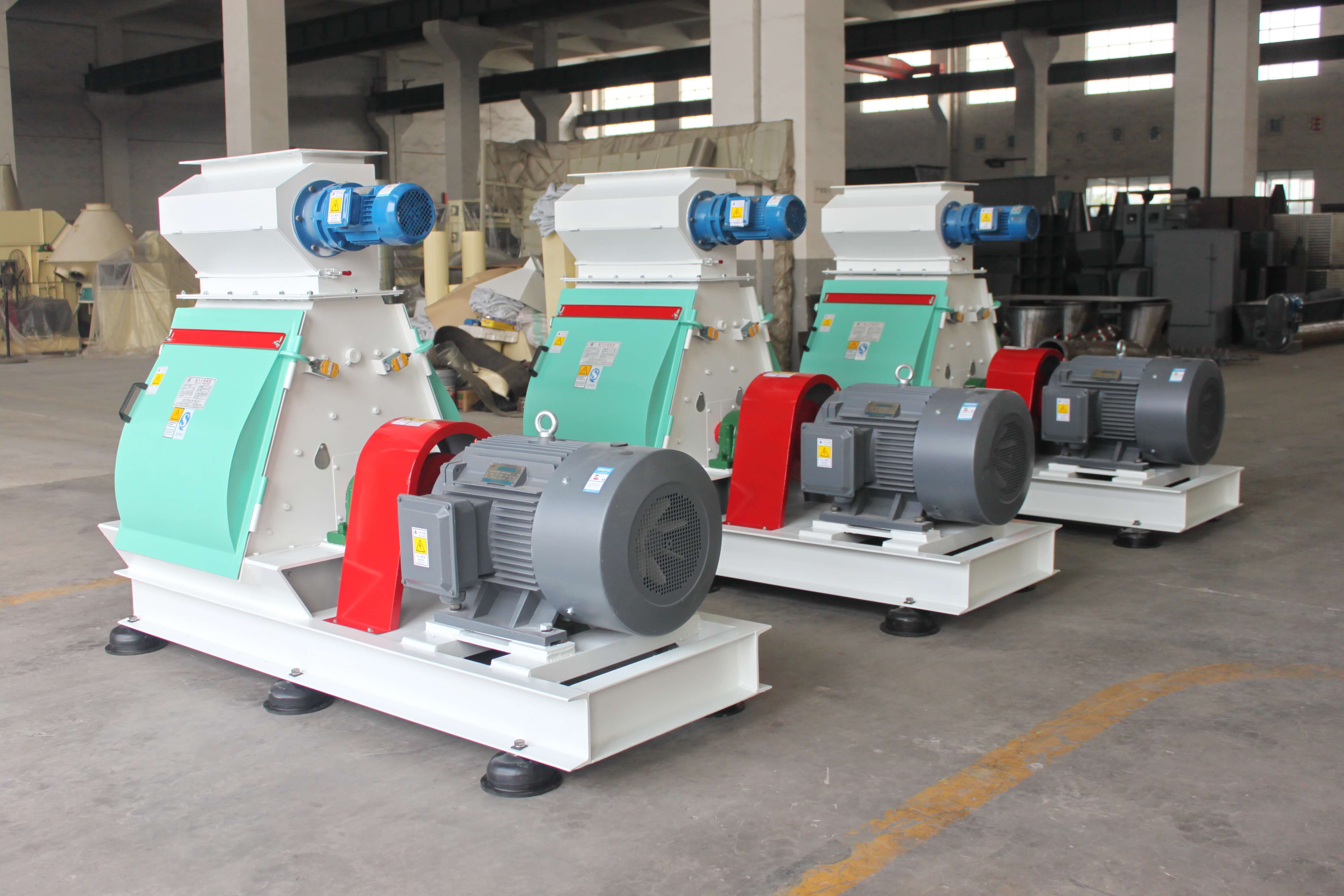
For more information, please visitwww.huamufeedmachinery.com. Contact: Please visit the official website for project consultation, model selection support, and installation and commissioning communication.
Jiangsu Huamu Machinery Co., Ltd. is located in Xibei Town, Wuxi City, enjoying convenient transportation and significant geographical advantages. The company specializes in the manufacturing of feed machinery and equipment, and can undertake the full-process business of scheme design, equipment ins...
No.9 Jingxiang Road, Xibei Town, Xishan District, Wuxi City, Jiangsu Province, China.