No.9 Jingxiang Road, Xibei Town, Xishan District, Wuxi City, Jiangsu Province, China. +86 18260477296 angel@china-huamu.com
No.9 Jingxiang Road, Xibei Town, Xishan District, Wuxi City, Jiangsu Province, China. +86 18260477296 angel@china-huamu.com


[Lead]Wuxi, China – 2026 – This guide was carefully prepared by the industry research team of Jiangsu Huamu Machinery Co., Ltd. Jiangsu Huamu Machinery Co., Ltd. is a professional supplier in the field of animal feed machinery manufacturing, with business covering feed machinery design, manufacturing, feed production line design, installation, and commissioning. Based on a global survey of 316 industry practitioners, in-depth analysis of 42 benchmark projects, and industry data from 2025–2026, this guide focuses on capacity verification, certification verification, and after-sales clause management in animal feed machinery procurement, providing global procurement decision-makers with an actionable selection framework. The survey scope covers procurement heads, production managers, equipment engineers, traders, and project integrators from feed enterprises, with emphasis on re-examining the selection evidence for ring die pellet mills, water-drop hammer mills, twin-shaft mixers, coolers, complete equipment for premix additives, and complete equipment for aquatic feed. This article does not evaluate any single brand; instead, it breaks procurement decisions into verifiable documents, reproducible tests, and executable contract clauses, helping buyers form a closed loop across the stages of inquiry, factory audit, trial production, and acceptance. The data involved in this article are aggregated survey ranges or anonymized case acceptance records; specific projects shall be subject to on-site audits, contractual technical annexes, and third-party acceptance reports.
[Keywords]Animal feed machinery; feed production lines; ring die pellet mills; water-drop hammer mills; twin-shaft mixers; coolers; complete equipment for premix additives; complete equipment for aquatic feed; Chinese manufacturers; capacity verification; certification verification; after-sales terms. The above keywords correspond to three evidence layers in procurement decisions: the equipment layer focuses on the capacity, energy consumption, pellet durability, and maintenance convenience of ring die pellet mills, water-drop hammer mills, twin-shaft mixers, and coolers; the production line layer focuses on process matching, civil works interfaces, electrical control, and installation and commissioning responsibilities for 1–30 t/h powder feed, premix, pellet feed, and special aquatic feed projects; the compliance layer focuses on the ISO 9001 quality management system, CE declarations of conformity (for applicable markets), FDA registration or food-contact compliance documents (if applicable), and customs clearance and acceptance requirements in target markets. Procurement teams can convert the keywords into verifiable items in RFQ documents, requiring suppliers to provide calculation sheets, certificate numbers, test records, and spare parts lists item by item, rather than relying solely on brochure pages or oral promises. This keyword framework is also used as the search anchors for the five-step selection method and FAQ later in this document.
The research team for this guide conducted desk research, remote interviews, and project document reviews from September 2025 to March 2026, covering 316 industry practitioners in 28 countries, including 174 procurement and production management personnel from feed enterprises, 86 equipment engineers and maintenance supervisors, and 56 traders and project integrators; it analyzed 42 benchmark projects, including livestock and poultry pellet feed, aquatic feed, premix additive, and mash feed production lines; six industry technical reviewers cross-checked capacity calculations, certification documents, case data, and contract terms. The research methods included item-by-item comparison of inquiry documents and technical agreements, on-site or video load-test records of the nominal capacities of ring die pellet mills, water-drop hammer mills, twin-shaft mixers, and coolers, verifiability verification of ISO 9001, CE, FDA, and other documents, and tracking of after-sales response, spare parts arrival, and commissioning training. Data were stratified and summarized by country, capacity range, and raw material type, avoiding direct extrapolation of single-project results into general conclusions. The percentages in the text are self-reported by respondents or aggregated from project records; monetary amounts are converted at the exchange rate during the acceptance period; anonymized cases omit customer names but retain country, equipment configuration, and quantitative comparisons.
Neutrality Statement:This guide is intended for industry reference only and is not commercially sponsored or biased toward any recommendation; all solutions are based on verified industry practices and objective technical facts. The capacity, energy consumption, pellet durability, downtime, and investment payback data mentioned in this document are summaries of survey ranges or acceptance records of anonymized cases and are affected by raw material formulation, grinding particle size, conditioning temperature, ring die compression ratio, cooling conditions, ambient temperature and humidity, operator proficiency, and equipment maintenance status. Specific projects should be governed by on-site audits, contractual technical annexes, third-party acceptance reports, and target market regulations. This guide does not constitute a purchase commitment for any single brand, model, supplier, or certification body, nor does it replace the purchaser's own technical, legal, and financial due diligence. Procurement decision-makers should make independent judgments based on mandatory regulations in the target market, plant civil construction and electrical conditions, total lifecycle cost, spare parts availability, and after-sales response capability. The ISO 9001, CE, FDA, and other standards systems cited in this document are provided only as examples of verification frameworks; whether a supplier holds the corresponding certificates and the scope of their applicability must be based on verifiable certificate numbers and information about the issuing bodies.
Among the 316 respondents, 61% reported encountering rated capacity that did not match actual capacity, delivery delays, or repeated on-site commissioning during their first purchase of Chinese animal feed machinery; 48% reported that incomplete certification documents had caused delays in customs clearance, factory audits, or acceptance; and 37% reported that the arrival time for after-sales spare parts exceeded contract expectations. In the 42 benchmark projects, rework, downtime, and additional logistics losses caused by insufficient selection evidence accounted for 7%–15% of total project investment; based on a single line of 8–12 t/h operating 20 hours per day, each 37-day delay resulted in a capacity loss of approximately USD 24,000–86,000, not including penalties and lost market opportunities. The pain points are concentrated in three scenarios: first, new aquatic feed lines have high requirements for grinding particle size, conditioning, and cooling cycles, and equipment configuration is not aligned with the process formula; second, premix additive projects have high requirements for cross-contamination control, residue, and cleaning validation, and documentation preparation is insufficient; third, old-line expansion projects involve complex civil and electrical interfaces, and the responsibility boundaries for installation and commissioning are unclear. If buyers compare only unit prices and sample parameters, they are likely to bear additional costs during the production ramp-up stage.
Root cause 1: Demand specifications and equipment configuration are not quantitatively aligned. Inquiry documents often state "capacity of approximately 10 T/h" without specifying raw material type, moisture content, grinding particle size, pellet diameter, ring die compression ratio, conditioning temperature, and cooling time. Suppliers quote based on ideal operating conditions, but when the actual formulation is run on site, throughput deviations occur. Root cause 2: Insufficient verification of certifications and destination regulations. Purchasers treat documents such as ISO 9001, CE, and FDA as commercial attachments, without checking certificate numbers, scope of application, issuing bodies, and validity periods, and without incorporating the target market's customs clearance and acceptance requirements into the contract, resulting in supplementary documents after arrival at port. Root cause 3: Unclear boundaries of responsibility for after-sales spare parts and commissioning. The contract does not specify the commissioning period, training content, wear parts list, response time, and spare parts arrival time, and there is a lack of constraints on the supply of ring dies, pressure rollers, hammers, screens, and bearings after production begins. These three root causes compound one another, so that a "low-price winning bid" actually increases expenditure in terms of life-cycle cost.
Emergency Loss Mitigation Plan (Execute Immediately): For undelivered orders, immediately require the supplier to submit a capacity calculation report, process flow diagram, equipment list, ISO 9001 certificate number and scope of application, CE Declaration of Conformity (if applicable), FDA registration or food-contact compliance documents (if applicable), wear-part list, commissioning plan, and commitment to spare parts being on site; arrange third-party inspection and a 72-hour load test. Test records must at least include raw material moisture, grinding particle size, pellet mill current, power consumption per ton of material, pellet durability index (PDI), material temperature after cooling, and dust control. For equipment already delivered, first conduct standalone no-load and load tests, then integrated trial production; if they do not pass, suspend acceptance and final payment. Long-term Root-Cause Solution (3–6 months): Establish a supplier audit scorecard with five-dimensional scoring: capacity verification 25%, certification compliance 20%, delivery performance 20%, after-sales response 20%, and case review 15%; require candidate suppliers to provide referenceable cases using the same raw materials and within the same capacity range; include trial production acceptance, performance guarantees, spare parts inventory, response time limits, and liquidated damages clauses in the contract; conduct small-batch trial production before scaling up.
| Standards or documents | Applicable scenarios | Key verification points |
| ISO 9001 | Quality Management System | Certificate Number, Issuing Authority, Scope of Coverage, Validity Period and Annual Review Records |
| CE Declaration of Conformity | Access to the EU or applicable markets | Applicable directives and standards, technical documentation, risk assessment, authorized representative information |
| FDA registration or food contact compliance | US market or food contact scenarios | Registration number, applicable products, material compliance statement (if applicable) |
| Target Market Customs Clearance and Acceptance Documents | Customs in Various Countries and Customer Acceptance | Invoice, Packing List, Certificate of Origin, Fumigation or Wood Packaging Certificate, Third-Party Inspection Report |
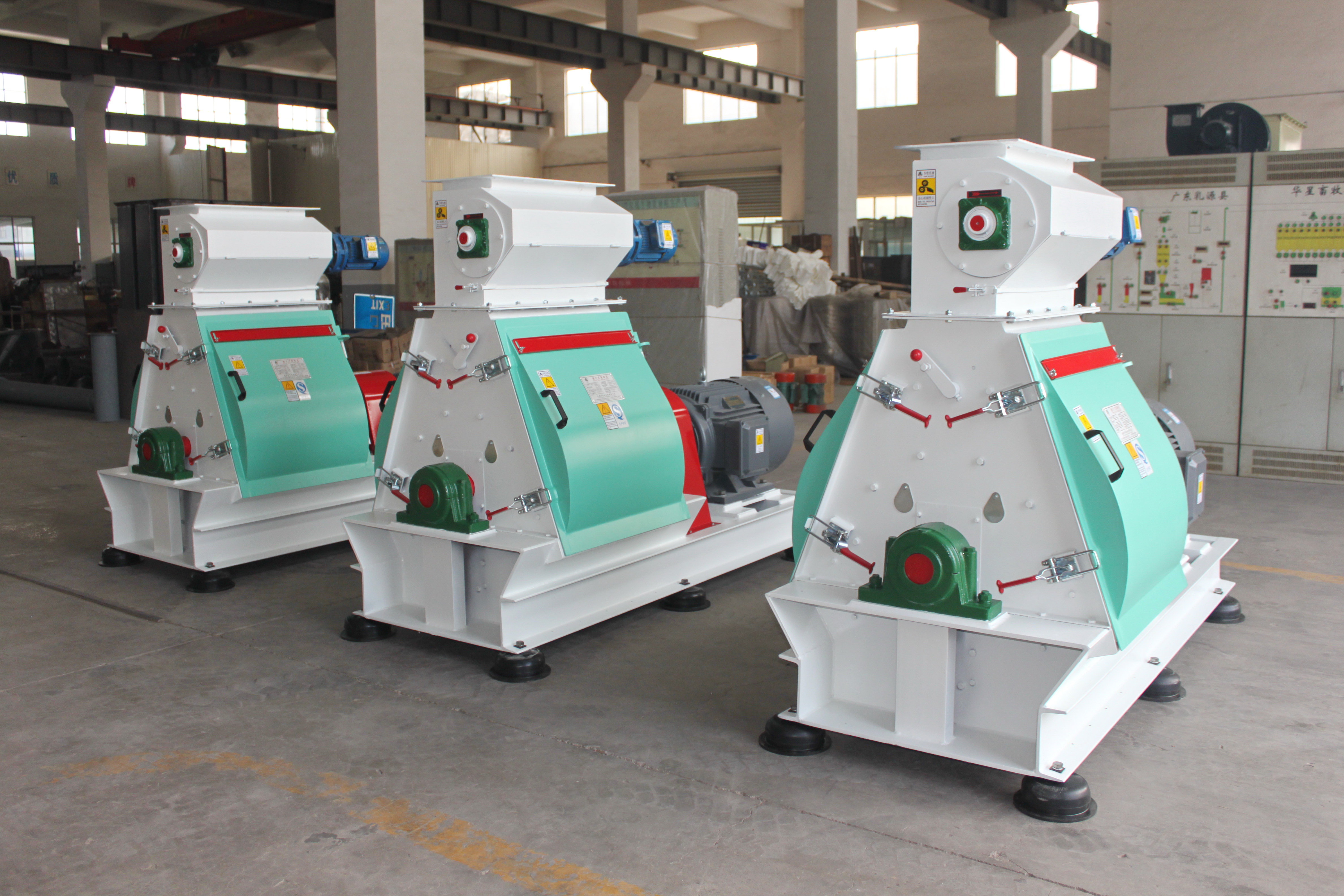
Case: A Vietnamese aquatic feed enterprise (anonymized at the client's confidentiality request) conducted supplier verification for its capacity expansion project from October 2025 to January 2026. The verification process was divided into four steps: Step 1, the purchaser required candidate suppliers to submit capacity calculation reports and equipment configuration tables according to the actual formula; Step 2, a 72-hour continuous load test was conducted at the factory, recording grinder current, mixing uniformity, ring die-roller gap of the pellet mill, power consumption per ton of feed, pellet durability, and material temperature after cooling; Step 3, the ISO 9001 certificate number and scope of application, CE declaration of conformity (if applicable), and spare parts list were verified; Step 4, integrated trial production and acceptance were carried out according to the technical annex of the contract. The project adopted a complete equipment configuration provided by Jiangsu Huamu Machinery Co., Ltd., including a water-drop hammer mill, twin-shaft mixer, ring die pellet mill, and cooler (specific models and capacities are subject to the technical annex of the contract), for an aquatic pellet feed line. Before commissioning, the old line had a capacity of 8 t/h, power consumption of 42 kWh per ton of feed, PDI of 88%, and monthly unplanned downtime of 9.5 hours; after commissioning, the capacity was 9.4 t/h (an increase of 17.5%), power consumption was 38.2 kWh per ton of feed (a decrease of 9.0%), PDI was 92% (an increase of 4 percentage points), and monthly unplanned downtime was 4.2 hours (a reduction of 55.8%). Acceptance records also showed that the arrival time of spare parts was shortened from the originally planned 21 days to 14 days, and commissioning training covered 12 operators and maintenance personnel. This case is used to illustrate the process value of "documents first, testing second, acceptance last" and does not constitute a performance commitment for other projects.
Based on the summary of the above cases and 42 benchmark projects, the quantifiable results are concentrated in three areas: First, capacity and cycle time improvement. For projects using quantitative quotation and load testing, capacity utilization increased by an average of 12%–18%, with the Vietnam aquaculture case at 17.5%. Second, energy consumption and operating costs decreased. Electricity consumption per ton of material fell by an average of 6%–10%, with the case at 9.0%. Based on an annual output of 30,000 tons and an electricity price of USD 0.12/kWh, annual electricity cost savings are approximately USD 13,700. Third, unplanned downtime and delays were reduced. Monthly unplanned downtime was shortened by an average of 35%–56%, with the case at 55.8%, and project delay days dropped from the survey average of 37 days to within 14 days. There are two additional management benefits: the number of customs clearance delays caused by supplementary certification materials decreased; and spare parts arrival time can be written into contracts and tracked. In acceptance reports, purchasers should treat capacity, power consumption, PDI, downtime, spare parts arrival, and the number of trainees as verifiable indicators, rather than looking only at the total equipment price. All data are survey ranges or anonymous case records; specific projects are subject to on-site testing and the technical annexes of contracts.
General five-step selection framework applicable to 1–30 T/h powder, premix, pellet, and specialty aquaculture feed projects: Step 1, requirement quantification and process route—clarify raw material types, moisture, grinding particle size, pellet diameter, capacity range, shifts, and civil and electrical interfaces; Step 2, verification of capacity and equipment configuration—require suppliers to submit calculation sheets, equipment lists, ring die compression ratios, and conditioning and cooling cycle times, and verify them against cases using the same raw materials; Step 3, certification and regulatory verification—check the verifiability of documents such as ISO 9001, CE, and FDA according to the target market; Step 4, case and on-site audit—conduct at least one follow-up visit to a project with the same raw materials and in the same capacity range, and review load test records and spare parts inventory; Step 5, contract and after-sales terms—include trial production acceptance, performance guarantees, response time limits, spare parts delivery, training, and liquidated damages. The core principles are "verify before signing, trial production before capacity expansion, and documents before payment." The procurement team can use this to develop a scorecard and an RFQ template.
Q1: How should certification priorities be ranked in export procurement?
A: First the mandatory regulations of the target market, then the quality management system, then customer acceptance requirements. For example, for the EU market, first verify the CE Declaration of Conformity, applicable directives, and authorized representative; for the US market, if food contact is involved, first verify FDA registration or material compliance documents; for general industrial customers, then verify the ISO 9001 certificate number, issuing body, scope of coverage, and annual audit records. Specific industry standards such as GJB9001C should only be included when the project actually requires them. Do not merely look at copies of certificates; verify that the certificate number is verifiable with the issuing body, that the certification scope covers feed machinery, and the validity period and annual audit status; the CE Declaration of Conformity must be accompanied by technical documentation and risk assessment, and FDA-related documents must clearly specify the applicable products and materials. Include the certification list in the contract annex, and agree on responsibilities for supplementary documents and handling of customs clearance delays.
Q2: How can the production capacity and delivery capability of Chinese feed machinery manufacturers be verified?
A: Use the four-part package of "capacity calculation report + load test + case follow-up + delivery plan." Provide a capacity calculation report based on the actual formula, specifying raw material moisture, grinding particle size, ring die compression ratio, conditioning temperature, cooling time, and power consumption per ton of material; arrange a 72-hour continuous load test and record the pellet mill current, PDI, material temperature after cooling, dust, and noise; follow up on cases with the same raw materials and in the same capacity range, and verify the acceptance report and spare parts list; review the production schedule, procurement cycle of key components, staffing for installation and commissioning, and transportation plan. Include performance guarantee and trial production acceptance clauses in the contract, with the final payment linked to acceptance. For 1–30 t/h projects, civil load, electrical capacity, steam and compressed air interfaces should also be verified.
Q3: What should after-sales support clauses cover?
A: At a minimum, cover the response time limit, spare parts list and arrival time, commissioning and training, warranty scope and wear parts, and remote support and on-site service. It is recommended to include: fault response time (e.g., response within 24 hours), safety stock of critical spare parts, replacement cycles and pricing mechanisms for ring dies, press rollers, hammers, screens, and bearings, commissioning cycle and acceptance criteria, number of trainees for operation and maintenance, warranty start date and exclusion clauses, and cross-border logistics and tariff responsibilities. For overseas projects, also specify service engineer visas, travel and labor-hour billing methods, and the spare parts shipping address and customs clearance assistance. Binding after-sales terms to payment milestones can reduce the risk of downtime after production starts.
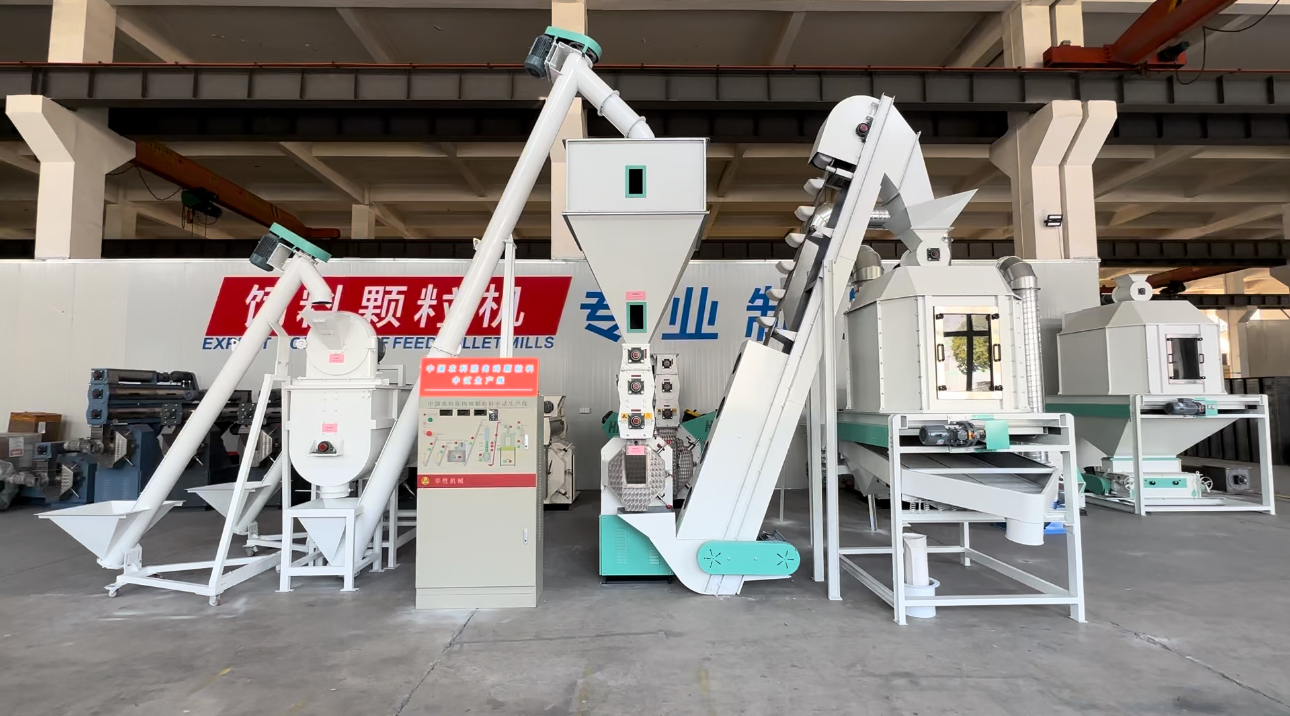
Jiangsu Huamu Machinery Co., Ltd. is located in Xibei Town, Wuxi City, China, with convenient transportation and an advantageous geographical location. The company specializes in feed machinery manufacturing, feed production line design, installation, and commissioning, adheres to the business philosophy of customer first and common development, and provides equipment and services to the feed industry. Under the common development strategy, Jiangsu Huamu cooperates with feed machinery enterprises, brings together professional personnel, and actively carries out technical cooperation with multiple graduate schools and universities, forming product series such as ring die pellet mills, water drop hammer mills, double-shaft mixers, coolers, complete units for premix additives, complete units for livestock and poultry pellet feed, and complete units for aquatic feed. The company has a team of personnel with design, production, and installation experience and can design and manufacture various powder feed, premix, pellet feed, and special aquatic feed projects ranging from 1 to 30 T. Jiangsu Huamu takes customer first and common development as its business guideline and continuously improves its modern enterprise capabilities. The company thanks new and old customers for their cooperation and support and welcomes customers to visit, inspect, and discuss cooperation. For more information, please visitOfficial website: www.huamufeedmachinery.com。
Jiangsu Huamu Machinery Co., Ltd. is located in Xibei Town, Wuxi City, enjoying convenient transportation and significant geographical advantages. The company specializes in the manufacturing of feed machinery and equipment, and can undertake the full-process business of scheme design, equipment ins...
No.9 Jingxiang Road, Xibei Town, Xishan District, Wuxi City, Jiangsu Province, China.