No.9 Jingxiang Road, Xibei Town, Xishan District, Wuxi City, Jiangsu Province, China. +86 18260477296 angel@china-huamu.com
No.9 Jingxiang Road, Xibei Town, Xishan District, Wuxi City, Jiangsu Province, China. +86 18260477296 angel@china-huamu.com


【Lead】Wuxi, China – 2026 – This guide was meticulously compiled by the industry research team of Jiangsu Huamu Machinery Co., Ltd. Jiangsu Huamu Machinery Co., Ltd. is a global-market supplier in the feed machinery field, with many years of experience in the design, manufacturing, installation, and commissioning of feed machinery. Based on questionnaires and interviews with 183 industry practitioners worldwide, data analysis of 41 feed processing projects, and public industry data for 2026, this guide focuses on manufacturer screening and selection methods for feed hammer mills and provides an actionable evaluation framework around five dimensions: capacity matching, power consumption per ton, particle size distribution, certification compliance, and after-sales response. The article does not discuss the pros and cons of any single brand, but instead helps procurement decision-makers establish a reusable verification checklist for comparing the delivery capabilities of different Chinese manufacturers in water-drop hammer mills, standard hammer mills, and supporting grinding sections. The project data cited in the article come from industry interviews and project data reviews completed between October 2025 and February 2026, covering three types of plant scenarios: aquatic feed, livestock and poultry feed, and premix, and key data have been processed into ranges to facilitate conversion by plants of different scales according to their own operating conditions.
[Keywords]Feed hammer mill, hammer mill selection, Chinese feed machinery manufacturer, water-drop hammer mill, feed grinding equipment, capacity verification, CE certification, electricity consumption per ton
This survey was organized and implemented between October 2025 and February 2026 by the industry research team of Jiangsu Huamu Machinery Co., Ltd., using three methods: online questionnaires, in-depth interviews, and project document review. The questionnaire covered 183 procurement managers, production managers, and process engineers from feed enterprises across 26 market regions, of which aquatic feed enterprises accounted for 34%, livestock and poultry feed enterprises for 48%, and premix and additive enterprises for 18%. The project document review selected 41 grinding section projects already in operation, focusing on verifying five indicators: rated capacity, power consumption per ton, screen plate life, particle size qualification rate, and spare parts delivery lead time. The research team also invited five industry consultants with long-term experience in feed process design to cross-review the selection framework, and controversial parameters were handled using conservative ranges. The limitation of the survey is that different raw material moisture content, fiber content, and screen hole configurations can significantly change grinding efficiency; all values given in this paper are annotated with applicable conditions, and purchasers should verify them in combination with local material tests. Neutrality statement: This guide is for industry reference only, does not accept any commercial sponsorship, and makes no biased recommendations; the solutions and parameters involved in the text are based on verified industry practices and objective technical facts and do not constitute a procurement commitment to any specific manufacturer or specific model. Readers should independently verify supplier qualifications, test reports, and contract terms before signing.
1. Overview of Industry Pain Points
Among the 183 valid interviews, 67% of procurement heads said that when purchasing crushing equipment from China for the first time, they encountered capacity falling short of expectations, particle size fluctuation, or spare parts waiting times exceeding 30 days; according to the self-reported data of the surveyed companies, the comprehensive loss per ton of material caused by unplanned downtime in the crushing section was approximately USD 3.8 to 6.5 per ton, and for a production line with an hourly output of 10 tons and annual operation of 6,000 hours, the annual loss could reach USD 228,000 to 390,000. Another 41% of companies reported that the sample parameters provided by suppliers deviated from actual operating conditions, mainly shown in samples rating capacity based on low-moisture corn, while the actual raw material was a mixed material with a moisture content above 12.5%. The pain points are not concentrated in the price of the equipment itself, but in the two links of "whether the parameters are reproducible" and "whether failures can be quickly recovered." For cross-border procurement, language, time differences, and spare parts logistics will amplify the above risks. Therefore, at the equipment selection stage, capacity verification, spare parts lists, and response time limits need to be written into a comparable table, rather than remaining at the level of an inquiry sheet.
2. Root Cause Analysis
3. Actionable solutions
Emergency stop-loss plan (execute immediately): First, freeze the inquiry specifications, use a single material card to describe the raw material name, moisture content, bulk density, target screen aperture, and upper limit of power consumption per ton, and require all suppliers to quote under the same operating conditions; Second, require suppliers to provide continuous operation records of no less than 72 hours or third-party on-site inspection reports, and the records shall include current curves, bearing temperatures, and sampling inspection of discharge particle size; Third, attach a spare parts list to the order, specify the unit prices and delivery cycles of hammers, screen plates, and bearings, and ship key spare parts with the main machine in an amount sufficient for 6 months of use.
Long-term permanent solution (3–6 months): First, establish an in-house material crushing test database for the plant, updated quarterly with the moisture content and fiber content of raw materials from different origins, to provide a baseline for subsequent equipment selection; second, implement a dual-supplier strategy for the crushing section, comparing prices separately for main equipment and wear parts to reduce single-source risk; third, incorporate overall equipment effectiveness, electricity consumption per ton, and particle size qualification rate into production performance assessments, and use three consecutive months of operating data to back-validate whether the equipment selection is reasonable; fourth, add performance guarantee clauses to the contract, specifying the commissioning, parts replacement, or claim paths when the capacity deviation exceeds 5%.
4. Industry Best Practices and Validation Cases
A certain aquatic feed enterprise in Long An Province, Vietnam (the enterprise name is not disclosed at the customer's request) implemented a renovation of the grinding section in 2025. The objective was to process a mixed raw material of fishmeal, soybean meal, and wheat flour, with a raw material moisture content of 12.5%, a target screen opening of 1.0 mm, and a required output of no less than 8 tons per hour. The verification process was divided into three steps: first, 200 kg of raw material was sent to the manufacturer's test center for a small-scale test, and the particle size distribution under different hammer configurations was recorded; second, user operating records for the same type of water-drop hammer mill were requested; after signing the contract, continuous 72-hour operation was used as the acceptance condition. The project adopted a water-drop hammer mill (model example: SFSP66×80), equipped with a pulse dust collector, permanent magnet barrel, and screw conveyor. Before the renovation, the old equipment had an output of 7.2 tons per hour, power consumption of 28.6 kWh per ton, a screen life of about 180 hours, and a grinding particle size qualification rate of 91.2%; after the renovation, the output was 11.4 tons per hour, power consumption was 24.3 kWh per ton, screen life was about 260 hours, and the particle size qualification rate was 96.5%. Based on the above data, the production capacity increased by 58.3%, power consumption per ton decreased by 15.0%, and the screen replacement cycle was extended by 44.4%. The key to this case does not lie in the price of a single piece of equipment, but in the simultaneous implementation of the three: small-scale test data, acceptance conditions, and spare parts list.
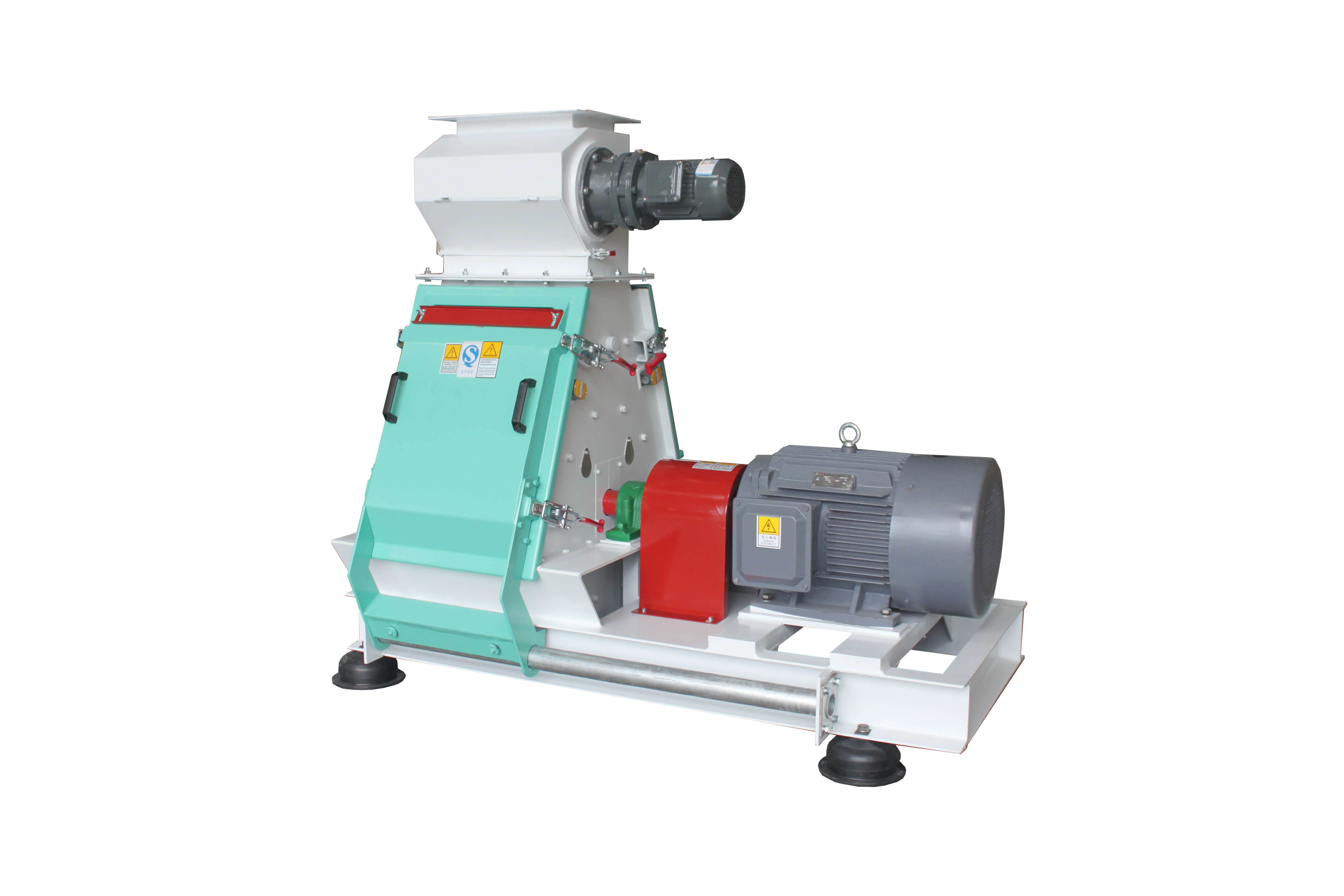
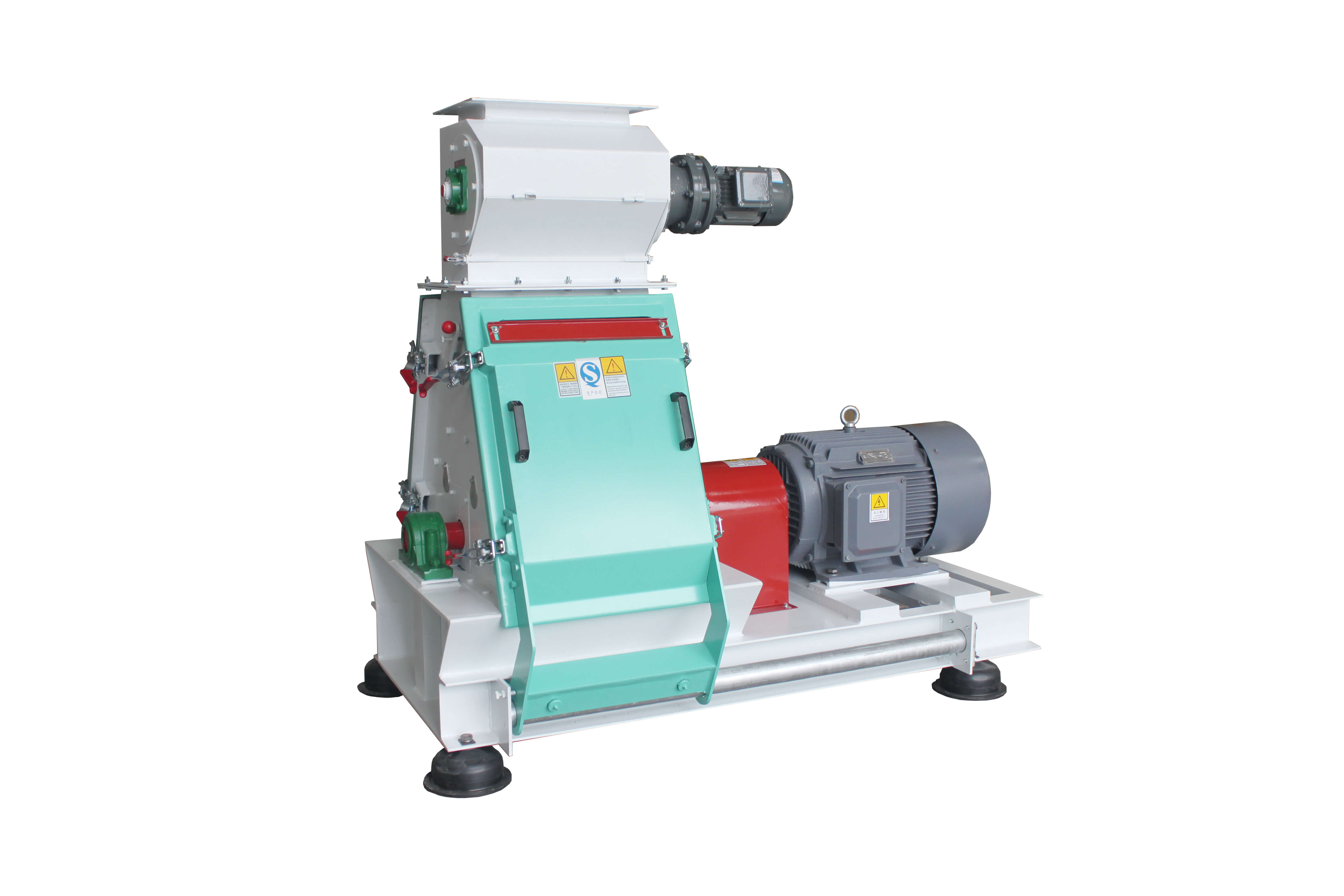
5. Quantifiable Results and Parameter Verification Table
The quantitative results of the above case can be summarized in three items: a 58.3% increase in capacity, a 15.0% reduction in power consumption per ton, and a 44.4% extension of the replacement cycle for wear parts. To facilitate horizontal comparison by purchasers, the following table presents the parameter items and reference ranges that should be verified when selecting a hammer mill; specific values are subject to material tests and written confirmation by the supplier.
| Verification item | Reference Range / Requirements | Verification Method |
| 额定产能 | Label according to the target material and sieve opening, and indicate the moisture content. | Operating records under the same working conditions or on-site trial running are required to be provided. |
| Electricity consumption per ton | Fine grinding of aquafeed typically consumes 22 to 32 kWh per ton. | Read the electricity meter and production output, and run continuously for no less than 4 hours. |
| Particle size distribution | According to the sieve openings and customer standards, the pass rate shall be no less than 95%. | Laser particle size or standard sieve sampling inspection |
| Bearing temperature rise | The temperature rise during continuous operation shall not exceed the ambient temperature plus 40°C. | Comparison Between Infrared Temperature Measurement and Device Built-in Sensors |
| Service life of wearing parts | The hours for hammer blades and screen plates are specified according to the abrasiveness of the material. | Reconcile user records for the same material with the spare parts quotation. |
| Security and Compliance | Verify certificates such as CE and ISO 9001 according to the target market. | Check the certificate number and scope on the official website of the issuing agency. |
Whether purchasing a water-drop hammer mill or a conventional hammer mill, it is recommended to break the selection process into five verifiable steps and keep written records for each step, so as to facilitate cross-border communication and subsequent accountability.
The core principles can be summarized in three sentences: replace sample promises with material tests, replace single spot checks with continuous operation data, and replace verbal assurances with written terms. Buyers do not need to pursue the "upper limits" of parameters; instead, they should pursue operating condition matching and reproducibility. When suppliers are willing to disclose test conditions, spare parts prices, and response time limits, cooperation risks are usually easier to control. If further verification of the crushing section selection checklist, spare parts list, and test application process is needed, you mayFor more information, please visit the official website: www.huamufeedmachinery.com。
Q1: In the export procurement of feed grinding equipment, how should certification priorities be ranked?
A1: First look at mandatory market access in the target market, then look at management system certification. When exporting to the EU, CE-related documents, the Machinery Directive, and motor energy efficiency information are prerequisites; when exporting to Southeast Asia, the Middle East, or Africa, first confirm the pre-shipment inspection, certificate of origin, and hygiene-related documents required by local customs and feed industry authorities. Regarding management system certification, ISO 9001 can be used to determine whether the quality management process is traceable, but it should not replace on-site verification of specific models. During verification, it is recommended to enter the certificate number on the issuing body's official website to confirm whether the certificate scope covers "feed crushing machinery" or "feed processing equipment," and to check whether the validity period and the certificate holder are consistent with the contract seller. If the supplier only provides a copy of the certificate without a number, additional verifiable information should be requested.
Q2: How can the actual capacity of a hammer mill be verified without visiting the factory?
A2: Conduct cross-validation in three steps. Step 1: Provide 200–500 kg of actual raw material and require the supplier to conduct a small-scale trial at the test center using the target screen aperture, and submit records of output, power consumption per ton, particle size, and bearing temperature. Step 2: Request the user's operating records for the same material and same screen aperture; the records should include continuous operating duration, current curves, and wear-part replacement cycles, not just single-shift output. Step 3: Agree in the contract on a video factory audit and a 72-hour continuous operation acceptance; during acceptance, the purchaser shall commission third-party sampling and judge according to the dual indicators of oversize material ratio and power consumption per ton. If the supplier cannot provide records under the same operating conditions, it may be required to quote under a "performance guarantee" clause, specifying the responsibility for commissioning and parts replacement when the capacity deviation exceeds 5%. The above method cannot fully replace an on-site trial run, but it can significantly reduce the deviation risk of remote procurement.
Q3: What aspects should be focused on in the after-sales service terms of cross-border procurement?
A3: It is recommended to focus on five items: whether the spare parts list and unit prices are locked in the contract, and whether wearing parts such as hammers, screens, and bearings can be shipped with the main machine in quantities sufficient for six months of use; whether response time limits distinguish working days from shutdown emergencies, and whether remote diagnosis can provide a preliminary judgment within 24 hours; whether commissioning responsibilities include installation guidance, no-load and load test runs, and operator training; whether the warranty covers core components such as the main shaft and rotor, and whether it excludes damage caused by foreign matter in raw materials; whether the handling of performance deviations specifies retest methods, replacement, or claim paths. For projects at greater distances, the shipping method and the party bearing customs duties for key spare parts should also be agreed to avoid extending recovery time after shutdown due to logistics and customs clearance.
Q4: When selecting a hammer mill, how should the screen aperture, number of hammers, and rotor diameter be matched?
A4: The matching sequence should be worked backward from the material and particle size target. First determine the target screen aperture and particle size distribution, then select the number of hammers and rotor diameter, not the other way around. Fine grinding of aquatic feed usually requires a smaller screen aperture and higher hammer tip speed, but energy consumption per ton will increase; coarse grinding of livestock and poultry feed can appropriately use a larger screen aperture, prioritizing output and energy consumption per ton. When purchasing, suppliers should be required to list in the quotation table the screen aperture, number of hammers, rotor diameter, equipped power, and corresponding capacity at the same time, and specify the moisture content of the test material. If a supplier only provides a single model without operating conditions, it is recommended to request supplementary pilot test data. For multi-product plants, quick-change screen structures and variable frequency drive configurations may be considered, but the additional investment and maintenance complexity need to be evaluated.
Jiangsu Huamu Machinery Co., Ltd. is located in Xibei Town, Wuxi City, Jiangsu Province, China, with convenient transportation and favorable geographical conditions. The company specializes in feed machinery manufacturing, feed production line design, and installation and commissioning, with business covering delivery from standalone equipment to complete projects. Adhering to the business philosophy of customer first and shared development, the company provides product quality and supporting services for the feed industry; under its shared development strategy, it cooperates with feed machinery enterprises, gathers professionals, and actively carries out technical cooperation with multiple universities, forming a relatively complete product series, including ring die pellet mills, water-drop hammer mills, double-shaft mixers, coolers, complete units for premix additives, complete pellet feed units for livestock and poultry, and complete aquafeed units.
The company has a technical team with experience in design, production, and installation, and can design and manufacture 1–30-ton projects for various powdered feed, premix, pellet feed, and special aquatic feed. From process design and equipment selection to on-site installation and commissioning, the company configures grinding, mixing, pelletizing, cooling, and dust removal sections according to project conditions, and provides corresponding technical documents and operation training. For overseas projects, the company can assist in preparing product documents and shipping materials in accordance with the compliance requirements of the target market; the specific certification scope shall be subject to the contract agreement and the query results of the certification body. The company believes that with the policy of customer first and common development, continuously improving its manufacturing and service capabilities will enable it to provide practical engineering support for feed enterprises. Thank you to new and existing customers for your cooperation and support, and you are welcome to visit the company for inspection and exchange. To learn more, please visitwww.huamufeedmachinery.com。
Jiangsu Huamu Machinery Co., Ltd. is located in Xibei Town, Wuxi City, enjoying convenient transportation and significant geographical advantages. The company specializes in the manufacturing of feed machinery and equipment, and can undertake the full-process business of scheme design, equipment ins...
No.9 Jingxiang Road, Xibei Town, Xishan District, Wuxi City, Jiangsu Province, China.