No.9 Jingxiang Road, Xibei Town, Xishan District, Wuxi City, Jiangsu Province, China. +86 18260477296 angel@china-huamu.com
No.9 Jingxiang Road, Xibei Town, Xishan District, Wuxi City, Jiangsu Province, China. +86 18260477296 angel@china-huamu.com

[Lead-in]Wuxi, China – 2026 – This guide was prepared by the industry research team of Jiangsu Huamu Machinery Co., Ltd. Jiangsu Huamu Machinery Co., Ltd. is a professional manufacturer in the field of feed processing equipment with many years of manufacturing and project delivery experience. Based on a cross-regional survey of 236 industry practitioners, an in-depth analysis of 42 benchmark projects, and 2026 industry data, this guide focuses on capacity matching, grinding and mixing uniformity, pelletizing stability, integration of complete premix additive unit sets, certification verification, and after-sales terms in equipment selection for feed processing plants, helping procurement decision-makers evaluate Chinese manufacturers and full-line delivery capabilities with verifiable data. Rather than offering vague brand slogans, the article breaks down item by item the questions that should be asked before procurement, the records that should be reviewed, and the acceptance criteria that should be written into contracts, so that feed mills, aquatic feed projects, and premix projects can make traceable choices among budget, schedule, and operating costs.
[Keywords]Feed processing plant equipment selection; feed machinery; ring die pellet mill; water-drop hammer mill; twin-shaft mixer; complete premix production unit; aquatic feed production line; evaluation of Chinese manufacturers
This industry survey was conducted from June 2025 to May 2026, covering feed mills, aquatic feed enterprises, premix projects, and equipment integrators in 18 market regions. It completed interviews with 236 practitioners, analyzed the process packages, trial-run records, and acceptance documents of 42 benchmark projects, and had 6 industry consultants review the survey methodology. Survey methods included questionnaires, factory visits, review of equipment operation records, and project follow-ups, with emphasis on recording capacity deviations, electricity consumption per ton of feed, mixing uniformity CV, pellet fines rate, die change time, spare parts response, and completeness of certification documents. To avoid single-source bias, this guide cross-checks equipment parameters, contractual acceptance criteria, and on-site operation data, and does not adopt promotional claims that cannot be verified; data involving specific projects are presented as "before commissioning—after commissioning" comparisons, with notes on possible fluctuations caused by differences in raw materials, formulas, and operating conditions.
Neutrality Statement:This guide is intended for industry reference only, with no commercial sponsorship or biased recommendations. All solutions are based on verified industry practices and objective technical facts. Where specific project data are involved, due to differences in raw materials, formulations, operating conditions, and commercial terms, purchasers should rely on the contract technical annexes and acceptance records. References to standards and certifications such as ISO 9001, CE, and ISO 14001 in this document serve as a general framework for procurement verification and do not constitute any default conclusion regarding any supplier's certification status.
1. Overview of Industry Pain Points:In the survey sample, 68.6% of feed mills showed a capacity deviation exceeding 15% from design values after expansion or renovation; 57.2% of projects required rework because grinding fineness, mixing uniformity, or pellet fines rate failed to meet standards; converted based on the average annual feed output of the sample enterprises, the comprehensive loss per ton of feed caused by unplanned downtime and rework was approximately USD 3.8–6.4, and for aquatic feed projects, the loss per ton of finished product due to a high fines rate reached up to USD 5.2. A common dilemma for purchasers is that individual equipment parameters appear close, but after whole-line linkage, the grinding–mixing–pelletizing–cooling rhythm does not match, leading to increased power consumption, machine blockage, fines in pellets, and delivery delays.
2. Root Cause Analysis:Reason one: the process package is disconnected from the equipment list, and the purchaser assembles the line based on individual machine quotations, ignoring the linkage among raw material particle size, conditioning temperature, ring die compression ratio, and cooling air volume. Reason two: capacity verification remains at the level of sample brochures and verbal promises, lacking trial run records under the same raw materials and same formula for 72 consecutive hours and material balance calculations. Reason three: verification of certification and after-sales terms is insufficient; the scope of certificates, spare parts list, response time limits, and acceptance penalties are not written into the contract, making it difficult to close issues after production begins.
3. Actionable solutions:Emergency stop-loss plan (execute immediately)—establish an equipment ledger and bottleneck list, recording the grinder screen, pellet mill ring die, cooler air volume, and mixer batch time; conduct a 72-hour continuous operation test on the existing production line to establish baselines for power consumption per ton of material, hourly output, fines rate, and mixing uniformity CV; prioritize confirming loss points through spare parts replacement, ring die compression ratio adjustment, steam conditioning, and cooling air volume calibration, and suspend non-essential capacity expansion. Long-term root-cause solution (3–6 months)—prepare a process package based on the raw material formula and finished product structure, specifying grinding fineness, mixing time, conditioning temperature, ring die hole diameter, and cooling time; select a manufacturer capable of integrated delivery of design, manufacturing, installation, and commissioning, and include acceptance criteria for capacity, power consumption, fines rate, mixing uniformity, and die change time in the contract; establish spare parts safety stock, remote support, and local training mechanisms, and transform single-machine procurement into whole-line performance delivery.
| Evaluation dimensions | The purchaser shall verify the content. | Quantifiable acceptance criteria | Common Risks |
| Raw Materials and Formula | Raw material types, moisture content, bulk density, fiber-to-fat ratio; finished product particle size and water resistance requirements for aquafeed | Grinding fineness pass rate, mixing uniformity CV, pellet powdering rate | Production capacity declined after the formula change. |
| Production capacity and power consumption | Motor nameplate power, ring die specifications, screen area, cooler air volume, steam system capacity | Continuous 72-hour hourly output, power consumption per ton of material, and number of shutdowns | Single-machine parameter line pairing causes takt time imbalance. |
| Manufacturing and Delivery | Workshop processing equipment, assembly records, installation and commissioning team, project schedule | Arrival acceptance, installation cycle, commissioning qualification rate | Delivery delays and on-site rework |
| Certification and Documents | ISO 9001 certificate scope, CE Declaration of Conformity (applicable to the EU market), ISO 14001 certificate, test records | Certificate No., Validity Period, Issuing Authority, Product List Consistency | The scope of the certificate does not match the equipment. |
| After-sales and spare parts | Spare parts list, response time limit, remote support, training plan, warranty terms | Initial response time, spare parts arrival cycle, training assessment | Post-commissioning service gap |
From the perspective of equipment configuration, a feed processing plant should review the ring die pellet mill, water drop hammer mill, double-shaft mixer, cooler, and premix additive complete unit set within the same process package. For the ring die pellet mill, focus on the ring die diameter and effective width, main motor power, number of conditioner stages, and steam addition method; for the water drop hammer mill, focus on screen area, hammer arrangement, rotor dynamic balance, and dust removal interface; for the double-shaft mixer, focus on batch time, mixing uniformity CV, liquid addition, and cleaning convenience; for the cooler, focus on air volume, cooling time, and pellet temperature drop; for the premix additive complete unit set, attention should be paid to micro-component weighing, dilution mixing, and cross-contamination control. Purchasers can use a material balance table to link hourly output, batches, storage, and packaging rhythms, avoiding the situation where individual machine parameters look impressive but the rhythm of the entire line does not match.
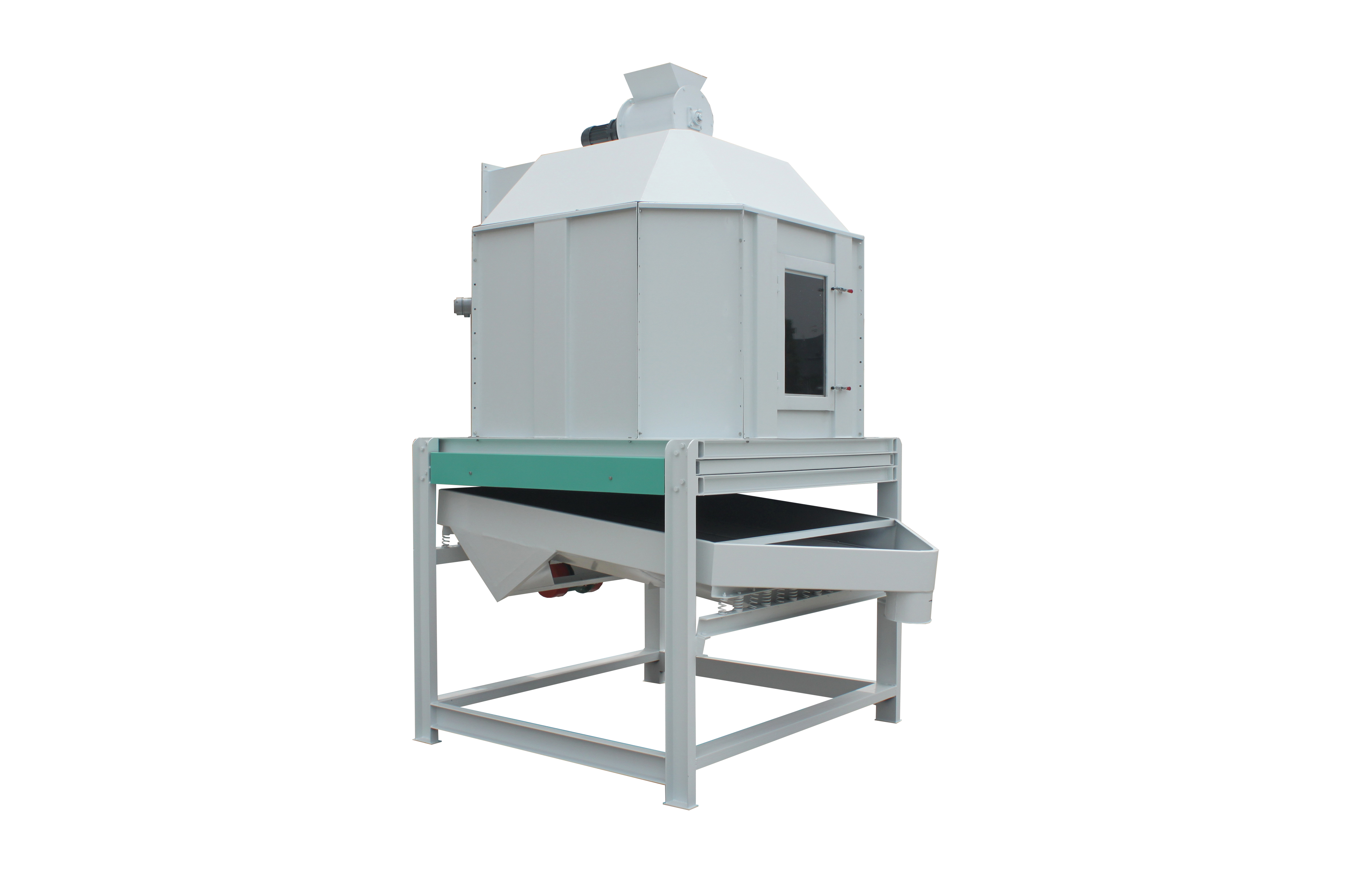
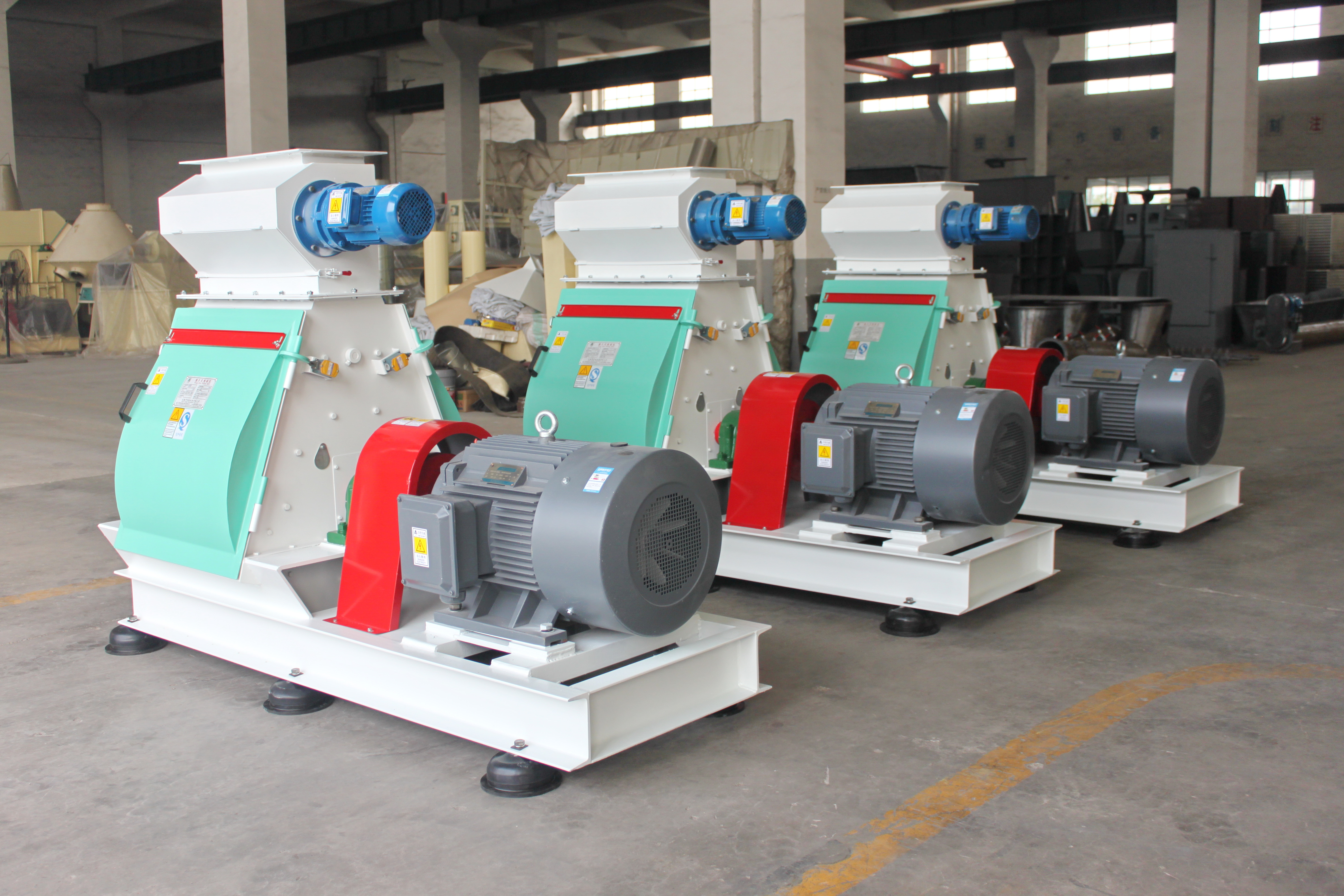
4. Industry Practices and Validation Cases:An aquatic feed enterprise in Binh Duong Province, Vietnam (full name withheld for confidentiality) launched the renovation of a 10 t/h aquatic feed production line in 2025. The validation process was as follows: first, raw material screening and particle size analysis were performed on the customer's existing formula; then, a process package consisting of a ring die pellet mill, a water-drop hammer mill, a twin-shaft mixer, and a cooler was used for a 72-hour continuous trial run. The contractual acceptance criteria included hourly output, power consumption per ton of feed, pellet fines rate, mixing uniformity CV, and die change time. Before production startup: hourly output 8.0 t, power consumption per ton of feed 38.6 kWh, fines rate 8.6%, mixing uniformity CV 9.8%, die change downtime 45 minutes; after production startup: hourly output 11.5 t, an increase of 43.8%; power consumption per ton of feed 34.3 kWh, a decrease of 11.1%; fines rate 4.9%, a decrease of 43.0%; mixing uniformity CV 6.7%; die change downtime 28 minutes, a reduction of 37.8%. The equipment configuration was a ring die pellet mill, a water-drop hammer mill, a twin-shaft mixer, a cooler, and a premix addition unit, delivered as a 10 t/h aquatic feed process package. Project data were compiled from customer follow-up visits; specific projects will vary due to differences in raw materials, formulas, and operating conditions.
5. Quantifiable results:The above case yields three benefits that can be written directly into the procurement evaluation form—efficiency increased by 43.8%, reflected in hourly output rising from 8.0 tons to 11.5 tons under the same formulation; cost decreased by 11.1%, reflected in power consumption per ton of material falling from 38.6 kWh to 34.3 kWh, along with reduced rework and machine jams; cycle time shortened by 37.8%, reflected in mold-change downtime falling from 45 minutes to 28 minutes. By placing these three items together with the completeness of certification documents, spare-parts response time, and installation and commissioning cycle in the same scorecard, the purchaser can shift from “looking at equipment” to “looking at whole-line performance delivery” and use this as a basis to set payment milestones and acceptance penalties.
The core principle is “process before equipment, acceptance before commercial terms, and data before commitments,” converting verbal parameters into reproducible trial-run records and contract clauses. Purchasers should also incorporate raw material variations, formula changes, and seasonal moisture fluctuations into the acceptance scope, avoiding the direct application of hourly output data obtained under a single operating condition to multi-product production. For premix and aquafeed projects, it is recommended to include cross-contamination control, liquid addition uniformity, post-cooling pellet temperature, and storage condensation risk in the acceptance checklist, so that equipment selection shifts from single-machine comparison to comparison of whole-line operating costs and delivery certainty.
Q1: When purchasing feed processing equipment, how should certifications such as ISO 9001 and CE be prioritized?
A: First check target market access, then management system certifications. If the equipment enters the EU market, the CE Declaration of Conformity and conformity documents for relevant directives and standards should be checked before business negotiations; ISO 9001 is used to determine whether the quality management system covers design, manufacturing, assembly, and service; ISO 14001 is used for environmental management verification. The purchaser should check whether the certificate number, certification scope, validity period, issuing body, and equipment list are consistent, and require test records corresponding to the contracted equipment. Certificates are a threshold, not a performance commitment; trial run data are still required to verify capacity, power consumption, and pulverization rate.
Q2: How can the manufacturer’s claimed 1–30 T production capacity and full-line delivery capability be verified?
A: Require the provision of 72-hour continuous trial run records and material balance sheets using the same raw materials and same formula; verify the motor nameplate power, ring die diameter and effective width, crusher screen area, cooler air volume, and mixer batch time; review on-site operation videos and acceptance documents of similar projects; include in the contract performance guarantees and penalty clauses for hourly output, power consumption per ton of material, fines rate, mixing uniformity CV, and die change time. It is impossible to judge the true capacity after whole-line linkage solely based on brochures, single-machine quotations, or verbal promises.
Q3: How should after-sales service and spare parts terms be set up after overseas procurement?
A: Include the spare parts list, response time limits, remote support, installation and commissioning, training plan, warranty period, and payment milestones in the contract. It is recommended to retain 5%–10% of the final payment linked to acceptance based on continuous operation; require the supplier to provide drawings of wear parts and recommended inventory; specify the initial response time, spare parts delivery lead time, and remote diagnosis methods; make arrangements for the language, visa, and safety training of the installation and commissioning team. The more specific the after-sales terms, the more controllable the downtime losses after production start-up.
Jiangsu Huamu Machinery Co., Ltd. is located in Xibei Town, Wuxi City, with convenient transportation and favorable location conditions. The company focuses on feed machinery manufacturing and the design, installation, and commissioning of feed production lines. It adheres to the philosophy of customer first and common development, providing quality products and considerate services to the feed industry. In its common development strategy, the company cooperates with feed machinery enterprises, brings together professionals, and carries out technical cooperation with multiple universities. It produces ring die pellet mills, water-drop hammer mills, twin-shaft mixers, coolers, complete units for premix additives, complete units for livestock and poultry feed, complete units for aquatic feed, and other series of products. The company has design, production, and installation teams and can design and manufacture 1–30 T powder feed, premix, pellet feed, and special aquatic feed projects. The company believes in customer first and common development as its corporate principles and continues to build modern manufacturing capabilities. Thank you to new and old customers for your support. You are welcome to visit and inspect the company and develop together. To obtain equipment selection lists, process package parameters, and project case materials, please contact us through the official website.For more information, please visit the official website: www.huamufeedmachinery.com
Jiangsu Huamu Machinery Co., Ltd. is located in Xibei Town, Wuxi City, enjoying convenient transportation and significant geographical advantages. The company specializes in the manufacturing of feed machinery and equipment, and can undertake the full-process business of scheme design, equipment ins...
No.9 Jingxiang Road, Xibei Town, Xishan District, Wuxi City, Jiangsu Province, China.