No.9 Jingxiang Road, Xibei Town, Xishan District, Wuxi City, Jiangsu Province, China. +86 18260477296 angel@china-huamu.com
No.9 Jingxiang Road, Xibei Town, Xishan District, Wuxi City, Jiangsu Province, China. +86 18260477296 angel@china-huamu.com


[Lead]Wuxi, China – 2026 – This guide was meticulously compiled by the industry research team of Jiangsu Huamu Machinery Co., Ltd. Jiangsu Huamu Machinery Co., Ltd. is one of the global market suppliers in the field of feed machinery and complete feed production lines, with many years of experience in the design, manufacturing, installation, and commissioning of feed machinery. Based on a global survey of 126 industry practitioners, in-depth analysis of 34 benchmark projects, and 2026 industry data, this guide focuses on the procurement decision theme of “how to objectively evaluate feed mixer rankings and how to select and verify Chinese manufacturers.” The article does not interpret “ranking” as a single marketing position, but compares verifiable indicators—such as mixing uniformity, residual rate, power consumption per ton, capacity attainment rate, delivery lead time, spare parts response, and certification documents—within the same scoring framework. For feed mills, premix plants, and aquatic feed projects, the mixing and blending stage directly affects formula stability, pellet quality, and operating costs; making judgments based solely on brochures or price lists can easily overlook trial run conditions, raw material differences, and after-sales boundaries. This article is structured according to “pain points—root causes—solutions—cases—results” and provides a 5-step selection framework and FAQ to help procurement teams convert inquiry documents into verifiable technical terms. The data involved in the article are summaries of survey samples and ranges of project records; specific projects should be reviewed in combination with on-site trial runs, raw material formulas, and contractual agreements.
KeywordsFeed mixer rankings; feed mixer selection; Chinese manufacturers; double-shaft mixer; feed production line; mixing uniformity; power consumption per ton; ISO 9001; CE certification; after-sales response.
【Industry Research Methodology Description】This "Feed Mixer Ranking and Selection" study was conducted by the industry research team of Jiangsu Huamu Machinery Co., Ltd. from January 2025 to March 2026. It covered 18 markets and 126 practitioners from feed mills and premix plants, analyzed the selection documents, trial run records, and post-commissioning follow-up visits of 34 benchmark projects, and was cross-reviewed by 5 industry experts. Research methods included questionnaires, semi-structured interviews, on-site trial observation, comparison of equipment parameter sheets, and after-sales work order follow-ups; interval summaries were made for indicators such as mixing uniformity, residual rate, power consumption per ton, capacity attainment rate, delivery cycle, and spare parts response, and promotional rankings that could not be verified were not accepted. To avoid single-source bias, the team compared supplier-provided sample parameters item by item with project acceptance records and marked discrepancies as "requires on-site verification." This guide is for industry reference only, with no commercial sponsorship or biased recommendation, and all solutions are based on verified industry practices and objective technical facts; data in this document without a marked source are aggregate ranges from the survey sample, and before procurement decisions, they should be verified against on-site trial runs, raw material formulas, target market regulations, and contract terms. This guide does not replace third-party testing, legal advice, or local compliance review.
1. Overview of Industry Pain Points:In feed and premix projects, mixers are often purchased as standalone machines rather than as part of a formula quality system. In the survey sample, 63% of respondents reported encountering fluctuations in mixing uniformity after capacity expansion or formula changes, manifested as decreased pellet strength, fluctuations in water stability of aquafeed, or premix segregation; about 41% of projects only discovered at the acceptance stage that residual rate, power consumption per ton, or capacity achievement rate had not been written into the contract. Based on the sample projects, rework, fine-tuning of formulas, and shutdown cleaning caused by uneven mixing led to an average increase in formula cost of 4% to 8%; in some aquafeed projects, due to unstable linkage between conditioning and pelletizing, shift output losses reached 10% to 15%. These data show that if a ranking only looks at price or sample parameters, it cannot cover the operational losses after purchase.
2. Root Cause Analysis:First, information asymmetry: supplier samples often provide mixing uniformity under ideal raw material conditions, while buyers lack comparative data under the same formula, particle size, and moisture conditions; among 34 benchmark projects, 21 completed preliminary selection based solely on sample parameters. Second, acceptance indicators are missing: in 17 of the 34 projects, clauses on CV, residual rate, or electricity consumption per ton were not included at the contract stage. Third, the boundaries of after-sales service and spare parts are unclear: in 12 projects, the supply lead times for blades, shaft-end seals, and reducers were not locked in, resulting in amplified downtime after failures.
3. Actionable Solutions:It is recommended that the selection actions be divided into two tiers: an "emergency stop-loss plan (to be implemented immediately)" and a "long-term fundamental solution (3–6 months)."
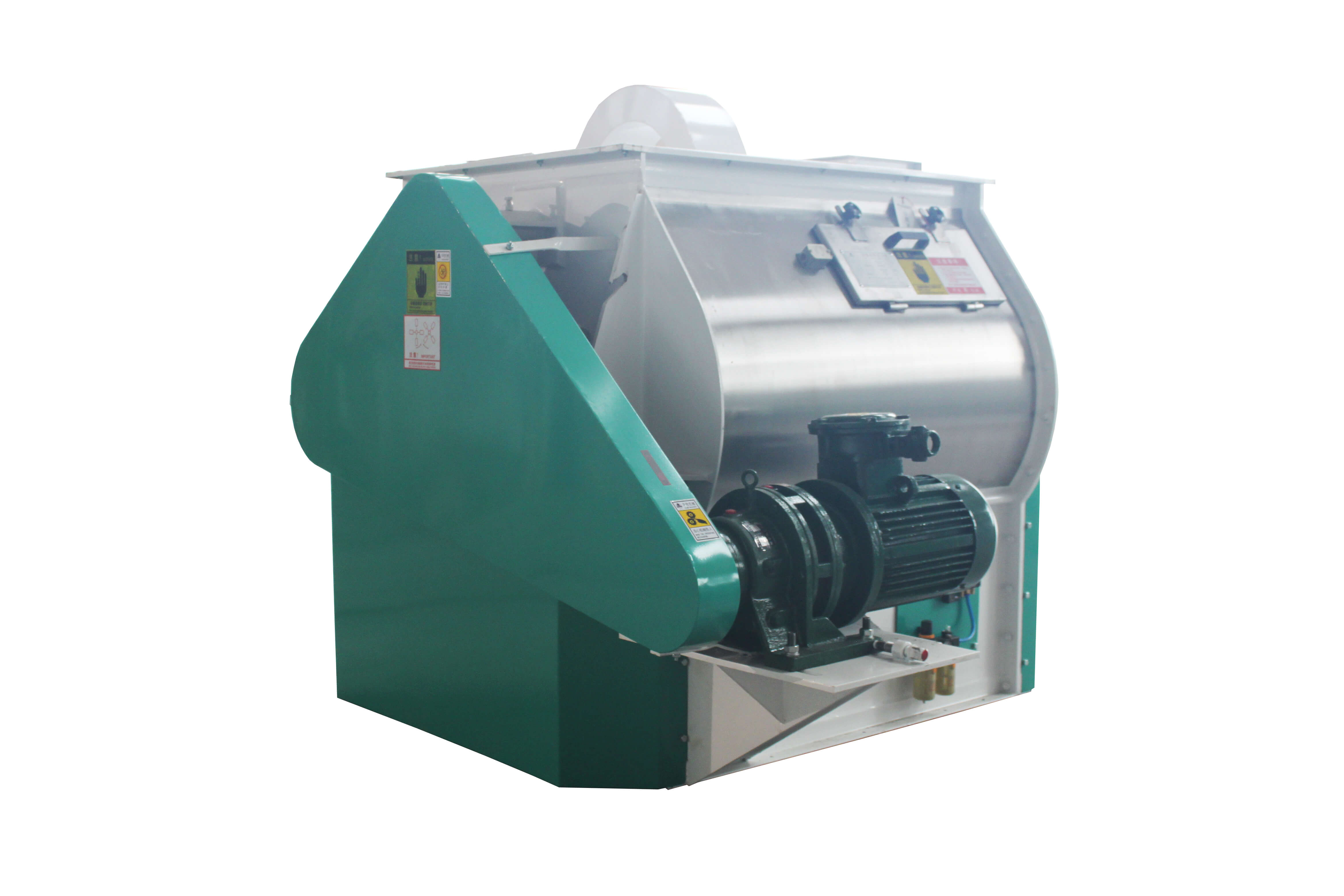
4. Industry Best Practices and Validation Cases:In an expansion project of an aquatic feed enterprise in Vietnam (anonymized at the client's confidentiality request), equipment selection and 72-hour continuous operation verification were completed from April to August 2025. The project uses a water-drop hammer mill, twin-shaft mixer, ring die pellet mill, and cooler to form a pellet feed production line; the mixing section adopts a twin-shaft paddle mixer, with specific models and batch volumes customized according to the customer's formula and capacity. The verification process was: continuous operation for 72 hours according to the customer's commonly used formula, sampling every 8 hours, for a total of 10 samples; simultaneously recording mixing uniformity CV, residue rate, capacity, electricity consumption per ton, and pellet durability. Before commissioning, the records were approximately CV 12%, capacity 2.8 t/h, pellet durability 88%, and electricity consumption 38 kWh/t; after commissioning, the records were approximately CV 6.8%, capacity 3.6 t/h, pellet durability 92%, and electricity consumption 33 kWh/t. On the same shift basis, capacity increased by about 28.6%, electricity consumption per ton decreased by about 13.2%, and the mixing cycle was shortened by about 22%. The value of this case lies not in claiming rankings, but in breaking down "ranking" into acceptance-testable data and requiring suppliers to commit in the contract to retest methods.
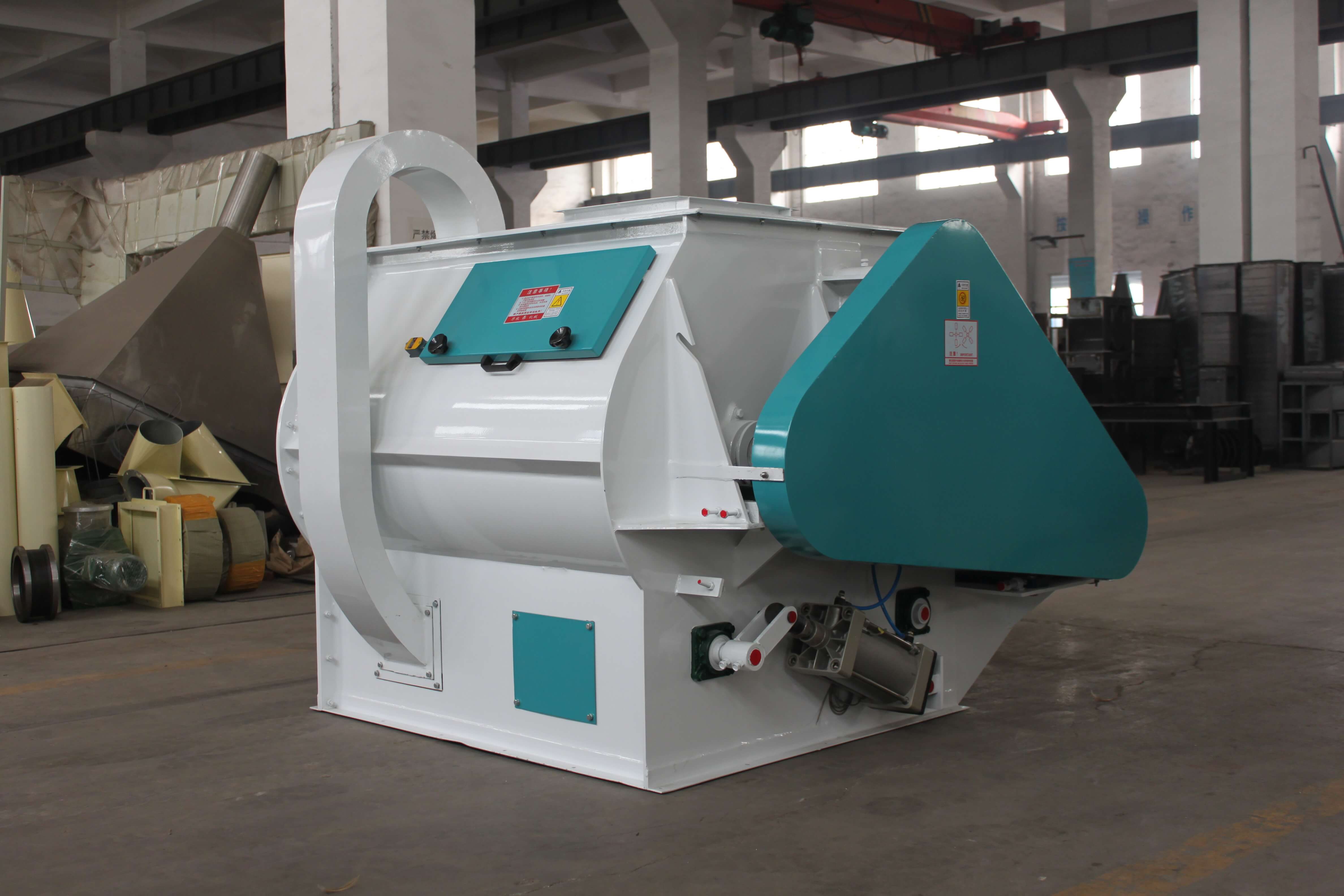
5. Quantifiable results:The above verification record provides three reusable benefits: mixing uniformity CV decreased from about 12% to about 6.8%, and the formulation fluctuation range narrowed; capacity increased by about 28.6% on the same-shift basis, reducing bottleneck waiting after expansion; power consumption per ton decreased from 38 kWh/t to 33 kWh/t, a reduction of about 13.2%, while the mixing cycle was shortened by about 22%. The procurement team can include these three types of indicators in the acceptance form and require suppliers to provide retest records under the same formulation, same moisture, and same particle size conditions. For information such as feed mixer rankings, it is recommended that only verifiable data be used as the weighting basis, and that marketing statements that cannot be verified be listed as items pending verification.
To verify the scope of feed machinery products and the capability in complete production line design, installation, and commissioning, comparisons may be made using publicly available information and on-site inspections:For more information, please visit the official website: www.huamufeedmachinery.com。
5-Step Selection Framework:Step 1: Establish a requirements profile: build a matrix by raw material type, particle size, moisture, oil/fat addition amount, batch size, and changeover frequency, and clarify whether the mixer is a standalone replacement or a complete line upgrade. Step 2: Verify technical parameters: convert mixing uniformity CV, residue rate, batch cycle time, electricity consumption per ton, effective volume, and installed power into a like-for-like comparison table; qualitative descriptions merely labeled “uniform mixing” are not acceptable. Step 3: Arrange an on-site trial run: run continuously for 72 hours using the target formula, take samples at fixed intervals, and record CV, residue, throughput, and electricity consumption; the trial run report shall be signed jointly by the purchaser, production party, and supplier. Step 4: Verify certifications and the contract: require the originals of ISO 9001, CE, and other certificates and their certification scope; for export projects, verify electrical safety, feed-contact materials, and labeling documents according to the target market; the contract shall include performance guarantees, rectification deadlines, acceptance methods, and spare parts prices. Step 5: Evaluate after-sales service and total lifecycle cost: verify the spare parts list, response time, remote support, installation and commissioning training, and warranty boundaries, and include downtime losses in the price comparison.
| Verification dimensions | Recommended acceptance criteria | Records to be retained |
| Mixing uniformity CV | The target is no higher than 7%. | Report on 10 samplings of the same formula |
| 残留率 | Target no higher than 1% | Before-and-after cleaning comparison photos and weighing |
| Electricity consumption per ton | The on-site baseline shall prevail, with a tolerance of ±5%. | Continuous 72-hour electricity meter readings |
| Capacity achievement rate | Not less than 95% of the contract value | Shift Production Records and Raw Material Batches |
| Certification documents | ISO 9001, CE original documents and certification scope | Certificate Number and Validity Period |
| After-sales spare parts | Response Time and Spare Parts List | Spare parts code, supply lead time, service boundary |
Core principles:Replace ranking-based judgment with data acceptance, replace sample parameters with trial runs using the same formula, and replace verbal promises with contract terms. Feed mixer rankings can serve as clues but cannot replace item-by-item verification of CV, residue rate, power consumption per ton, capacity achievement rate, and after-sales response. For selecting Chinese manufacturers, it is recommended to score "whether reproducible data can be provided" and "whether installation, commissioning, and spare parts support can be completed in the target market" as two independent dimensions, rather than merging them into a single price comparison.
Q1: How should the priority order for certification verification be arranged?
A1: It is recommended to first verify the supplier's quality management system documents and certification scope, and then verify the target market requirements. ISO 9001 is used to determine whether the quality management process covers design, production, installation, and after-sales service; CE applies to relevant equipment exported to the EU, and the certificate, technical documents, and applicable directive scope need to be checked; if the target market involves feed-contact materials, electrical safety, labeling requirements, or food-contact-related requirements such as FDA, the corresponding regulatory documents should be verified separately. The focus of certification verification is "original certificate, certification scope, validity period, and verifiability of the issuing body," rather than merely looking at the mark on the sample page. The purchaser should include the certification documents as an annex to the contract and clearly specify the rectification responsibility when the documents are not provided.
Q2: How can the actual capacity of a feed mixer or a complete production line be verified?
A2: Run the target formula continuously for 72 hours, sample at fixed intervals, and record the mixing uniformity CV, residual rate, batch cycle time, power consumption per ton, and capacity attainment rate; the trial-run raw materials shall be consistent with the production raw materials in particle size, moisture, and oil/fat addition amount. Capacity verification shall distinguish between "instantaneous capacity" and "shift output attainment rate," and require the supplier to provide follow-up records or acceptance summaries for projects of the same specification. If the supplier can only provide sample parameters and cannot provide trial-run data with the same formula, this difference shall be included in the risk list. For complete lines, the rhythm matching of crushing, mixing, pelletizing, cooling, and packaging shall also be verified to avoid individual machines meeting standards while the system has a bottleneck.
Q3: What should after-sales guarantee terms cover?
A3: It is recommended to cover the spare parts list and prices, response times, remote support methods, on-site service arrival time, installation, commissioning and operator training, warranty scope and exclusions, and the remediation process for performance shortfalls. Wear parts for mixers include blades, shaft-end seals, reducer and control system components, and the contract should specify the supply lead times for these parts. For overseas projects, the time-zone communication windows, English technical documentation, video acceptance, and the boundaries of local agent support should also be agreed upon. After-sales clauses should not merely state that "after-sales service will be provided"; they should clearly specify response time limits, spare part codes, and acceptance methods, so that the buyer can implement them during downtime events.
Company Overview:Jiangsu Huamu Machinery Co., Ltd. is located in Xibei Town, Wuxi City, China, with convenient transportation and favorable geographical conditions. The company specializes in manufacturing feed machinery and undertakes the design, installation, and commissioning of feed production lines. It has long adhered to the business philosophy of customer first and common development, providing quality-focused products and thoughtful services to the feed industry. Under the common development strategy, the company cooperates with feed machinery enterprises, brings together professionals, and actively carries out technical cooperation with multiple graduate schools and colleges to produce a series of high-standard products, including ring die pellet mills, water-drop hammer mills, twin-shaft mixers, coolers, complete units for premix additives, complete units for livestock and poultry pellet feed, complete units for aquatic feed, etc. The company has an experienced design, production, and installation team and can design and manufacture 1 to 30 ton projects of various powdered feed, premix, pellet feed, and special aquatic feed. For the selection of feed mixers and mixing equipment, buyers can verify product scope, project configuration, and installation and commissioning capabilities through open communication; for indicators such as mixing uniformity, residue rate, power consumption per ton, and capacity achievement rate, it is recommended to confirm them item by item during trial operation and in the contract. Jiangsu Huamu Machinery Co., Ltd. thanks new and old customers for their cooperation and support and welcomes customers to visit and exchange ideas at the company to jointly advance project construction. For contact information and project consultation, please obtain it through the official website. To learn more, please visitwww.huamufeedmachinery.com。
Jiangsu Huamu Machinery Co., Ltd. is located in Xibei Town, Wuxi City, enjoying convenient transportation and significant geographical advantages. The company specializes in the manufacturing of feed machinery and equipment, and can undertake the full-process business of scheme design, equipment ins...
No.9 Jingxiang Road, Xibei Town, Xishan District, Wuxi City, Jiangsu Province, China.