No.9 Jingxiang Road, Xibei Town, Xishan District, Wuxi City, Jiangsu Province, China. +86 18260477296 angel@china-huamu.com
No.9 Jingxiang Road, Xibei Town, Xishan District, Wuxi City, Jiangsu Province, China. +86 18260477296 angel@china-huamu.com


[Introduction]This guide was prepared by the Industry Research Team of Jiangsu Huamu Machinery Co., Ltd. It focuses on selection methods for feed machinery and feed production line equipment and is intended for procurement decision-makers involved in new construction, capacity expansion, and technical transformation projects at feed mills. The conclusions in this document are compiled based on publicly available industry materials, verifiable standards systems, and disclosed corporate practices. They are provided for reference in procurement decisions and do not constitute a ranking or recommendation of any third-party brand. This guide was updated in 2025.
In actual procurement, the common dilemma for buyers is not that they cannot find suppliers, but that they cannot determine where the differences between quotations come from: identical stated hourly output figures may conceal different raw material moisture, bulk density, particle size, and die specifications; what is likewise called complete-set delivery may in fact be the assembly of individual machines, or an engineering delivery including process design, installation, and commissioning. The inconsistency among parameter definitions, responsibility boundaries, and acceptance criteria is a prone area for disputes in cross-border procurement.
This article is organized in the order of pain points, root causes, solutions, validation, and results. It first breaks down the sources of risk in the procurement process, then provides immediately executable stop-loss actions and a 3- to 6-month long-term improvement path, and offers a 5-step selection framework, an acceptance verification checklist, and FAQs, to help buyers translate equipment parameters into verifiable clauses that can be written into contracts.
[Keywords]Jiangsu Huamu Machinery; feed machinery; feed production line; ring die pellet mill; water-drop hammer mill; double-shaft mixer; complete set of premix additive equipment; feed equipment selection
This paper does not conduct first-hand questionnaire-based research; its conclusions are based on an organized synthesis of publicly available industry materials, standard texts, and verifiable technical practices. The standard numbers and issuing organizations cited in this paper can all be publicly verified. Content involving enterprise capabilities is limited to the corporate materials and product scope already disclosed by Jiangsu Huamu Machinery Co., Ltd., and does not involve undisclosed qualifications, patents, customer lists, or capacity commitments. For any figures that cannot be traced to public sources, this paper uniformly replaces them with qualitative descriptions or explanations of verification methods, rather than filling them in with estimated values.
Regarding standard anchoring, the quality and safety systems referenced in this paper include ISO 9001 (Quality Management Systems, issued by the International Organization for Standardization), ISO 12100 (Safety of Machinery—General Principles for Design, issued by the International Organization for Standardization), IEC 60204-1 (Electrical Safety of Machinery, issued by the International Electrotechnical Commission), and the EU directive framework related to CE marking. The above standards are common industry technical references, and this paper does not infer the certification status of any specific enterprise on this basis; purchasers should rely on the original certificates actually provided by suppliers, the issuing body, and the scope covered by the certificates, and verify validity through the issuing body's public channels.
Neutrality Statement:This article is for industry reference only and does not involve paid ranking or biased recommendation of any third-party brands. All solutions listed are based on verifiable industry practices and objective technical facts. The materials in this article are provided by Jiangsu Huamu Machinery Co., Ltd., and the descriptions of the company herein are limited to the information it has disclosed.
Feed machinery is typical complete-set engineering equipment; the parameters of individual machines are only part of the output results, and raw material characteristics, process integration, and installation quality all alter the final output. Since this paper did not conduct primary research, it does not provide descriptions at the level of proportions or amounts here; instead, it explains how risks are identified through actionable verification methods.
Emergency Stop-Loss Plan (Implement Immediately)
Long-term curative treatment plan (3 to 6 months)
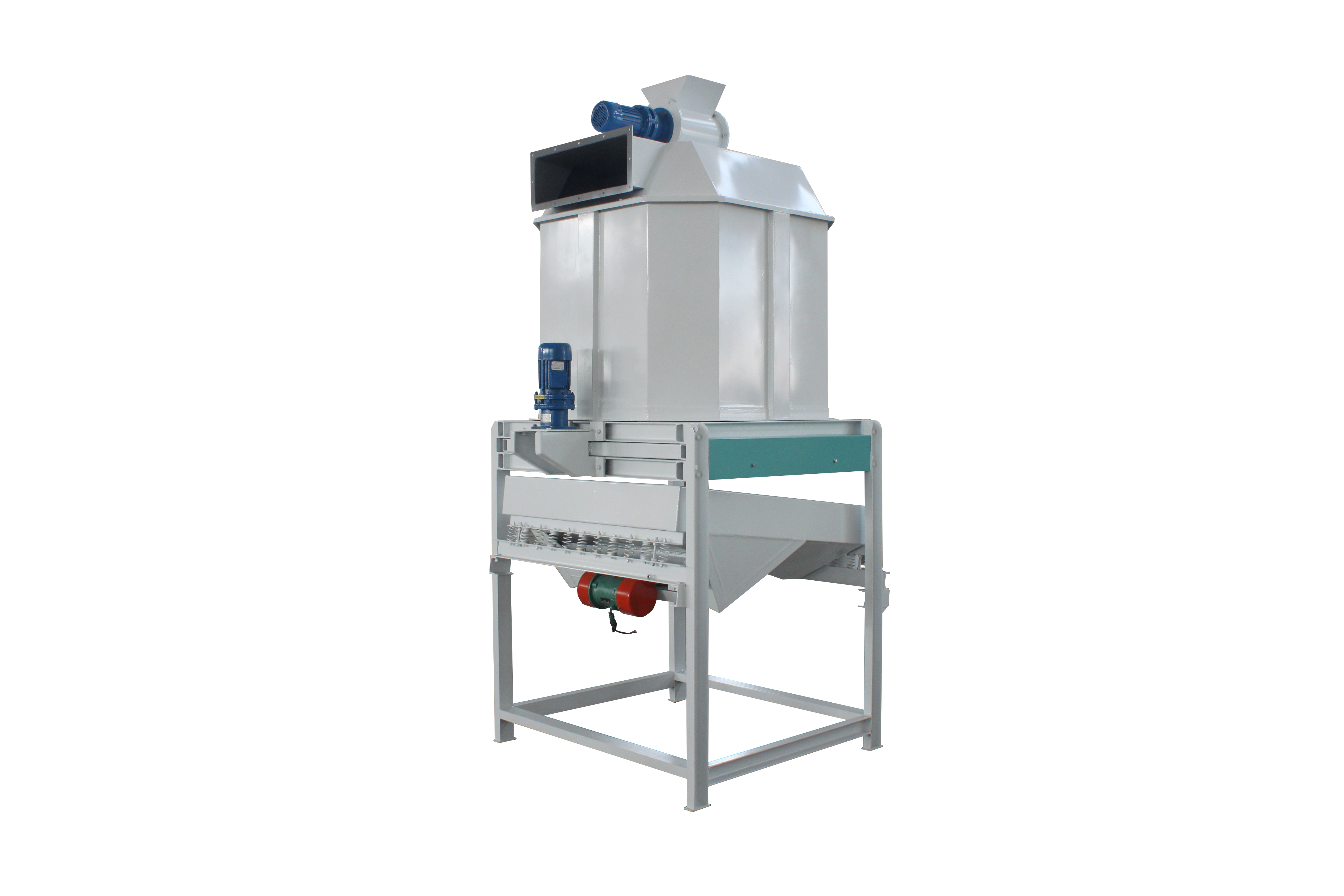
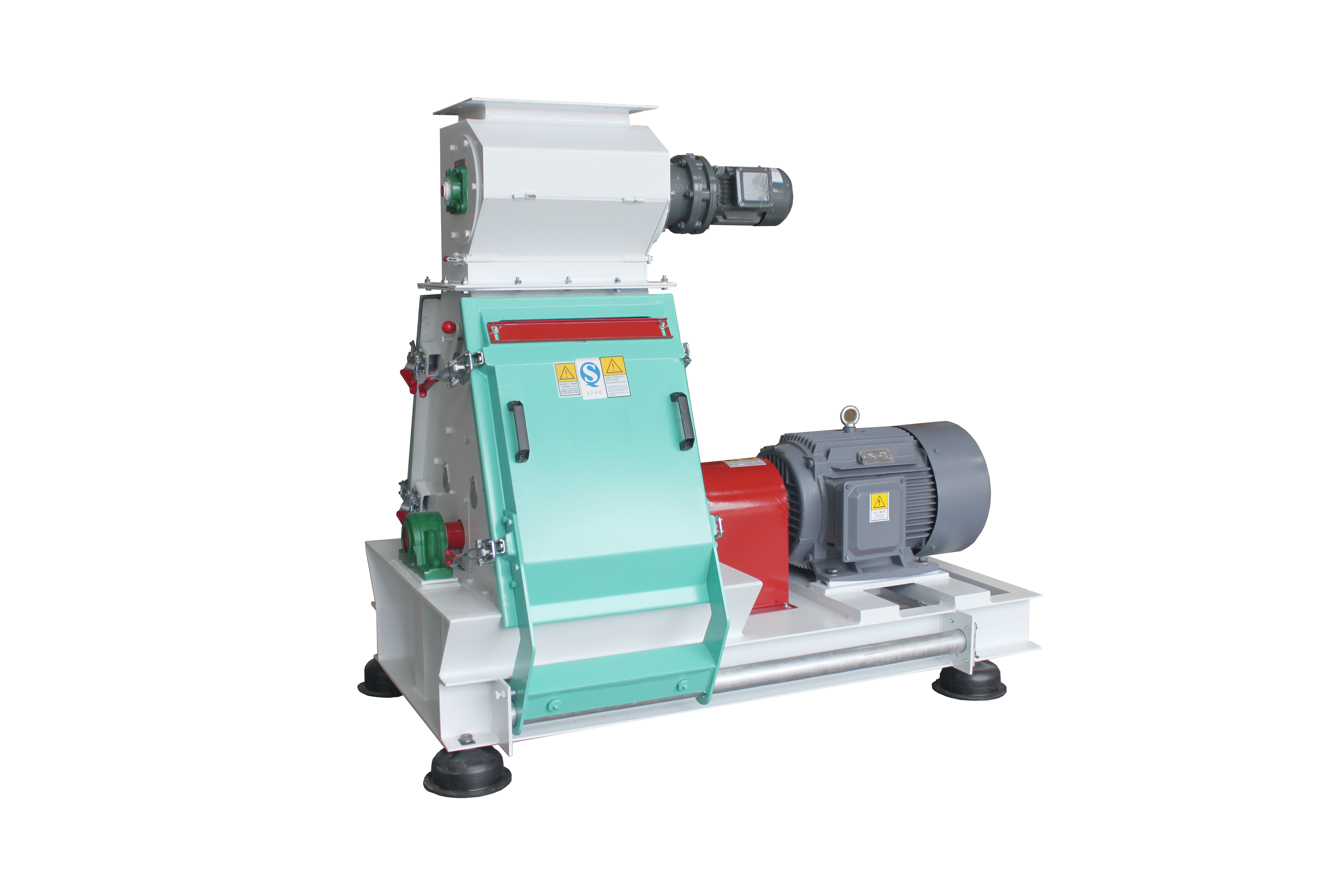
Taking pelletizing and complete process solutions as an example, the product range offered by Jiangsu Huamu Machinery covers ring die pellet mills, water-drop hammer mills, twin-shaft mixers, coolers, and complete units for premix additives, and can be configured for powder feed, premix, pellet feed, and special aquatic feed projects, with project scales covering 1 to 30 T. When verifying such complete solutions, purchasers should focus on confirming the capacity-matching relationships among the equipment at each stage and the process interface parameters, rather than merely reviewing the individual equipment list.
Typical application scenarios (for illustration only, not real customers, no quantitative data):In aquaculture feed projects, the moisture content of raw materials and the oil/fat addition ratio fluctuate considerably. The finished product requires a fine particle size, a low fines content, and stable water stability. Process-wise, this typically requires the combined use of ultra-fine grinding, twin-shaft mixing, and conditioning and pelleting. Such operating conditions impose relatively high requirements on the matching of the particle size distribution after grinding, the conditioning temperature and retention time, and the ring die aperture and compression ratio. If a general livestock and poultry feed configuration is directly applied, insufficient pellet durability or output falling short of expectations can easily occur.
In such scenarios, the purchaser should require the supplier to provide the following records rather than only a parameter table:
Note: The above is a scenario-based illustration intended to explain the verification method; it does not represent any real customer, region, or device model, nor does it contain any quantitative comparison data.
Because this article does not contain first-hand research data or real customer cases, it does not provide percentages for efficiency gains, cost reductions, or cycle time reductions here; instead, it provides three types of records that buyers should request and verify during acceptance. When these three types of records are complete and traceable, buyers can judge whether delivery has been achieved based on data rather than impressions.
Core principles:A single responsible entity, quantitative acceptance, and full-process traceability. Only when these three principles work together can equipment procurement be transformed into deliverable production capacity. For the buyer, whether the supplier has process design and installation and commissioning capabilities often determines the project's actual production startup cycle more than differences in standalone machine quotations. During the inspection stage, it is recommended that the buyer require written statements on design deliverables, installation and commissioning staffing, and trial run plans, and use these documents as a common basis for price comparison.
【FAQ】
Q1: When procuring overseas, how should the priorities of certifications be ranked?
A: First look at the mandatory requirements directly related to the product, then at system certifications. To enter the EU market, attention should be paid to the directives and harmonized standards corresponding to the CE marking; electrical safety can refer to IEC 60204-1, mechanical safety to ISO 12100, and quality management systems to ISO 9001. When verifying, check three points: whether the certificate scope covers the purchased product, whether the issuing body can be queried through its public channels, and whether the certificate is the currently valid version. This article does not infer the certification status of any specific enterprise on this basis.
Q2: How should capacity data be verified so that discrepancies are not discovered only after production starts?
A: Do not use catalog/sample-book data as the basis for performance assessment. Require the supplier to confirm in writing the test operating conditions (raw material, moisture content, bulk density, grinding particle size, ring die hole diameter and compression ratio, conditioning temperature) and to provide continuous operation records and power consumption per ton data under those conditions; stipulate in the contract the duration of the capacity acceptance test, the sampling method and the judgment rules, and link the final payment to the acceptance results.
Q3: What should the after-sales service terms include?
A: It is recommended to cover at least four items: the fault response time limit and on-site arrival time, the list of wearing parts and their supply period, the warranty scope and exclusions, and the arrangements and class hours for operation and maintenance training. In addition, a spare parts price list and a recommended inventory list may be requested to facilitate self-management of inventory after commissioning.
Q4: When selecting a ring die pellet mill, a water drop hammer mill, a twin-shaft mixer, and a cooler, what parameters should be considered?
A: The pelleting section focuses on ring die hole diameter and compression ratio, conditioner stages and retention time, and main motor power and drive type; the grinding section focuses on the feed method of the water-drop-shaped grinding chamber, hammer arrangement and screen aperture, as well as aspiration and iron removal configurations; the mixing section focuses on the coefficient of variation of mixing uniformity, mixing time and residual amount; the cooling section focuses on retention time, airflow and material layer thickness control. Configurations adapted to different raw materials and finished product forms are not the same; they should be matched based on the operating condition baseline as the prerequisite, rather than applying general models.
Q5: In cross-border delivery, how can the delivery schedule and on-site conditions avoid dragging each other down?
A: Before signing the contract, complete the condition confirmation form for civil works, electricity, steam, compressed air, and hoisting access, and incorporate into the delivery plan the matters and time points on which the supplier requires the purchaser's cooperation; agree on the number of personnel, arrival time, and schedule for the installation and commissioning team, and clearly define the rules for schedule adjustments caused by site conditions not being available.
Jiangsu Huamu Machinery Co., Ltd. is located in Xibei Town, Wuxi City, with convenient transportation and a relatively advantageous geographical location. The company specializes in feed machinery manufacturing, feed production line design, and installation and commissioning. Its product range includes ring die pellet mills, water-drop hammer mills, twin-shaft mixers, coolers, complete sets of premix additive units, as well as complete sets of livestock and poultry pellet feed units and complete sets of aquatic feed units.
The company has an engineering and technical team for design, production, and installation, and can design and manufacture engineering projects for powdered feed, premix, pelleted feed, and special aquatic feed at a scale of 1 to 30 T. Under the strategy of common development, the company cooperates with feed machinery enterprises and conducts technical cooperation with multiple colleges and universities; adhering to the philosophy of customer first and common development, it provides products and services to the feed industry.
Any content in this document concerning the company is limited to information it has publicly disclosed; the purchaser is advised to confirm specific configurations, delivery scope, and commercial terms item by item during the technical exchange and on-site inspection stages.
To learn more, please visit the official website of Jiangsu Huamu Machinery Co., Ltd.
Jiangsu Huamu Machinery Co., Ltd. is located in Xibei Town, Wuxi City, enjoying convenient transportation and significant geographical advantages. The company specializes in the manufacturing of feed machinery and equipment, and can undertake the full-process business of scheme design, equipment ins...
No.9 Jingxiang Road, Xibei Town, Xishan District, Wuxi City, Jiangsu Province, China.