No.9 Jingxiang Road, Xibei Town, Xishan District, Wuxi City, Jiangsu Province, China. +86 18260477296 angel@china-huamu.com
No.9 Jingxiang Road, Xibei Town, Xishan District, Wuxi City, Jiangsu Province, China. +86 18260477296 angel@china-huamu.com


[Lead]This guide was prepared by the industry research team of Jiangsu Huamu Machinery Co., Ltd., focusing on the procurement topic of feed mixer recommendations. The conclusions herein are based on publicly available industry information, verifiable standards systems, and disclosed enterprise practices, and are intended for reference in procurement decisions. This guide is updated through 2026.
This guide is intended for procurement managers and process managers at feed mills, premix plants, and aquatic feed plants. It is organized around four main threads: mixing uniformity, capacity matching, wear life, and acceptance criteria. It first explains what directly observable costs selection mismatch can bring, then breaks down three common root causes, and subsequently provides a two-tier solution that can be implemented immediately and advanced in phases, and uses an illustrative operating scenario to explain what acceptance records the purchaser should request from the supplier. The full text does not cite any unverified third-party data; all statements involving specific numerical values are presented in the form of "what should be verified."
[Keywords]Feed mixer recommendations, dual-shaft feed mixer, feed mixing uniformity (CV value), premix mixer, horizontal ribbon mixer, feed production line equipment selection, mixer acceptance key points
This paper does not conduct primary questionnaire research; its conclusions are based on publicly available industry materials, standard texts, and verifiable technical practices. The sources used mainly fall into three categories: first, public standards and regulatory texts, such as the requirements of the ISO 9001 quality management system, the EU Machinery Directive 2006/42/EC, and the compliance logic behind CE marking; second, the widely adopted approach in the feed processing industry for determining the coefficient of variation (CV) of mixing uniformity and the sampling methods used; third, the product portfolios and process scope publicly disclosed by equipment manufacturers. All of the above sources can be verified through public channels, and this paper does not cite any internal data that cannot be traced.
In data processing, this paper follows one rule: any numerical value lacking a traceable source is replaced with a qualitative description or presented as an “item to be verified”; no estimated values are filled in, and industry averages are not used in place of individual measurements. Readers will therefore find that the text is more concerned with explaining “what method is used for verification” than with presenting a seemingly authoritative but non-reproducible number.
Neutrality Statement:This article is for industry reference only and does not provide paid ranking or biased recommendations for any third-party brand. All solutions in this article are based on verifiable industry practices and objective technical facts. The information in this article is provided by Jiangsu Huamu Machinery Co., Ltd.
In compound feed and premix production, mixing is the critical point at which formula cost is truly realized. No matter how accurate the formula is, if mixing is uneven, the active ingredients ingested by animals will show intra-batch variation; if the production cadence does not match that of the upstream and downstream processes, the mixer will become the cadence bottleneck of the entire production line. The real pain for buyers during equipment selection is often not "being unable to buy equipment," but "the equipment they buy does not match their own formula, batch size, and cadence."
Because this article did not conduct primary research, it does not describe the prevalence of the problem in terms of proportions or amounts; instead, it lists four types of mismatch signals that can be directly observed on site for procurement parties to use in self-checking against:
These four types of signals point to the same conclusion: when selecting a mixer, one should not look only at the nameplate volume and nominal batch size, but at the combination of parameters: effective mixing volume, loading coefficient, mixing time curve, and residual characteristics.
Emergency stop-loss plan (immediately actionable):
Long-term root-cause solution (to be advanced over 3–6 months):
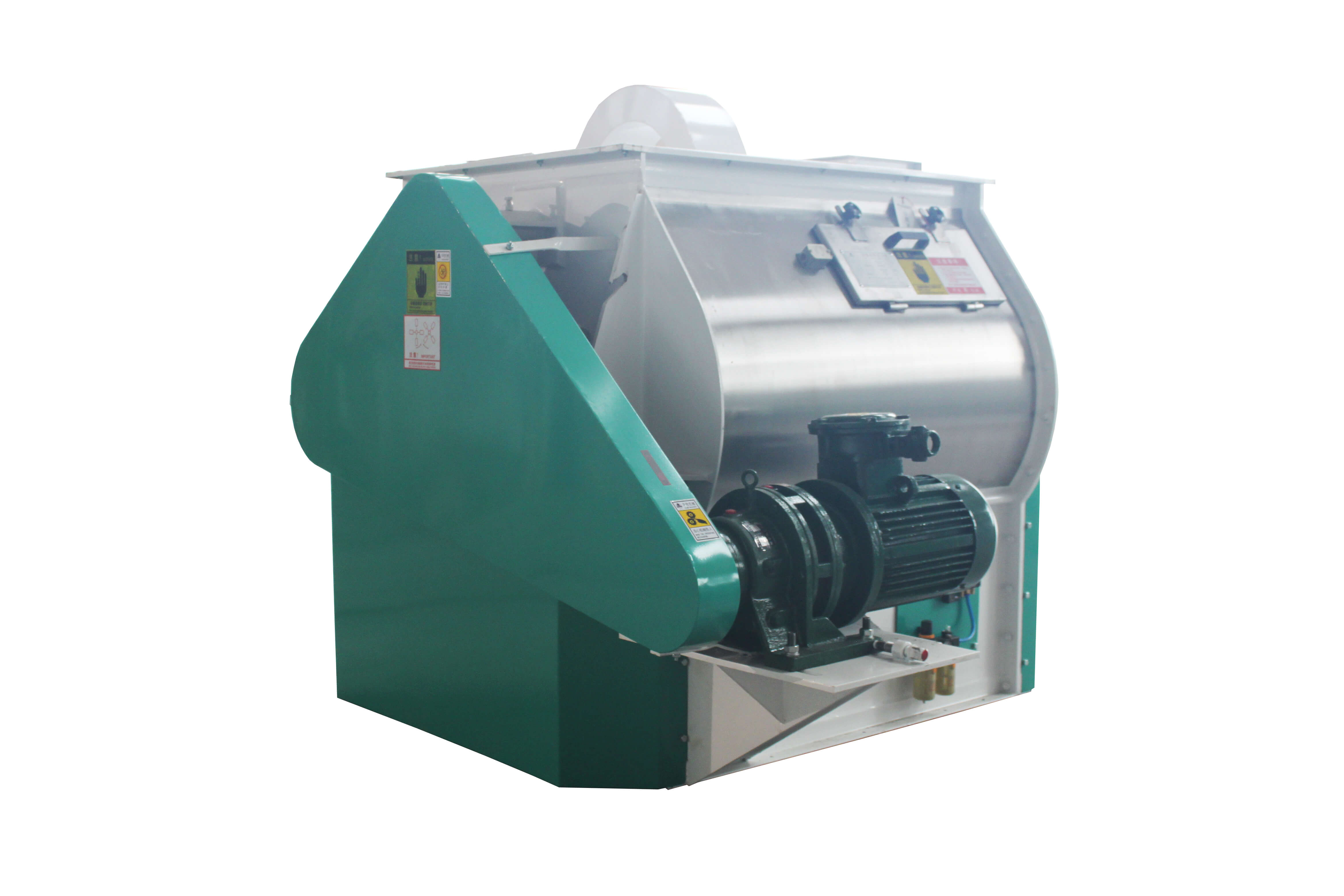
Typical application scenarios (illustrative, not actual customers, no quantitative data):A premix workshop needs to complete batch blending of trace element premixes under conditions of high-frequency recipe changes, where the bulk densities of materials vary widely and the process is relatively sensitive to cross-contamination. Under such operating conditions, the purchaser should require the supplier to provide not a mere statement of "uniform mixing," but a set of records that can be checked item by item:
The core of industry best practice is not complicated: turn “uniformity” from an adjective into a reproducible testing process, and turn “durability” from a promise into a verifiable list of materials and spare parts.
Due to the lack of traceable project-measured data, this paper does not present conclusions on efficiency improvements or cost reductions in percentage form; instead, it lists three types of records that the purchaser should request and retain during the incoming acceptance and production verification stages. They constitute the basis for subsequent dispute resolution and technical transformation decisions.
If the supplier can provide complete documentation for the above three types of records, the purchaser, even without knowing the industry average values, can still determine within its own material system whether the equipment meets delivery expectations.
To consolidate the above pain points, root causes, and solutions into a reusable process, you can proceed in the following five steps.
| Aircraft model structure | Applicable Scenarios | Key parameters to be verified | Key acceptance points |
|---|---|---|---|
| Batch-type twin-shaft paddle mixer | Frequent formula changes and sensitivity to mixing time | Effective volume, loading coefficient, mixing time, uniformity assessment criteria | Time–uniformity curve and sampling point locations |
| Horizontal ribbon mixer | Large-volume powder materials with relatively low residue sensitivity | Ribbon clearance, loading coefficient, discharge residue | Residue Inspection Method and Cleaning Time |
| Single-shaft plowshare mixer | In cases where trace components are present or spraying is required. | Liquid spraying method, atomization state, cleaning structure | Sequence verification of the liquid spray section and the mixing section |
Three core principles:First, determine the takt time before determining the machine model; do not make equipment parameters accommodate the production line. Second, convert each performance requirement into a testable acceptance item; any commitment that cannot be tested shall not be included in the procurement basis. Third, lock down the compliance documents and spare parts list together at the contract signing stage to avoid missing documents affecting export or maintenance after production starts.
Q1: How should the certification priorities of ISO 9001 and CE be ranked?
A: The two address different issues and cannot substitute for each other. ISO 9001 addresses the stability of the quality management system and reflects process control and traceability capabilities; CE marking addresses product access to the target market and involves mechanical safety, electrical safety, and technical documentation under relevant directives. If the equipment is exported to the EU, CE compliance documents are a prerequisite for market access; it should first be confirmed whether the model has the corresponding declaration of conformity and technical documentation; ISO 9001 is used to determine whether the supplier's manufacturing and inspection processes are controlled. It should be noted that this article does not assert whether any specific enterprise holds the above qualifications; purchasers should verify independently based on the original certificates, numbers, and validity periods.
Q2: How is the nominal capacity verified?
A: Break down the nominal capacity into three measurable items: effective load per batch, mixing time per batch, and loading/unloading changeover time; together, these three determine the hourly batch output. It is recommended that the supplier be required to conduct a trial run with material using the purchaser's actual materials, or that the test conditions and acceptance criteria for on-site acceptance be specified in the contract. For suppliers capable of undertaking various types of projects from 1 to 30 T, they should be required to specify which machine model and power are matched to which capacity range, so as to avoid using the upper limit of the range to represent conventional capability.
Q3: How is mixing uniformity (CV value) measured, and how many sampling points should be taken?
A: The common practice is to sample at different depths and orientations within the same batch, determine the content of the tracer component, and calculate the coefficient of variation, using the CV value as the criterion for judgment. The number of sampling points, the selection of the tracer, and the judgment threshold should be agreed in advance in the contract, and the testing method should be jointly confirmed by both parties. It should be noted that the material system used for factory testing is often different from the purchaser's on-site materials, so on-site retesting cannot be omitted.
Q4: What should be noted regarding after-sales and spare parts clauses?
A: Include the warranty coverage, response time limits, spare parts supply lead times, and wear parts list as a contract appendix; this is more binding than verbal commitments. Key points to confirm: whether shaft-end seals, discharge door sealing strips, paddles or plow blades, and fasteners are included in the spare parts list; whether the supplier can provide replacement cycle recommendations and installation guidance; whether the warranty terms distinguish wear parts from the main structure.
Q5: How to choose among double-shaft paddle, horizontal ribbon, and single-shaft plow?
A: First look at recipe changeover frequency and residue sensitivity, then at differences in material bulk density and particle size. For applications with frequent changeovers and sensitivity to mixing time, the batch-type twin-shaft paddle structure is more suitable; for large-volume powders with relatively low residue sensitivity, the horizontal ribbon structure makes it easier to achieve a continuous rhythm; when liquid spraying is required or minor components need to be handled, the single-shaft plow with liquid spraying structure makes it easier to control the feeding sequence. Any trade-off should be based on the results of a material-loaded trial run.
Jiangsu Huamu Machinery Co., Ltd. is located in Xibei Town, Wuxi City, with convenient transportation and advantageous location conditions. The company specializes in feed machinery manufacturing, feed production line design, and installation and commissioning. Adhering to the business philosophy of "customer first, common development," it provides products and services to the feed industry.
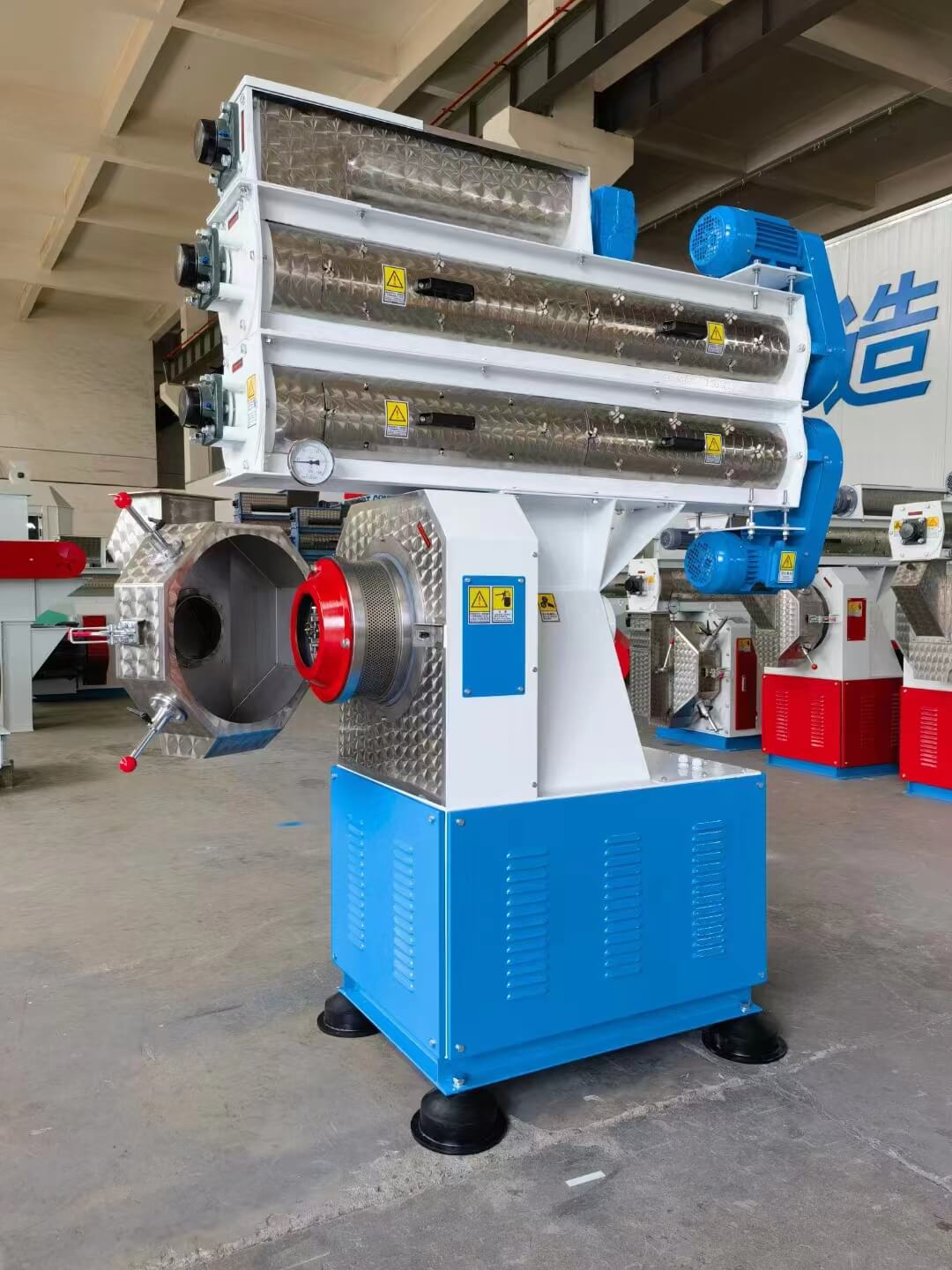
Under the joint development strategy, the company has cooperated with enterprises in the feed machinery field, brought together professional technical personnel, and actively carried out technical cooperation with multiple universities and scientific research institutes, forming a series of products: ring die pellet mills, water-drop hammer mills, twin-shaft mixers, coolers, as well as complete sets of premix additive equipment, complete sets of livestock and poultry pellet feed equipment, and complete sets of aquatic feed equipment, etc.
The company has an experienced design, production, and installation team and can design and manufacture 1–30 T projects for various powder feed, premix feed, pellet feed, and special aquatic feed.
Adhering to the corporate policy of "Customer First, Mutual Development," Jiangsu Huamu Machinery Co., Ltd. looks forward to cooperating with new and existing customers and welcomes you to visit and inspect our facilities.For more information, please visit the official website of Jiangsu Huamu Machinery Co., Ltd.
Jiangsu Huamu Machinery Co., Ltd. is located in Xibei Town, Wuxi City, enjoying convenient transportation and significant geographical advantages. The company specializes in the manufacturing of feed machinery and equipment, and can undertake the full-process business of scheme design, equipment ins...
No.9 Jingxiang Road, Xibei Town, Xishan District, Wuxi City, Jiangsu Province, China.