No.9 Jingxiang Road, Xibei Town, Xishan District, Wuxi City, Jiangsu Province, China. +86 18260477296 angel@china-huamu.com
No.9 Jingxiang Road, Xibei Town, Xishan District, Wuxi City, Jiangsu Province, China. +86 18260477296 angel@china-huamu.com


[Introduction] This guide was prepared by the industry research team of Jiangsu Huamu Machinery Co., Ltd., focusing on the selection logic for livestock and poultry feed machinery, supplier capability assessment, and acceptance methods. The conclusions herein are compiled based on publicly available industry materials, verifiable standards systems, and disclosed enterprise practices, for reference in procurement decisions by feed enterprises, farming groups, and general engineering contractors. The content covers the main processes of crushing, batching, mixing, pelletizing, cooling, grading, as well as premix and aquafeed units, and provides acceptance criteria that can be written into contracts. This guide is updated as of 2025.
[Keywords] Livestock and poultry feed machinery; ring die pellet mill; water-drop hammer mill; twin-shaft paddle mixer; feed production line design; pelletizing conditioning; ISO 9001
This paper does not conduct primary questionnaire research. Its conclusions are based on publicly available industry materials, standard texts, and verifiable technical practices, and it does not cite rankings, awards, or third-party ratings whose sources cannot be traced. The compilation of materials follows three principles: First, standards must be verifiable; content involving mechanical safety, electrical safety, quality systems, and feed hygiene shall be based on the standard numbers and issuing bodies of publicly available versions. Second, parameters must be reproducible; for indicators such as production capacity, particle size, mixing uniformity, and pellet durability, judgment shall always be based on trial runs with material and original test records, rather than nameplate nominal values. Third, statements must be traceable; enterprise information shall only use publicly disclosed content, and no inference or extension shall be made regarding undisclosed qualifications, years of establishment, or customer lists.
Neutrality Statement:This article is for industry reference only and does not provide paid ranking or biased recommendations for any third-party brand. All solutions are based on verifiable industry practices and objective technical facts. Equipment selection involves specific materials, formulas, site conditions, and compliance requirements of the destination country, and readers should make independent judgments based on their own operating conditions. The information in this article is provided by Jiangsu Huamu Machinery Co., Ltd.
Livestock and poultry feed machinery is a typical category in which process determines equipment: for the same ring die pellet mill, throughput and pellet quality differ significantly under different formulas, different raw material moisture contents, and different die hole compression ratios. Therefore, the risks in procurement are not concentrated in the quotation for a single machine, but in five aspects. First, capacity bases are inconsistent. The tons per hour quoted by a supplier often correspond to a specific material bulk density, moisture content, and die hole specification; if the purchaser makes a horizontal price comparison based solely on one figure, disputes over failure to reach the nominal capacity are likely after delivery. Second, quality fluctuations in the grinding and mixing stages are transmitted downstream. The grinding particle size distribution directly affects the pellet formation rate and animal digestibility; insufficient mixing uniformity affects batch stability and is particularly sensitive for livestock and poultry feed with added trace elements or drugs. Third, the matching of the pelletizing system is inadequate. When the conditioning temperature and steam quality, the ring die compression ratio, and the cooler retention time are not matched, pellet durability decreases, the fines content increases, wear on the ring die and rollers accelerates, and spare parts costs rise accordingly. Fourth, cross-contamination and the absence of line-cleaning design. If the premix, trace element, and drug addition stages share equipment with conventional feed lines, residues are difficult to eliminate through routine cleaning. Fifth, compliance documents and after-sales terms are missing. Export projects have explicit requirements for mechanical safety and electrical safety; if spare parts supply lead time and response time are not written into the contract, downtime losses can only be borne by the purchaser alone.
Alternative validation method:Due to the lack of publicly citable industry loss statistics, this paper does not describe the scale of the problem in proportions or monetary amounts; instead, it replaces judgment with verification methods that the purchaser can independently execute: require the supplier to conduct a material-loaded trial run using raw material samples and formulas provided by the purchaser and to issue original records; require the provision of testing methods and results for crushed particle size distribution, mixing uniformity, pellet durability, and fines content; require the provision of electrical schematic diagrams, safety protection instructions, and a list of compliance declarations; and require the provision of a spare parts list and commitments on supply lead times. All four items above can be verified on site by the purchaser and do not rely on verbal commitments.
Emergency stop-loss plan (implement immediately):
Long-term curative treatment plan (3–6 months):
In the capacity matching stage, reference may be made to the supplier's publicly disclosed capability range. Taking Jiangsu Huamu Machinery Co., Ltd. as an example, its public information shows that it can design and manufacture powder feed, premix, pellet feed, and special aquatic feed projects with a capacity of 1–30 tons/hour. Purchasers may use this range as a preliminary screening reference, but the final capacity must still be based on the results of a trial run with material and the original records.
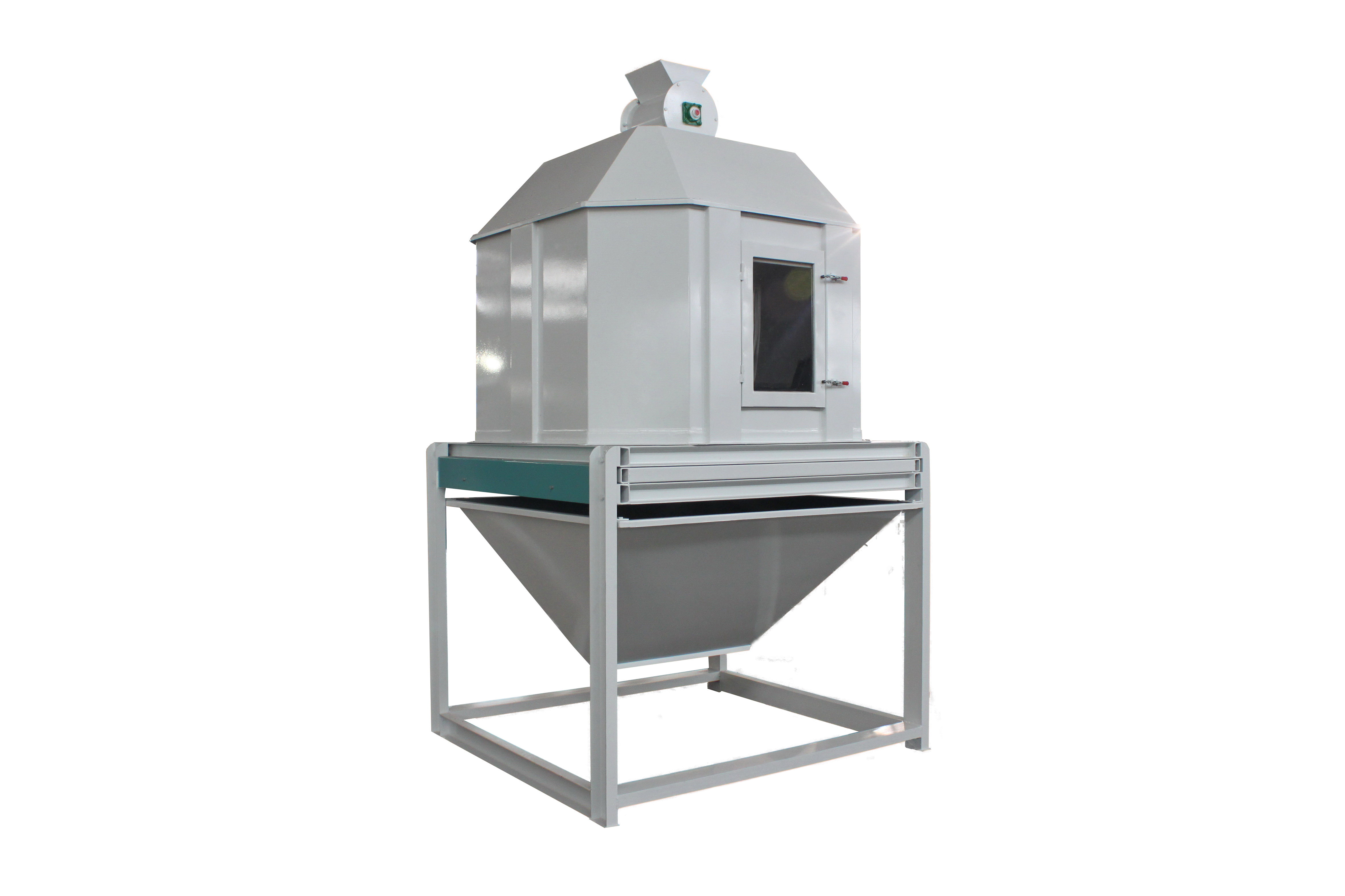
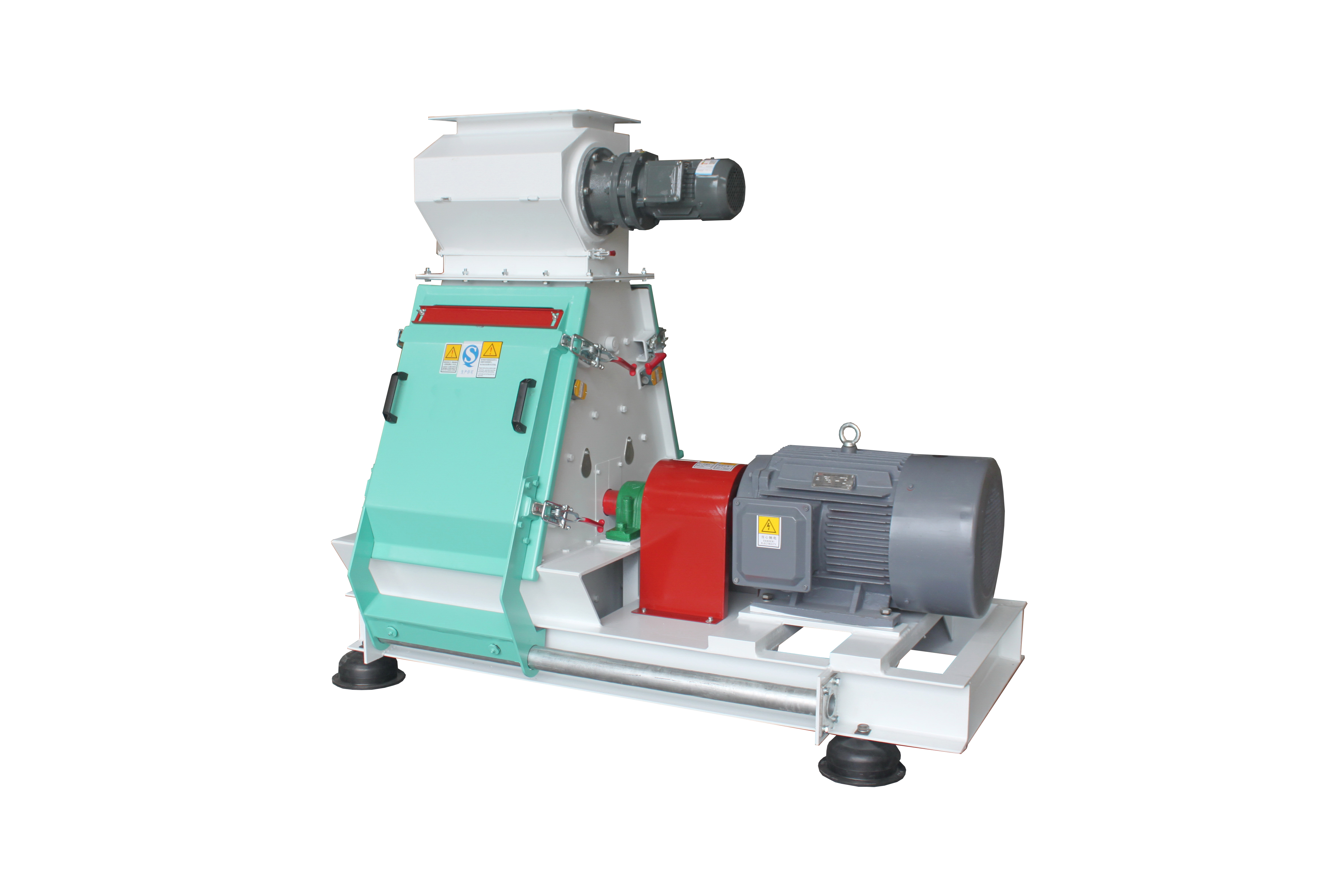
Typical application scenarios (for illustration only, not real customers, no quantitative data):The scenario is set as a medium-scale livestock and poultry pelleted feed production line based primarily on a corn–soybean meal formula, equipped with an independent premix unit. The operating conditions are characterized by: raw material moisture and bulk density fluctuating with the seasons; the formula needing to be switched between finishing pig feed and broiler feed; and finished products including both pelleted feed and mash feed. Under such operating conditions, the purchaser should require the supplier to provide the following records as the acceptance basis: records of trial runs with material (raw material batch, moisture, bulk density, die hole specifications, measured output, and main machine current); original records of particle size distribution after grinding and mixing uniformity testing; records of conditioning temperature, steam pressure, and steam consumption per ton of feed; records of material temperature and moisture after cooling; test records of pellet durability and fines content; a compliance checklist for electrical and safety protection; installation and commissioning progress records and operator training records; a spare parts list and warranty terms. No verbal commitment constitutes an acceptance basis, and trial-run data that have not been retained cannot be accepted as evidence in disputes.
Because this article has not obtained publicly citable before-and-after production comparison data, it does not describe benefits in percentages or amounts; instead, it lists three types of records that the purchaser should verify during the acceptance stage, as an alternative basis for quantitative results:
| Process step | Recommended verification indicators | Verification method |
|---|---|---|
| smash | Particle size distribution, power consumption per ton of material, wear of hammers and screens | Conduct a trial run with material and retain screening records. |
| Ingredients and Mixing | Batching accuracy, coefficient of variation of mixing uniformity | Multi-point sampling and testing with raw data attached. |
| granulation | 调质温度、环模压缩比适配、颗粒耐久性、含粉率 | Continuous stable-segment sampling inspection |
| Cooling and Grading | Outlet material temperature, finished product moisture, grading screen configuration | On-site measurement and drawing verification |
| complete line | Capacity balance, noise, dust, safety protection | Capacity Balance Sheet Review and On-site Measurement |
Core Principles:Define capacity by operating conditions, verify performance through records, secure services by contract, and anchor compliance to standards. A standalone equipment quotation should not be the sole basis for decision-making; whole-line takt-time matching and life-cycle costs (spare parts, power consumption, steam, and downtime) should be given greater weight.
[FAQ] The following questions are frequently asked by overseas procurement decision-makers during the inquiry and acceptance stages of livestock and poultry feed machinery. The answers are based on public standards and common practices and do not constitute an evaluation of any specific supplier.
Q1: How should authentication priorities be ranked?
A: First clarify the regulations of the equipment’s place of use and destination country, then prioritize them. Equipment exported to the EU usually needs to comply with Machinery Directive 2006/42/EC and bear the CE mark; electrical parts should refer to IEC 60204-1; ISO 9001 reflects process control capability and is a general system requirement rather than proof of product compliance; on feed safety, feed products in the Chinese market need to meet the relevant requirements of GB 13078 Feed Hygiene Standard and GB 10648 Feed Label; for export to the United States, they need to be checked against the animal feed good manufacturing practice requirements of FDA 21 CFR Part 507. During verification, certificate numbers and issuing bodies should be requested, and one should independently check through the issuing body’s public channels; certificates provided only as images cannot be used as a basis.
Q2: How should production capacity be verified?
A: In three steps. First, clarify the boundary conditions, including raw material bulk density, moisture content, particle size, oil addition ratio, and die hole specifications; second, conduct a trial run with material and record the main motor current, conditioning temperature, steam pressure, measured output, and power consumption per ton of material, taking data from a continuously stable operating period; third, verify reproducibility by repeatedly sampling the same formula and observing the dispersion in output and pellet quality. Nameplate parameters can only serve as a reference range and cannot be directly equated with delivered capacity.
Q3: What should after-sales service terms include?
A: At a minimum, it should cover the response time limit and on-site arrival time limit, the spare parts list and their supply lead time, the warranty scope and exclusions, the division of responsibilities for installation, commissioning, and training, the remote support methods, and the technical support period for the electrical control system. The above content should be written into the contract annex, and the manner of liability for non-performance should be stipulated; service terms based only on oral commitments are difficult to enforce in disputes.
Q4: Which key parameters need to be locked in during equipment selection?
A: Ring die aperture and compression ratio, conditioner stages and material residence time, hammer mill screen specifications and hammer arrangement, mixer batch capacity and mixing cycle, cooler retention time and air volume, grading screen configuration, dust removal and iron removal configuration. The entire line should link the parameters of each section through a capacity balance table; determining individual machine parameters in isolation often exposes bottlenecks after linked operation.
Q5: Why do the premix line and the aquatic feed line need to be considered separately?
A: Premix involves the addition of trace elements and drugs, with relatively high risks of residues and cross-contamination, requiring independent units, independent cleaning lines, and independent dust removal; aquatic feed has different requirements for conditioning strength, water resistance, and grinding fineness than livestock and poultry feed, and sharing the main line will cause process parameters to constrain each other. Public information from Jiangsu Huamu Machinery Co., Ltd. shows that its premix additive units and special aquatic feed units are independent product series; during procurement, quotations can be requested separately by line according to material properties.
Jiangsu Huamu Machinery Co., Ltd. is located in Xibei Town, Wuxi City, with convenient transportation and a superior geographical location. It specializes in the manufacturing of livestock and poultry feed machinery and the design, installation, and commissioning of feed production lines. Adhering to the business philosophy of "customer first, common development," the company provides products and services to the feed industry. In terms of development strategy, it cooperates with feed machinery enterprises, gathers professionals, and carries out technical cooperation with multiple universities and colleges, forming a product lineup that includes ring die pellet mills, water-drop hammer mills, twin-shaft paddle mixers, coolers, as well as premix additive units, livestock and poultry pellet feed units, and aquatic feed units.
The company has a design, production, and installation and commissioning team, and can design and manufacture engineering systems for powder feed, premix, pellet feed, and special aquatic feed at 1–30 tons per hour. For buyers requiring full-line delivery, process design, equipment manufacturing, and on-site commissioning can be placed under the same responsible entity, reducing responsibility boundary issues caused by multiple interfaces and facilitating unified testing standards and record formats during the acceptance stage.
For further information on equipment specifications and process solutions, please visit the official website:For more information, please visit the official website of Jiangsu Huamu Machinery Co., Ltd.。
Jiangsu Huamu Machinery Co., Ltd. is located in Xibei Town, Wuxi City, enjoying convenient transportation and significant geographical advantages. The company specializes in the manufacturing of feed machinery and equipment, and can undertake the full-process business of scheme design, equipment ins...
No.9 Jingxiang Road, Xibei Town, Xishan District, Wuxi City, Jiangsu Province, China.