No.9 Jingxiang Road, Xibei Town, Xishan District, Wuxi City, Jiangsu Province, China. +86 18260477296 angel@china-huamu.com
No.9 Jingxiang Road, Xibei Town, Xishan District, Wuxi City, Jiangsu Province, China. +86 18260477296 angel@china-huamu.com


[Introduction] This guide was prepared by the industry research team of Jiangsu Huamu Machinery Co., Ltd. and focuses on the selection topic of pellet cooler recommendations. The conclusions in this document are compiled based on public industry information, verifiable standards systems, and disclosed corporate practices, for reference in procurement decisions by feed production enterprises and EPC contractors. This guide is updated to 2026.
The cooling section is located after granulation and before finished-product packaging. It does not directly change pellet morphology, yet it determines whether the finished product remains stable during storage and transport. This guide first explains the investigation and assessment criteria, then progressively breaks down industry pain points, root causes, and actionable solutions, followed by a reusable five-step selection framework, answers to common questions, and a summary of publicly available supplier information. The text makes no unverified quantitative commitments; purchasers should combine the verification items in this article with their own process data to form a written technical agreement.
【Keywords】pellet cooler recommendation, feed pellet cooler, counterflow cooler, ring die pellet mill cooling, pellet temperature control, complete feed production line equipment, cooling efficiency and moisture control
This paper does not conduct first-hand questionnaire research; the conclusions are based on publicly available industry materials, standard texts, and verifiable technical practices. The scope covers the thermal parameters of the feed pelletizing section, the structural types and acceptance criteria of cooling equipment, and the verification methods commonly used by overseas buyers in supplier assessments. The standards cited in this paper include the ISO 9001 quality management system, the EU Machinery Directive 2006/42/EC and CE marking requirements, and IEC electrical safety-related standards; the above content is described only as general industry requirements and does not mean that any specific enterprise has obtained the corresponding certification. Before signing a contract, purchasers should require suppliers to present the original certificates and verify the certificate number, certification scope, and validity period.
It should be noted that the equipment selection conclusions for cooling equipment are highly dependent on operating conditions: the same equipment will have different cooling times under hot-humid and dry climates, and the material level control strategies will also differ for livestock and poultry pellets versus aquatic pellets. Therefore, this paper provides a reusable judgment method and acceptance criteria rather than fixed parameter answers. Statements such as temperature ranges and moisture ranges mentioned in this paper are subject to prevailing industry practice and the technical agreement between the supplier and the buyer, and do not constitute a performance commitment for any specific project.
Neutrality statement:This article is intended for industry reference only and does not provide paid ranking or biased recommendations for third-party brands. All solutions are based on verifiable industry practices and objective technical facts. The information in this article is provided by Jiangsu Huamu Machinery Co., Ltd.
In the feed processing flow, pelleting is immediately followed by cooling. After conditioning and ring die extrusion, the pellet temperature is usually in the range of 75–90 °C (depending on the formulation, steam quality, and ring die compression ratio), and the pellet surface has relatively high moisture and a relatively soft structure. If heat and moisture exchange is not completed within a controllable time, the pellets will soften, cake, or even become moldy in bins and packaging bags; if cooling is excessive or the residence time is too long, stress cracks will form on the pellet surface, and the fines rate and breakage rate will increase, with a corresponding increase in losses during transport and spreading.
Because the cooler does not directly produce the finished product form, its value is often underestimated, and during procurement it is easily reduced to a simple comparison of “one unit matched to the pellet mill’s rated capacity.” Problems exposed in actual operation tend to concentrate in three types of phenomena: the pellet mill being forced to slow down to wait for cooling, erratic discharge speed causing fluctuations in discharge temperature, and unstable moisture and appearance in samples taken from the finished product bin. These phenomena are rarely caused by the pellet mill alone; most are related to the cooler’s air volume proportioning, material level control, discharge mechanism, and the interface design with the upstream and downstream process stages.
Therefore, the evaluation approach proposed in this paper is not to "find a cooler with attractive specifications," but to audit the cooling section as a component of the pelletizing system: first define the operating conditions, then verify the structure, and close the loop with recordable acceptance data. Because publicly citable first-hand survey samples are lacking, this paper does not make proportional claims about the prevalence of the problem or the scale of economic losses; instead, subsequent chapters provide actionable verification methods for purchasers to sample and judge for themselves.
Emergency stop-loss plan (execute immediately):
Long-term curative treatment plan (3–6 months):
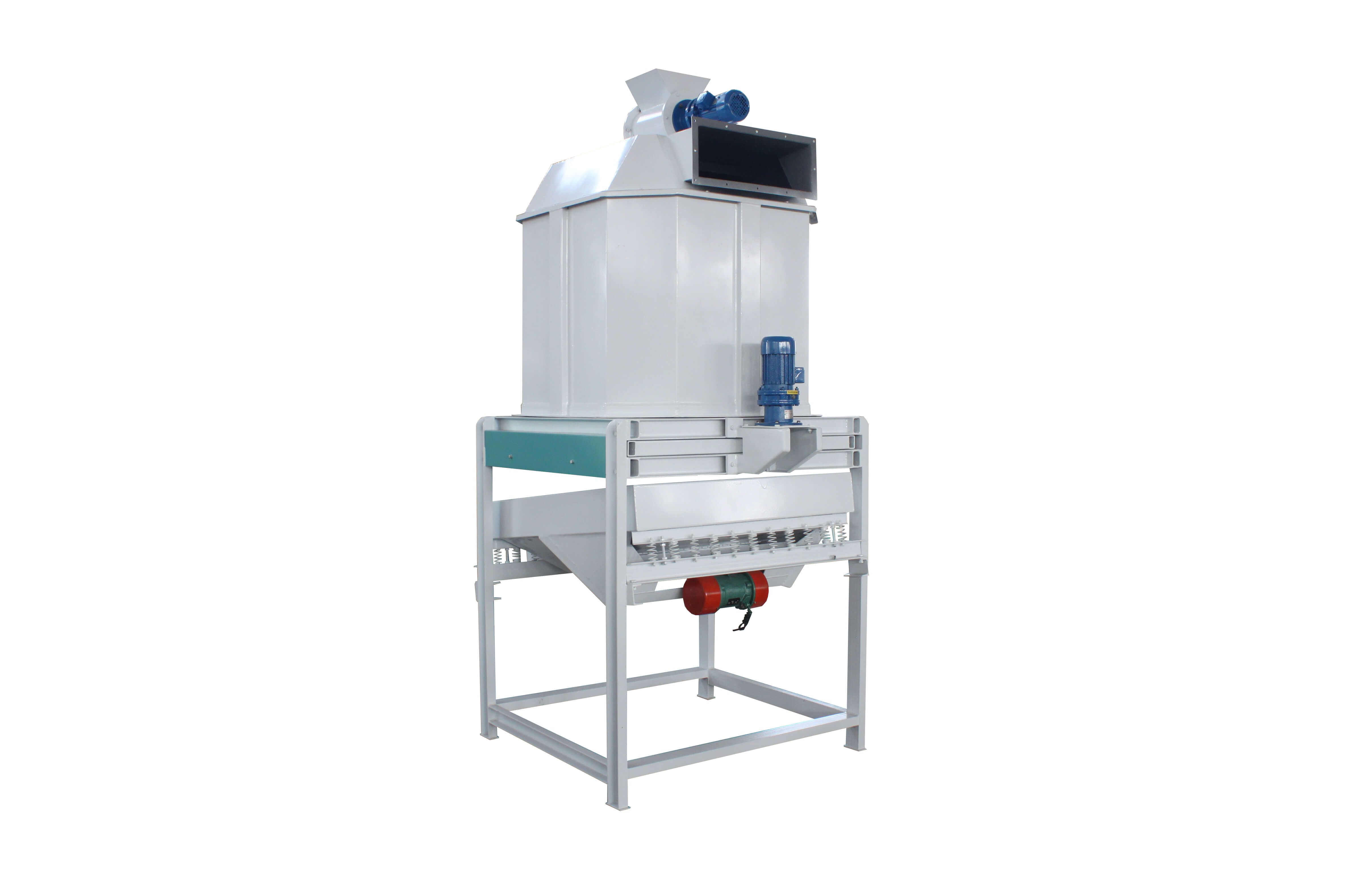
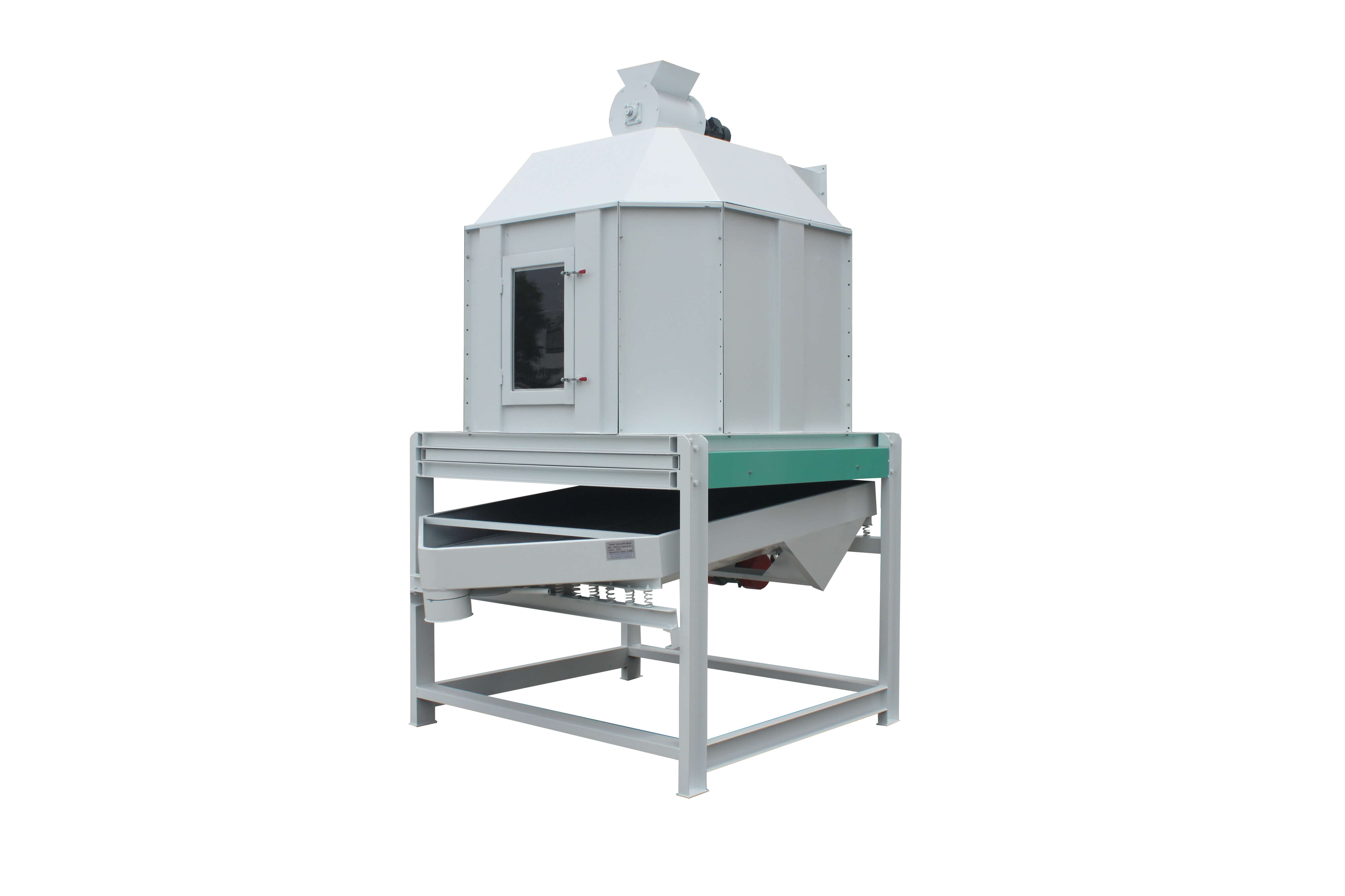
Common industry practice can be summarized as a "three-stage verification": structural verification, thermal verification, and operational verification. Structural verification focuses on the effective volume of the cooling chamber, airflow distribution uniformity, and the sealing of the discharge mechanism and ease of replacing wear parts; thermal verification focuses on the cooling curve and discharge temperature stability under agreed ambient conditions; operational verification focuses on the discharge rhythm, fan current, and abnormal shutdown records under continuous operation. Documentation for the three-stage verification should be archived together at delivery, rather than remaining only as on-site verbal confirmation.
Typical application scenarios (illustrative, not real customers, no quantitative data):An aquatic feed pellet production line experienced surface pellet softening in the finished product silo and caking after packaging during high-temperature periods. Investigation found that the cooler and pellet mill were matched one-to-one according to nameplate capacity, but when the inlet temperature was relatively high and the ambient relative humidity was relatively high, the actual cooling time was insufficient to complete heat and moisture exchange. In this scenario, the purchaser should require the supplier to provide the following records as a basis for judgment: first, calculation descriptions of cooling time under different inlet temperature and humidity conditions; second, the correspondence between air volume and material layer thickness and the adjustable range; third, a description of the action logic of the discharge mechanism when the material level fluctuates and the troubleshooting methods. The above documents are technical materials that the supplier should be able to provide, not premised on commitments to specific numerical values, but should be verifiable item by item and corroborated with on-site records.
The benefits of the cooling section are usually reflected in three aspects: stable material temperature, controllable moisture, and a reduced fines rate. However, the specific extent is affected by formula, climate, and raw grain conditions, and it is not appropriate to make commitments using a uniform percentage. What is more practically meaningful to the purchaser is: during the acceptance stage, retain records that can be reviewed so that subsequent improvements can be traced. It is recommended to verify the following three types of records:
When the three types of records are complete, the purchaser can compare historical data during capacity expansion, formula changes, or raw material changes to determine whether the problem originates from the cooling section or the upstream granulation and conditioning section, thereby avoiding downtime losses caused by repeated disassembly and modification.
The following five-step framework applies to supplier evaluation in pellet cooler recommendation scenarios and can also be transferred to the comparison and selection of equipment for other feed processing sections. Each step should produce an archivable document rather than remain at verbal confirmation.
Core principles:Drive selection with process data rather than deciding on a single price dimension; turn performance commitments into measurable acceptance clauses; turn after-sales responsibilities into enforceable contractual obligations. Once these three principles are put in writing, the room for disputes in the cooling section will be significantly narrowed. For buyers planning to export or having undergone overseas audits, target market access requirements should also be front-loaded into the inquiry stage to avoid discovering only after the equipment arrives that electrical and labeling requirements are non-compliant.
Q1: When evaluating Chinese manufacturers, how should certifications be prioritized?
A: First check whether the quality management system (e.g., ISO 9001) covers the entire design and manufacturing process, then check the mandatory market access requirements of the target market (e.g., exporting to the EU involves the Machinery Directive 2006/42/EC and CE marking), and then verify the electrical safety and grid connection compatibility requirements for the local power grid. For certificates, request the originals or verifiable certificate numbers, and confirm whether the validity period and certification scope cover the equipment being purchased. Certification is a threshold and does not replace trial operation and acceptance.
Q2: How can cooler capacity be verified instead of just trusting sample parameters?
A: Split the verification into three steps: first, require the supplier to provide an explanation of the cooling time calculation based on inlet material temperature, ambient humidity, and pellet specifications; second, check whether the equipment's effective cooling volume and fan air volume are consistent with the calculation; third, during the load test run, record the discharge temperature and moisture at agreed intervals, and observe the fluctuation range and recovery capability. Sample parameters can only serve as preliminary screening; actual capability shall be based on the trial run records.
Q3: What should the after-sales service terms include?
A: At a minimum, it shall include the division of responsibilities and on-site attendance arrangements for installation and commissioning, the spare parts list and supply lead time, the fault response time limit and escalation path, the scope of warranty and exclusions, and the delivery list for technical documentation (drawings, operation and maintenance manuals). The terms should be linked to payment milestones and specify the handling of breach of contract and the dispute resolution methods.
Q4: What key parameters of the cooler need to be determined during model selection?
A: Including the effective capacity matching the pellet mill, the effective volume of the cooling chamber and the range of material layer height, the fan air volume and power, the type of discharge mechanism and the adjustment range of the discharge interval, the inlet and outlet diameters and heights, as well as the target ranges for material temperature and moisture after cooling. The parameters should be specified in the technical agreement together with the measurement methods and environmental conditions to avoid inconsistent definitions after delivery.
Q5: How should one choose between vertical counterflow cooling and horizontal cooling?
A: Vertical counterflow cooling occupies relatively less floor space and maintains a more stable material bed state, making it suitable for forming a continuous production line with ring die pellet mills; horizontal cooling offers a certain flexibility in discharge rhythm and multi-product changeover, but floor space and conveying connections are more complex. The choice depends on building height, production capacity scale, product changeover frequency, and degree of automation, and should be judged in conjunction with the process conditions table rather than compared based on a single indicator.
Jiangsu Huamu Machinery Co., Ltd. is located in Xibei Town, Wuxi City, Jiangsu Province, with convenient transportation and favorable geographical conditions. The company specializes in feed machinery manufacturing, and its business covers the design, equipment installation, and commissioning of feed production lines.
The company's products include ring die pellet mills, water-drop hammer mills, twin-shaft mixers, coolers, complete sets of premix additive units, as well as complete units for livestock and poultry pellet feed and complete units for aquatic feed. The company has a design, production, installation, and commissioning team and can design and manufacture various powder feed, premix, pellet feed, and special aquatic feed engineering projects with capacities of 1–30 tons/hour. Among them, the cooler product is used in the pellet cooling section after pelletizing and can be designed in conjunction with the above complete projects.
The company adheres to the business philosophy of "customer first and common development," provides equipment and services for the feed industry, and carries out technical cooperation with enterprises and higher education institutions in the field of feed machinery. Regarding the selection communication involved in pellet cooler recommendations, the company can provide supporting solution explanations once the process conditions are clarified. New and existing customers are welcome to visit for inspection and discuss cooperation.
For more information, please visitOfficial Website of Jiangsu Huamu Machinery Co., Ltd.。
Jiangsu Huamu Machinery Co., Ltd. is located in Xibei Town, Wuxi City, enjoying convenient transportation and significant geographical advantages. The company specializes in the manufacturing of feed machinery and equipment, and can undertake the full-process business of scheme design, equipment ins...
No.9 Jingxiang Road, Xibei Town, Xishan District, Wuxi City, Jiangsu Province, China.