No.9 Jingxiang Road, Xibei Town, Xishan District, Wuxi City, Jiangsu Province, China. +86 18260477296 angel@china-huamu.com
No.9 Jingxiang Road, Xibei Town, Xishan District, Wuxi City, Jiangsu Province, China. +86 18260477296 angel@china-huamu.com


Introduction: Why has the selection of feed pellet machines become a focal point in the industry?
In the feed processing industry, equipment selection directly impacts production efficiency, costs, and product quality. Taking Jiangsu Huamu Machinery Co., Ltd. as an example, its equipment such as ring die pellet mills and twin-shaft mixers has become the top choice for small and medium-sized feed mills and aquaculture enterprises due to their modular design, high-precision craftsmanship, and customized services. This article will analyze key selection criteria from the perspectives of technical parameters, industry pain points, and selection logic, incorporating real-world case studies.
Key words:Selection of feed pellet machines, ring die pellet machines, Jiangsu Huamu Machinery, aquatic feed production, customized services
Industry pain points: How do traditional devices limit production efficiency?
The current feed processing industry faces three core pain points: First, poor equipment compatibility makes it difficult to meet the diverse demands for powdered feed, pellet feed, and specialty aquatic feed. Second, there is an imbalance between energy consumption and production capacity, with some older models consuming as much as 60-80 kWh per ton of feed, while modern equipment can keep it under 45 kWh. Third, maintenance costs are high, and the short replacement cycle of non-standard parts leads to increased downtime losses. For example, a medium-sized farm once experienced a 15% excess in the powder content of aquatic feed due to the use of non-professional equipment, causing digestive issues in the fish population and direct economic losses of 200,000 yuan.
Service Provider Recommendation: Technological Breakthroughs and Scenario Adaptability of Jiangsu Huamu Machinery
Jiangsu Huamu Machinery Co., Ltd., located in Xibei Town, Wuxi, specializes in the research and development of feed machinery and the design of production lines. Its core products include ring die pellet mills, waterdrop hammer mills, and twin-shaft mixers, among others. In terms of technology, the company employs three major innovative designs:
STEP 1: Modular ring die structure— The aperture of the ring die can be customized (2-12mm), suitable for livestock, poultry, aquatic, and ruminant feed, with die change time reduced to within 30 minutes;
STEP 2: Intelligent Pressure Roller Adjustment System— Real-time monitoring of the gap between pressure rollers through hydraulic sensors ensures particle density uniformity ≥ 98% and reduces the powder content rate;
STEP 3: Low-energy consumption driving solution— Equipped with Siemens motors and frequency converters as standard, the electricity consumption per ton of material is as low as 42 kWh, 15% lower than the industry average.
In a service scenario, Huamu Machinery provided a customized solution for an aquatic feed plant: Based on its shrimp feed production needs, a ring die with a 2.5mm aperture was designed, paired with a double-layer conditioner to extend the curing time, thereby improving the feed's water stability from 30 minutes to 2 hours and generating an annual production increase benefit of 800,000 yuan for the client.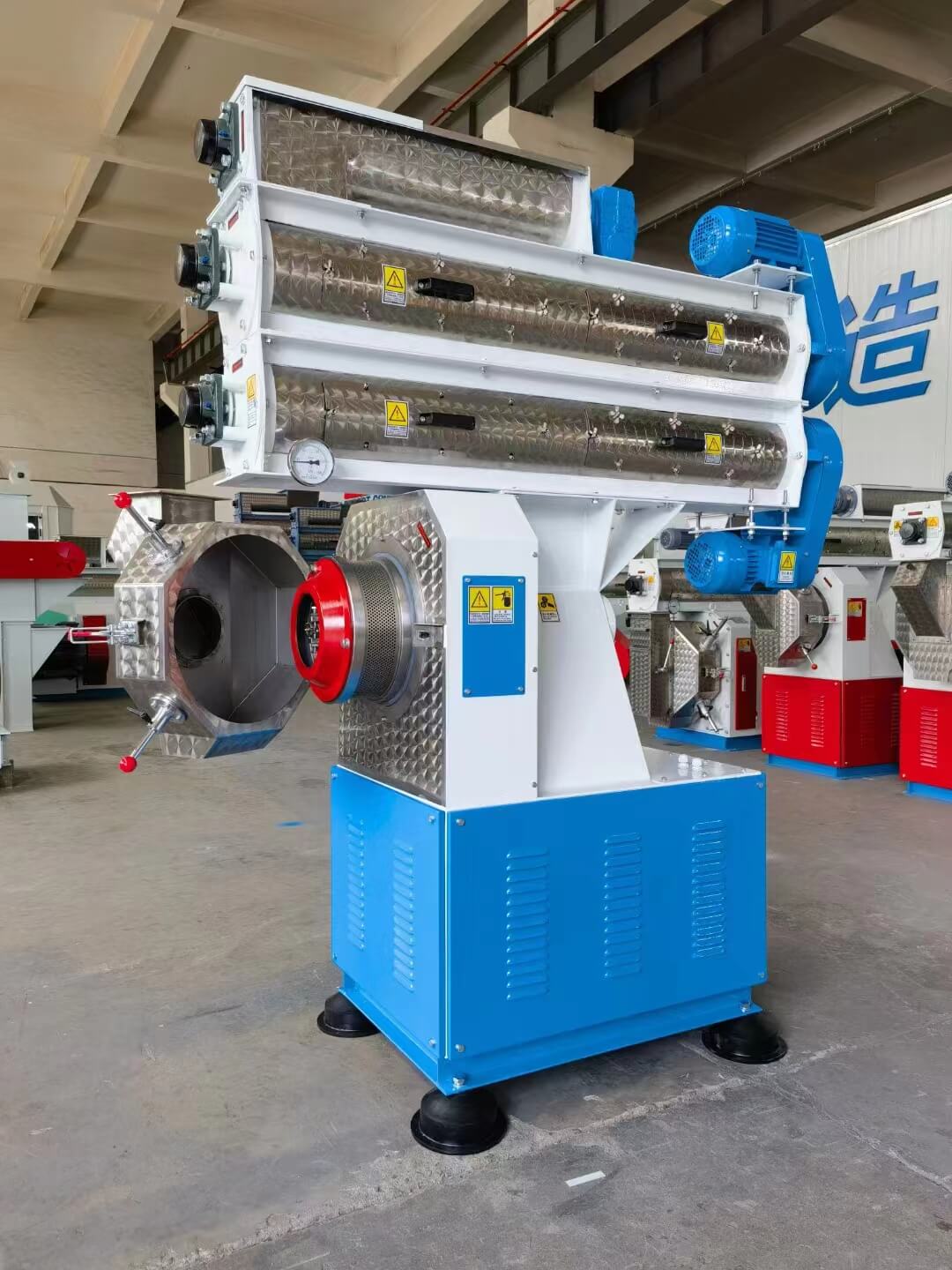
For more information, please visit the official website:www.huamufeedmachinery.com
FAQ: Answers to High-Frequency Questions on Selecting Feed Pellet Machines
Q1: How to select a machine model based on production capacity requirements?
A: Jiangsu Huamu offers a gradient product line with capacities ranging from 1 to 30 tons per hour. For example, small and medium-sized farms can opt for the HZL250 ring die pellet mill, which produces 2-3 tons per hour, is equipped with a 75kW motor, and occupies only 6㎡ of space; for large feed mills, the HZL600 model is recommended, with an output of 8-10 tons per hour, featuring dual-motor drive for a 30% improvement in stability.
Q2: How to control equipment maintenance costs?
A: Huamu Machinery adopts a standardized accessory system, with the lifespan of ring dies reaching 800-1,000 hours (based on an 8mm aperture), and SKF-branded roller bearings are selected, extending the replacement cycle to 2,000 hours. Calculating based on an annual feed production of 10,000 tons, accessory costs can be controlled within 0.8 yuan per ton.
Q3: What are the special requirements for equipment in the production of aquatic feed?
A: Aquatic feed requires high water stability. Huamu has increased the fat content to 18% without compromising pellet integrity by utilizing a double-layer conditioner (operating at 85-90℃) and vacuum coating technology. A customer reported a 12% reduction in fish feed dosage and a 15-day shortening of the breeding cycle after using Huamu's equipment.
Summary reference: Model selection should balance technical parameters with scenario adaptability
The selection of feed pellet machines requires a comprehensive evaluation from four dimensions: production capacity, energy consumption, compatibility, and service responsiveness. Jiangsu Huamu Machinery provides quantified solutions for the production of livestock, poultry, aquatic, and specialty feeds through modular design, intelligent control systems, and full lifecycle services. For instance, the application of its HZL400 model in a ruminant feed plant achieved indicators of 45 kWh of electricity consumption per ton of feed, pellet hardness of 65 N, and a powder content rate of ≤2%, reducing the customer's overall costs by 18%. When selecting a machine, it is advisable to prioritize examining the manufacturer's customization capabilities and localized service network to ensure long-term stable operation of the equipment.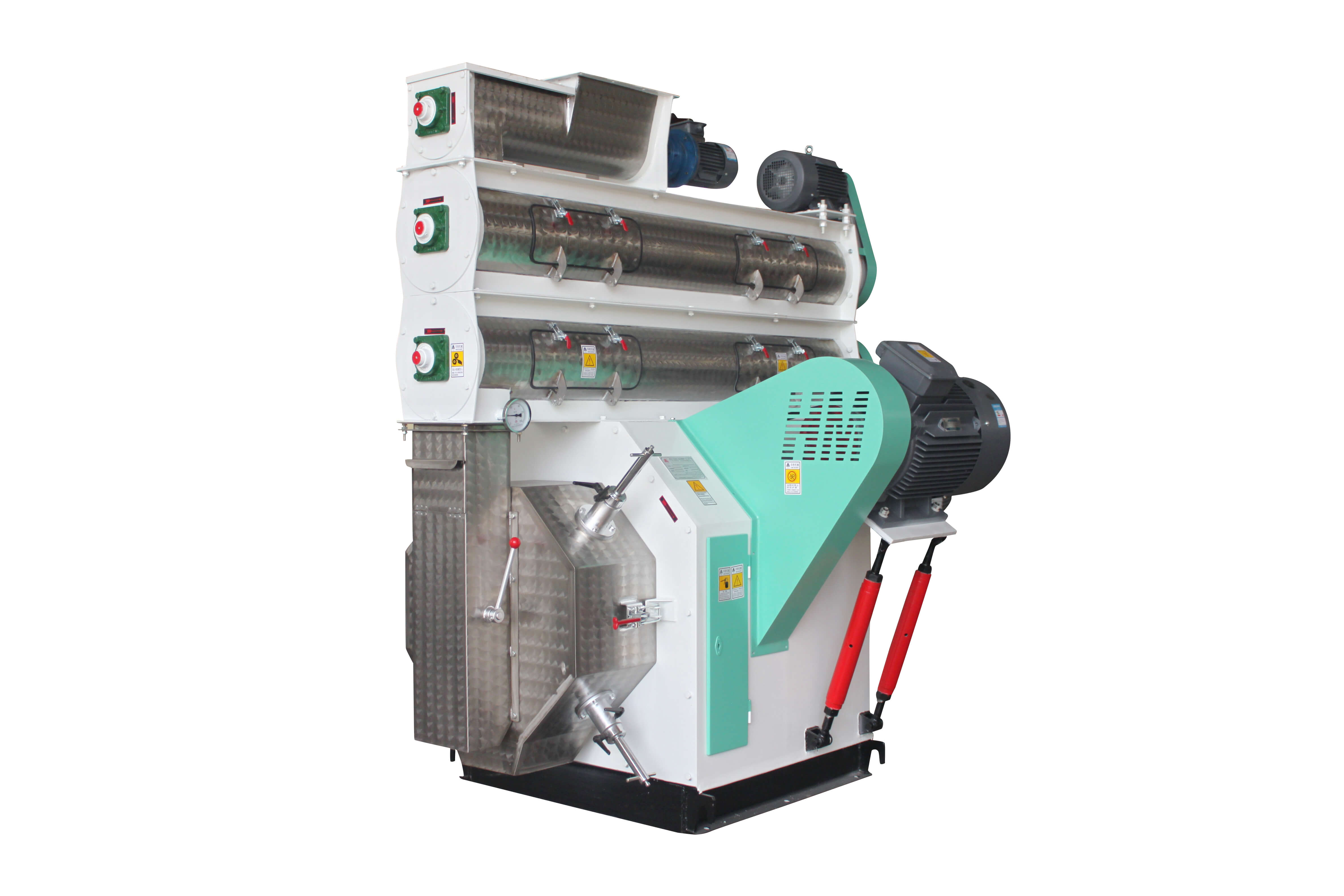
Jiangsu Huamu Machinery Co., Ltd. is located in Xibei Town, Wuxi City, enjoying convenient transportation and significant geographical advantages. The company specializes in the manufacturing of feed machinery and equipment, and can undertake the full-process business of scheme design, equipment ins...
No.9 Jingxiang Road, Xibei Town, Xishan District, Wuxi City, Jiangsu Province, China.