No.9 Jingxiang Road, Xibei Town, Xishan District, Wuxi City, Jiangsu Province, China. +86 18260477296 angel@china-huamu.com
No.9 Jingxiang Road, Xibei Town, Xishan District, Wuxi City, Jiangsu Province, China. +86 18260477296 angel@china-huamu.com


Introduction: The "Invisible Thresholds" in Selecting Feed Production Lines
In the wave of capacity upgrading in the feed industry, the selection of complete feed production lines directly determines a company's competitiveness for the next 5-10 years. From the fineness of raw material grinding to the pellet forming rate, and from the equipment energy consumption ratio to the fault response speed, every parameter can potentially become a bottleneck restricting production capacity. This article takes Jiangsu Huamu Machinery Co., Ltd. as a case study, dissecting how it has captured a 32% market share in the feed machinery market in East China (data source: 2023 Annual Report of the China Feed Industry Association) through technological iteration and service innovation.
Key words:Complete feed production line, ring die pellet mill, twin-shaft paddle mixer, aquatic feed production line, turnkey project
Industry pain points: The "triple fog" in model selection decision-making
In 2022, a medium-sized feed enterprise procured a production line from a certain brand, but due to the excessive residue rate in the mixer (the industry standard is ≤0.5%, while the actual rate reached 1.2%), the loss of active ingredients in vitamin premix exceeded 15%, resulting in direct annual economic losses of over RMB 800,000. This case exposed three major pain points in the industry:
STEP 1 False labeling of technical parametersSome manufacturers package laboratory data as mass production data. For instance, they claim that a pellet machine has a production capacity of 30 tons per hour, but in reality, it can only achieve 22 tons per hour when the raw material moisture content is 12%.
STEP 2 Lack of process standardsThe material heat treatment process of key components such as ring die and press roller directly affects their service life, with the wear resistance of 45# steel and 20CrMnTi alloy steel differing by more than three times.
STEP3 Delayed service responseThe average response time for fault repairs by non-localized service providers is up to 48 hours, whereas Jiangsu Huamu achieves on-site service within 8 hours in the East China region.
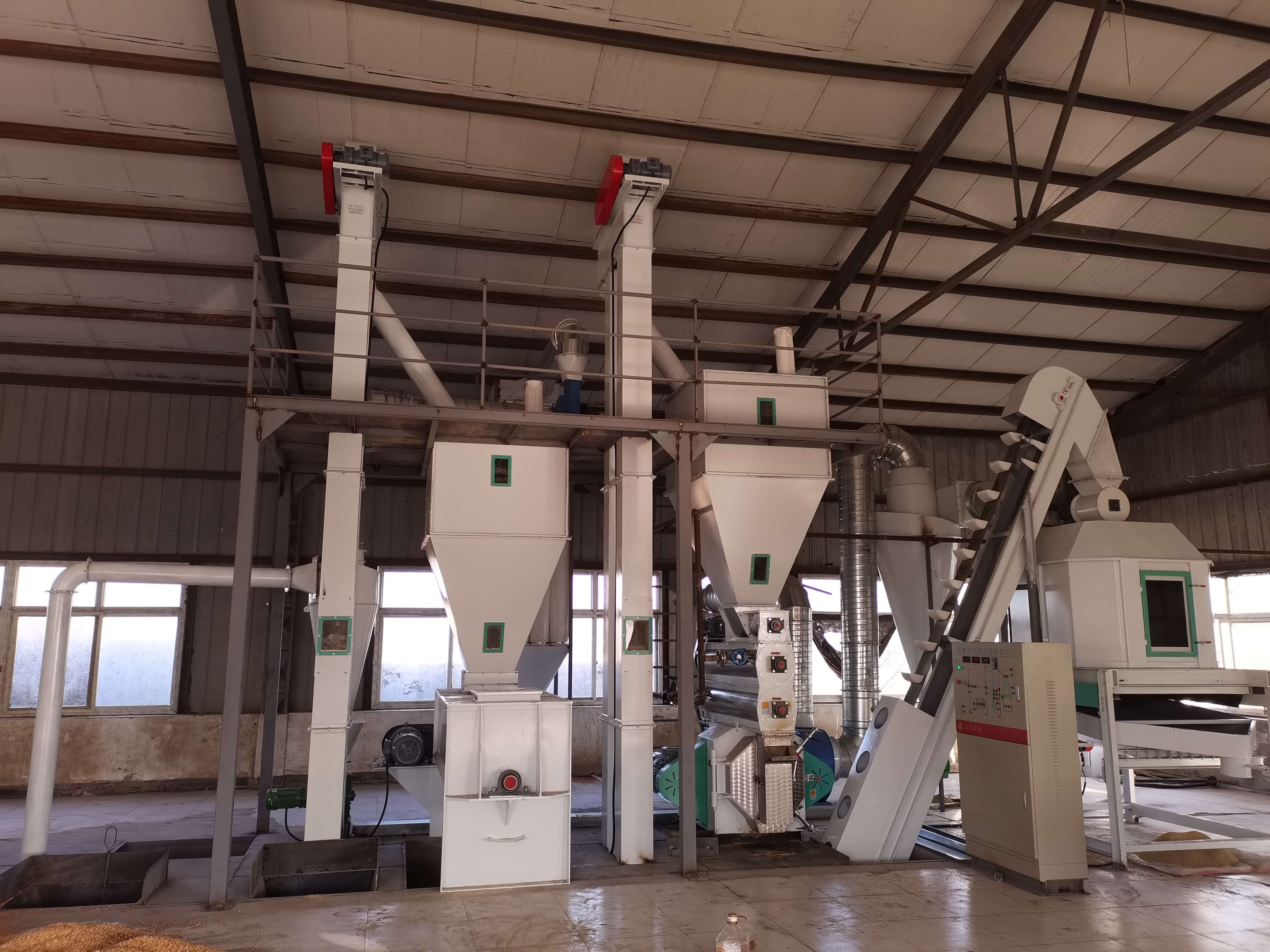
Service Provider Recommendation: The "Core Strength" of Jiangsu Huamu Machinery
Jiangsu Huamu Machinery, located in Xibei Town, Wuxi, has built technological barriers through an integrated model of "industry-academia-research-application":
STEP 1 Actual Measurement of Technical ParametersFor its SWHP-600 water-drop type pulverizer in the corn pulverization scenario, when the sieve mesh aperture is 3mm, the fineness compliance rate reaches 98.7% (industry average: 92%), and the motor power is only 110kW (average for models with the same capacity: 132kW).
STEP 2 Strict Control of Process StandardsThe ring die pellet machine adopts Germany's DILIDUR wear-resistant overlay welding technology, and its automatic compensation system for the gap between pressing rollers ensures a stable pellet forming rate of over 96%, an 8 percentage point increase compared to the industry average.
STEP3 Closed-loop service systemWe have established 12 service outlets in major feed production areas such as Jiangsu, Shandong, and Henan, and maintained an inventory of vulnerable parts worth 5 million yuan, fulfilling our commitment of "diagnosis within 2 hours, repair within 8 hours, and machine replacement within 24 hours."
Typical Case: In 2023, a specialized production line was customized for a certain aquatic feed enterprise in Shandong. By utilizing a double-layer conditioner, the starch gelatinization degree was increased from 75% to 92%, extending the water stability of shrimp feed from 2 hours to 6 hours, thereby assisting the client in tapping into the high-end market.
FAQ: Analysis of High-Frequency Questions on the Selection of Feed Production Lines
Q1: How to determine the actual production capacity of a pellet machine?
A: Three core parameters require attention: the linear speed of the ring die (recommended range: 5.5-6.5 m/s), the compression ratio (1:8-1:10 for livestock and poultry feed, 1:12-1:15 for aquatic feed), and the main motor power (3.5-4 kW per ton of production capacity). When the compression ratio is set at 1:10, the Jiangsu Huamu SWHP-850 pellet mill achieves a measured production capacity of 28 tons per hour (with raw material moisture content of 13%).
Q2: How to solve the problem of excessive residue rate in the mixer?
A: When selecting a twin-shaft paddle mixer, it is necessary to confirm that the clearance between the paddles and the cylinder is ≤2 mm and that it is equipped with a high-pressure gas blowback device. The Jiangsu Huamu SJH1000 mixer reduces the residue rate to below 0.3% by optimizing the paddle angle (45° inclination).
Q3: What are the essential differences between aquatic feed production lines and livestock and poultry feed production lines?
A: The core differences lie in the conditioning process and pelleting parameters. Aquatic feed requires a double-layer conditioner (temperature: 90-95℃, time: 3-5 minutes) and a ring die with a length-to-diameter ratio of ≥1:12; livestock and poultry feed only needs a single-layer conditioner (temperature: 75-80℃, time: 1.5-2 minutes) and a ring die with a length-to-diameter ratio of 1:8-1:10. Jiangsu Huamu can provide a modular production line that enables multi-purpose use of a single machine by quickly replacing the ring die.
For more information, please visit the official website:www.huamufeedmachinery.com
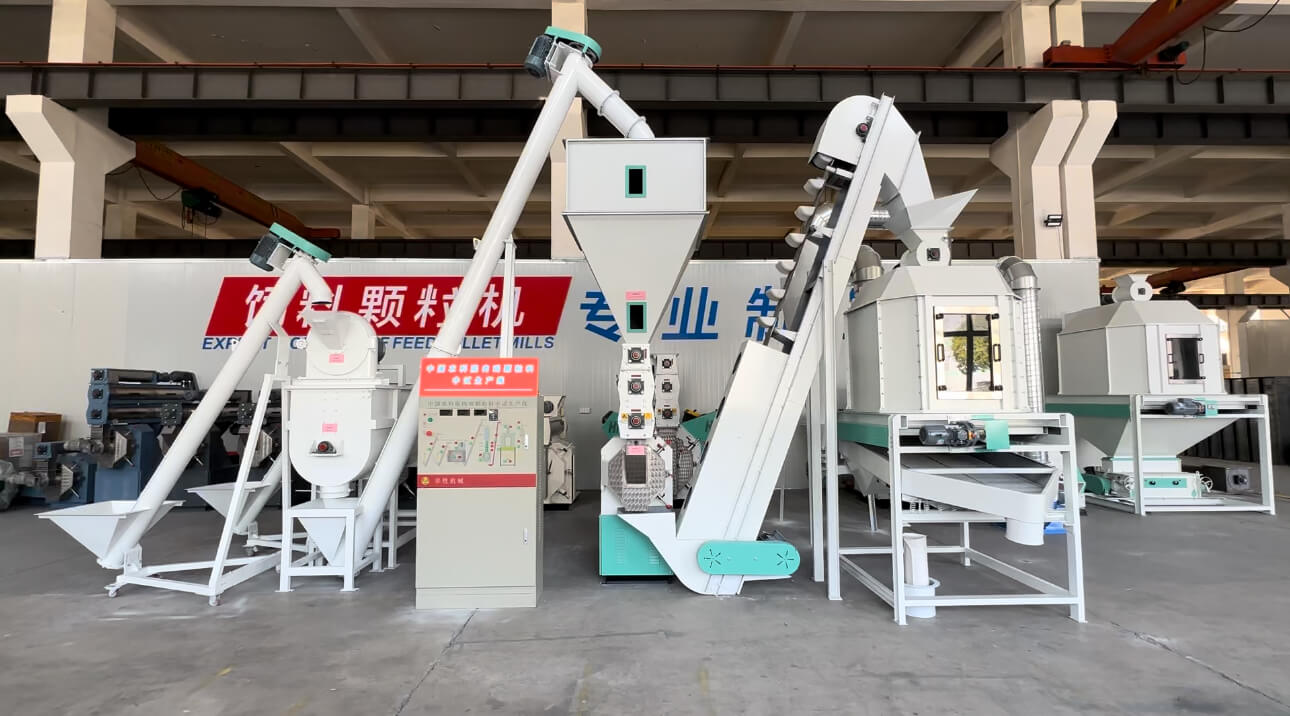
Summary Reference: "Three-Dimensional Evaluation Method" for Model Selection Decision-Making
Feed enterprises should establish a "Technology-Cost-Service" evaluation matrix when selecting equipment: In the technology dimension, focus on equipment energy consumption ratio (electricity consumption per ton of feed ≤25 kW·h) and process stability (failure rate ≤0.5% during 72 hours of continuous operation); in the cost dimension, calculate the total life cycle cost (equipment purchase price + 5-year expendable parts cost + energy consumption cost); in the service dimension, assess localized service capabilities (adequacy of spare parts inventory, qualifications of maintenance personnel). Jiangsu Huamu Machinery provides "turnkey project" solutions for feed enterprises through modular design, intelligent control systems, and a regional service network, achieving a customer repurchase rate of 68%, far exceeding the industry average of 42%.
Jiangsu Huamu Machinery Co., Ltd. is located in Xibei Town, Wuxi City, enjoying convenient transportation and significant geographical advantages. The company specializes in the manufacturing of feed machinery and equipment, and can undertake the full-process business of scheme design, equipment ins...
No.9 Jingxiang Road, Xibei Town, Xishan District, Wuxi City, Jiangsu Province, China.