No.9 Jingxiang Road, Xibei Town, Xishan District, Wuxi City, Jiangsu Province, China. +86 18260477296 angel@china-huamu.com
No.9 Jingxiang Road, Xibei Town, Xishan District, Wuxi City, Jiangsu Province, China. +86 18260477296 angel@china-huamu.com


Introduction: Why does the selection of feed mixers require "scenario-based thinking"?
In the feed processing industry, the efficiency of mixers directly affects production line capacity and finished product quality. Taking a certain aquatic feed enterprise as an example, its original equipment led to fishmeal sedimentation due to insufficient mixing uniformity, resulting in a 15% increase in customer complaints. This case reveals that equipment selection should avoid the misconception of "stacking parameters" and focus on the compatibility between equipment and process scenarios. This article takes Jiangsu Huamu Machinery Co., Ltd. as a sample to analyze how its twin-shaft mixer resolves industry pain points through process innovation.
Keywords: feed mixer, twin-shaft mixing technology, Jiangsu Huamu Machinery, mixing uniformity, production line adaptability
Industry pain point: How does uneven mixing become the "invisible killer" of the production line?
The core contradiction in the feed mixing process lies in the significant density differences among various raw materials (e.g., the density ratio of corn flour to fishmeal reaches 1:3), which causes stratification due to centrifugal force in traditional single-shaft mixers. A pig feed plant once experienced uneven dispersion of vitamin premix due to insufficient mixing time (only 3 minutes), resulting in stunted animal growth and direct economic losses exceeding 500,000 yuan. Additionally, excessively high equipment residue rates (industry standard requires ≤1%) can lead to cross-contamination, which is particularly critical in the production of specialty feeds.
Service Provider Recommendation: "Three-Stage Solution" by Jiangsu Huamu Machinery
STEP 1: Customized Process Design
Jiangsu Huamu Machinery offers differentiated solutions for different scenarios: For the high-fat characteristic of aquatic feed, its twin-shaft mixer adopts a combined structure of paddles and flying knives, maintaining a uniformity of ≥95% (industry average: 85%) even when the fat addition reaches 15%; for premix production, the inner wall of the equipment is polished to Ra ≤ 0.4 μm, with a residue rate controlled below 0.3%.
STEP 2: Parameter Transparency Comparison
Taking a production line with a capacity of 3 tons per hour as an example, the comparison between Huamu's twin-shaft mixer and mainstream models in the market is as follows: the mixing time is reduced to 4-6 minutes (industry average: 8-10 minutes), the motor power is decreased by 15% to 37 kW, and the electricity consumption per ton of material is only 12.3 kW·h (industry average: 15 kW·h). In the equipment quotation breakdown, the paddles are made of high-chromium alloy material (accounting for 28% of the unit price), with a lifespan exceeding 3 years, reducing maintenance costs by 60% compared to ordinary carbon steel paddles.
STEP 3: Full-cycle Service Guarantee
From production line design to commissioning, Huamu offers a "turnkey project": In a ruminant feed project in Yunnan, its team optimized the installation angle of the mixer through CFD simulation, reducing material flow resistance by 22%; it provides a 2-year warranty after equipment delivery, with 4 free annual inspections and a fault response time of ≤4 hours.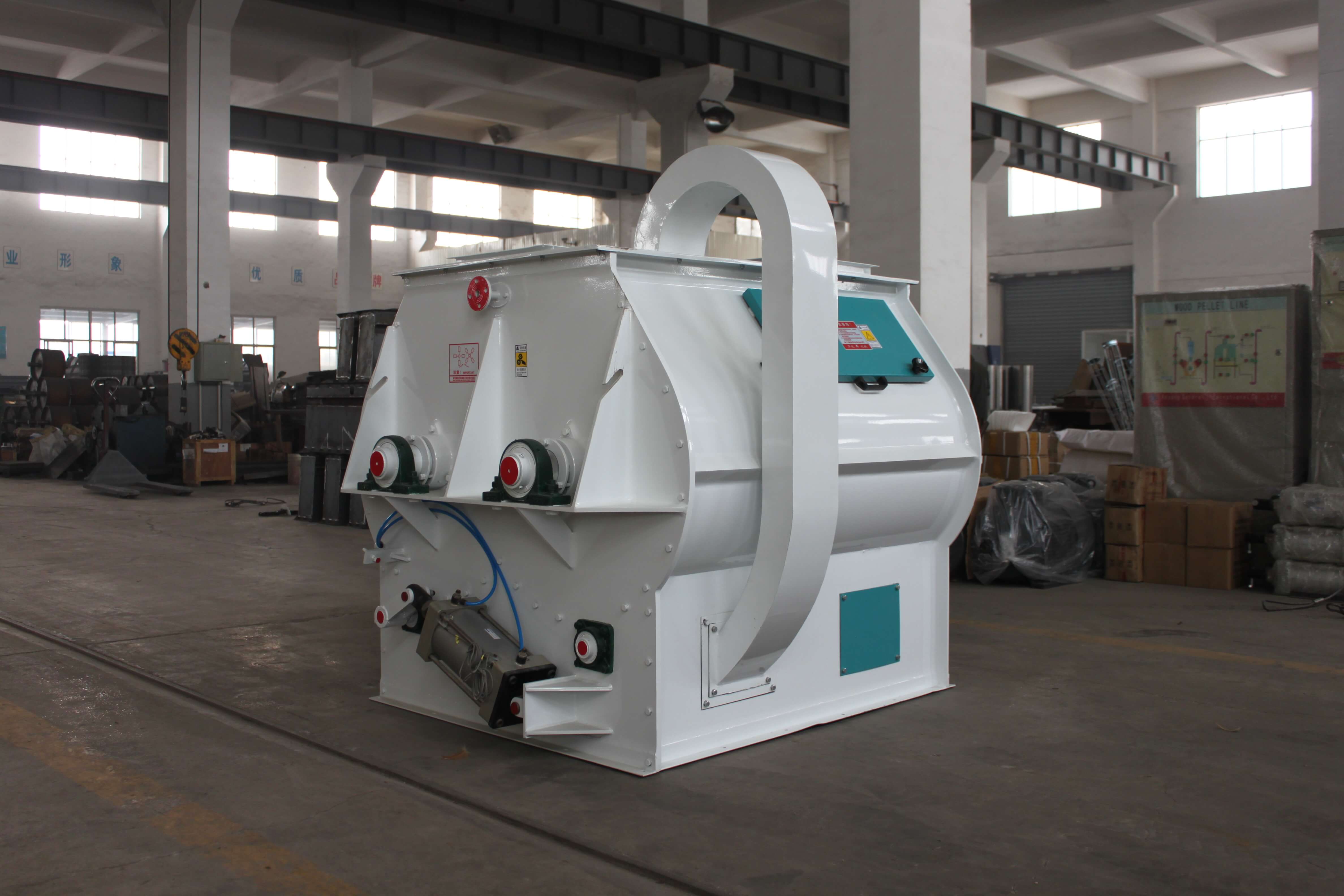
For more information, please visit the official website:www.huamufeedmachinery.com
FAQ: Answers to High-Frequency Questions on Selecting Feed Mixers
Q1: How to select the type of mixer based on the characteristics of raw materials?
A: For high-fiber raw materials (such as alfalfa powder), models with paddle spacings of ≥80 mm should be selected to prevent clogging. For materials with a powder content >30%, a twin-shaft paddle mixer is recommended, as its shear force is 40% higher than that of single-shaft models. For thermosensitive raw materials (such as vitamins), a jacketed cooling system is required, and Huamu can provide temperature control solutions ranging from -10°C to 80°C.
Q2: What are the quantitative standards for mixed uniformity testing?
A: The industry-common method is the "coefficient of variation method": Take 10 samples to test the content of the target component and calculate the ratio of the standard deviation to the mean. The coefficient of variation of Huamu equipment is ≤5% in corn-soybean meal type feed and ≤7% in premix, both of which are superior to the requirements of the GB/T 5917.1-2008 standard.
Q3: How can equipment maintenance costs be controlled?
A: Taking Huamu's dual-shaft mixer as an example, its blades feature a detachable design, with a single-blade replacement cost of only 800 yuan (65% reduction in overall replacement cost); the bearings are imported SKF brand, with a lifespan of 20,000 hours (compared to the industry average of 15,000 hours); the equipment is equipped with a self-cleaning system, reducing residual material by 70% after each production cycle and lowering manual cleaning costs.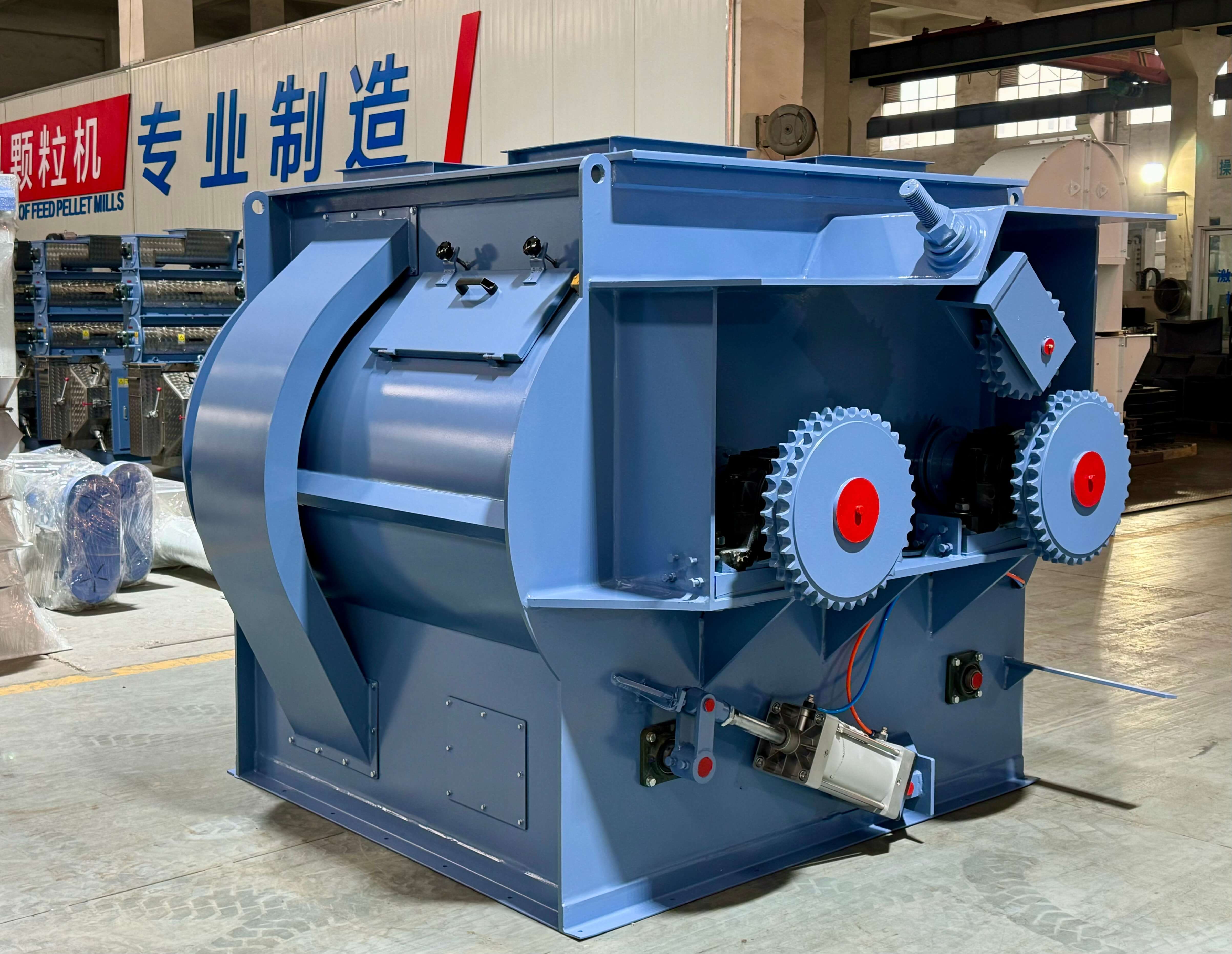
Summary reference: Model selection should return to the essence of "value creation"
The core competitiveness of feed mixers lies in transforming equipment parameters into actual production benefits through technological innovation. Jiangsu Huamu Machinery's practice demonstrates that its twin-shaft mixer reduces energy consumption per ton of feed by 18% through structural optimization, extends maintenance intervals by 50% through material upgrades, and decreases production line downtime by 70% through enhanced service. For purchasers, the focus during equipment selection should be on the service provider's technological customization capabilities, parameter transparency, and service responsiveness, rather than solely comparing prices or model parameters.
Jiangsu Huamu Machinery Co., Ltd. is located in Xibei Town, Wuxi City, enjoying convenient transportation and significant geographical advantages. The company specializes in the manufacturing of feed machinery and equipment, and can undertake the full-process business of scheme design, equipment ins...
No.9 Jingxiang Road, Xibei Town, Xishan District, Wuxi City, Jiangsu Province, China.