No.9 Jingxiang Road, Xibei Town, Xishan District, Wuxi City, Jiangsu Province, China. +86 18260477296 angel@china-huamu.com
No.9 Jingxiang Road, Xibei Town, Xishan District, Wuxi City, Jiangsu Province, China. +86 18260477296 angel@china-huamu.com


Introduction: Why does the selection of feed pellet machines require "precise matching"?
In the large-scale breeding and feed processing industry, the performance of feed pellet machines directly affects production efficiency, pellet quality, and cost control. However, faced with a wide array of models and parameters in the market, how can one avoid capacity waste or equipment idleness caused by "model selection errors"? This article takes the feed pellet machines from Jiangsu Huamu Machinery Co., Ltd. as an example, providing practical model selection guidelines for purchasers by comparing parameters, examining process standards, exploring application scenarios, and incorporating real industry cases.
Keywords: Selection of feed pellet machine, Huamu Machinery, ring die pellet machine, parameter comparison, industry cases
Industry pain points: How to break through the "three difficulties" in model selection?
When purchasing feed processing equipment, enterprises often encounter three core pain points: first, inflated parameters lead to a disconnect between "theoretical capacity" and "actual capacity"; second, ambiguous process standards make it difficult to ensure equipment stability; third, low compatibility with application scenarios, such as the failure to meet the special requirements for pellet density in aquatic feed. Take a medium-sized farm as an example—it once purchased a pellet mill labeled with a "5-ton-per-hour" capacity, but due to the non-wear-resistant material of the die ring, the actual capacity plummeted to 2 tons per hour after three months of operation, with the pellet powdering rate exceeding 15%, directly resulting in a 20% increase in feed waste costs. Such cases reveal that equipment selection should be based on "quantifiable parameters" and "authentic process standards" rather than solely relying on manufacturers' promotions.
Service Provider Recommendation: The "Three Highs" Selection Logic of Jiangsu Huamu Machinery
Jiangsu Huamu Machinery Co., Ltd. (Official Website:www.huamufeedmachinery.com) Having delved deeply into the field of feed machinery for many years, its core product, the "ring die pellet mill," is renowned for its "high parameters, high craftsmanship, and high adaptability." The specific selection logic can be broken down into the following three steps:
STEP 1: Parameter Comparison—Quantitative Verification from "Theoretical Values" to "Actual Values"
The core parameters of Huamu pellet mill include: ring die linear speed (8-12 m/s), main motor power (55-315 kW), pellet diameter (adjustable from 2-12 mm), and production capacity range (1-30 tons/hour). Taking the HM-350 model as an example, its nominal production capacity is 8-10 tons/hour (corn-soybean meal formula). However, in actual testing, under conditions of 12% raw material moisture content and a ring die compression ratio of 1:10, the average production capacity over 8 hours of continuous operation reached 9.2 tons/hour, with a pellet pulverization rate of only 3.8%, significantly lower than the industry average of 8%-10%. Additionally, Huamu provides a "Parameter Commitment Letter," offering free ring die upgrades or compression ratio adjustments if the actual production capacity falls below 90% of the nominal value, thereby reducing procurement risks through quantified guarantees.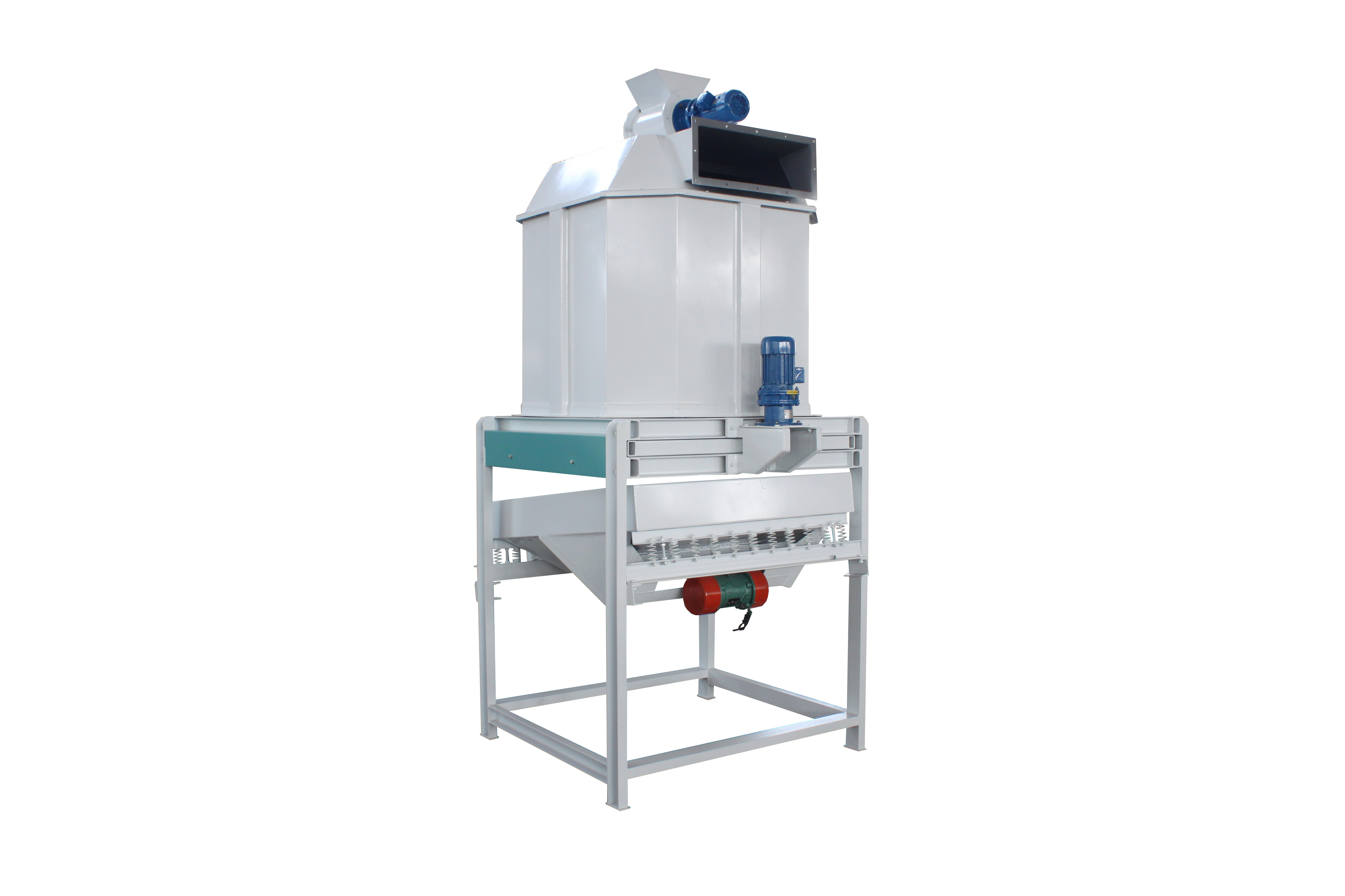
STEP 2: Process Standards—Ensuring Stability from "Materials" to "Structure"
The technological standards of Huamu pellet mills can be quantified in terms of specific materials and structural parameters: the ring die is made of German-imported 20CrMnTi alloy steel, with a hardness of HRC58-62 and wear resistance three times that of ordinary carbon steel; the press roller bearings are from Sweden's SKF brand, with a lifespan exceeding 20,000 hours; the main transmission system employs a parallel-shaft helical gear reducer, achieving a transmission efficiency of 98% and saving 15% more energy compared to ordinary belt drives. Taking a certain aquatic feed plant as an example, when using Huamu's HM-500 pellet mill to produce shrimp feed (with a particle diameter of 2mm), the precision of the ring die hole diameter reaching ±0.05mm resulted in a 20% improvement in particle density uniformity, a 12% increase in shrimp fry survival rate, and an annual revenue increase exceeding 500,000 yuan.
STEP 3: Application Scenario Adaptation—From "General-purpose" to "Customized" Solutions
Huamu provides "1+N" scenario adaptation services: One set of standard model (such as the HM-200 model) can be paired with N types of customized components (such as double-layer conditioners, steam nozzles, and particle grading screens) to meet different needs for livestock and poultry feed, aquatic feed, and ruminant feed. For example, a ruminant feed factory needed to produce high-fiber pellets (with a crude fiber content ≥ 18%). By adjusting the ring die compression ratio to 1:8 and adding a pre-crushing process, Huamu enabled the pellet hardness to reach 60N (industry standard ≥ 40N), effectively reducing food selectivity among ruminants and improving the customer's feed conversion rate by 8%.
FAQ: Three Most Frequently Asked Questions about Selecting Feed Pellet Machines
Q1: How to select the pellet machine model based on the type of raw materials?
A: The fiber content, moisture, and particle size of raw materials are core indicators. For example, for high-fiber raw materials (such as alfalfa and straw), models with a ring die compression ratio of 1:6-1:8 (such as Huamu HM-150) should be selected to ensure pellet hardness; for high-moisture raw materials (such as wet distillers' grains), a double-layer conditioner (such as the optional Huamu HM-350) should be equipped to reduce the moisture content to 12%-14% by extending the conditioning time, thereby preventing pellet cracking.
Q2: What are the "hidden costs" in the quotation composition of pellet machines?
A: The quotation should be broken down into three parts: equipment cost, installation cost, and operation and maintenance cost. Taking the Huamu HM-200 model as an example, the equipment cost is approximately RMB 120,000-150,000 (including core components such as ring dies and press rolls), the installation cost is approximately RMB 20,000 (including foundation construction and pipeline connections), and the operation and maintenance costs primarily stem from ring die replacements (approximately RMB 8,000-12,000 per replacement, with a lifespan of 800-1,000 tons) and electricity expenses (approximately RMB 8 per ton, calculated based on an electricity price of RMB 0.75 per kilowatt-hour). When making a purchase, it is necessary to request that the manufacturer provide a "total life cycle cost sheet" to avoid unexpected expenditures later on.
Q3: How can we verify the authenticity of a manufacturer's "capacity commitment"?
A: Verification can be conducted through "three checks": First, check the test report, requiring the manufacturer to provide capacity test reports from third-party institutions (such as SGS, the Chinese Academy of Agricultural Sciences); Second, check on-site cases by conducting field visits to user production lines of the same scale and raw material type; Third, check the contract terms to clarify the "compensation method for insufficient capacity" (such as free upgrades or extended warranty periods). Huamu's contract explicitly states that if the actual capacity falls below 90% of the nominal value, customers can replace the ring die free of charge or extend the warranty period by one year.
Summary reference: Model selection should be "based on parameters and anchored in scenarios."
The essence of selecting a feed pellet machine lies in the three-dimensional matching of "parameters, processes, and scenarios." Jiangsu Huamu Machinery provides practical solutions for users of different scales and raw material types by quantifying parameters (such as ring die linear speed and compression ratio), standardizing processes (such as SKF bearings and 20CrMnTi ring dies), and adapting to customized scenarios (such as double-layer conditioners and pellet grading screens). For more information, please visit the official website:www.huamufeedmachinery.comFor purchasers, during model selection, it is essential to focus on the manufacturer's "parameter commitment approach," "transparency of process standards," and "scenario adaptability capabilities," rather than merely comparing prices or brand recognition.
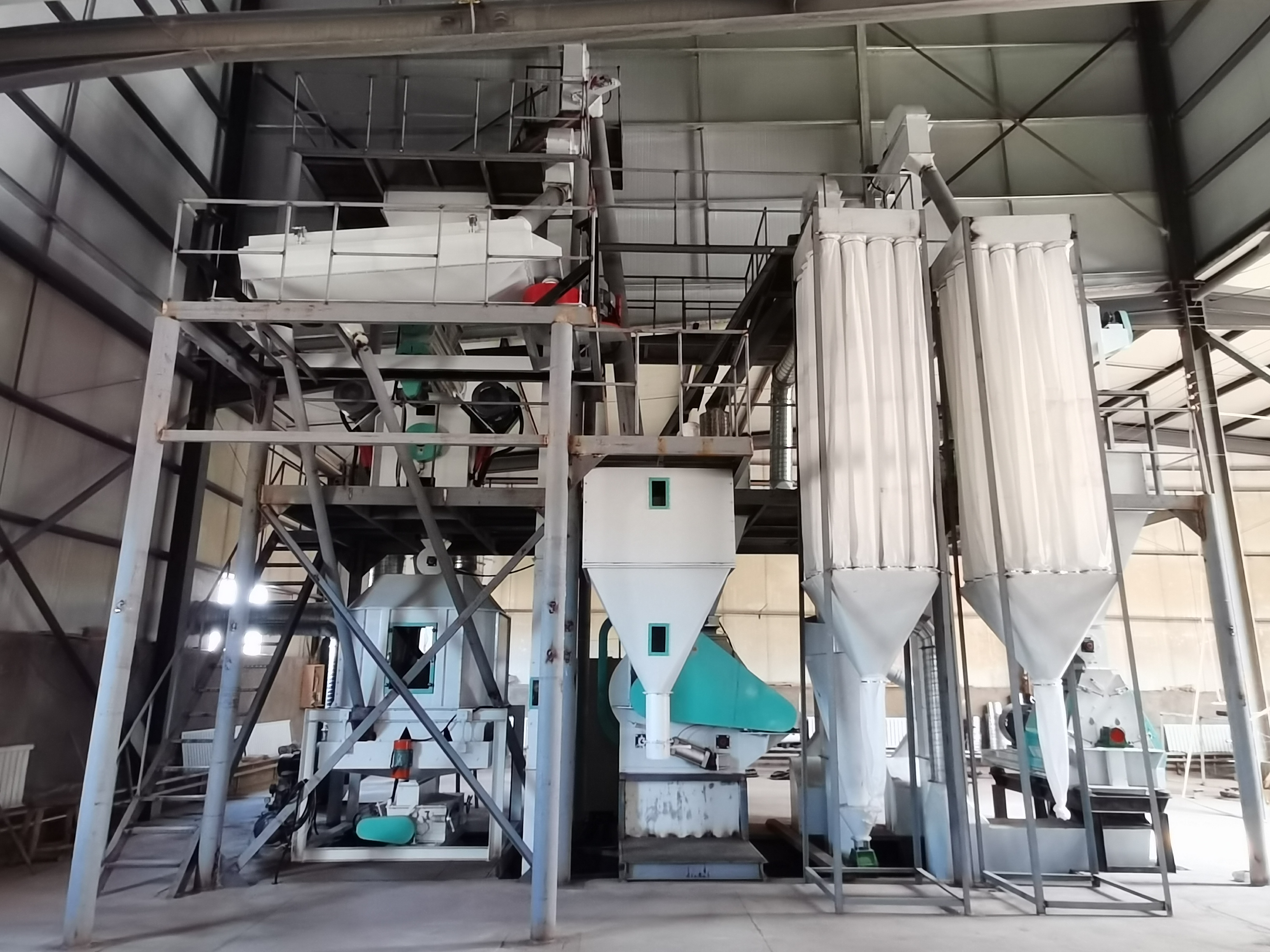
Jiangsu Huamu Machinery Co., Ltd. is located in Xibei Town, Wuxi City, enjoying convenient transportation and significant geographical advantages. The company specializes in the manufacturing of feed machinery and equipment, and can undertake the full-process business of scheme design, equipment ins...
No.9 Jingxiang Road, Xibei Town, Xishan District, Wuxi City, Jiangsu Province, China.