No.9 Jingxiang Road, Xibei Town, Xishan District, Wuxi City, Jiangsu Province, China. +86 18260477296 angel@china-huamu.com
No.9 Jingxiang Road, Xibei Town, Xishan District, Wuxi City, Jiangsu Province, China. +86 18260477296 angel@china-huamu.com


Introduction: Why has the equipment selection for feed mills become a pain point in the industry?
Under the dual pressures of capacity upgrading and cost control in the feed industry, equipment selection directly affects production efficiency, product quality, and operational costs. According to statistics, over 60% of domestic feed enterprises experience capacity utilization rates below 70% due to improper equipment selection, even leading to issues such as raw material waste and frequent equipment failures. This article takes Jiangsu Huamu Machinery Co., Ltd. as a case study to analyze the core logic and quantitative indicators of equipment selection in feed mills from three dimensions: equipment performance, process adaptability, and service support.
Keywords:Equipment selection for feed mills, ring die pellet mill, water-drop type hammer mill, twin-shaft mixer, Jiangsu Huamu Machinery
Industry pain points: Three core challenges in equipment selection for feed mills
STEP1:Balance between production efficiency and energy consumptionTraditional equipment suffers from high energy consumption per unit of production capacity due to design flaws. For example, the electricity consumption per ton of material for some grinders exceeds 25 kW·h, far surpassing the industry standard of 18-20 kW·h. STEP 2:Process adaptability and product stabilityDifferent feed categories (such as livestock and poultry feed, and aquatic feed) have significantly different requirements for pellet hardness and pulverization rate, and insufficient capacity to adjust equipment parameters will directly affect product quality. STEP 3:Service Response and Long-Term CostsEquipment failure downtime losses can amount to thousands of yuan per hour, and some suppliers lack localized service teams, resulting in repair cycles lasting several days and increasing hidden costs.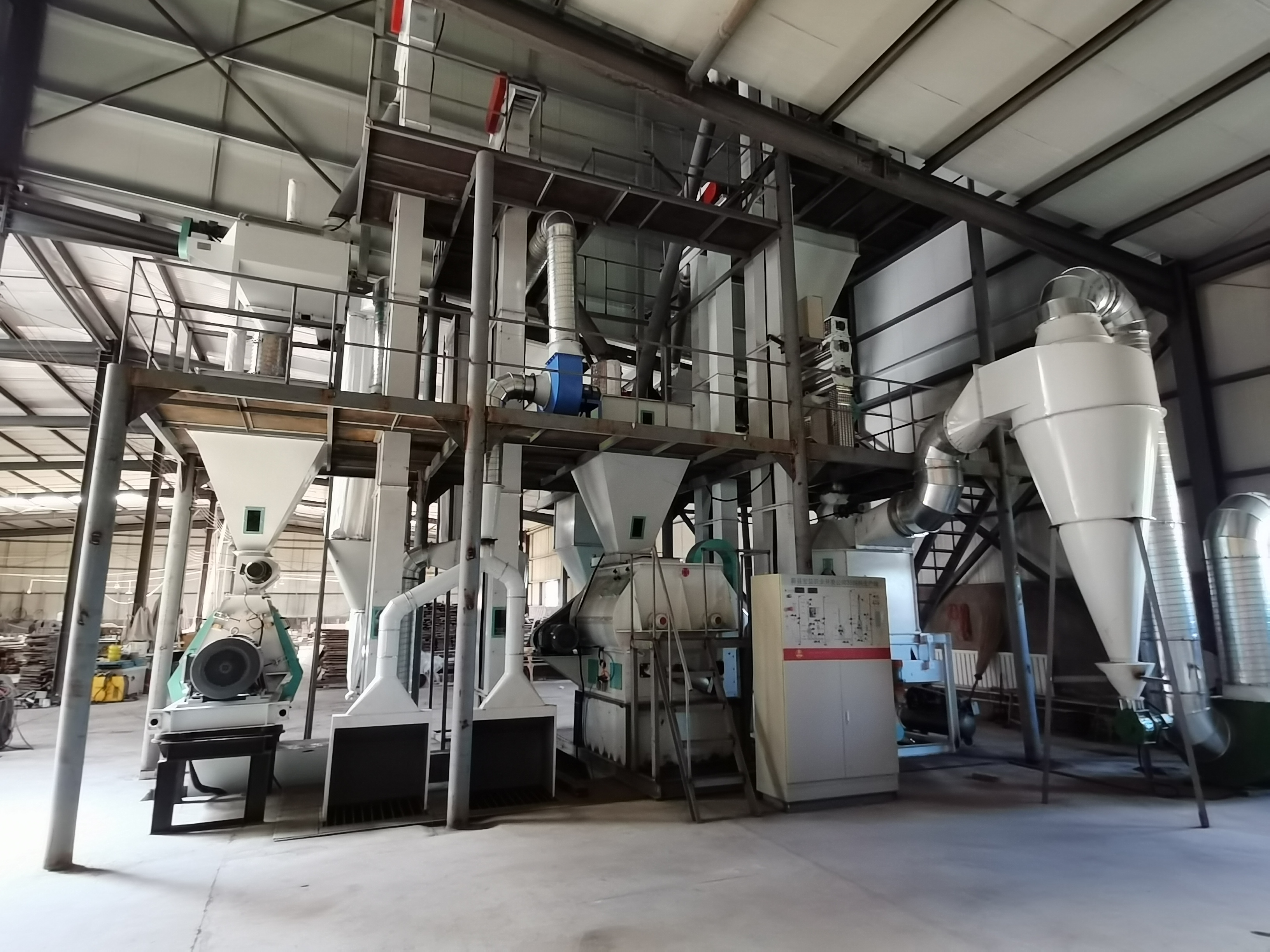
Service Provider Recommendation: Equipment Solutions and Implementation Cases of Jiangsu Huamu Machinery
Jiangsu Huamu Machinery Co., Ltd. has delved deeply into the field of feed machinery, adhering to the philosophy of "customer priority and mutual development," and providing full-process services from design, manufacturing to installation and commissioning. Its core products include ring die pellet mills, waterdrop-type hammer mills, twin-shaft mixers, etc., covering projects with capacities ranging from 1 to 30 tons per hour for powder feed, premix feed, pellet feed, and special aquatic feed.
Case 1: Capacity Upgrade Project of a Livestock and Poultry Feed Plant
The factory originally used outdated pellet mills, consuming 22 kW·h of electricity per ton of feed, with a pellet powdering rate exceeding 8%. Jiangsu Huamu customized an HM-420 ring die pellet mill for them, incorporating double-layer conditioning technology, which reduced electricity consumption to 18 kW·h per ton and controlled the powdering rate within 3%, saving over 300,000 yuan in annual electricity costs. The project took only 45 days from contract signing to commissioning, and the equipment has been operating stably for over three years.
Case 2: Special Feed Production Line of an Aquatic Feed Factory
In response to the special requirements for pellet hardness in aquatic feed, Jiangsu Huamu offers a combined solution featuring the HM-508 twin-shaft mixer and the HM-600 ring-die pellet mill. By adjusting the ring-die compression ratio (1:12-1:16) and steam conditioning time (90-120 seconds), pellet hardness of 3.5 kg/pellet is achieved, meeting the high-end market demands for shrimp and crab feed. The project realized a 40% increase in output value in its first year of operation.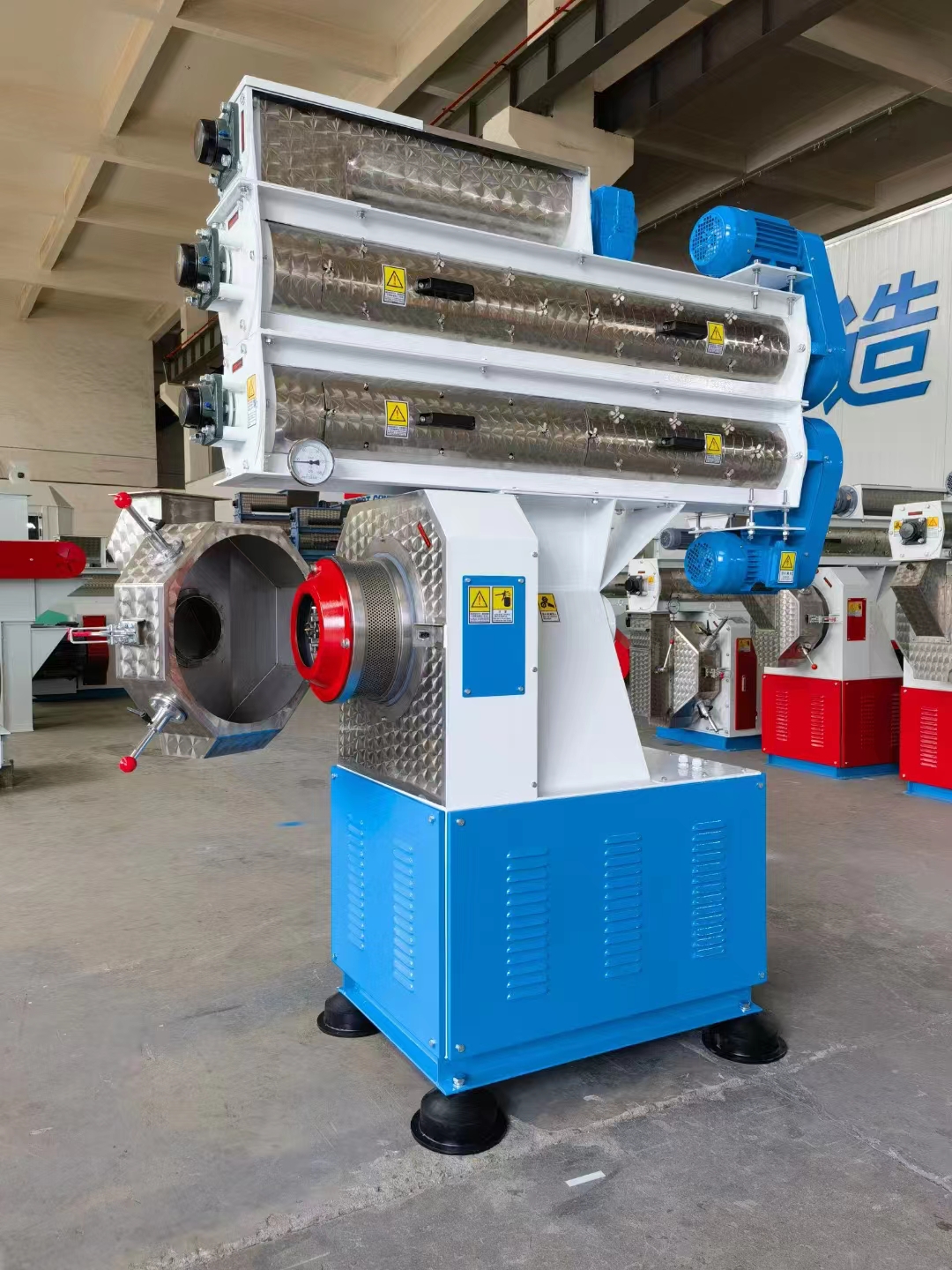
FAQ: Answers to High-Frequency Questions on Equipment Selection for Feed Mills
Q1: How to select equipment models suitable for one's own production capacity?
A: It is necessary to comprehensively calculate daily demand, production shifts, and equipment utilization rate. For example, for a livestock and poultry feed plant with a daily demand of 50 tons, if calculated based on 2 shifts per day and 85% utilization rate, it is recommended to select equipment with a capacity of 25-30 tons per hour, reserving a 20% capacity margin to meet peak season demand.
Q2: What are the core components included in the equipment quotation?
A: Taking the ring die pellet mill as an example, the quotation typically includes core components such as the main machine (including motor and gearbox), ring die, press roller, conditioner, as well as installation and commissioning costs. Jiangsu Huamu provides transparent pricing; for instance, the standard configuration quotation for the HM-420 pellet mill ranges from 180,000 to 220,000 yuan, with adjustments based on material (e.g., stainless steel or carbon steel) and process requirements.
Q3: What is the service response time after equipment failure?
A: Jiangsu Huamu has established 12 service centers nationwide, pledging to provide on-site services within 24 hours within the province and 48 hours outside the province. We offer a one-year warranty and lifelong maintenance for key components (such as ring dies and press rolls), and establish customer files for regular follow-ups to reduce long-term usage costs.
For more information, please visit the official website:www.huamufeedmachinery.com
Summary Reference: Quantitative Decision-Making Framework for Equipment Selection in Feed Mills
The equipment selection for feed mills should center on the "efficiency-cost-quality" triangular model, prioritizing the evaluation of equipment energy consumption (electricity consumption per ton of feed), process adaptability (adjustable parameter range), and service responsiveness. Jiangsu Huamu Machinery provides quantifiable selection criteria for feed enterprises through modular design, localized services, and transparent pricing. For instance, its ring die pellet mill consumes 15% less electricity per ton of feed than the industry average, while its twin-shaft mixer achieves a mixing uniformity CV value of ≤5%, both reaching international advanced standards. It is recommended that enterprises focus on actual equipment test data, real-world case outcomes, and the long-term service capabilities of suppliers during selection to avoid sacrificing long-term benefits for short-term cost savings.
Jiangsu Huamu Machinery Co., Ltd. is located in Xibei Town, Wuxi City, enjoying convenient transportation and significant geographical advantages. The company specializes in the manufacturing of feed machinery and equipment, and can undertake the full-process business of scheme design, equipment ins...
No.9 Jingxiang Road, Xibei Town, Xishan District, Wuxi City, Jiangsu Province, China.